Every year in late November, phones start ringing at small hatcheries across Kenya. People want chicks, often at short notice, and often more than the incubator owner has. At the same time, other farmers are discovering too late that a chick hatched in late November will not be a table bird by Christmas. Both problems have the same cause: hatches that were not planned against a calendar.
An incubator is a production line with a fixed clock. A chicken egg takes 21 days to hatch, and every later stage, from brooding to market weight to point of lay, also takes a known length of time. Once you know those times, you can work backwards from the dates you want to sell, and set eggs on the right day instead of whenever the trays happen to be empty.
This guide shows how to build a hatch calendar from the start of November: what eggs set now can and cannot reach, how to sell into the December market with chicks rather than meat birds, how to line up the Easter 2027 market, and how to make sure the hatches you plan actually succeed in the wet, power-cut-prone weeks of the short rains.
The Fixed Clock: What the Incubator Can and Cannot Do
Chicken eggs hatch in 21 days. Eggs set on 1 November hatch around 22 November. That simple fact decides what each hatch can be sold as.
Christmas table birds are already out of reach for this hatch. Kenyan reports of KALRO training put improved kienyeji cocks at market weight at about four to four and a half months, while unimproved local birds take far longer. A kienyeji cockerel for Christmas 2026 needed to hatch around August. If you hatched then, our guide to finishing kienyeji cockerels for December covers the last weeks. If you did not, do not promise Christmas birds from November hatches.
Chicks for December buyers are well within reach. Day-old chicks hatched in late November, or chicks brooded on for three or four weeks, can be sold through December to farmers who want to start or restock a flock.
Easter 2027 is the natural target for meat birds. Easter Sunday falls on 28 March 2027. Chicks hatched in late November reach about four months old in late March, the age at which improved kienyeji cockerels are reported to reach market weight. That makes the November hatch an Easter hatch.
Selling Into December: Day-Olds or Started Chicks
For a farm hatchery, December is a chick market. Two products make sense.
Day-old chicks. The quickest turnover: hatch, sort, sell. The risk is that buyers who have never brooded lose many chicks in cold, wet weather, then blame the hatchery. Give every buyer a simple brooding sheet and point them to our guide to chick brooding equipment.
Started chicks, three to four weeks old. You do the brooding, carry the feed and the risk, and sell a stronger chick that has had its early vaccinations and no longer needs much heat. Many buyers prefer them, and you can usually charge more to cover your costs. You need brooding space, heat and a vaccination plan agreed with your vet.
Whichever you choose, take orders before you set eggs. Ask regular customers, local groups and agrovets how many chicks they will want and when, take a deposit where you can, and set enough eggs to cover the orders plus your expected losses. A hatch without orders becomes a brooder full of chicks you have to feed.
Build a Staggered Hatch Calendar
Setting one huge batch a year is risky: one power cut, one bad batch of eggs or one humidity mistake loses everything. Setting smaller batches every week or two spreads the risk, keeps chicks coming for repeat buyers and makes better use of the machine. The calendar below shows a simple weekly pattern for November and December.
| Set eggs | Candle | Lockdown | Hatch | Sell as |
|---|---|---|---|---|
| 1 Nov | 8 Nov | 19 Nov | 22 Nov | Day-olds late Nov, started chicks mid Dec, Easter cockerels |
| 8 Nov | 15 Nov | 26 Nov | 29 Nov | Day-olds early Dec, started chicks late Dec |
| 15 Nov | 22 Nov | 3 Dec | 6 Dec | Day-olds mid Dec, started chicks early Jan |
| 22 Nov | 29 Nov | 10 Dec | 13 Dec | Day-olds before Christmas |
| 29 Nov | 6 Dec | 17 Dec | 20 Dec | Day-olds just before Christmas; check buyers first |
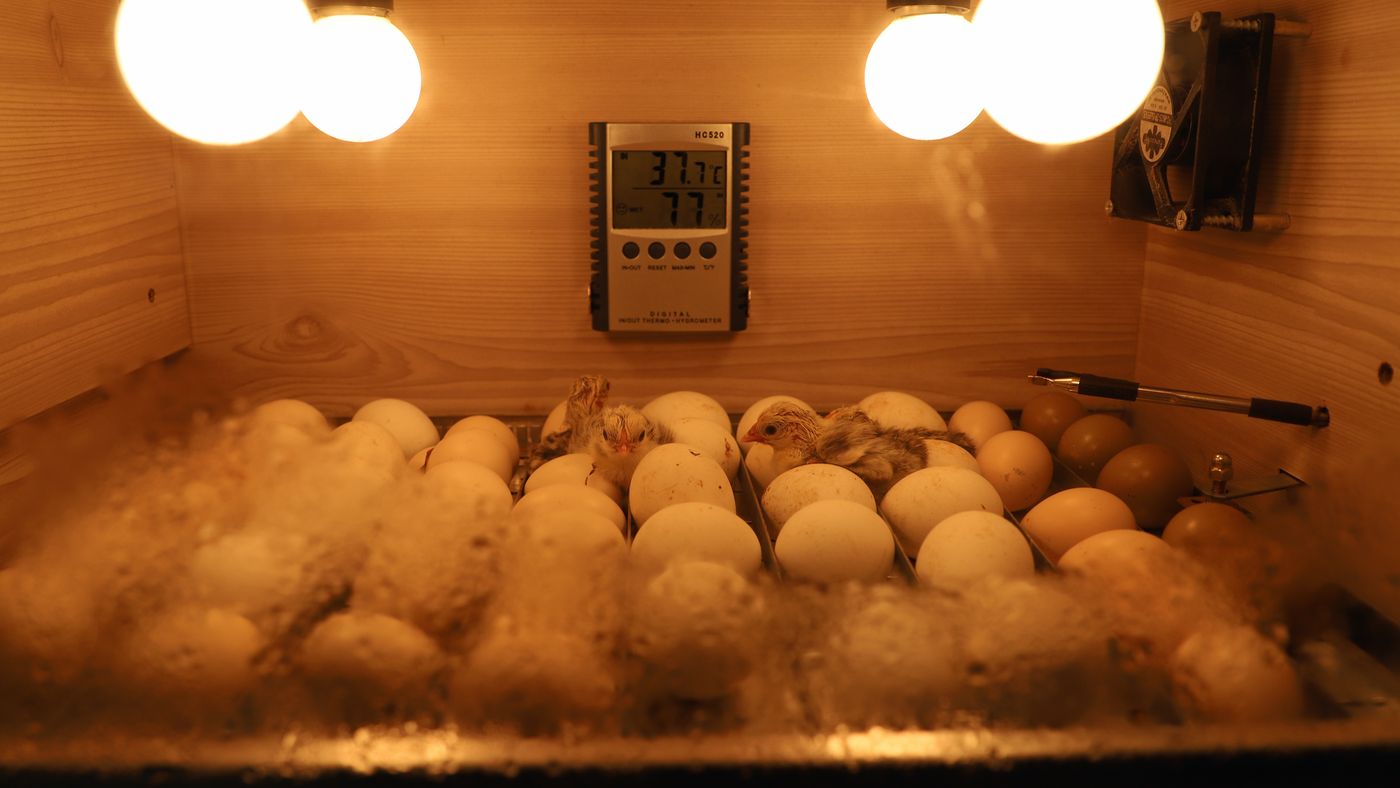
Candling at around day 7 removes clear (infertile) eggs and early deaths; lockdown at day 18 is when turning stops and humidity is raised for hatching. Our guides to egg candling and incubator humidity explain both. If you set every week in one machine, you will have eggs at different stages together. A separate hatcher, or a machine with a separate hatching tray, keeps lockdown conditions from upsetting earlier batches; see our guide to setters and hatchers.
Hatching Eggs: Where Most Hatches Are Won or Lost
A planned hatch is only as good as the eggs that go in. Many disappointing hatches are blamed on the incubator when the eggs were the problem.
Breeding flock. Keep a ratio of cocks to hens your breed supplier or livestock officer recommends, feed the breeders properly and keep them healthy. Infertile eggs cannot hatch in any machine.
Collection and storage. Collect eggs at least twice a day so they do not get dirty, cracked or warmed by broody hens. Set clean, well-shaped, uncracked eggs of normal size. Store them in a cool, shaded place, pointed end down, and set them within about a week of laying; hatchability falls the longer eggs are kept. Do not wash hatching eggs in dirty water.
Bought-in eggs. If you buy hatching eggs, buy from a known flock, check them on arrival, let them rest for some hours before setting, and record the source so you can trace a bad batch. Our guide to improving hatch rate covers the full list of causes when hatches disappoint.
Protect the Hatches From the Short Rains
Kenya's national weather service forecast above-average rainfall for much of the country from October to December 2026, with prolonged wet spells and storms. For an incubator, that means power cuts and damp air.
Power. An incubator that loses heat for a few hours near hatch can lose the batch. Machines that run on both mains and battery, such as the 210 egg AC/DC incubator, or a solar incubator setup, ride through cuts. Our backup power guide sizes batteries and generators. If power fails without backup, keep the lid closed to hold the heat and cover the machine with a blanket, leaving the vents clear.
Humidity. In very damp weather, room humidity can push the incubator too high, which leads to chicks that are wet, sticky or drowned in the shell. Check humidity with a hygrometer rather than guessing, and use less water in the trays when the air is already moist.
The room. Keep the incubator in a room with a steady temperature, away from windows, doors and draughts, and off a cold, damp floor. A machine in a cold store room has to work harder and its temperature swings more.
Keep Records So Next Year's Calendar Is Better
The first hatch calendar is a plan. The second is much better, because it is built on what actually happened. For every batch, write down the date set, the number of eggs and their source, the number cleared at candling, the number hatched, the number of saleable chicks, and who bought them, when and at what age.
After one season you will know your real hatch rate by egg source and by month, which weeks your buyers wanted chicks, and whether day-olds or started chicks sold better. That tells you when to set more eggs next year, when to set fewer, and whether a larger or second machine would pay. Records also make it much easier to work out what went wrong when a batch disappoints, because you can compare it with the batches before.
Keep a short note of costs, too: eggs bought, power or fuel, feed and vaccines for started chicks. Selling a chick that cost you more to produce than you charged is easy to do in a busy December, and only records will show it.
Choosing Capacity for Your Calendar
Work out the largest number of eggs you will have in the machine at once. If you set 100 eggs every week, you will hold three weeks of eggs, about 300, at the busiest point. That points to a machine of around 350 eggs rather than 128. Fuga's range runs from the 64 egg, 128 egg and 192 egg automatic incubators to the 350 egg incubator and larger incubators in various sizes. Our incubator buying guide helps you compare.
Your Hatch Planning Checklist
| Step | Check |
|---|---|
| Targets | Selling dates fixed: December chicks, Easter 28 March 2027 cockerels, pullets for laying |
| Orders | Buyers and quantities confirmed; deposits taken where possible |
| Numbers | Eggs to set worked out from your real hatch rate |
| Calendar | Weekly or fortnightly settings; candling and lockdown dates written down |
| Eggs | Clean, uncracked, stored cool and pointed end down; set within about a week |
| Power and room | Backup tested; incubator in a warm, draught-free room; hygrometer in use |
| Chicks | Vaccination plan from your vet; brooding sheet for buyers |
Incubation Equipment
Prices change, so we do not list them here. See each product page or the Fuga price list for current prices and stock.
| Item | Best for |
|---|---|
| 64 eggs automatic incubator | Starting out, small weekly settings |
| 210 eggs AC/DC incubator | Areas with frequent power cuts |
| 350 eggs incubator | Staggered weekly settings of about 100 eggs |
| Subhen automatic incubators | Growing farm hatcheries |
| Plastic egg trays | Storing and handling hatching eggs |
Count back from the dates you want to sell, sell November hatches as chicks in December and as meat birds at Easter, set in smaller, regular batches, plan on your real hatch rate and protect every batch from power cuts and damp. For incubators and spares, see our poultry range or our guide to starting a hatchery business, or WhatsApp 0716 961 018 with the number of chicks you plan to sell each month.
Key Takeaways
- Chicken eggs hatch in 21 days: eggs set on 1 November hatch around 22 November.
- Christmas 2026 table birds needed to hatch around August; a November hatch sells as chicks in December.
- Improved kienyeji cocks are reported to reach market weight at about four to four and a half months, so late November hatches suit Easter on 28 March 2027.
- Take orders before setting and set eggs based on your real hatch rate, not the machine's best.
- Set smaller batches weekly or fortnightly, with candling around day 7 and lockdown at day 18.
- Protect hatches from power cuts and damp air, and keep records to improve next year's calendar.
Frequently Asked Questions
Can I still hatch kienyeji chickens for the Christmas market?
Not as table birds from a November hatch. Kenyan reports of KALRO training put improved kienyeji cocks at market weight at about four to four and a half months, so Christmas birds needed to hatch around August. A November hatch can be sold as day-old or started chicks in December, and as meat birds around Easter 2027.
How many eggs should I set to fill my chick orders?
Divide the chicks you need by your real hatch rate from your records. If 70 of every 100 eggs set become saleable chicks and you have orders for 280 chicks, set about 400 eggs.
Is it better to sell day-old chicks or started chicks?
Day-old chicks turn over fastest. Started chicks of three to four weeks need brooding space, feed and a vaccination plan from your vet, but they are stronger, many buyers prefer them in cold, wet weather, and you can charge more to cover your costs.
What size incubator do I need for weekly settings?
Work out the most eggs in the machine at one time. Setting 100 eggs every week means about 300 eggs at the busiest point, which points to a machine of around 350 eggs, ideally with a separate hatcher or hatching tray.