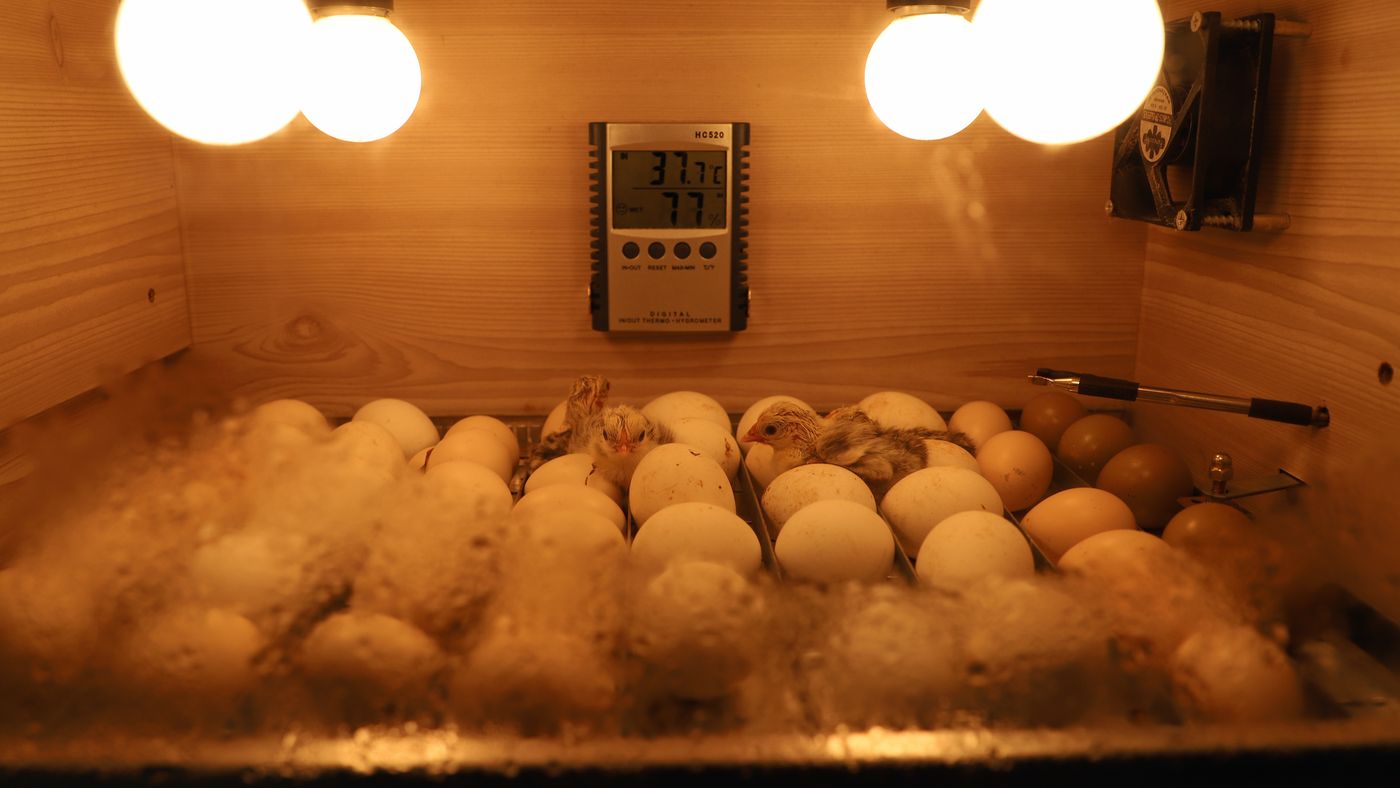
Day twenty-one arrives and you lift the lid expecting a tray of chicks. There are eleven. The other forty eggs sit where you placed them three weeks ago, cold and quiet, and not one of them is going to tell you what went wrong.
That is the cost of running an incubator blind. The machine held its numbers, the turner clicked on schedule, and the batch still failed. Worse, the next batch will fail the same way, because those twenty-one days produced not one piece of evidence you can act on.
Candling is the evidence. A bright light and a dark room turn a sealed shell into a window, and two short inspections in a three week cycle will tell you whether the problem sits in your flock or your machine, which half of the incubation is killing embryos, and whether your humidity suits the altitude you live at.
What Candling Is, and What the Light Can Actually Show You
Candling means holding a bright, narrow beam against the shell in a dark room and reading the shadows inside. The name is literal: before torches, hatcherymen held eggs against a candle flame in a darkened shed.
An eggshell is porous calcium carbonate, thin enough that strong light passes through it and is scattered by whatever sits behind. Three structures become readable. The air cell at the blunt end shows as a clear bright dome, because there is nothing in it but gas. The blood vessels show as fine dark lines across the inside of the shell, because blood absorbs light far more strongly than albumen. The embryo shows as a dark mass, and from the second week as a shadow that shifts if you hold the egg still and wait.
What candling cannot show matters too. Not sex, not the temperature history, and not bacterial contamination until it has gone far enough to cloud the contents. Nor much at all through a very dark or speckled shell, unless the beam is narrow, strong and pressed hard so no light leaks round the edge.
The tool is simple. A purpose made candler is a high output LED behind a small aperture with a soft rubber rim that seals against the shell, and a strong LED torch with a collar of rolled card taped over the lens does the same job for nothing. Use cool white LED rather than a filament bulb: a filament runs hot, and you are holding it against a live embryo.
When to Candle, and Why Opening the Machine Too Often Costs You
A chicken egg incubates for twenty-one days, and two checkpoints do almost all of the useful work.
Day seven is the fertility check. By then a live embryo has a vascular network big enough to see through a brown shell, and a dead one has usually declared itself as a ring. Candling earlier is possible with white shells, but on day four you will be guessing on half the tray and throwing out eggs that were merely slow.
Day eighteen is the transfer check. This is the day chicken eggs move from the setter into the hatcher, or come off the turner in a single stage machine, so you are handling every egg anyway and the inspection costs nothing extra. Our guide to setters and hatchers explains why that transfer is also your last chance to keep a rotten egg out of the hatching basket.
A third look around day fourteen is diagnostic rather than routine, the one you add when chasing a humidity question, because by then the air cell is large enough to judge confidently.
Everything beyond those three inspections is a cost. Air temperature inside a tabletop machine recovers within minutes of closing the lid, and that is exactly what misleads people. The eggs do not. Each egg is a small mass of water with the thermal inertia to match, and once a tray has stood in a twenty degree room for a quarter of an hour, the machine has to put that heat back with a heater sized for holding temperature, not for recovering it. The display will read normal long before the eggs do.
Humidity is worse, because the moist air leaves the instant you open the lid and is replaced by whatever the room is holding. Then there is handling: shell damage, bacteria off hands, a dropped tray, and controllers that drive the heater hard against a cold load and overshoot on the way back.
Two looks, not ten. Candle at day seven and again at day eighteen, with an optional day fourteen when chasing a humidity problem. Never candle in the last three days: the humidity you let out then is the humidity the chick needs to free itself from the membrane.
Reading the Egg at Day Seven: Fertile, Infertile and Early Dead
In a dark room, hold the egg blunt end up with the beam against the side and rotate it slowly. You are sorting into three piles.
Fertile and developing. A dark spot roughly the size of a pea sits slightly off centre, with blood vessels radiating away from it in a branching, uneven network, like a tree seen from underneath. Tilt the egg gently and the whole structure sways with the fluid around it. The rest of the egg is still fairly translucent and the air cell is small.
Infertile, or clear. Light passes straight through. The yolk shows as a soft shadowy blob that drifts lazily when you tilt the egg, and there are no vessels anywhere.
Early dead. The egg was fertile and the embryo stopped. Most of these show a blood ring, which the next section deals with. Some show a dark irregular smudge lying against the shell with no vessel network attached, and some a fine dark line with no branches at all.
Count the piles separately and write the counts down. Clears and early deads mean entirely different things, and merging them into one number called failures destroys the only diagnostic information the batch will produce.
One honest complication: an embryo that died in the first day or two can look exactly like an infertile egg, because it never grew enough tissue to cast a shadow. To separate the two, break a sample of your clears into a bowl and look at the yolk surface. A fertile egg shows a small pale ring, a bullseye with a lighter centre. An infertile one shows a solid spot with no ring.
Blood Ring or Live Embryo? The Distinction That Decides Your Fix
This is the comparison that catches new operators, because both are red and both prove the egg was fertile.
A live embryo has a centre. Vessels radiate outward from a dark body, they branch as they travel, the pattern is asymmetric, and it sits in three dimensions with some vessels nearer the shell than others. Rock the egg and the whole network moves as a suspended structure.
A blood ring has no centre. It is a single circle or arc of red lying close against the inside of the shell, with nothing radiating from the middle and nothing branching off it. Often it is only a partial ring, a crescent, or a heavy red line across one side of the egg.
The reason is mechanical, and knowing it tells you when the death happened. In the first days the embryo builds a spreading network of vessels across the yolk, and the outer edge of that network is itself a circular vessel marking the growing boundary. When the embryo dies, the vessels lose their tone and the blood settles into that boundary. You are looking at the rim of the vascular area with the middle drained out, which means the embryo lived and then died, usually between the second and the fifth day.
A ring has no centre. Vessels branching out of a dark body means a live embryo. A red circle or crescent with nothing in the middle means the embryo started and stopped. Clear eggs are a breeding problem. Blood rings are an incubation or egg handling problem. That single distinction is the reason you candle at day seven at all.
The usual causes all sit before day five: eggs stored too long or at the wrong temperature, rough handling or a bumpy ride in from the breeder farm, a setting temperature that ran high in the first days, and disinfection that was too aggressive. Our guide on diagnosing a poor hatch yourself works through each in turn.
The Air Cell: The Humidity Gauge You Already Own
The air cell is the gas pocket at the blunt end of the egg. It forms within minutes of laying as the warm contents cool and contract, and it grows through incubation for one reason: the egg loses water vapour through the pores in its shell, and the space left behind fills with air. That makes it a running record of water loss. Your hygrometer tells you what the air is doing; the air cell tells you what the eggs are doing.
Follow the mechanism and the correction becomes obvious rather than something to memorise. Wetter air in the machine means a smaller difference in vapour pressure between the inside of the egg and the air around it, so less water leaves and the air cell stays small. Drier air means more water leaves and a bigger air cell. So an air cell too small at day fourteen is telling you the machine is too wet and humidity should come down, and one too large is telling you the machine is too dry and humidity should go up.
Both errors kill at the end, in different ways. Too little water lost and the chick is surrounded by fluid it cannot absorb, so it drowns at pipping or hatches swollen, wet and weak. Too much water lost and the chick is dehydrated inside a tough, leathery membrane, so it pips and then sticks, unable to turn.
Using the air cell is a matter of marking it. Hold the egg to the light at day seven and draw the boundary onto the shell in soft pencil, then again at day fourteen and day eighteen. Three lines on a shell is a growth record you can compare across batches and seasons. By day eighteen the boundary should no longer be level: it should tilt and dip down one side, which is the chick drawing the air cell down as it turns into hatching position. A flat air cell on day eighteen is a chick that has not positioned itself.
The precise version of the same measurement is weighing. Weigh a marked sample tray at setting and again at day eighteen, then work out the percentage of the original weight that has gone. Hatchery practice generally targets a loss of around eleven to thirteen per cent of fresh weight by day eighteen for chicken eggs.
This matters more in Kenya than in most places, because the country runs from sea level to well over two thousand metres. The Coast and the Eldoret highlands are not the same problem, and a setting copied from an imported manual or a neighbour across the Rift will not transfer. The air cell is how you calibrate to your own site.
What the Candling Sheet Tells You to Change
Counts only earn their keep when they change a decision.
Many clears, few early deads. A fertility problem, and the machine is innocent. Look at the breeder flock: the ratio of cockerels to hens, commonly around one cockerel to eight or ten hens in light layer type birds, the age and condition of those cockerels, feather cover around the vent, and whether the birds are on a breeder ration rather than an ordinary layer ration. Then look at storage, because fertile eggs held too long before setting lose hatchability no matter how good the machine is.
Many blood rings and early deads. The flock is fertile, so the damage is being done between lay and day five. Work through storage temperature and duration, transport, handling at setting, whether the machine ran hot in the first days, and your disinfection method.
Clean at day seven, then dead in shell at day eighteen or at hatch. Fertility and early incubation are both fine, so the fault lives in the second half: air cell growth and humidity, turning, ventilation as oxygen demand rises, and slow temperature drift. Open the unhatched eggs afterwards and note the stage each chick reached.
Cloudy, mottled or dark eggs that smell. Bacterial contamination, and not a curiosity but an emergency. Remove them, never transfer them, and never open one near the machine. A rotten egg bursting in a hatcher basket can take the whole tray around it.
Building a Candling Routine That Does Not Cost You Chicks
Speed is the whole discipline. Everything below exists to keep the tray out of the machine for the shortest possible time.
- Set up before you open anything. Dark room near the machine, candler charged, soft pencil, spare tray, lidded bucket for rejects, record sheet already ruled up.
- Work in trays, not in eggs. One tray out, machine closed, candle that tray, put it back, fetch the next. A closed lid between trays is free.
- Rotate, never shake. Turn the egg against the beam rather than swinging it about, because shaking ruptures the very vessels you are inspecting.
- Mark and move on. A pencil cross and straight into the bucket beats a second opinion. If unsure, put it back: a doubtful egg costs one slot, a wrongly discarded live embryo costs a chick.
- Work warm. Candling at six in the morning in a highland store room is a far colder job for the eggs than the same task at midday.
- Write it down every time. Date, batch, source, number set, clears, blood rings, cracks, and later the number hatched.
The count is the product. The eggs you pull out are worth a little in saved space and better biosecurity. The numbers you write down are worth far more, because they are the only data your hatchery generates. A batch candled and not recorded has been half wasted.
Three or four recorded batches give you a trend, and a trend is the only thing that proves a change worked. Sanitise your hands and the face of the candler between batches too, because a candler pressed against fifty shells in turn moves bacteria around a tray very efficiently.
What Candling Should Change About the Machine You Buy
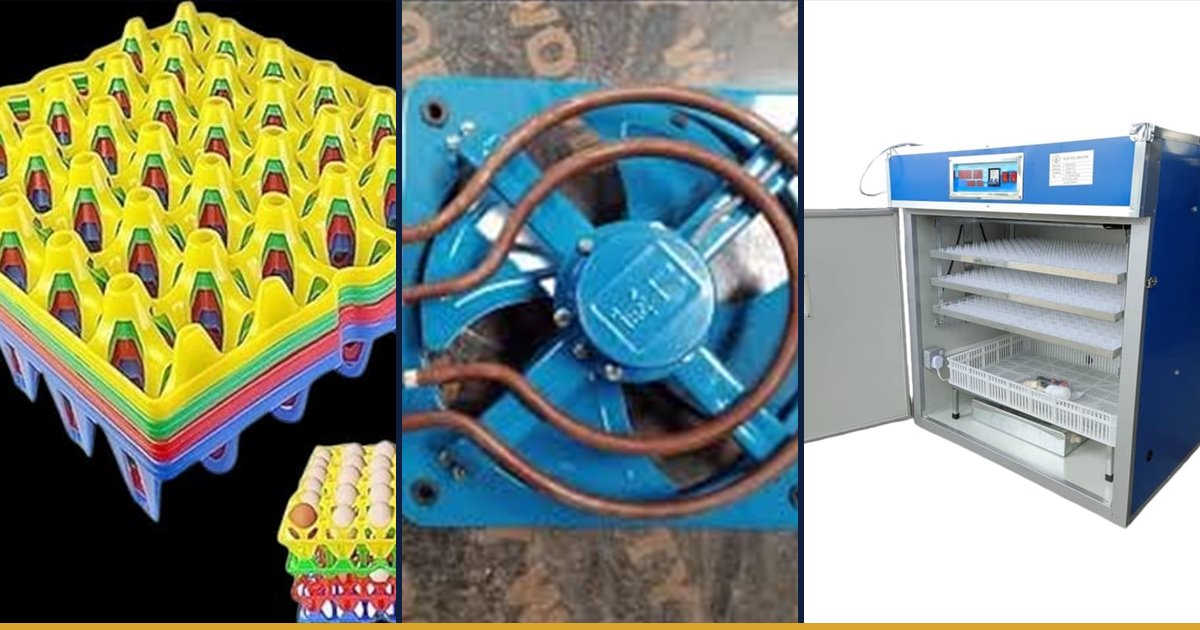
A machine that makes inspection painful will not be inspected, so candling belongs in the buying decision. Trays that slide out as a unit halve your open time. A viewing window lets you watch chick activity during lockdown without opening anything. Separate setting and hatching stages hand you a transfer day, a candling checkpoint you were going to pay for anyway. And a humidity reading you can trust is what turns air cell observations into a setting you can adjust with confidence.
Fuga stocks egg incubators from small tabletop units up to commercial capacities, and we keep incubator spare parts on the shelf, including controllers, sensors, heating elements and turning motors, because a hatchery that cannot replace a failed humidity sensor is running blind. Current prices for every size sit on our price list, and the figure shown there is the one that applies on the day you read it.
Key Takeaways
- Candle at day seven and day eighteen, with an optional day fourteen for humidity questions. Every extra opening costs heat the eggs recover slowly and humidity that leaves instantly.
- A clear egg was never fertile, which is a flock problem. A blood ring was fertile and died, which is a handling or incubation problem. Counted together, they tell you nothing.
- A live embryo has a dark centre with vessels branching out of it. A blood ring is a circle or crescent with nothing in the middle, and it means death around day two to day five.
- The air cell records water lost. Smaller than expected means the machine is too wet, so lower humidity. Larger means too dry, so raise it. Mark the boundary in pencil at day seven and day fourteen.
- The counts are the real output. Record clears, rings and cracks every batch, because a trend is the only evidence that a change worked.
Frequently Asked Questions
When should I candle chicken eggs?
Day seven and day eighteen do almost all of the useful work. Day seven separates infertile eggs from embryos that started and died, and by day eighteen you are handling every egg anyway to move it off the turner or into the hatcher. Add a day fourteen check only when settling a humidity question, and do not candle during the last three days, because opening the machine then removes the humidity the chick needs to escape the membrane.
What does a blood ring in an egg mean?
It means the egg was fertile and the embryo died, usually between the second and fifth day. Blood settles into the circular vessel at the edge of the vascular area, leaving a red ring or crescent with nothing in the middle. Because those eggs were fertile, the problem is not your breeding flock. Look instead at egg storage, transport shock, a setting temperature that ran high in the first days, and harsh disinfection.
Does candling harm the embryo?
Done properly, no. A cool white LED candler adds no meaningful heat in the few seconds an egg is against it. The harm comes from the handling around it: a tray left out for half an hour, shaking the egg for a better look, bacteria off unwashed hands, a dropped tray. Rotate rather than shake, sanitise between batches, and keep each inspection short.
My air cell looks too small at day fourteen. What do I change?
Lower the humidity. A small air cell means too little water has left the egg, and the usual cause is a machine running too wet. Uncorrected, the chick ends up surrounded by fluid it cannot absorb and either drowns at pipping or hatches wet, swollen and weak. The reverse holds as well: an air cell larger than expected means too much water has gone and humidity should be raised.
I cannot see anything through my dark brown eggs. What can I do?
Use a narrower, brighter beam pressed hard against the shell so light cannot leak round the edge, and work in a genuinely dark room rather than a shaded one. Candle from the side of the egg rather than the end, and let your eyes adjust first. If dark or speckled shells are a constant problem, candle a little later, around day ten, when the embryo and its vessels are big enough to read through.
Fuga supplies incubators, hatchery consumables and spares across our Eldoret, Nakuru, Nairobi and Coast branches, and we would rather you ran a small machine well than a large one blind. If your candling numbers are telling you something you cannot interpret, send the counts through our contact page or on WhatsApp and we will help you work out where the fault sits.