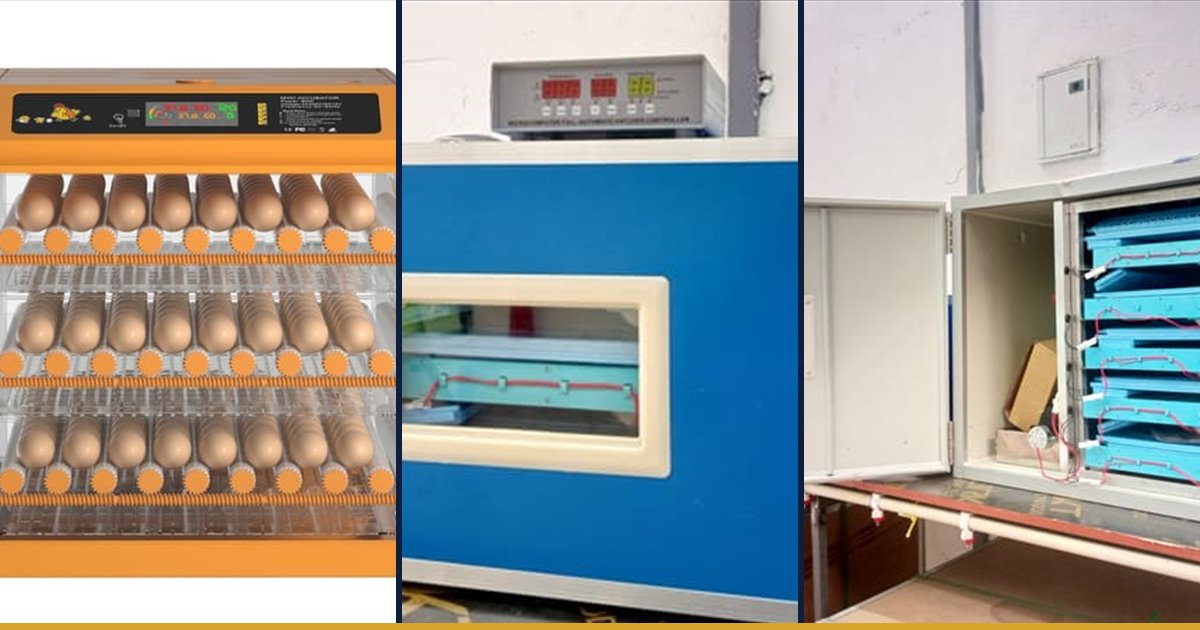
A farmer buys a 1056 egg incubator expecting, reasonably enough, something like a thousand chicks. What the machine actually delivers, run properly, is closer to 260 to 280 chicks a week. Nothing is faulty. The number on the box was never the number of chicks.
That gap is the single most common reason people buy the wrong size, and it is not the seller's marketing so much as a misunderstanding of how incubation cycles work. Get the arithmetic right and the size choice becomes obvious. Get it wrong and you either buy a machine that sits half empty or one that cannot feed the orders you already have.
This is the sizing decision, worked through properly. The detailed price pages for each size are linked as we go.
The number on the box is eggs set, not chicks sold
Capacity is setter capacity: how many eggs the machine holds at once. Three things stand between that and chicks you can sell.
First, incubation takes 21 days for chicken eggs, and that is fixed. Second, not every egg hatches. A well run small hatchery on good fertile eggs manages somewhere in the region of 75 to 85 per cent; poor egg storage, poor fertility or an unstable machine pulls that down fast. Third, and the one almost everyone misses: a full machine does not empty all at once unless you set it all at once.
Why the second number is a third of the first
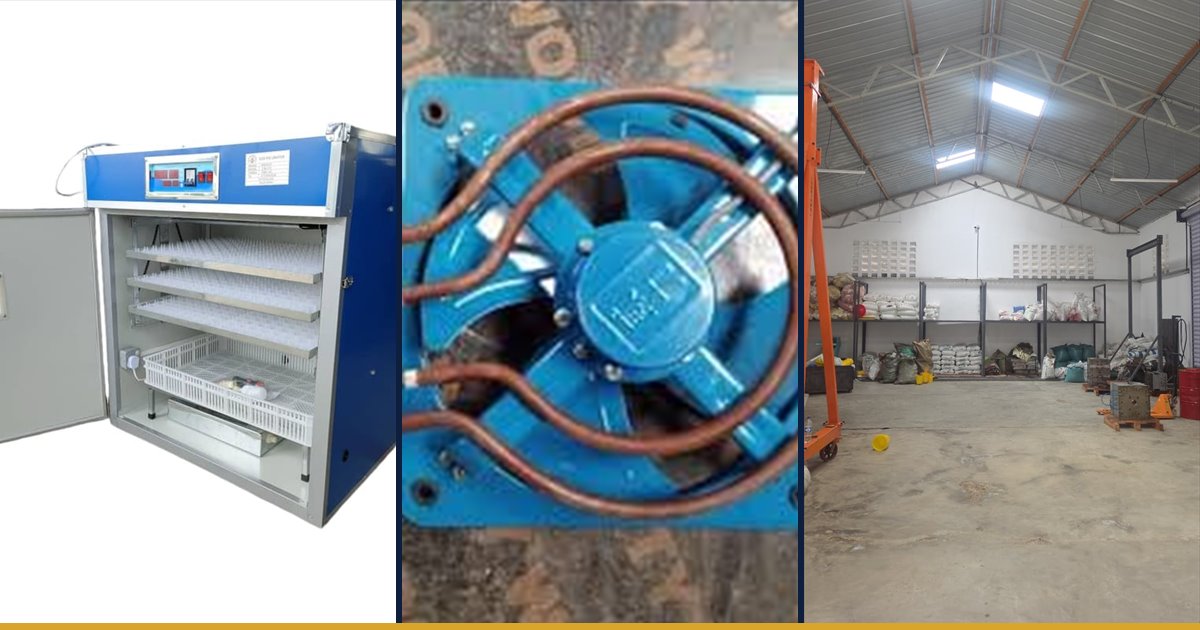
Look at how the machines are actually named on a stock list: 1056*352, 528*176, 1056*528. Those two numbers are setter capacity and hatcher capacity, and in the first two cases the hatcher is exactly one third of the setter. That is not a coincidence, and it tells you how the machine is meant to be run.
Eggs spend roughly days 1 to 18 in the setter, being turned, then move to the hatcher for days 19 to 21, where turning stops and humidity is raised. If you set a fresh batch every week, three batches are in the setter at any moment, at different ages, while a fourth is hatching. So each weekly batch is about a third of the setter, and the hatcher only ever needs to hold one week's worth.
So the useful figure is not capacity. It is capacity divided by three, multiplied by your hatch rate. On a 1056 setter at a realistic 78 per cent, that is about 275 chicks a week. On a 528, about 137. On a 350, about 91.
The sizing sum. Chicks you need per week, divided by your realistic hatch rate, multiplied by three, is the setter capacity to buy. Needing 200 chicks a week at 78% means 200 / 0.78 x 3, which is about 770, so a 1056 rather than a 528.
Work backwards from chicks you can actually sell
Run that sum on chicks you have a buyer for, not on the flock you hope to have. Day old chicks are perishable stock: they cannot be held while you look for a market, and the cost of brooding unsold chicks eats the margin the hatch earned.
If you do not yet know your weekly demand, buy small and be wrong cheaply. Moving up a size later is straightforward, and the small machine keeps earning as a dedicated hatcher once you do. Buying large first and discovering the market is half what you assumed is the expensive direction to be wrong in.
The size ladder, with real prices
Our incubators start from about KSH 4,125 and run to KSH 110,000. Roughly where the steps fall:
- 64 and 128 eggs, about KSH 10,000 and KSH 15,000. Home scale, testing the idea, or hatching for your own flock. Around 16 to 33 chicks a week if cycled. See 64 and 128 egg incubator prices.
- 210 to 264 eggs, KSH 24,000 to KSH 55,000 depending on build and whether a matched hatcher is included.
- 300 and 350 eggs, KSH 50,000 to KSH 55,000. The usual first serious step, roughly 78 to 91 chicks a week. See 300 and 350 egg incubator prices.
- 528 eggs, KSH 60,000 with a 176 hatcher, KSH 65,000 as a matched pair. About 137 chicks a week. See 528 egg incubator prices.
- 1056 eggs, KSH 75,000 with a 352 hatcher, KSH 90,000 with a 528, KSH 110,000 as a matched 1056 pair. About 275 chicks a week from the 352 configuration. See 1056 egg incubator prices.
Note the KSH 75,000 versus KSH 110,000 gap on the same 1056 setter. You are paying for hatcher capacity, which only earns its keep if you set more often than weekly. On weekly setting the 352 hatcher is the right buy and the larger one is idle capacity that still costs you power to heat.
Setter and hatcher, or one box doing both
Small machines do both jobs in one cabinet: you stop the turner at day 18 and raise humidity, and the same chamber hatches. That works, and it is why the entry machines are cheap.
It also means you cannot set a new batch while one is hatching, because the two need different conditions and a hatch makes a mess of down and shell fragments that you do not want blown over eggs at day 3. One box therefore means one batch every 21 days, not one a week, which cuts your output to a third of what a split setup gives from the same capacity.
That is the real argument for separate units, and it is covered properly in our guide to setters versus hatchers. Separate hatching baskets are inexpensive, around KSH 1,000 for 88 eggs and KSH 1,600 for 176.
Power is the requirement nobody budgets for
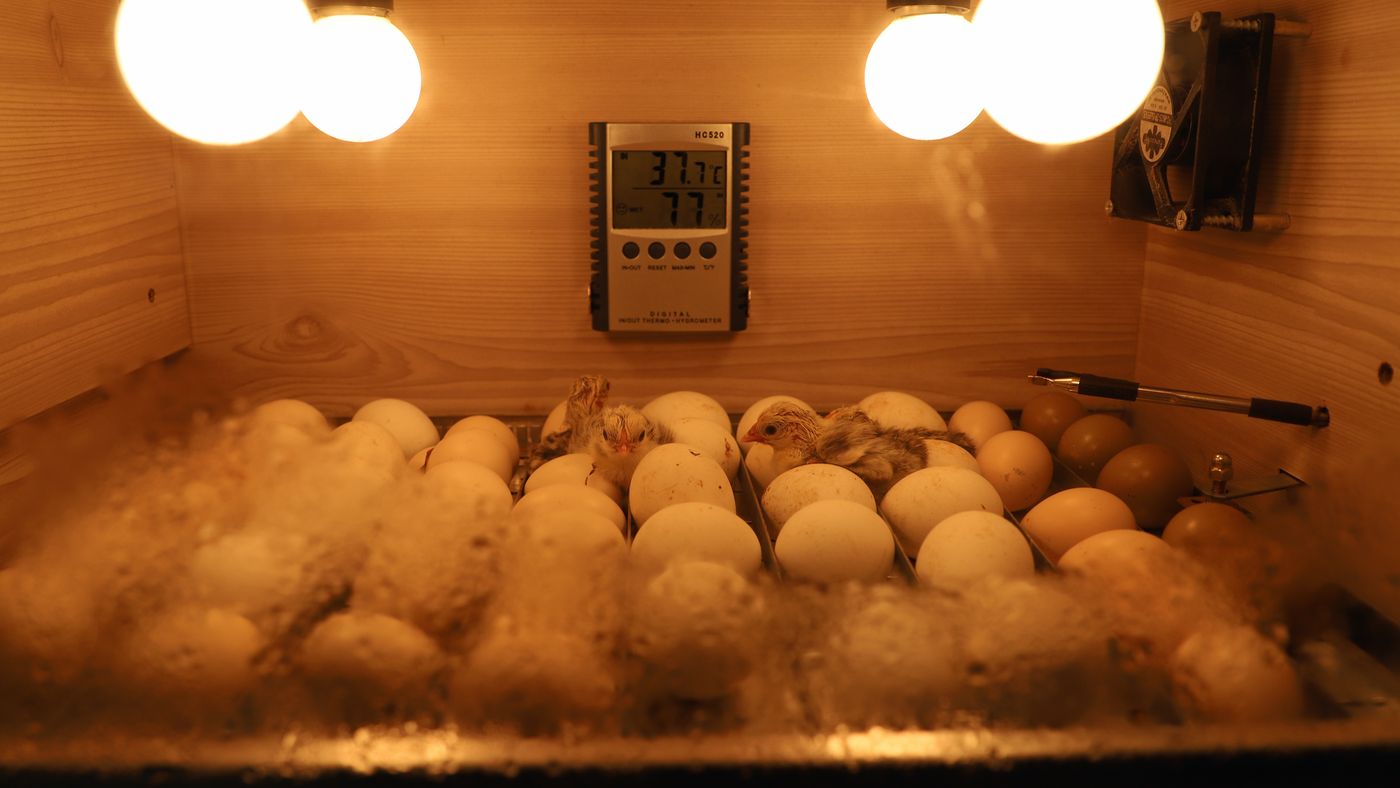
An incubator is a 21 day commitment to holding about 37.5 to 37.8 degrees. A long outage in the first week can cost you the batch, and unlike most farm equipment there is no catching up afterwards.
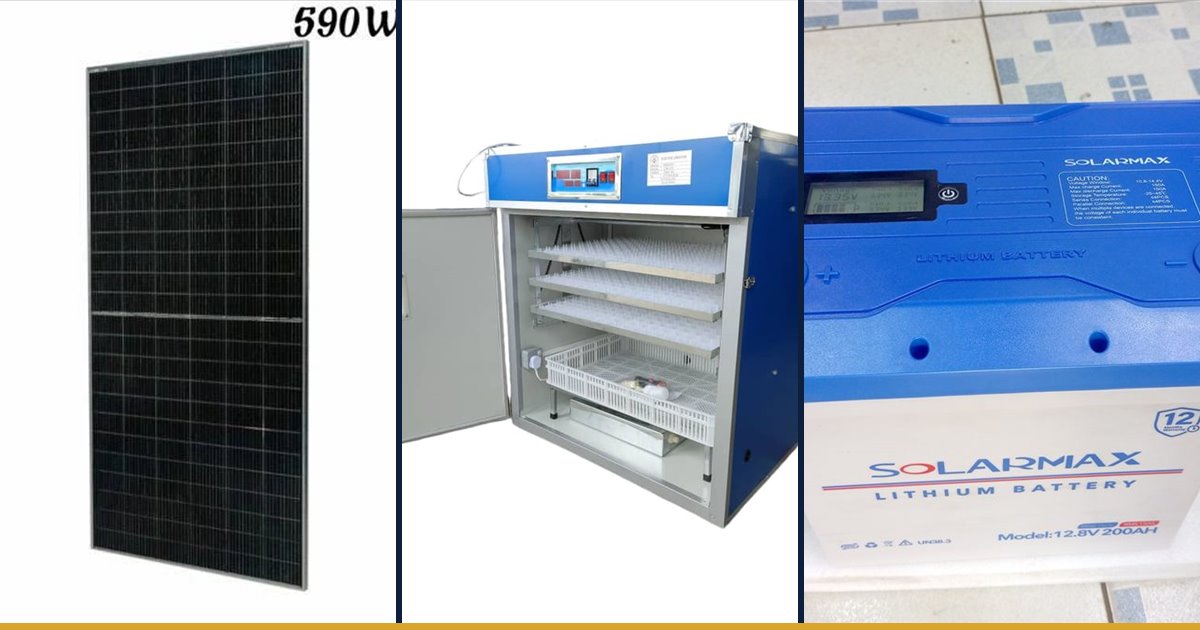
So ask about backup before you ask about capacity. A machine with good insulation holds temperature for a while unaided, which buys you time in a short outage. For anywhere with genuinely unreliable supply, read our assessment of solar incubators and what actually works before committing, and size any inverter for the heater's draw rather than its average.
Spare controllers are worth knowing about too, at around KSH 7,000 for a 210 egg unit and KSH 9,000 for a 350. The controller is the part that fails, and a spare turns a lost batch into an afternoon's repair.
Before you buy, ask three questions. What is the hatcher capacity, not just the setter? How long does it hold temperature with the power off? And what does a replacement controller cost? A supplier who answers all three is worth buying from.
The machine is not what decides your hatch rate
It is tempting to treat hatch rate as a property of the incubator. It mostly is not. Egg quality, fertility, storage before setting, turning and humidity management account for far more variation than the cabinet does.
Eggs held too long or too warm before setting lose hatchability before the machine is ever switched on. Humidity that is right for days 1 to 18 is wrong for the hatch, when it must be raised. Turning matters through the first 18 days and must stop after. None of that is about which machine you bought, and all of it is where the percentage points are. Our guide to improving hatch rates goes through each in turn.
And plan for what happens on day 21. Chicks need a brooder ready and warm before they hatch, not after, which our guide to chick brooding equipment covers. If this is heading towards a business rather than a sideline, start with starting a hatchery business in Kenya.
Key takeaways
- Capacity is eggs set, not chicks sold. The useful figure is capacity divided by three, times your hatch rate.
- Hatcher capacity is a third of setter capacity because three weekly batches overlap inside a 21 day cycle.
- A 1056 machine produces roughly 275 chicks a week, not 1,056.
- Size from chicks you have a buyer for. Day old chicks cannot be stored while you find a market.
- One combined box means one batch every 21 days, a third of what a split setter and hatcher delivers.
- Ask about power backup and the cost of a spare controller before you ask about capacity.
- Hatch rate is decided by egg quality, storage, turning and humidity far more than by the cabinet.
Frequently asked questions
How many chicks will a 528 incubator give me per week?
Setting weekly, about 176 eggs go into the hatcher each week, so roughly 137 chicks at a 78 per cent hatch. If you run it as a single combined unit rather than a split setter and hatcher, you get one batch of about 410 chicks every 21 days instead, which is fewer chicks per week overall.
What temperature and humidity should I run?
Around 37.5 to 37.8 degrees through the whole cycle in a forced air machine. Humidity is the part that changes: moderate through days 1 to 18, then raised for the hatch so the membrane does not dry and trap the chick. Follow the manufacturer's figures for your specific machine, and watch air cell development rather than trusting the dial alone.
Can I hatch duck or turkey eggs in a chicken incubator?
Yes, but the cycle is longer: both duck and turkey eggs run about 28 days against 21 for chicken, and Muscovy ducks about 35. The tray spacing also differs because the eggs are larger, so capacity drops. Do not mix species in one batch, because they will not come off at the same time.
Is a second-hand incubator a reasonable buy?
Only if you can see it run and hold temperature for several hours before you pay. The chassis rarely fails; the controller, heating element and turning motor do. Given a replacement controller is KSH 7,000 to KSH 9,000, a cheap machine with a dying controller is not the bargain it appears.
Ready to equip your farm or business?
Tell us how many chicks a week you have buyers for and how reliable your power is, and we will work the sizing sum with you and recommend one machine rather than a price list. We stock the full incubator range from 64 eggs upward, along with hatching baskets, spare controllers and brooding equipment, all with a minimum one year warranty.