Most small pig keepers in Kenya make their money in one stretch of the pig's life: the months between buying or weaning a young pig and selling it to a butcher or processor. Over those months the pig eats most of the feed it will ever eat, and feed is by far the largest cost on almost every pig farm. A pig that grows steadily on clean water and the right ration reaches selling weight sooner and on less feed than one that stalls in a wet, crowded or hot pen. The difference is profit or loss.
This guide follows a group of weaners from the day they arrive to the day they are weighed and sold. It covers choosing weaners, setting up the pen, feeding by stage, water, weighing, keeping disease out and selling by weight. Figures are general guidance from extension practice and vary with breed, feed and climate; your county livestock officer or vet can help you adjust them.
Start With the Right Weaners
Weaners in Kenya are commonly sold at about six to eight weeks old, though farms that wean earlier sell younger pigs. Buy from a farm you can visit, where the sows look healthy and the pens are clean. Choose pigs that are lively, bright eyed, with clean tails and no diarrhoea staining, no coughing, no limping and no swollen joints or navels. Pigs from the same litter, or at least the same farm, of similar size settle together with less fighting.
Bring them home in a clean, well ventilated crate or vehicle in the cooler part of the day, with shade. Put them in a pen that has been cleaned, disinfected and left empty, away from your other pigs for the first couple of weeks, and watch them closely. Ask the seller what feed they were on and keep them on it for the first days, then change gradually over about a week. A sudden change of feed on top of the stress of moving is a common cause of scouring in new weaners.
The Pen: Dry, Shaded and Not Crowded
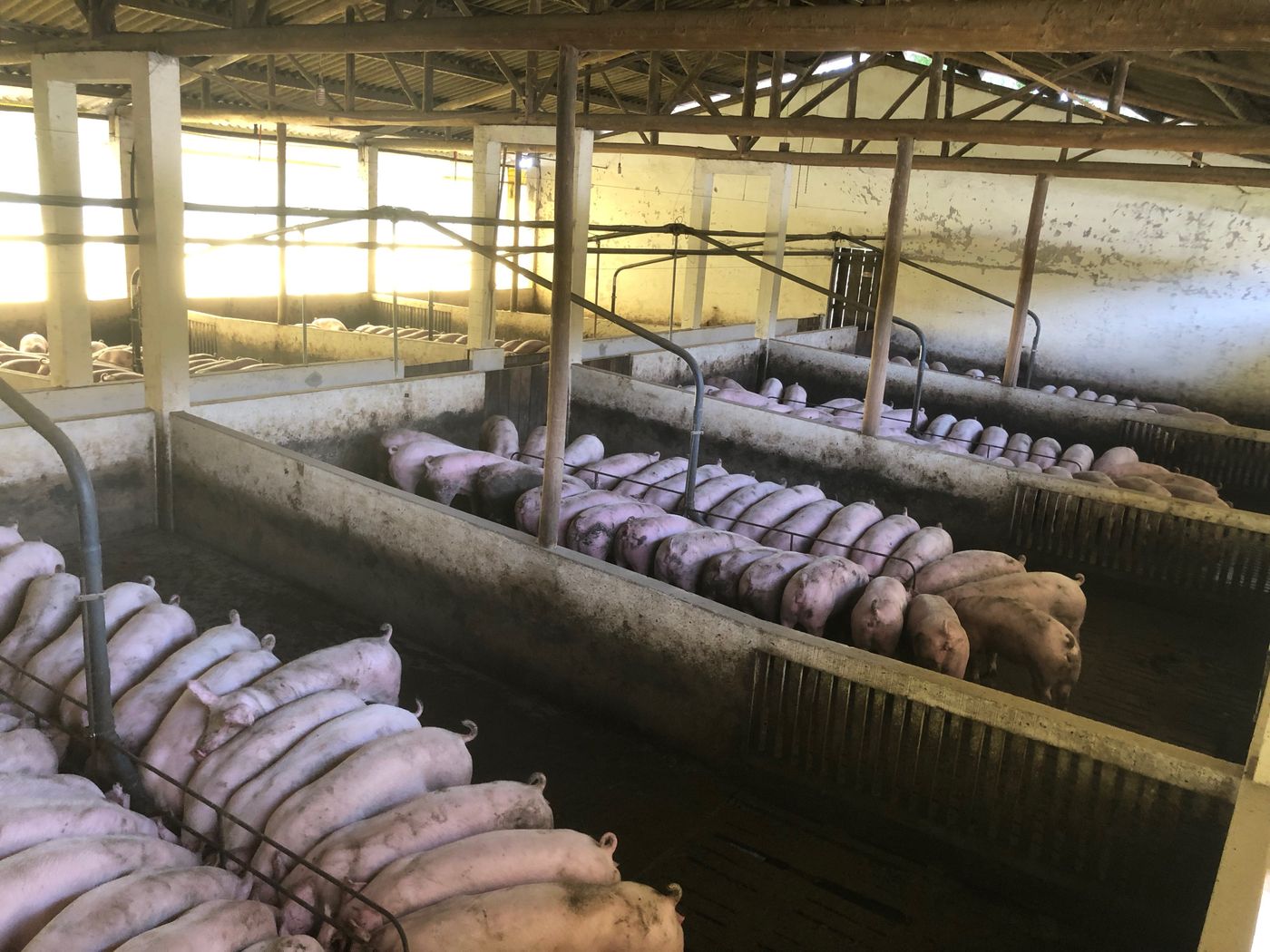
Pigs do not sweat, so heat is a real problem in much of Kenya, and wet, cold floors are a problem in the highlands during the short rains. A good fattening pen has a roof with an overhang that keeps rain off the floor, walls or curtains that can be opened for air and closed against wind, a solid floor with a slope towards a drain, and a dry lying area separate from the dunging area. Pigs naturally dung away from where they sleep and eat if they have the space to do so.
Space allowance for finishing pigs is commonly given as roughly 0.7 to 1 square metre per pig, depending on final weight, with more needed in hot areas. Crowded pigs fight, bite tails, grow unevenly and get sick more often. Plan the pen for the size the pigs will be at the end, not the size they are when they arrive, or plan to split the group as they grow. Our pig farming equipment guide covers pen layout, floors and drainage in more detail.
Feeding by Stage
A growing pig's needs change. Young pigs need feed richer in protein to build muscle and frame. As they get heavier they need relatively more energy and less protein, and feeding a starter ration to finishing pigs wastes money. Commercial feeds in Kenya are usually sold as creep, weaner, grower and finisher rations, and home-mixed rations follow the same stages.
Many smallholders mix their own pig feed or use a combination of commercial feed and farm products such as maize germ, sweet potato vines, vegetables and kitchen waste. Home mixing can save money but only if the ration is balanced and the ingredients are clean and dry. Mouldy maize or bran is dangerous for pigs, because some moulds produce toxins that cause poor growth, illness and abortions in sows. Store feed off the floor in a dry, rat-proof place, as explained in our guide to feed storage pests and moulds, and have any home ration checked by an extension officer or nutritionist.
Feeders matter more than most people think. Pigs root and play with feed, and an open trough on the floor can lose a large share of the feed to trampling and dung. A feeder with a lip, a sturdy steel piglet feeder for young pigs, or a self-feeder that releases a little at a time keeps feed clean and in front of the pigs. Make sure every pig in the group can eat at once or that there is always feed available, so the smaller pigs are not pushed away.
Water: The Feed Nobody Weighs
A pig that cannot drink as much as it wants will not eat as much as it should, and its growth slows. Pigs drink more in hot weather and more on dry feeds. Nipple drinkers keep water clean and save labour, but they must be set at the right height for the size of the pigs, raised as the pigs grow, and checked daily for blockages and flow. A blocked nipple in a hot pen can cut growth for a whole group before anybody notices. Where you use troughs, clean them every day, because pigs foul water quickly.
Heat, Cold and the Short Rains
Growing pigs eat less when they are too hot, and they burn feed just to keep warm when they are cold and wet. Both cost growth. In hot lowland areas, signs of heat stress include fast, open-mouthed breathing, pigs lying stretched out apart from each other, and pigs wallowing in their own dung and water to cool down. Good roof height, shade, open sides for air movement and plenty of cool water help. Some farmers sprinkle the floor or the pigs lightly in the hottest hours, but the floor must be able to drain and dry, or you trade heat stress for wet-floor problems.
In the highlands during the short rains, the risk is the opposite. Cold nights, driving rain and draughts at pig height make pigs huddle, cough and lose condition. Close the windward side at night, keep the lying area dry with clean bedding where your system allows, and fix leaks in the roof and gutters before the rains are at their heaviest. A thermometer in the pen tells you more than guessing.
Weigh Every Two Weeks
You cannot manage growth you do not measure. Weighing the pigs every two weeks, or at least once a month, tells you whether the ration and the pen are working, which pigs are falling behind, and when the group will reach selling weight. A platform scale with a crate or pen gate is the most accurate. A weighing tape around the chest gives a good estimate and is cheap and quick; our weighing tape guide explains how to use one well, and our farm scales guide covers checking a scale for accuracy.
Weighing also lets you work out feed conversion, the number of kilogrammes of feed needed for each kilogramme of liveweight gain. You do not need a laboratory. Weigh the feed bags in, weigh the pigs at the start and end of a period, and divide.
In the example, both pens ate the same feed, but pen B turned it into 20 kilogrammes less pig. Every one of those kilogrammes was paid for in feed. When feed conversion gets worse, look first at water, crowding, wet floors, heat, feed wastage and illness before changing the ration.
Health: Prevention Is Most of It
Clean, dry pens, clean water, enough space and a stable group prevent most growth problems. Watch the pigs at every feed: a pig that does not come to the trough, coughs, scours, limps or lies apart from the others needs attention that day. Worms, mange and lice slow growth quietly; ask your vet for a deworming and parasite control programme suited to your farm, and follow the product label and withdrawal period before slaughter. Castration of male pigs, if your buyer requires it, should be done young by a vet or trained person. Keep visitors, traders and their vehicles away from the pens, and use a footbath and dedicated boots, as described in our farm biosecurity guide.
Selling by Weight
Pigs in Kenya are sold to processors, butchers and traders, and buyers often want pigs within a certain weight band; pigs that are too light or too fat may be paid less per kilogramme. Agree on the weight range and price basis with your buyer before the pigs are ready, and weigh them yourself before the buyer arrives so you know what you are selling. If you are offered a price per carcass, remember that the carcass weighs much less than the live pig; dressing percentage for pigs is commonly given as roughly 70 to 75 percent, and it varies with weight and how the carcass is dressed. Comparing a liveweight offer with a carcass offer is simple arithmetic once you know the weight.
Keeping finished pigs for extra weeks after they reach the target weight usually costs feed that buys mostly fat, which many buyers do not want. Plan the sale for when the group reaches target, and line up the next batch of weaners so the pen does not stand empty longer than the cleaning and rest period.
Fattening Checklist
- Weaners from a known farm, lively and of even size.
- Clean, rested pen with a dry lying area, shade and a drain.
- Enough space for the pigs' final size.
- Ration matched to stage, changed gradually, stored dry.
- Feeders that limit waste; water always available and checked daily.
- Weigh every two weeks and track feed per kilogramme gained.
- Vet-guided parasite control; no swill; strict visitor rules.
- Buyer and weight band agreed before the pigs are ready.
Pig Equipment, With Prices
These prices are from the Fuga price list at the time of writing; check the site or call a branch for current prices and stock.
| Item | Stock code | Price |
|---|---|---|
| PIGLET FEEDER LIGHT GAUGE(78G) | 7117 | KSh 1,800 |
| PIGLET FEEDER HEAVY GAUGE(1100G) | 7118 | KSh 2,200 |
| NIPPLE - FEM P1- PIG | 6306 | KSh 250 |
| NIPPLE - FEM P2 PIG | 6307 | KSh 300 |
| EAR TAGS-PIG | 6197 | KSh 15 |
| WEIGHING TAPE | 6432 | KSh 800 |
| 300KGS WEIGHING SCALE | 6593 | KSh 8,500 |
Buy good weaners, keep them dry, cool and uncrowded, feed by stage, never let the water run out, and weigh them often. For feeders, pig nipples, tags and a weighing scale, browse our livestock and poultry equipment, visit any Fuga branch in Eldoret, Nairobi or Nakuru, or WhatsApp 0716 961 018. If you plan to mix your own feed, our comparison of hammer mills and disc mills is a good place to start.
Key Takeaways
- Buy lively, even-sized weaners from a farm you can visit, keep them apart at first and change their feed gradually.
- Keep pens dry, shaded and uncrowded; space for finishing pigs is commonly given as roughly 0.7 to 1 square metre per pig.
- Feed by stage, from weaner to grower to finisher, store feed dry and never feed mouldy grain or uncooked swill.
- Water drives feed intake: set nipple drinkers at the right height, raise them as pigs grow and check flow daily.
- Weigh every two weeks and work out feed eaten per kilogramme gained to catch problems early.
- Agree the weight band and price basis with your buyer before the pigs are ready, and weigh them yourself before selling.
Frequently Asked Questions
At what age are weaners usually sold in Kenya?
Weaners are commonly sold at about six to eight weeks old, though farms that wean earlier may sell younger pigs. Choose lively pigs of similar size with clean tails, no cough and no limp.
How much space does a fattening pig need?
Space for finishing pigs is commonly given as roughly 0.7 to 1 square metre per pig, depending on final weight, with more in hot areas. Plan the pen for the pigs' size at the end, not when they arrive.
What is feed conversion and how do I measure it?
It is the kilogrammes of feed eaten for each kilogramme of liveweight gained. Weigh the feed used over a period, weigh the pigs at the start and end, and divide feed eaten by weight gained. A rising figure means something in the pen or the ration needs attention.
Can I feed kitchen waste to pigs?
Never feed uncooked swill or pork scraps, because they can spread African swine fever, which has no vaccine or cure. Ask your county veterinary office about safe handling of any food waste, and make sure the main ration is balanced.
How do I compare a liveweight price with a carcass price?
Weigh the pig first. The carcass weighs less than the live pig; dressing percentage for pigs is commonly given as roughly 70 to 75 percent, varying with weight and how the carcass is dressed. Multiply liveweight by the dressing percentage to estimate carcass weight and compare the two offers.