Day-old chicks sell. In most parts of Kenya there is steady demand, buyers pay on collection, and the product turns over in three weeks rather than three months. That combination makes hatching look like an easy business, and it is the reason a lot of people buy an incubator and rather fewer people are still hatching two years later.
The ones who last are not the ones who bought the biggest machine. They are the ones who solved egg supply, protected themselves against power failure, and built demand before they built capacity. This page is about doing it in that order.
Start With the Buyer, Not the Machine
Chicks are perishable in the commercial sense. You cannot store them until a buyer appears. A batch hatches on a particular day, and from that day they need heat, feed, space and attention, all of which cost money while you look for somebody to take them.
So the first work is not equipment. It is finding out who actually buys chicks near you, what breeds they want, what they currently pay, when they want them, and how many. Talk to the agrovets, the existing keepers, the groups. Find out who currently supplies them and what those suppliers get wrong, because reliability is usually the gap. A hatchery that delivers the promised number on the promised day beats one that occasionally has more chicks.
If you cannot name people who will take your first three batches, you are not ready to buy a machine.
Egg Supply Is the Business
This is where hatcheries succeed or quietly fail, and it gets far less attention than the incubator does.
Your output is capacity multiplied by fertility multiplied by hatchability. You control capacity by writing a cheque. Fertility and hatchability you have to earn, and fertility is decided entirely before the egg reaches your machine.
Consider what a drop in fertility does. A full 528 machine at 85 per cent fertility with a good hatch gives you somewhere around 350 to 450 chicks. The same machine at 65 per cent fertility gives you far fewer, for identical electricity, identical three weeks and identical labour. Nothing about your machine changed. Somebody's cockerel ratio slipped, or eggs sat in the sun at a collection point.
You have two routes. Keep your own breeding flock, which gives you control over cockerel ratio, nutrition, collection frequency and storage, at the cost of feeding birds that are not themselves the product. Or buy hatching eggs, which is cheaper to start but means your business rests on somebody else's management.
If you buy in, agree the terms explicitly rather than assuming them: cockerel to hen ratio of roughly one to eight or ten, collection at least twice daily, storage at 15 to 18 degrees pointed end down, eggs delivered within seven days of lay, and never washed. Most Kenyan hatching-egg problems come from eggs that were fine when laid and were then left in a nest all afternoon, or washed, or carried in a hot vehicle.
Choosing the Machine
Two questions matter more than capacity.
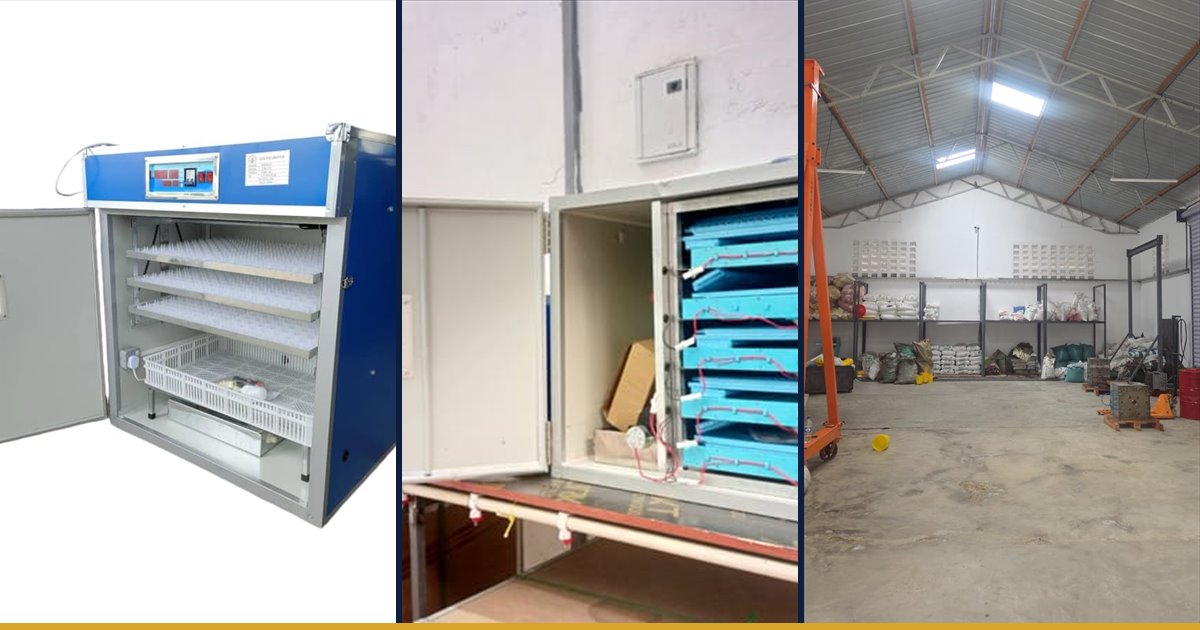
Can it set and hatch separately? This decides your annual output more than the size does. A machine that sets and hatches in the same space must be emptied between batches, giving roughly one batch a month. With a separate hatcher, the setter stays permanently loaded and you set weekly, roughly tripling annual throughput from the same cabinet. Our guide to setters versus hatchers explains why, and it is the single most useful thing to understand before buying.
What size do your buyers actually need? Work backwards from committed weekly orders, not from ambition. A machine running half empty costs the same in electricity, attention and three weeks as a full one.
A sensible progression for most people: learn on a 64 or 128, move to the 210 to 352 class as demand builds, then the 528 once you are selling out, and the 1056 class when you are turning orders away. At each step, keep the old machine as your hatcher. It is already paid for and it converts into the thing that triples your output.
What Else the Money Has to Cover
Budget roughly as much again as the incubator. People who budget only for the machine get caught.
Backup power, sized properly. Not optional. One lost batch costs the eggs, three weeks and the customers you had promised. Measure the machine's real consumption, decide the outage length you actually face, and size battery and inverter to match. Our guide to solar and backup power for incubators covers the method, and our solar range covers the components.
A dedicated room. Stable temperature, clean, ventilated, and separated from any poultry houses. A hatchery inside a poultry house is a disease problem with a date on it.
Brooding capacity. Chicks need heat from the moment they hatch, whether they are collected that day or three days later. Buyers are late. Plan to hold chicks warm and fed, or you lose them and your reputation together.
Trays, spares and instruments. Setter and hatcher trays, a spare controller, sensor, turning motor and fan, plus an independent thermometer and hygrometer that do not belong to the machine. We stock incubator spares for exactly this reason: at hatchery scale a failed component is a lost batch, not an inconvenience.
Chick handling. Somewhere clean and warm to take off, count, sort and box, plus transportation crates.
Running It Week to Week
A hatchery is a calendar business. Everything is dated and everything is predictable, which is precisely why customers can rely on it.
For each batch: set day, transfer to hatcher at day eighteen, hatch at day twenty-one, clean. Candle at day seven and count the clears, because that single number tells you whether a poor result was a fertility problem or an incubation problem, and the fixes are entirely different. Candle again at transfer and discard dead embryos rather than moving them into the hatcher where one rotten egg can spoil a basket.
Clean and disinfect the hatcher after every hatch without exception. Twenty minutes, and it protects everything else.
Keep records for every batch: date set, number set, egg source, clears at day seven, transfer count, hatched, and any incident such as a power cut. After a few cycles these records describe your machine, your climate and your suppliers better than any guide can. Our guide on diagnosing hatch failures shows how to read them, including what the unhatched eggs tell you.
The Realistic Numbers
We are not going to publish a profit projection, because the figures that matter, your egg cost, your chick price, your electricity and your local demand, vary far too much across Kenya for a national number to mean anything. Anyone who shows you a confident countrywide profit table is selling you something.
What we can tell you is the shape of it. Build your own projection from: eggs per batch, your realistic fertility and hatchability rather than the machine's headline capacity, batches per year given your setting arrangement, your actual local chick price, and running costs including electricity, labour, feed for held chicks and equipment depreciation. Then reduce it, because your first several batches will underperform while you learn.
The businesses that work are usually the patient ones: a modest machine, filled reliably, hatching consistently, growing capacity only when the order book demands it.
Talk to Us Before You Buy
Tell us how many chicks you have buyers for and how often, where your eggs will come from, what your power situation is and what space you have. We will tell you what actually fits, and if that is a smaller machine than you were planning to buy, we will say so. We stock incubators, hatchers, trays, controllers and spares across all six branches, and we would rather you succeed and come back than buy too much once.
Key Takeaways
- Chicks cannot be stored until buyers appear. Find who buys, what breeds, what price and when, before you buy a machine.
- Reliability is the product. Delivering the promised number on the promised day beats occasionally having more chicks.
- Fertility is decided entirely before the egg reaches your machine, and it moves your output more than capacity does.
- Whether the machine sets and hatches separately affects annual output more than its size.
- Budget roughly as much again as the incubator for power backup, a dedicated room, brooding, trays and spares.
- Build your own projection from local prices. Any confident countrywide profit table is selling you something.
Frequently Asked Questions
How do I start a hatchery business in Kenya?
Start with demand, not equipment. Find out who buys chicks near you, what breeds they want, what they pay and when, and secure buyers for your first few batches. Then solve egg supply, either with your own breeding flock or a written arrangement with breeders. Only then choose a machine sized to committed orders, and budget roughly as much again for backup power, a dedicated room, brooding and spares.
Is a hatchery business profitable in Kenya?
It can be, but the figures that decide it, your egg cost, local chick price, electricity and demand, vary far too much across Kenya for any national number to be meaningful. Build your own projection from eggs per batch, realistic fertility and hatchability rather than headline capacity, batches per year given your setting arrangement, and real running costs. Then reduce it, because early batches underperform while you learn.
What size incubator should I start a hatchery with?
Work backwards from committed weekly orders rather than ambition, because a half empty machine costs the same to run as a full one. A sensible progression is learning on a 64 or 128, moving to the 210 to 352 class as demand builds, then a 528 once you sell out, then the 1056 class when you turn orders away. Keep each old machine as your hatcher.
Where do hatching eggs come from?
Either your own breeding flock, which gives you control over cockerel ratio, nutrition, collection and storage, or bought in hatching eggs, which is cheaper to start but rests your business on somebody else's management. If you buy in, agree terms explicitly: a cockerel to hen ratio around one to eight or ten, collection at least twice daily, storage at 15 to 18 degrees pointed end down, delivery within seven days of lay, and never washed.
What happens if the power fails at a hatchery?
A full cabinet cools slowly and usually survives a few hours, but a long outage during setting loses most of the batch along with the eggs and three weeks. Backup power is not optional at hatchery scale. Measure the machine's real consumption, decide the outage length you actually face, and size battery and inverter to match rather than guessing.
How many batches a year can a hatchery run?
It depends entirely on whether you can set and hatch separately. A machine doing both in the same space must be emptied between batches, giving roughly one batch a month. With a separate hatcher the setter stays permanently loaded and you set weekly, roughly tripling annual throughput from the same cabinet without buying a bigger setter.