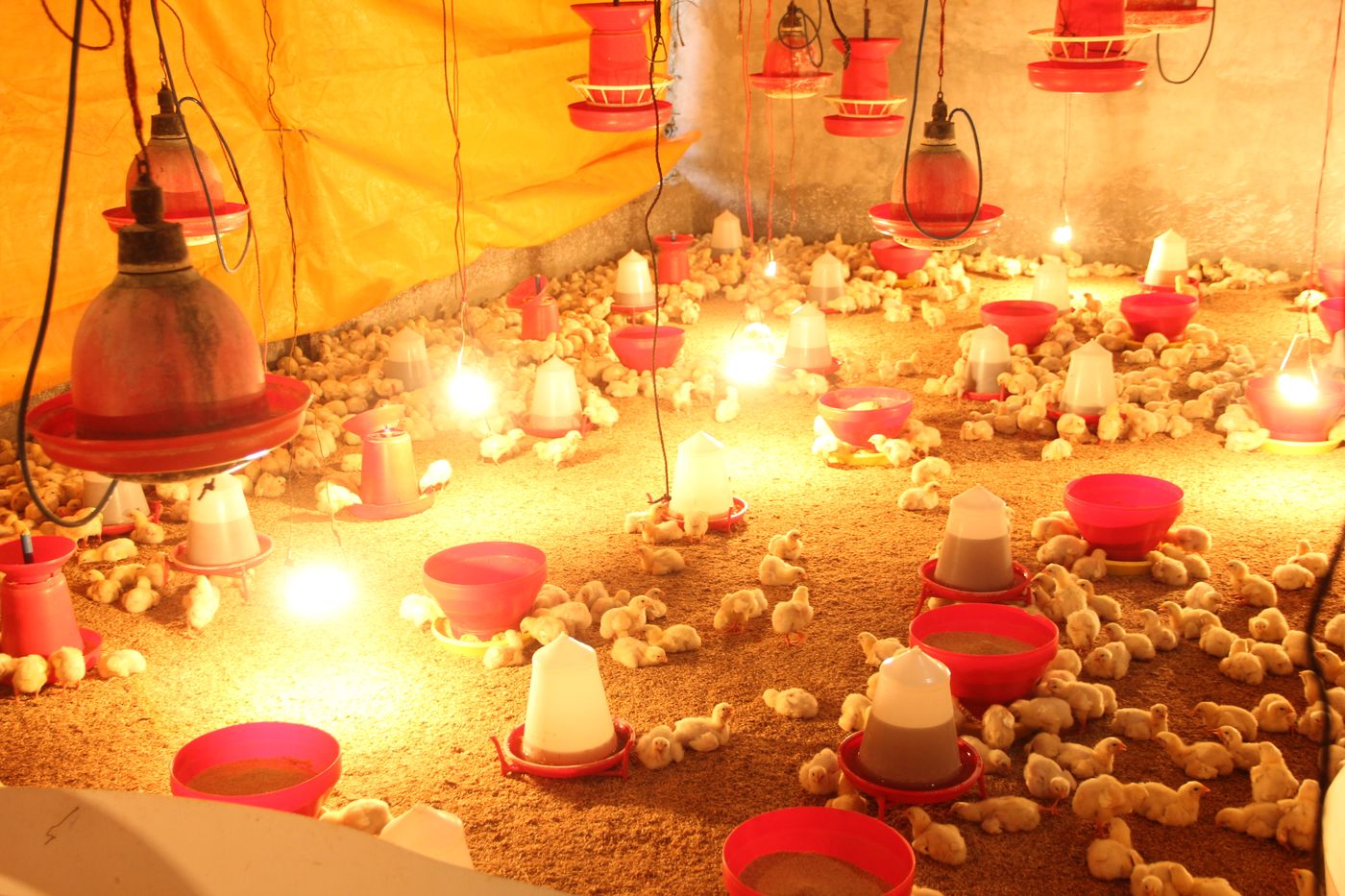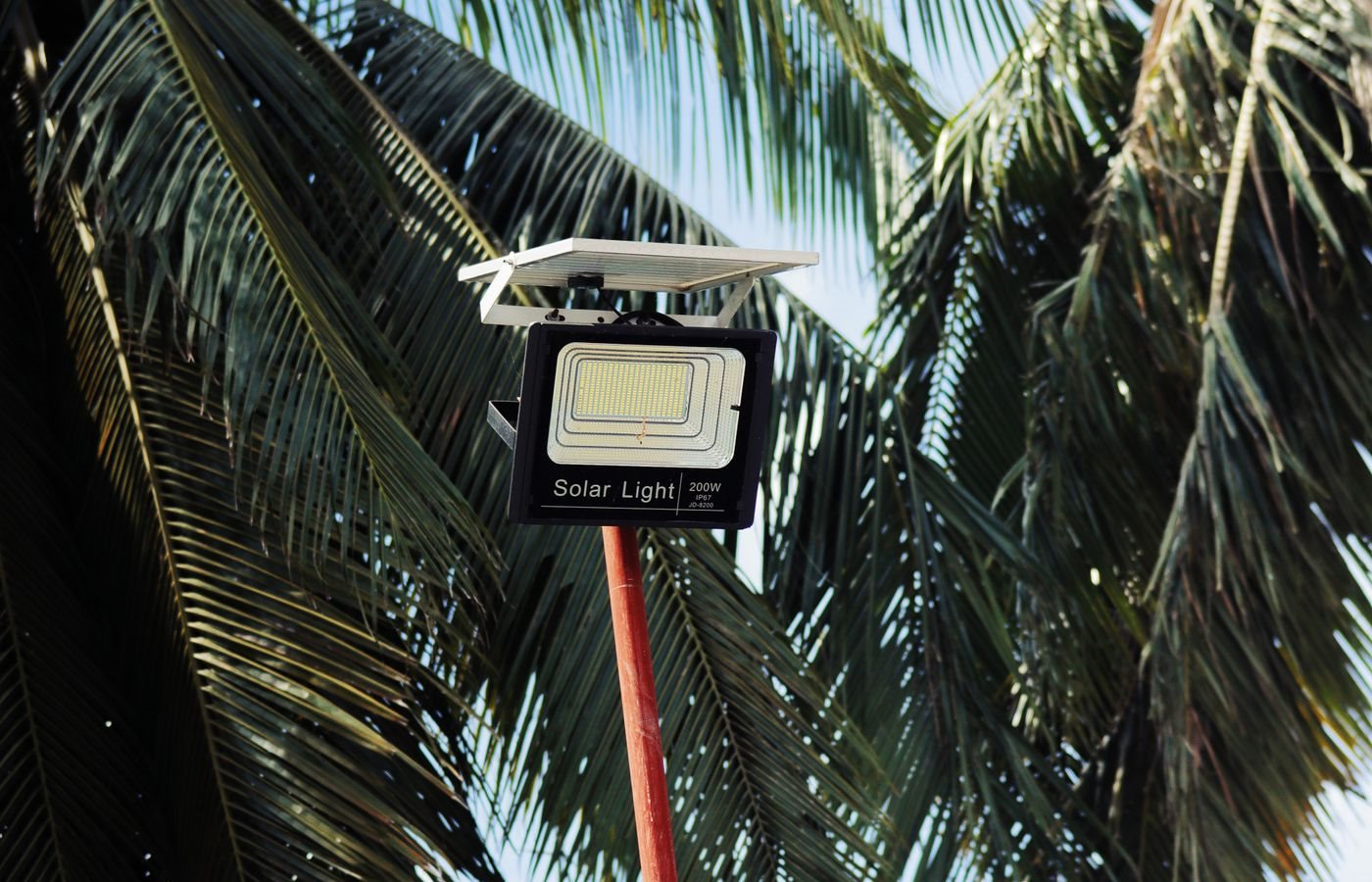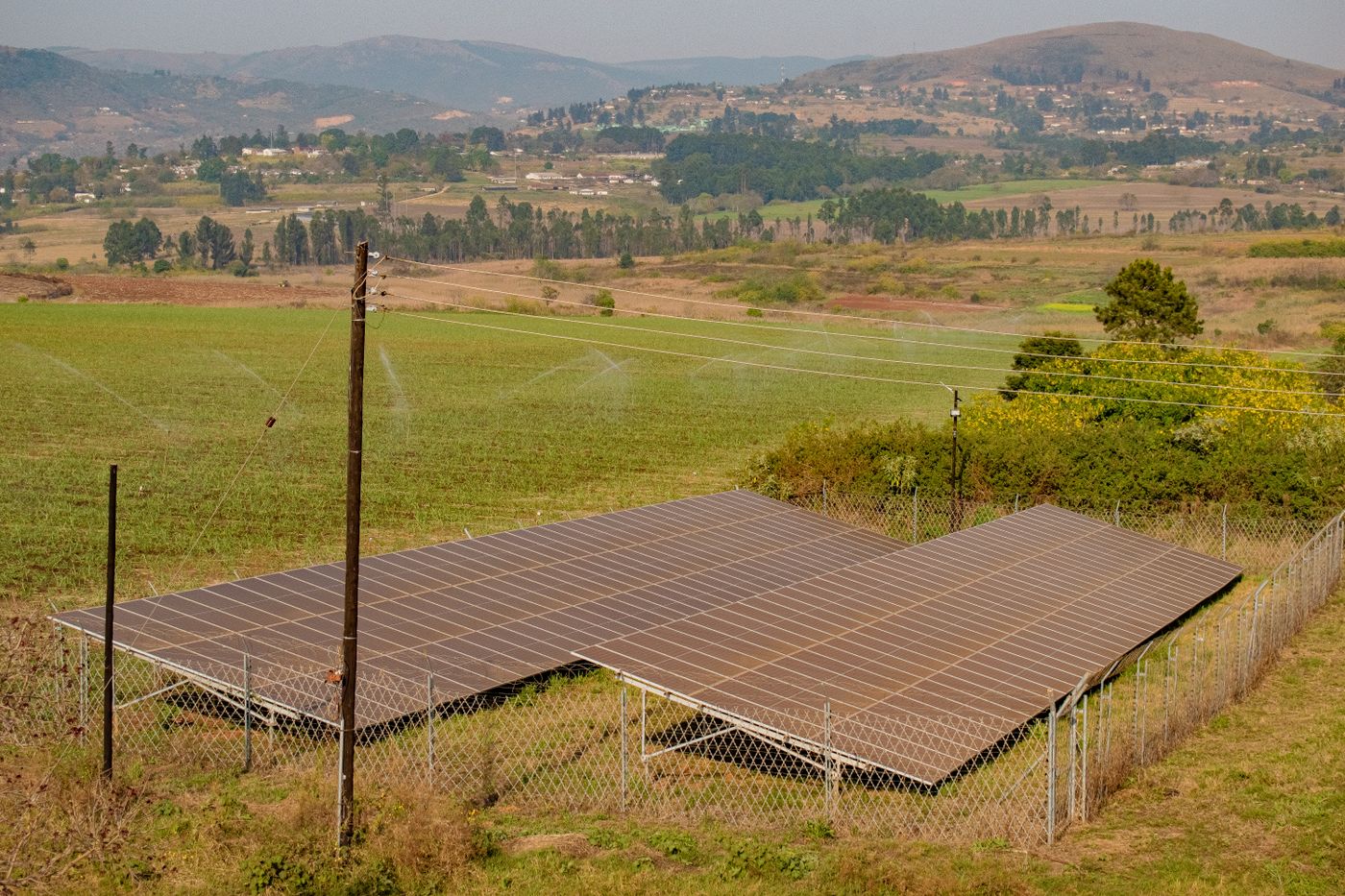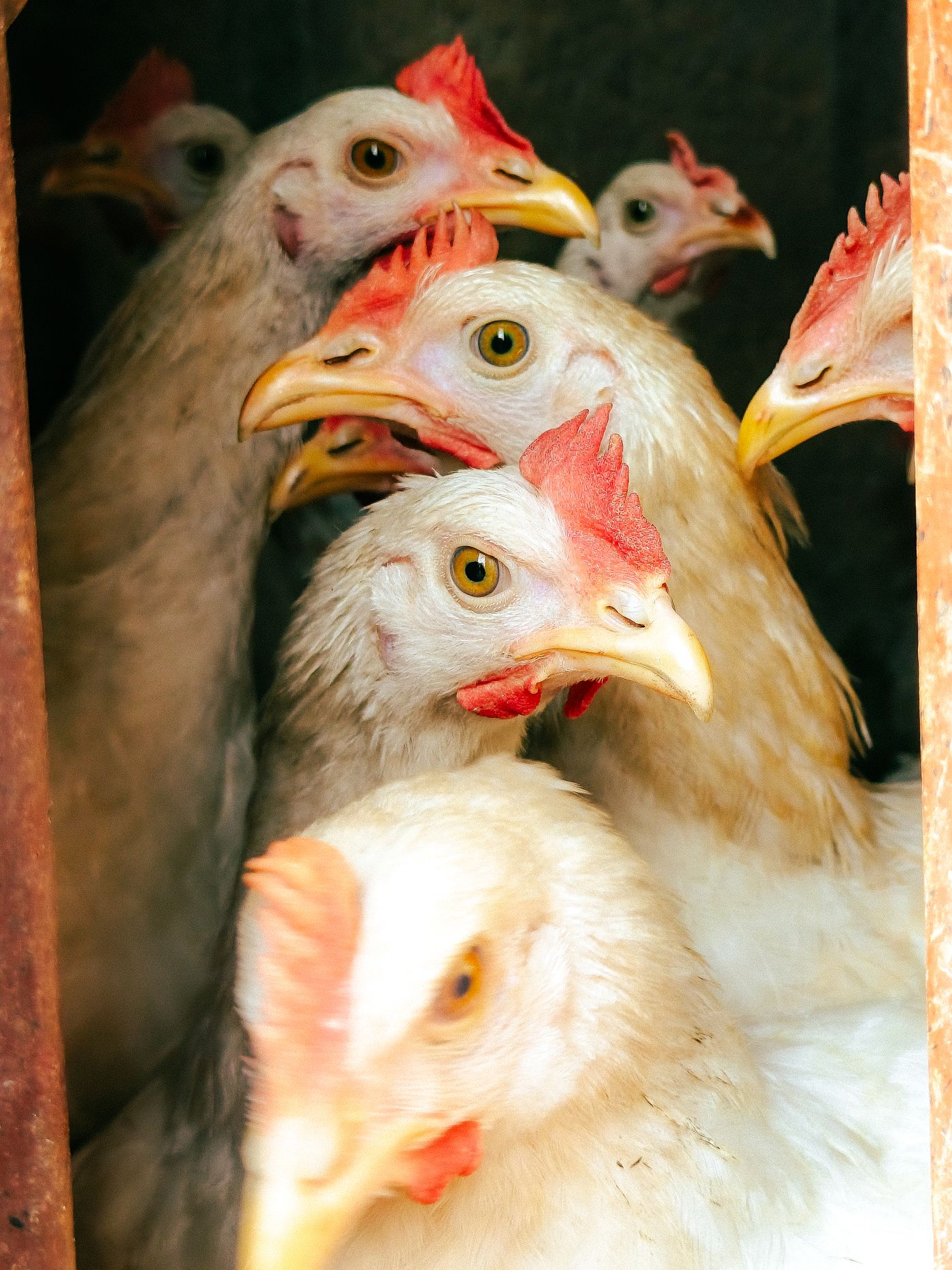
A layer farmer near Nakuru wired a single bright bulb in the middle of her poultry house, ran it from a small solar kit and set it to come on at four in the morning. Production still dipped. The hens near the bulb were fine; the ones in the far corners were standing in near darkness, and on cloudy mornings in the short rains the battery gave out before sunrise. The light was on the timer. It was not reaching the birds.
Solar lighting for poultry houses and other farm buildings is a design job, not a shopping trip. You need enough light at the birds, spread evenly, for the right number of hours, every single day, including the grey weeks. Get the numbers right and a small, well chosen solar system does it for years with no power bills and no blackouts.
Our guide to the poultry lighting programme explains why birds need the light, and our guide to solar security lighting covers floodlights outside. This guide is about designing the indoor system: how bright, how many lamps and where, how many hours, and how big the battery and panel must be, with a worked example you can copy.
Start With How Much Light the Birds Need
Light for birds is measured in lux, the amount of light falling on a surface. It is light at bird height that matters, not the wattage on the box. Breeders' management guides give targets, and they differ by type of bird and stage.
A Hy-Line technical bulletin recommends about 15 lux during rearing and 20 to 30 lux during lay, and stresses keeping intensity consistent between rearing and laying houses. Broiler guidance commonly calls for brighter light in the first week, around 25 lux, so chicks find feed and water, then dimmer light of about 5 to 10 lux. Breed guides differ, so use the one for your birds.
Kenya sits on the equator, so natural day length stays close to 12 hours all year. Laying flocks are usually given extra light to reach a longer day, which on most farms means lamps switched on before dawn, and sometimes after dusk. Your lighting programme, set with your breed guide or vet, tells you how many extra hours you need.
From Lux to Lamps: The Calculation
Once you know the lux target and the floor area, you can work out how much light the lamps must produce, measured in lumens, which is printed on any decent LED lamp's box.
Worked example (illustrative). A layer house is 6 m by 10 m, so 60 m². The target is 20 lux at bird height. Lumens needed at the floor are 60 × 20, which is 1,200 lumens. Not all the light from a lamp reaches the floor: walls, dust, roof height and fittings absorb some. Using a utilisation factor of 0.5 for illustration, the lamps must produce about 2,400 lumens in total.
Modern LED lamps commonly produce around 100 lumens per watt, though this varies, so read the box. At 100 lumens per watt, 2,400 lumens is about 24 watts of LED, for example six lamps of about 4 watts, or four of about 6 watts. Six smaller lamps spread along the house give far more even light than one big lamp in the middle.
If the programme needs 4 hours of lamp light before dawn, the daily energy is 24 W × 4 h, which is 96 watt-hours. Add a little for the controller and losses, and that is the number the battery and panel must supply.
Battery: Plan for the Grey Mornings
Most poultry lighting runs before sunrise, so all of it comes from the battery. The battery must cover a normal morning, plus enough reserve for cloudy days when the panel cannot refill it fully. The short rains of October to December are when that reserve gets tested.
Continuing the example: two days of reserve means 96 × 2, or 192 watt-hours. A lithium battery can usually be used down to a large share of its capacity, while lead-acid batteries last longer if you use only about half. Our guide to lithium versus lead-acid batteries explains the difference. If you plan to use about 80 percent of a lithium battery, you need roughly 240 watt-hours, which at 12 volts is about 20 amp-hours. Choose a larger battery if you will add lamps for other buildings later.
Panel and Controller: Refill Every Day
The panel must put back the night's energy in one day, even when the sky is overcast. Kenya receives roughly 4 to 6 kWh per square metre of sunlight a day on average, but design on the lower end for the rainy seasons. Our guide to solar performance in the rainy season covers what cloudy weeks do to output.
In the example, 96 watt-hours divided by 4 sun hours, and allowing about 30 percent for losses, comes to about 34 watts. A panel of around 50 watts gives a comfortable margin to recover after a grey day. A charge controller rated for the panel current protects the battery; our guide to charge controller sizing shows how to choose one, and our guide to panel mounting, tilt and shade shows where to put the panel.
DC or AC, Timers and Fittings
Run lamps on DC where you can. A small poultry system works best with 12 volt DC LED lamps wired straight from the controller's load output or through a DC timer. That avoids the losses of an inverter. If you already have an inverter system in the house, it can run AC lamps, but remember the inverter itself uses power all night if left on. Our guide to inverter sizing covers that.
Use a timer, not a person. Lighting programmes depend on the same switching times every day. A reliable timer switches lamps on before dawn and off after sunrise. Never let lights fail or switch at random during lay; reducing day length for laying hens works against production.
Choose fittings for a poultry house. Poultry houses are dusty, humid and full of ammonia, and they get washed down between flocks. Use sealed, moisture resistant lamp fittings, keep cables in conduit away from birds' beaks, and mount lamps where they will not be knocked. Our guide to solar wiring and connectors covers cable choice. Clean the lamps between flocks, because a dusty lamp gives far less light.
Light is not heat. LED lamps give light, not warmth. Do not try to brood chicks with a solar lighting system; brooding heat needs a gas or electric brooder. See our guide to gas versus electric brooders.
Other Farm Buildings
The same method works for every building on the farm. Work out the floor area, choose a sensible light level for the job, convert to lumens and watts, and multiply by hours.
Dairy sheds and milking areas. Early morning milking needs good light to check udders, clean teats and spot mastitis signs. Bright, even light over the milking area matters more than lighting the whole shed.
Stores and feed rooms. Short bursts of light when someone is working. A motion sensor lamp saves battery.
Pig pens and calf pens. Light for checking animals at night and during farrowing or calving. Sealed fittings out of reach of animals.
You can run several buildings from one system, but add up every lamp and every hour honestly, and size the battery and panel for the total. Our guide to protecting panels and batteries from theft is worth reading before you mount anything.
Your Solar Poultry Lighting Checklist
| Step | Check |
|---|---|
| Target | Lux at bird height and hours of extra light from your breed guide or vet |
| Lamps | Area × lux ÷ utilisation = lamp lumens; several small LED lamps spaced evenly |
| Energy | Total lamp watts × hours = watt-hours a day |
| Battery | Covers at least two mornings at the usable share of capacity |
| Panel | Refills a day's use in cloudy weeks, with margin; correctly rated controller |
| Control | Reliable timer; same switching times every day |
| Fittings | Sealed, washable, out of reach; cables in conduit; lamps cleaned between flocks |
Solar Equipment to Look At
Prices change, so we do not print them here. See each product page or the Fuga price list for current prices and stock.
| Item | Role in the system |
|---|---|
| Charge controller 20 amps | Protects the battery and switches DC loads |
| 100 amps lithium battery | Storage for several buildings or a larger house |
| 300W inverter | Only if you must run AC lamps |
| Thermo hygrometer | Checking house temperature and humidity alongside the lighting |
Set the lux target, spread small LED lamps evenly, size the battery for grey mornings and the panel to refill it, and keep switching times fixed with a timer. Browse our solar range and poultry equipment, or WhatsApp 0716 961 018 with the size of your house and your lighting hours and we will help you size the system.
Key Takeaways
- Design for lux at bird height: published guidance is about 20 to 30 lux for layers in lay and about 25 lux for broiler chicks in week one, then dimmer.
- Convert the target to lamp lumens: floor area times lux, divided by a utilisation factor for losses.
- Use several small LED lamps spaced evenly rather than one bright lamp, and check corners with a lux meter.
- Pre-dawn lighting comes from the battery, so size it for at least two mornings at its usable capacity.
- Size the panel to refill a day's use in the cloudy weeks of the rains, with a correctly rated charge controller.
- Run DC lamps on a reliable timer, use sealed washable fittings, and never use lighting as brooding heat.
Frequently Asked Questions
How bright should lights be in a layer house?
A Hy-Line technical bulletin recommends about 20 to 30 lux at bird level during lay and about 15 lux in rearing, and FAO material citing Hy-Line gives 10 to 30 lux for laying houses. Follow the management guide for your breed and keep light even across the house.
How many solar bulbs do I need for a poultry house?
Multiply the floor area by the target lux, divide by a utilisation factor of around 0.5 to allow for losses, and you have the total lamp lumens needed. Divide by the lumens of one lamp to get the number. Several small lamps spaced evenly give better coverage than one big one.
What size battery do I need for solar poultry lighting?
Multiply total lamp watts by the hours of lamp light to get watt-hours a day, multiply by the days of reserve you want, usually at least two, then divide by the usable share of the battery's capacity. Divide by the system voltage to get amp-hours.
Can I use solar lights to keep chicks warm?
No. LED lamps give light, not useful heat. Brooding chicks needs a gas or electric brooder sized for the flock. Use the solar system for lighting only.