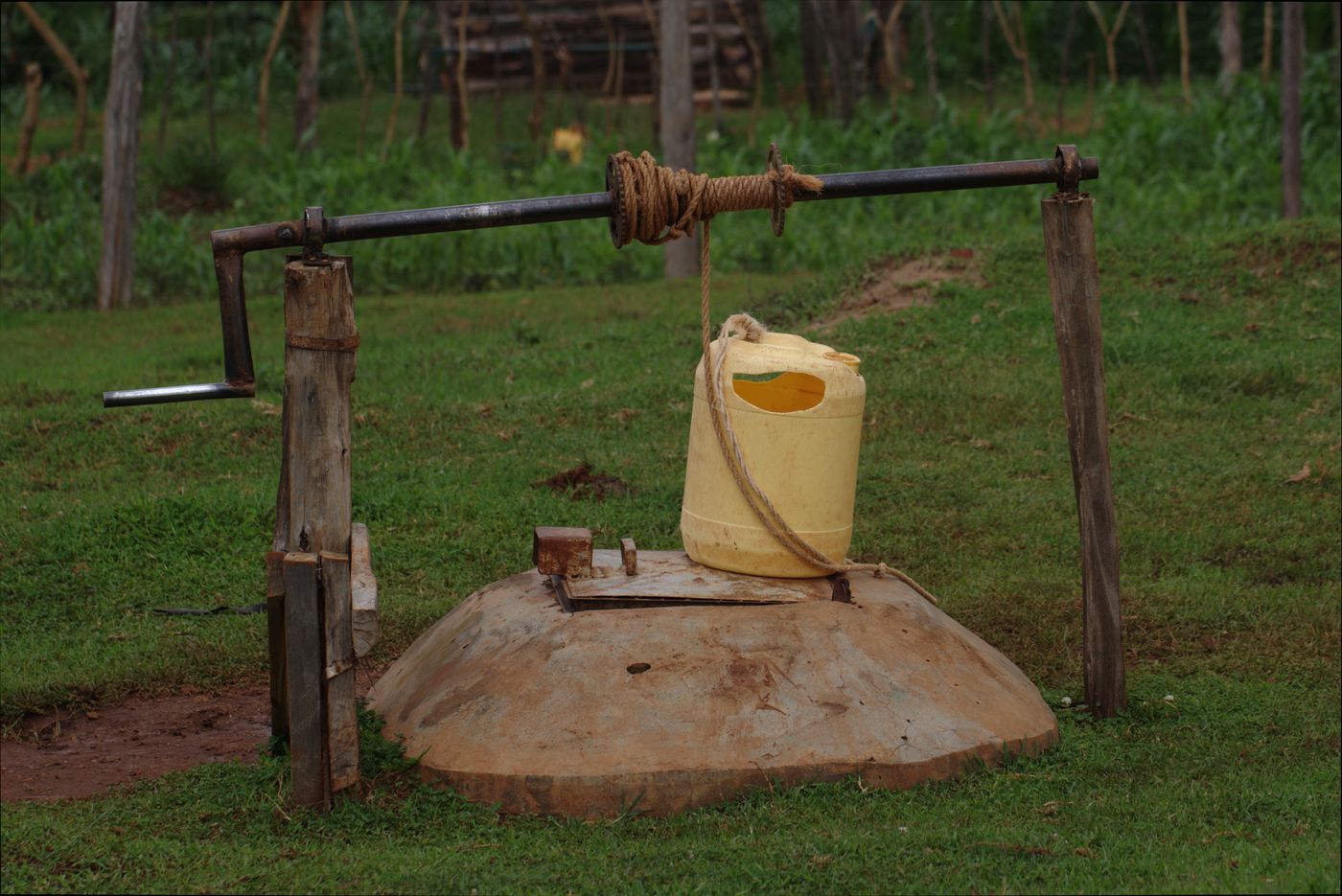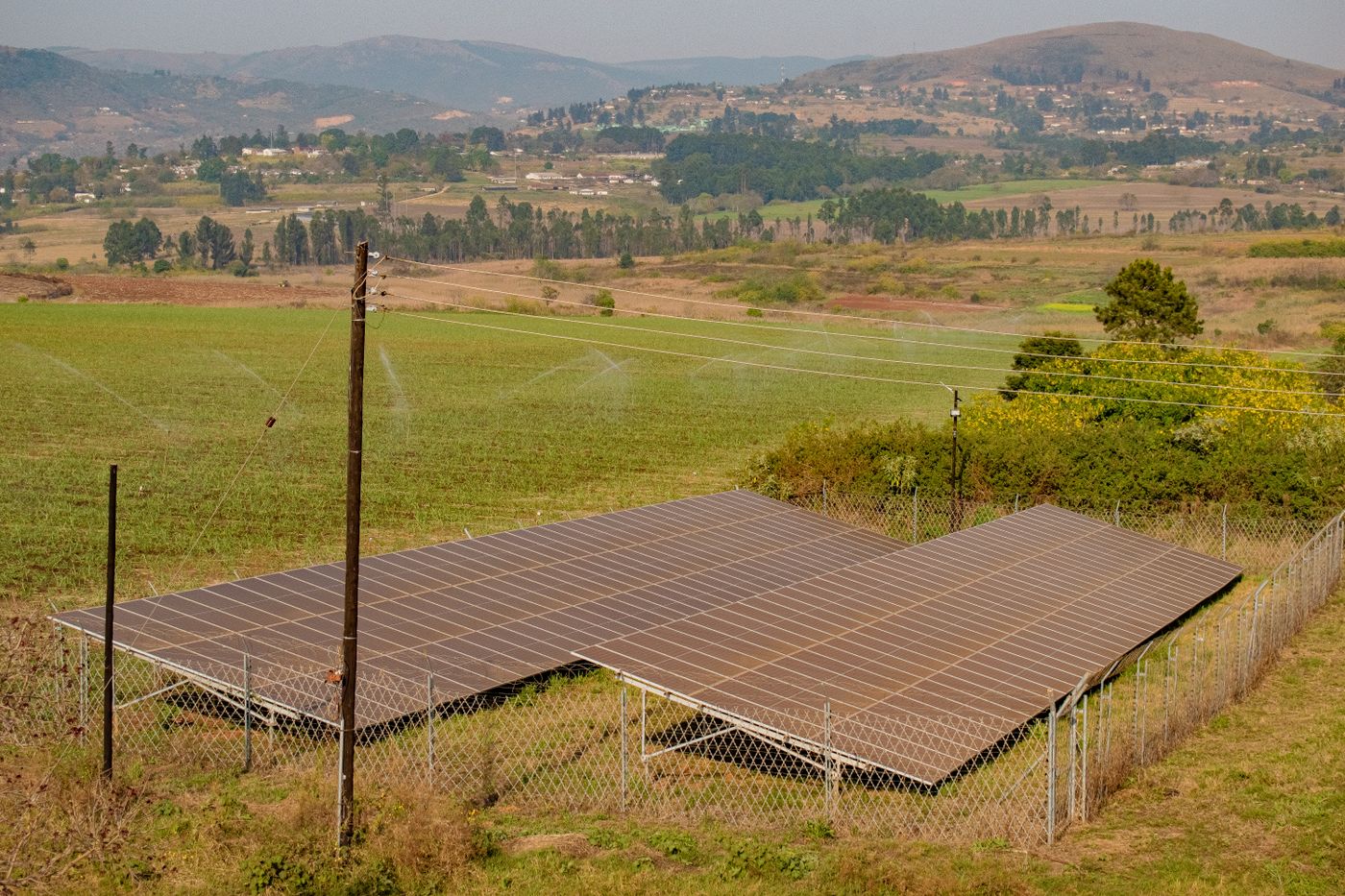
Two farmers buy the same solar pump in the same week. One puts it down a borehole in Machakos and fills a 10,000 litre tank by early afternoon. The other drops it into a hand-dug well in Kakamega, and by ten in the morning the pump is sucking air, the well is empty and the tank is barely a quarter full. Nothing is wrong with the pump. It was sized for the panel and the price, not for the water source.
That is the most common mistake in solar pumping. People size the pump and forget that a borehole, a shallow well and a river each put a different limit on the system. A borehole limits you by its safe yield and depth. A well limits you by how fast it refills. A river limits you by suction lift, silt, floods and the law.
This guide gives you a sizing worksheet you can fill in for your own source: daily water need, the head your pump really faces, the sun you can count on in the short rains, a simple energy calculation to check any quote, and the traps each type of source sets.
Start With the Source, Not the Pump
Before you ask how big a pump you need, ask how much water your source can give you in a day without damage. That number caps everything else. A pump that draws faster than the source refills will run dry, overheat or burn out, however good the panels are.
Borehole. When a borehole is drilled, the contractor should carry out a test pumping and give you a report showing the static water level (where the water sits when nobody is pumping), the level it falls to while pumping at a set rate, and a recommended safe yield. Keep that report. It is the most valuable sizing document you own, and a pump installer who does not ask for it is guessing.
Hand-dug or shallow well. Wells rarely come with a report, so you have to measure. Pump or bail the well down, note how far the level dropped, and time how long it takes to recover. The refill rate in litres per hour is what the well can actually supply, and it often falls in the dry season and at the end of a long dry spell.
River or stream. Flow is usually not the limit for a small farm, but the river brings other problems: the pump sits above the water and must lift it by suction, the water carries silt and debris, the level rises and falls with the rains, and floods can wash away anything installed carelessly.
Permits matter too. The Water Act 2016 requires a permit from the Water Resources Authority (WRA) for water use from surface and ground water, and the WRA classifies boreholes into categories by use and impact. Check with your WRA regional office before you drill, and before you abstract from a river, and keep your permit current.
Step 1: Work Out Your Daily Water Need
Add up what you will use on a typical day in the hardest season, in litres. Count the house, the livestock, the dairy or poultry unit, and any irrigation. For livestock, ask your livestock officer for drinking figures for your breeds and conditions; intake rises with heat, with milk yield and with dry feed. For irrigation, our guide to irrigation scheduling explains how to estimate crop water.
Be honest about growth. If you plan to double the herd or add a greenhouse next year, size the panels and pipe now so you only have to add a tank later. Write the total down. For the worked example below we will use 6,000 litres a day, which is 6 cubic metres.
Step 2: Measure the Head Your Pump Really Faces
Head is the height, in metres, that the pump has to push water, plus the extra pressure lost to friction in the pipes. It is the single number that most changes the size of a solar pump, and it differs sharply between sources.
For a borehole, use the pumping water level from the test pumping report, not the static level. Water drops when you pump, and that drop can be many metres. Add the height from the ground to the top of the tank, then add friction. For a well, use the lowest level you expect in a dry spell. For a river, the vertical lift is the rise from the water surface to the tank or field.
Friction depends on pipe diameter, length and flow. A pipe that is too narrow can add more head than the lift itself. Our guides to pipe sizing and friction loss and sizing a pump by head and flow show how to work it out. Add the lift and the friction together and you have the total dynamic head.
Step 3: Count the Sun You Can Rely On
A solar pump has no battery in most farm systems. It pumps when the sun shines, and the amount of sun decides how much water you get. Estimates for Kenya put average daily solar energy at roughly 4 to 6 kWh per square metre, with some northern areas higher; the Turkana County energy office, citing the Ministry of Energy's solar resource assessment, gives that range. In practice this is often expressed as 4 to 6 "peak sun hours" a day.
Average is not good enough for design. Size for the cloudier weeks of the season you depend on most, which for many farms means the short rains of October to December or the long rains. Our guide to solar performance in the rainy season explains what overcast weeks do to output. Many installers design on the lower end of the local range, then cover the gaps with a bigger tank.
Step 4: A Simple Energy Check on Any Quote
You do not need to be an engineer to check whether a quote is sensible. Lifting one cubic metre of water (1,000 litres) through one metre takes about 2.725 watt-hours of energy. That is basic physics. Multiply by your daily volume and your total head to get the energy the water itself needs:
Water energy (Wh per day) = volume (m³) × total head (m) × 2.725
No pump system turns all the sunlight on its panels into lifted water. Panel losses, heat, the controller, the motor and the pump all take a share. Divide by the peak sun hours and by an overall efficiency to estimate the panel size. The pump maker's sizing chart is the final word, because efficiency varies between pump types and operating points, but this check tells you whether a quote is in the right range.
Worked example. A farm needs 6 m³ a day from a borehole with a total dynamic head of 40 m. Water energy is 6 × 40 × 2.725, about 654 Wh a day. If we design on 5 peak sun hours and assume an overall efficiency of 35 percent for illustration, the panel size is 654 ÷ (5 × 0.35), about 374 watts. A quote for a 120 watt panel would be too small; a quote for 2,000 watts would deserve questions.
The Traps Each Source Sets
Borehole
Set the pump below the lowest pumping water level, with a margin, but not down among the screens or near the bottom where sand collects. Do not pump above the safe yield on the test report, even if the panels could. Fit dry-run protection so the pump stops if the water drops, and a level switch in the tank so it stops when the tank is full. Our guides to borehole pump installation and borehole pump maintenance cover the details.
Hand-dug well
The usual failure is a pump that is simply too fast for the well. A small pump that runs gently all day, matched to the refill rate, delivers more water than a big one that empties the well by mid-morning and then stands idle. Keep the intake off the bottom so it does not suck mud, protect the well from surface runoff, and cover it. Our guides to small solar pumps for shallow wells and borehole versus shallow well go further.
River or stream
A surface pump pulls water up its suction pipe using air pressure, and air pressure sets a hard limit: about 10.3 metres at sea level in theory, less at altitude, and noticeably less in practice once friction and the pump itself are counted. Keep the pump as close to the water as is safe from floods, and keep the suction pipe short and airtight. Where the lift is too high, a submersible pump placed in the water, or in a protected sump beside the river, avoids the problem.
Screen the intake, keep it off the riverbed and away from the muddiest water, and fit a filter if you feed drip lines. Mount panels and the pump above the highest flood mark you know of, and anchor everything. Our guide to pumping irrigation water from a river covers intakes and placement, and remember that river abstraction needs a WRA permit.
The Tank Does the Work of a Battery
Because most solar pumps run without batteries, the tank is your storage. Placed high, it also gives you free pressure by gravity for troughs, taps and drip lines. Add the tank height to your head calculation, but remember it saves you a second pump later. Our guides to water storage tanks and tank stands and gravity flow explain how to size and raise it.
Whatever you install, check it in its first weeks. Note what time the tank fills on a sunny day and on a cloudy one, and watch the source level. If the tank never fills, the system is undersized or the source is weak. If the pump stops on dry-run protection, your source is the limit, not the sun.
Your Solar Pump Sizing Worksheet
| Step | What to write down |
|---|---|
| Source limit | Borehole safe yield from test report, or well refill rate, or river reliability; WRA permit status |
| Daily need | Litres per day in the hardest season, including growth plans |
| Design volume | The smaller of the daily need and what the source can give |
| Total head | Lowest water level to tank top, plus pipe friction (or suction lift plus rise, for a river) |
| Sun | Peak sun hours for the cloudier weeks you depend on |
| Energy check | Volume × head × 2.725 Wh, then compare the quote's panel size |
| Storage | Tank holding at least a day's need, raised if gravity pressure helps |
| Protection | Dry-run cut-out, tank level switch, screened intake, flood-safe mounting |
Solar Pumping Equipment to Look At
Prices change, so we do not print them here. See each product page or the Fuga price list for current prices and stock, and bring your worksheet when you call.
| Item | Where it fits |
|---|---|
| Solar Water Pump 100W | Small daily volumes at low head, such as a shallow well or kitchen garden |
| 590 Solar panel | Building the array your energy check calls for |
| Doyin Electric Submersible Water Pump | Mains or inverter powered option for wells and boreholes |
| Irrigation kits | Using tank pressure for drip irrigation |
Measure your source, work out the head from the lowest water level, size for the cloudy weeks and let the tank carry the nights. For pumps, panels and fittings, see our solar range and water and irrigation range, or WhatsApp 0716 961 018 with your source type, depth and daily need, and we will check the numbers with you.
Key Takeaways
- The source sets the ceiling: never size a pump beyond a borehole's safe yield or a well's measured refill rate.
- Keep the borehole test pumping report; it gives the pumping water level and safe yield you need to size the pump.
- Total head is the lift from the lowest water level to the tank top plus pipe friction, and it changes panel size more than anything else.
- Check any quote with the energy formula: volume in cubic metres times head in metres times 2.725 Wh, then allow for sun hours and losses.
- Rivers bring suction lift limits, silt and floods; keep the pump close to the water, screen the intake and mount above flood level.
- Use a tank holding at least a day's need as your storage, and confirm WRA permit requirements before drilling or abstracting.
Frequently Asked Questions
How do I know what size solar pump my borehole needs?
Start with the test pumping report from the driller, which gives the pumping water level and safe yield. Add the tank height and pipe friction to get total head, decide your daily volume (no more than the safe yield), then use the pump maker's sizing chart for your sun hours. The energy formula in this guide lets you check the quote.
Why does my solar pump empty my well by mid-morning?
The pump draws water faster than the well refills. Measure the refill rate by pumping the well down and timing its recovery, then choose a smaller pump, or set it to run slowly through the day, so it matches what the well can supply. Fit dry-run protection so the pump stops when the water runs low.
Can a surface solar pump lift water from a river up a high bank?
Only within its suction limit. Air pressure limits suction lift to about 10.3 metres at sea level in theory and less at altitude and in practice. Keep the pump close to the water and safe from floods, keep the suction pipe short, or use a submersible pump in the water or a protected sump.
Do I need a permit to pump water from a borehole or river in Kenya?
The Water Act 2016 requires a permit from the Water Resources Authority for water use from surface and ground water, and boreholes are classified by category. Check the requirements with your WRA regional office before drilling or abstracting.
Does a solar water pump need a battery?
Most farm solar pumps run directly from the panels without batteries. The water tank acts as storage, filling during the day and supplying you at night and during cloudy spells, which is usually cheaper and longer lasting than batteries.