A pullet does not begin to lay because she has reached a certain age on a calendar. She begins because her body has read two things at the same time: that she is big enough, and that the days are getting longer.
The second is entirely in your hands, and on most farms it is managed by accident. Lights go on when somebody remembers, off when the last worker leaves, and out altogether when the grid drops before dawn. To the bird, none of that is neutral.
Light is the cheapest input on a poultry farm and the one most often left to chance. Here is what day length does inside the bird, the two rules you must never break, why the equator changes the problem, and why a broiler house that never goes dark is trouble waiting.
Day Length Is a Biological Signal, Not a Convenience
The chicken is a long-day breeder. Its wild ancestor bred as days lengthened, so chicks hatched into the season of greatest food abundance. Selection for production has changed a great deal about the modern hen, but it has not removed that machinery.
What she measures is duration, not brightness. Perception happens partly through the eye, but importantly through photoreceptors deep in the brain, reached by light passing through skull and tissue. The response is to how long the light lasts, not how strong it feels.
The chain that follows explains the timing. A lengthening day acts on the hypothalamus, which releases gonadotropin releasing hormone. That drives the pituitary to release luteinising hormone and follicle stimulating hormone. Those drive follicle development in the ovary, and the first egg follows. The sequence takes days to weeks, not hours.
So an added hour of light is not simply more feeding time, useful though that is. It is a seasonal instruction the bird will act on for the rest of her productive life.
The Two Rules You Must Never Break
Never decrease day length for a growing pullet or a hen in lay. A falling day is precisely the signal a bird uses to recognise that the season is ending. Give it to a pullet and she delays maturity. Give it to a hen in production and output falls; make it large enough and she moults. A power cut, a burnt bulb and a worker who leaves early all make this mistake on your behalf.
There is one legitimate reduction, at the very start. Chicks get long light hours in the first days so they find feed and water, and that is stepped back to the ordinary day within two to three weeks, before the bird becomes photosensitive. After that window closes, day length may be held or increased. It may never fall.
Never increase day length too early. Photostimulating a pullet before her frame and body weight are ready pulls sexual maturity into a body that cannot support it. The visible cost is a long run of small eggs, because egg size tracks the size of the bird laying it. The hidden costs are worse: prolapse risk in an undersized bird, and a flock that reaches a peak it cannot hold.
Body weight is the permission, day length is the trigger. Weigh a sample against your breed's target before turning the lights up, and check uniformity while you are at it. On an uneven flock, photostimulation lands on birds at very different stages and the light end suffers for it.
Twelve Hours All Year: What the Equator Does to the Problem
Kenya sits astride the equator, roughly four degrees north to four degrees south. Natural day length here is close to twelve hours on every day of the year, and the seasonal variation is measured in minutes rather than hours. Sunrise near half past six, sunset near half past six, in January and in July alike.
Three things follow.
You will never get a long natural day. A layer programme that needs fifteen or sixteen hours needs three or four hours of supplementary light every day of the laying period. Not a seasonal correction. A permanent operating cost and a permanent operating discipline.
Your baseline never drifts. Temperate producers spend real effort correcting for a natural day that swings by many hours through the year. Yours is flat. Once your programme is written it behaves identically in every month, which makes it easier to run and easier to audit.
An open-sided house can add light but cannot subtract it. Any programme calling for a decreasing or deliberately short rearing day cannot be run in an open house, because you cannot make the sun set earlier. The workable Kenyan version is: brooding light for the first days, allowed to fall to natural day length, held there through rearing, then stepped up at photostimulation. A true step-down programme needs blackout curtains and light traps on every vent, which is a serious build.
Where you put the extra hours matters too. Adding them before dawn is safer than adding them all in the evening, because an abrupt evening switch-off leaves birds on the floor unable to find the perch. If you do use evening hours, dim them in steps or leave a corridor light on briefly afterwards.
Intensity: How Bright, and How to Judge It Without a Meter
Duration carries the reproductive signal. Intensity does something different: it drives behaviour, and behaviour drives feed intake, activity, pecking and where eggs get laid.
The broad pattern is low intensity through rearing, which keeps birds calm, then a lift at photostimulation that reinforces the day length message. Chicks in the first days need more than either, simply to find feed and water.
You can judge it without a meter. Stand at the darkest point in the house, hold a feed bag at bird level and try to read the small print. If you have to squint, that corner is too dim. If the house feels like midday outside, you will pay for it in pecking.
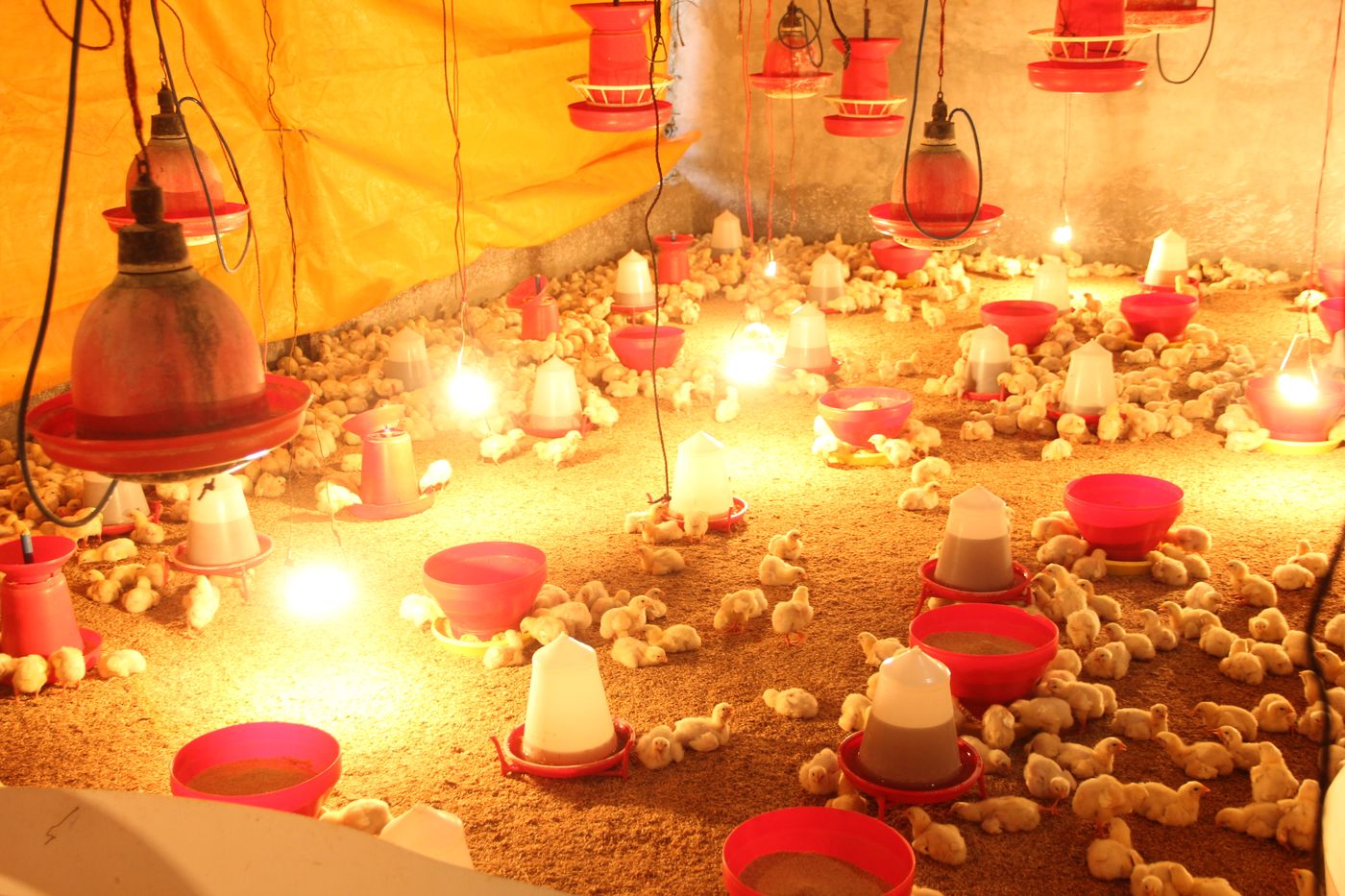
Uniformity matters more than any single reading. What ruins houses is the variation between the pool under a lamp and the gap two metres away. Dark corners collect floor eggs. Bright spots concentrate birds and trigger pecking. Uneven light means uneven intake, and uneven intake means an uneven flock.
Practically: space bulbs roughly one and a half times their mounting height apart, stagger alternate rows so the pools overlap, and light the feed and water lines rather than the nest boxes. Nests should be the darkest place in the house, which is much of how you stop hens laying on the floor.
Dust is the quiet thief. A dusty bulb loses a serious fraction of its output, and because it happens gradually nobody notices. Put bulb wiping on the monthly routine alongside checking the feeders and drinkers, and replace visibly dimmed lamps rather than waiting for failure.
One rule for troubleshooting: if you have feather pecking, reduce intensity, never duration. Dimming is a legitimate control. Shortening the day breaks rule one to solve a different problem, and it will cost you production.
Warm or Cool Light, and Whether Colour Really Matters
Birds do not see what you see. Chickens carry four cone types where humans carry three and are sensitive into the ultraviolet. They also resolve flicker faster than we do, so a cheap driver that looks steady to you can read as a strobe to the bird, which is a genuine stressor.
A human lux meter is weighted to the human eye and underreads what the bird experiences, so use it to compare one point in the house with another rather than as truth.
On colour temperature, the general pattern reported in poultry lighting work is that warmer, longer wavelength light is associated with stimulating reproduction, while cooler blue and green light tends toward calmer birds and growth. That is a tendency that varies by strain, not a law to build a business on.
So do not chase colour before fixing duration, coverage and flicker, all of which matter more. Warm white for layers in production and cooler white for broiler grow-out is a defensible default. Never mix colour temperatures in one house: birds drift to the zone they prefer, and you get crowding at one end and empty floor at the other.
Buy dimmable, flicker-free LED with a proper driver. In a house running lights every day of the year the running cost difference repays the higher purchase price several times over, and cheap unbranded LEDs flicker and drift in output long before they fail.
Broilers: Why a House That Never Goes Dark Is a Mistake
None of the reasoning above transfers directly. A broiler is never photostimulated, so day length here is not about reproduction. It is about rest, growth and health.
Continuous light looks logical on paper: more waking hours, more eating, faster growth. It does not work that way. Birds under twenty-four hour light lose their circadian rhythm. Without a dark period they never produce the night-time melatonin pattern that supports immune function, never get consolidated sleep, and carry very fast weight gain on a skeleton that gets no recovery. Programmes with a genuine dark period are generally associated with better leg health, fewer metabolic problems, and feed conversion no worse and often better.
The practical shape is straightforward. Near-continuous light for the first days after placement, so chicks establish intake. Then introduce a dark period and hold it through grow-out. One unbroken block beats several scattered short ones, which never let birds sleep properly. Many producers ease the dark period back before catching. The exact hours belong to your breed guide, and Cobb, Ross and Hubbard do not agree.
Two conditions make it work. Darkness has to be dark, so a security lamp shining through the mesh means you have a dim period, not a dark one. And it has to fall at the same time every day, because an inconsistent dark period is a stressor rather than a rest.
Building It: Timers, Circuits and Solar Backup
Lighting programmes rarely fail in the design. They fail in the execution, and the fixes are cheap.
Fit a timer. A twenty-four hour timer costs very little and removes the largest source of error, which is a human being with other things to do. Set it, label the setting on the wall beside it, and check it after every power cut, because cheap timers lose their programme.
Fit a dimmer if you can. Lifting intensity at photostimulation and dropping it if pecking starts, without anybody climbing to change bulbs, turns intensity from an installation choice into a management tool.
Put lighting on its own circuit. Lights draw almost nothing next to pumps, mills and fans. Separating the circuit means you can back up the load that matters most at a fraction of the cost of backing up the farm.
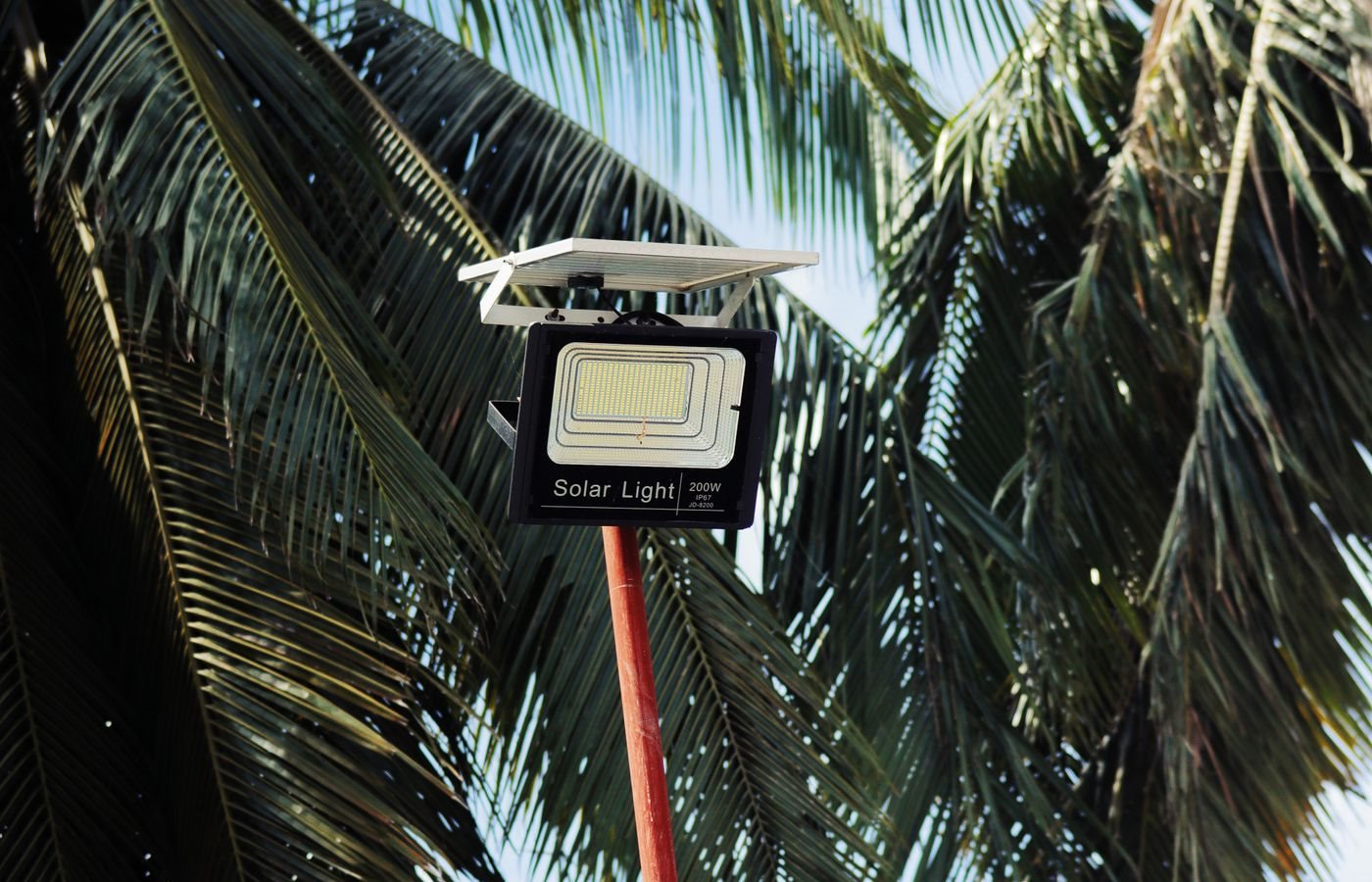
Back it up. This is where the equator, the grid and rule one collide. If supply fails at four in the morning during your supplementary hours, the flock has received a shorter day, and repeated often enough that is rule one broken by accident. Sizing is arithmetic: bulbs, multiplied by watts, multiplied by hours to cover. Twenty nine-watt LEDs is 180 watts, and five hours of that is 900 watt-hours. Our solar equipment range carries the panels, batteries and inverters, with figures on the price list.
Finally, write the programme on the wall: date, age in weeks, on time, off time, total hours. Have whoever opens up record the actual times, not the intended ones. A morning the lights did not come on is a signal you cannot take back, and the only way to explain a dip six weeks later is a record of what the birds actually received.
Key Takeaways
- Day length is a biological signal running through the hypothalamus and pituitary to the ovary. The response takes weeks, so lighting mistakes surface long after they are made.
- After the first two to three weeks, day length may be held or increased but never reduced. Photostimulate on body weight and flock uniformity, not on the calendar.
- On the equator natural day length sits near twelve hours year round, so supplementary light is permanent for layers, and an open-sided house can add light but never subtract it.
- Uniformity of light beats peak brightness. Light the feed and water lines, keep nests dark, and wipe dusty bulbs monthly.
- Broilers need a genuine, unbroken dark period. It protects leg health and rest, and it stops a flock smothering the night the grid fails.
- A timer, a separate lighting circuit and a small solar or inverter backup are the three cheapest things that keep a written programme true in practice.
Frequently Asked Questions
How many hours of light do layers need in Kenya?
Most commercial layer programmes build up to somewhere between 15 and 16 hours of total day length in full production, but the exact figure and the rate of increase belong to your breed's management guide rather than to a general rule. Because natural day length on the equator sits close to 12 hours every day of the year, you will need supplementary light for roughly three to four hours daily, every day of the laying period, not just seasonally.
Why should you never reduce day length for laying hens?
A falling day length is the signal a bird uses to recognise that the breeding season is ending. A pullet that receives it delays sexual maturity, and a hen already in production responds by reducing output and, if the reduction is large enough, by regressing her reproductive tract and moulting. Once the first three weeks of brooding are past, day length should only ever be held steady or increased.
How do I check light intensity in a poultry house without a meter?
Stand at the darkest point in the house, hold a feed bag at bird level and try to read the small print on the label. If you have to squint or move closer, that corner is too dim. Then walk the whole house looking for bright pools under lamps and dark gaps between them. Uniformity matters more than any single reading, because dark corners collect floor eggs and bright spots trigger pecking.
Do broilers need a dark period?
Yes. Continuous light removes the bird's circadian rhythm, suppresses the normal night-time melatonin pattern that supports immune function, and gives birds no consolidated sleep at a time when their skeletons are carrying very rapid weight gain. A single unbroken block of darkness is better than several scattered short ones. It also trains the flock to stay calm in the dark, which matters enormously the night the grid fails.
Should poultry house lights be warm white or cool white?
Warmer, longer wavelength light is generally associated with stimulating reproduction and cooler blue or green light with calmer, growing birds, so warm white for layers in production and a cooler white for broiler grow-out is a defensible default. The bigger wins are elsewhere: correct duration, even coverage and flicker-free drivers all matter more than colour. Never mix colour temperatures within one house, because birds will crowd toward the zone they prefer.