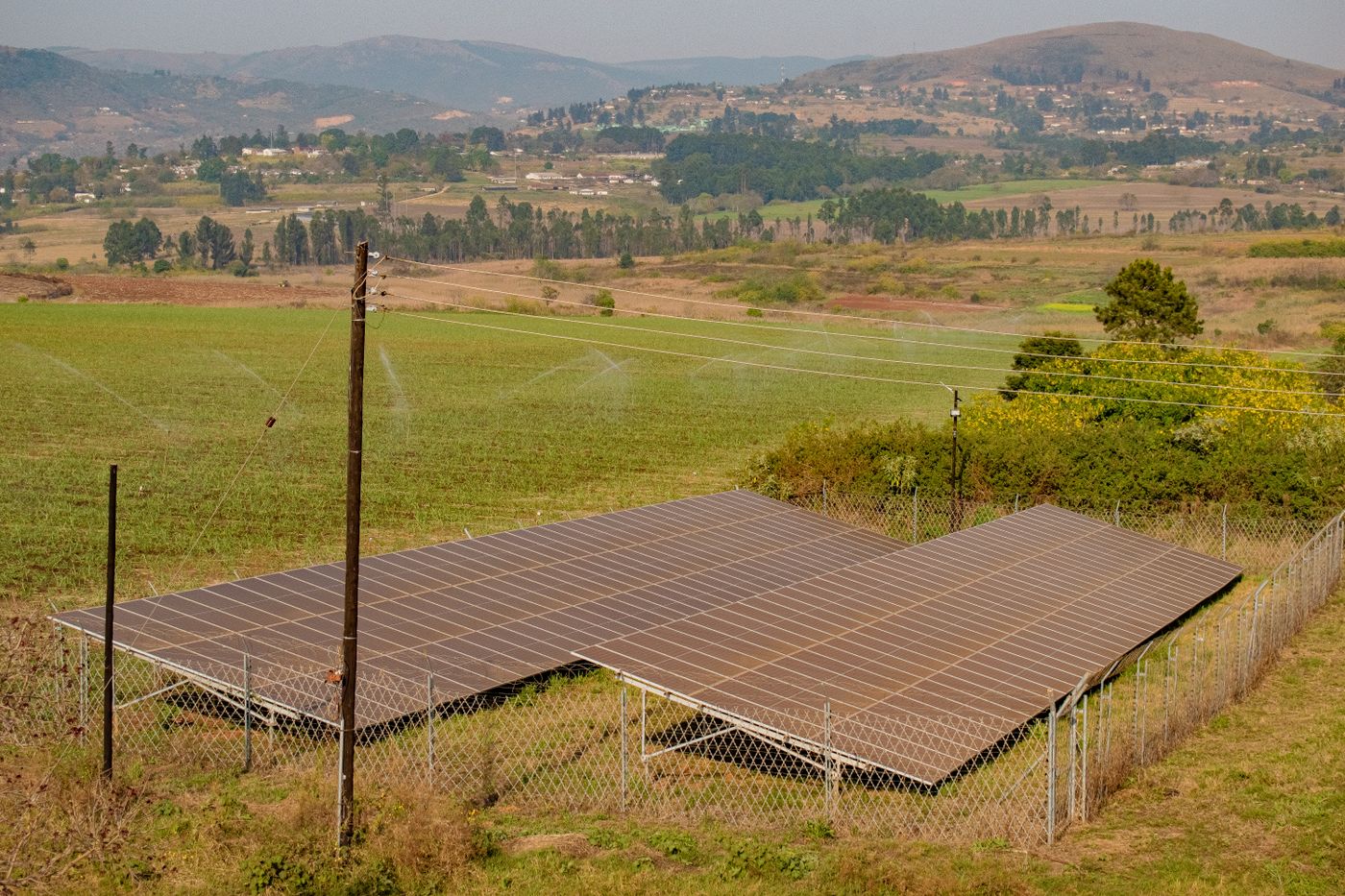
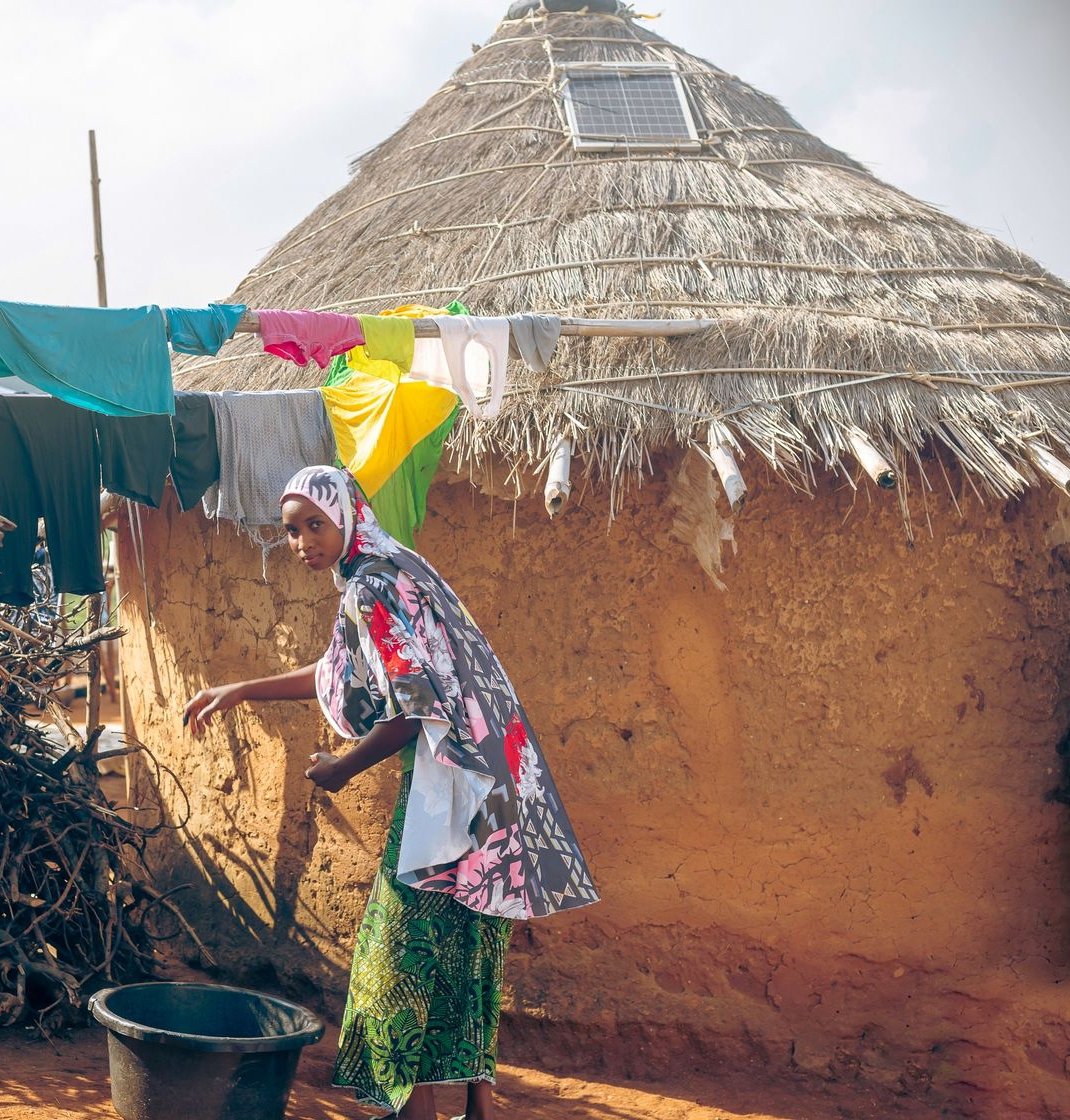
Two neighbours in Machakos buy the same panels on the same day. One system charges its battery by early afternoon and runs for years. The other never seems to fill the battery, a connector on the roof turns brown and brittle within a season, and one morning after the short rains the controller is dead. The panels were identical. The difference was in the wiring: how the panels were joined, what cable carried the power down from the roof, and how the connections were made.
Wiring is where a solar system quietly gains or loses. Cable that is too thin turns good sunlight into heat. Ordinary house cable cracks in the sun. A connector squeezed shut with pliers lets in water and becomes a hot spot. And because solar panels produce direct current at voltages that can be dangerous, a careless connection is also a safety risk.
This guide explains series and parallel wiring, how to choose and size the PV cable, how MC4 and Y connectors should be used, and what protection belongs between the roof and the controller. It is written so you understand what a good installation looks like and can check the work, not as a replacement for a qualified electrician.
Series and Parallel: What Each Does
Every panel has a positive and a negative lead. How you join several panels decides the voltage and current that travel down the cable to the controller.
- Series means positive of one panel to negative of the next. The voltages add up and the current stays the same as one panel. Two identical panels in series give twice the voltage at the same current.
- Parallel means positives joined together and negatives joined together. The voltage stays the same as one panel and the currents add up. Two identical panels in parallel give the same voltage at twice the current.
The power is the same either way: watts are volts times amps. What changes is how that power travels, and that has three consequences.
The controller decides first. A PWM controller works best when the panel voltage is close to the battery's, so its panels are usually wired in parallel. An MPPT controller can take a higher voltage and convert it down, so series wiring is often the better choice, as long as the total stays below the controller's maximum input voltage on the coldest morning. Our guide to solar panel sizing and budget covers matching the array to the rest of the system.
Shade behaves differently. In a series string the same current flows through every panel, so a panel shaded by a tree or a water tank drags down the whole string. Panels have bypass diodes that limit the damage, but a string with one shaded panel still loses more than the shaded panel alone. Where part of the roof is shaded at certain hours, parallel wiring, or putting the shaded panels on their own string, often harvests more.
Never mix different panels in one string. In series, the string current is limited by the weakest panel. In parallel, the voltage is pulled towards the lowest panel's. Adding a new, larger panel to an old string wastes much of the new panel. Keep identical panels together, and give a different panel its own controller input or its own controller.
Why Voltage Matters for the Cable
Cable has resistance, and current flowing through resistance loses power as heat. The loss rises with the square of the current, so halving the current cuts the loss to a quarter. That is the strongest argument for series wiring on a long run: the same power travels at a higher voltage and a lower current, and less of it is wasted on the way down from the roof or across the shamba to a pump.
You can work the loss out yourself. For a copper cable, resistance is about 0.0172 ohms for each metre of 1 mm² cross-section. A circuit has two conductors, out and back, so the resistance of a run is:
R = 2 × length in metres × 0.0172 ÷ cable size in mm²
The power lost is the current squared times that resistance, and the voltage drop is the current times the resistance. Below, that is applied to two PANEL 200 W/24V panels on a 15 metre run, wired first in parallel and then in series, on two cable sizes.
The sums, step by step. On 2.5 mm² cable the 15 metre run has R = 2 × 15 × 0.0172 ÷ 2.5 ≈ 0.21 ohms. In parallel the current is 13.3 A, so the loss is 13.3 × 13.3 × 0.21 ≈ 36.7 W, nearly a tenth of the array's 400 W, and the voltage drops by about 2.75 V, close to 9 percent of 30 V. In series the current halves to 6.67 A and the loss falls to about 9.2 W. On 6 mm² cable the resistance falls to about 0.086 ohms and the losses to about 15.3 W and 3.8 W.
PV Cable: Why House Wire Is the Wrong Choice
Cable on a roof lives a hard life: full equatorial sun, heat from the iron sheets, rain, and the occasional rat. Ordinary house wiring cable is made for walls and conduit. Its insulation is not designed for years of ultraviolet light, and outdoors it hardens, cracks and eventually exposes the copper.
Proper PV solar cable is made for exactly this job. It has double insulation that resists ultraviolet light and heat, and it is rated for the direct current voltages a solar array produces. It is also usually made of finely stranded copper, which bends without breaking and crimps cleanly into MC4 connectors. Our PV SOLAR CABLE 6MM is the size most often used for array runs on farm and household systems.
Run the cable so that it lasts:
- Clip it to the panel frames and mounting rails so it does not lie loose on hot iron or flap in the wind.
- Keep it off sharp sheet edges, and use a grommet or conduit wherever it passes through the roof or a wall.
- Leave a drip loop below the entry point so rain running down the cable falls off before it reaches the hole.
- Use red for positive and black for negative, or mark both ends clearly, so nobody has to guess the polarity years later.
MC4 and Y Connectors Done Properly
Most modern panels come with short leads ending in MC4 connectors: a male and a female plug that click together and lock, with seals that keep water out. They are good connectors when they are made up properly and a common failure point when they are not.
- Crimp, do not squeeze. The metal contact inside an MC4 must be crimped onto the stripped cable with a proper MC4 crimping tool. Pliers leave a loose joint with high resistance, which heats up under load and can melt the housing.
- Strip to the right length so the copper sits fully in the contact with no bare strands outside it, and tighten the gland nut so the seal grips the cable.
- Match the connectors. Plugs from different makers can look alike but fit loosely. A loose fit lets in water and creates heat.
- Listen for the click, then tug gently to confirm the lock holds.
- Keep connectors off the roof sheet, clipped up where water does not pool during the short rains.
Y-type connectors join two panel leads into one, so two panels can be paralleled without a junction box: one Y for the positives, one for the negatives. They are convenient for two panels. Beyond two parallel strings, a combiner box with a fuse on each string is the safer route, because a fault in one string can be fed by all the others at once. When three or more strings run in parallel, each string normally needs its own fuse, rated no higher than the maximum series fuse figure printed on the panel label.
Protection Between the Roof and the Controller
A solar panel produces voltage whenever light falls on it. There is no switch on a panel, so the wiring has to provide safe ways to isolate it and to protect it.
- A DC isolator switch between the array and the controller lets you cut the panels off safely for maintenance. It must be rated for DC at the array's voltage; an AC switch can fail to break a DC arc.
- A fuse or DC breaker near the battery protects the cable from the very large current a battery can deliver into a fault.
- Earthing. Panel frames and metal mounting rails should be bonded to a proper earth. In lightning-prone parts of the country, such as much of western Kenya, a surge protection device on the DC side is a sensible addition, fitted and earthed by an electrician.
- A polarity check with a multimeter before the array is connected to the controller. Reversed polarity can destroy a controller in an instant.
For a submersible solar pump, the same principles apply over a longer distance, which is why series wiring and cable size matter even more there. Our guide to submersible solar pumps for shallow wells covers the pump side.
Checks After the Short Rains
Wiring faults develop slowly, and the end of the rainy season is a good time to look. With the isolator off, check that every MC4 is locked and its seal is tight, that no cable insulation is cracked or chewed, that clips have not broken, and that no connector is discoloured. Brown or melted plastic means a hot joint: replace the connector, and find out why it overheated. Combine the inspection with panel cleaning, as described in our guide to cleaning and maintaining solar panels.
Remember too that a roof is a workplace. Iron sheets are slippery when wet or dusty, so work in dry weather, secure the ladder, and walk only on the purlins or on boards laid across them.
The Wiring Parts We Stock
These are the cable, connectors, panels and controller from our price list used in this guide. Ask us whether the cable price is per metre and how many connectors your layout needs before you order.
| Item | Stock code | Price |
|---|---|---|
| PV SOLAR CABLE 6MM | 6724 | 300 KSH |
| MC4 SOLAR CONNECTOR 1 WAY | 6293 | 1,000 KSH |
| Y-TYPE SOLAR CONNECTOR | 6723 | 600 KSH |
| PANEL 200 W/24V | 6314 | 11,000 KSH |
| PANEL 300W/24V | 6315 | 15,000 KSH |
| CHARGE CONTROLLER 40A | 6153 | 4,000 KSH |
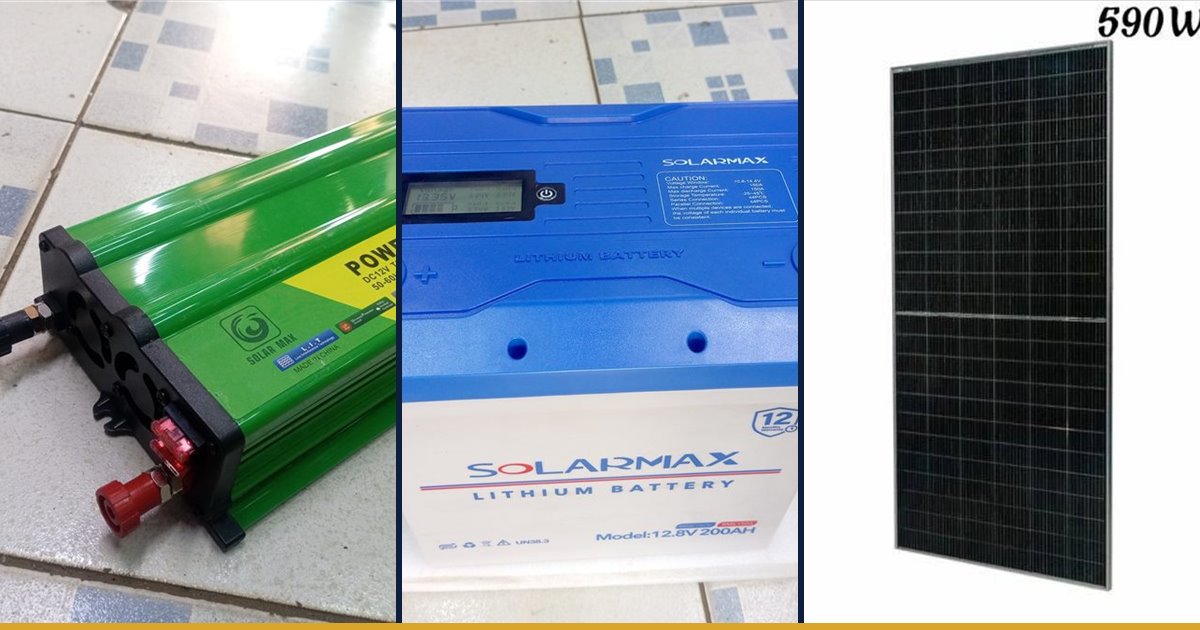
Larger panels such as our 590 W solar panel work at higher voltages and currents, which makes correct cable, connectors and DC-rated protection even more important. For the battery side of the system, our guide to inverter sizing covers battery cables and fuses.
Good wiring costs a little more on the day and nothing afterwards. Have the final connections, the isolator, the fuses and the earthing done by a qualified electrician, and use this guide to check that the job has been done right.
Bring us a sketch of your roof, the panels you plan and the distance to the controller, at any Fuga branch or on WhatsApp 0716 961 018, and we will work out series or parallel, the cable size and the connectors with you. The full range is on our solar equipment page.
Key Takeaways
- Series wiring adds the voltages at the same current; parallel wiring adds the currents at the same voltage. The controller type decides which suits you.
- Cable loss rises with the square of the current, so series wiring into an MPPT controller and thicker cable each cut the power wasted on long runs.
- Work out a run's resistance as 2 times the length times 0.0172 divided by the cable size in square millimetres, and aim for a voltage drop of a few percent or less.
- Use UV-resistant PV solar cable, not house wiring, and clip it off hot iron and sharp edges with a drip loop where it enters the building.
- Crimp MC4 contacts with a proper tool, match connector brands, and never pull a connector apart under load.
- Fit a DC-rated isolator, a battery fuse, string fuses for three or more parallel strings, and earthing; have a qualified electrician make the final connections.
Frequently Asked Questions
Should I wire my solar panels in series or parallel?
It depends on the controller. A PWM controller works best with panels in parallel at close to battery voltage. An MPPT controller usually does better with panels in series, which lowers the current and the cable losses, as long as the string's cold-morning voltage stays below the controller's maximum input. Where part of the roof is shaded, parallel wiring or a separate string for the shaded panels often harvests more.
What size cable do I need from my solar panels?
Calculate the run's resistance as 2 times the length in metres times 0.0172, divided by the cable size in square millimetres, then check the voltage drop at your array's current. Many installers aim for 3 percent or less. 6 mm² PV cable is common for farm and household array runs, and series wiring reduces the cable size needed.
Can I use ordinary house cable for solar panels?
No. House wiring cable is made for walls and conduit, and its insulation hardens and cracks after years of sun on a roof. PV solar cable has double, UV-resistant insulation rated for the direct current voltages an array produces.
How many panels can I join with Y connectors?
Y connectors are convenient for paralleling two panels or strings. With three or more parallel strings, use a combiner box with a fuse on each string, rated no higher than the maximum series fuse figure on the panel label, because a fault in one string can be fed by all the others.
Is it safe to unplug an MC4 connector while the sun is out?
Not while current is flowing. Breaking a live DC connection can draw an arc that burns the contacts and your hand. Switch off the DC isolator, or cover the panels, before connecting or disconnecting anything on the array.