On the equator, night does not creep in. By seven in the evening the compound that felt open at six is fully dark: the dog barks at shapes you cannot see, the walk to the poultry house needs a torch, and anyone at the fence line is invisible from the kitchen door. Darkness is not just inconvenient on a farm. It is cover, and cover is the one thing every thief and every night predator depends on.
For years the fix meant wiring: an electrician, cable trenched to every corner, and a monthly bill for lights that burn all night. Many compounds never did it because the gate, the boma, and the store sat too far from the meter. Solar lighting has removed that excuse. A modern solar flood or street light is a self-contained system, panel, battery, controller, and LEDs in one package, that bolts to a pole or gable and runs itself from dusk with no cable to the house at all.
This guide is the practical version: what lighting genuinely deters and what it does not, when a flood light beats a street light and where each belongs, why the wattage on the box tells you less than the panel and battery behind it, how high and how far apart to mount, motion sensing versus dusk-to-dawn, an honest look at the camera hybrids, and a full lighting plan for a working farm, area by area.
Why Light Is the Cheapest Security Layer You Can Buy
Think of farm security as layers: deter, detect, delay, respond. A wall delays, a dog detects, a watchman responds. Light works on the first two at once, for less money than any of the others. A lit compound tells anyone approaching that they will be seen before they touch anything, and it lets you, your dog, and your neighbours actually see them. Most rural theft is opportunistic: chickens lifted from an open run, tools and fuel from an unlocked lean-to, a goat walked out through a gap. Opportunists want darkness and a quiet exit. Remove the darkness and most pick another compound.
Be honest about the limit, too. Light alone does not stop a determined, organised gang; nothing bought in one carton does. What it does is strip away surprise and make every other layer work better: the dog sees what it is barking at, the neighbour's phone call is accurate, your response starts from information instead of guesswork. That is why lighting pairs so naturally with an energiser wire, which we covered in our guide to solar electric fencing for farm security: the fence raises the cost of entry, the light removes the cover for attempting it.
Flood Light or Street Light: Where Each One Belongs
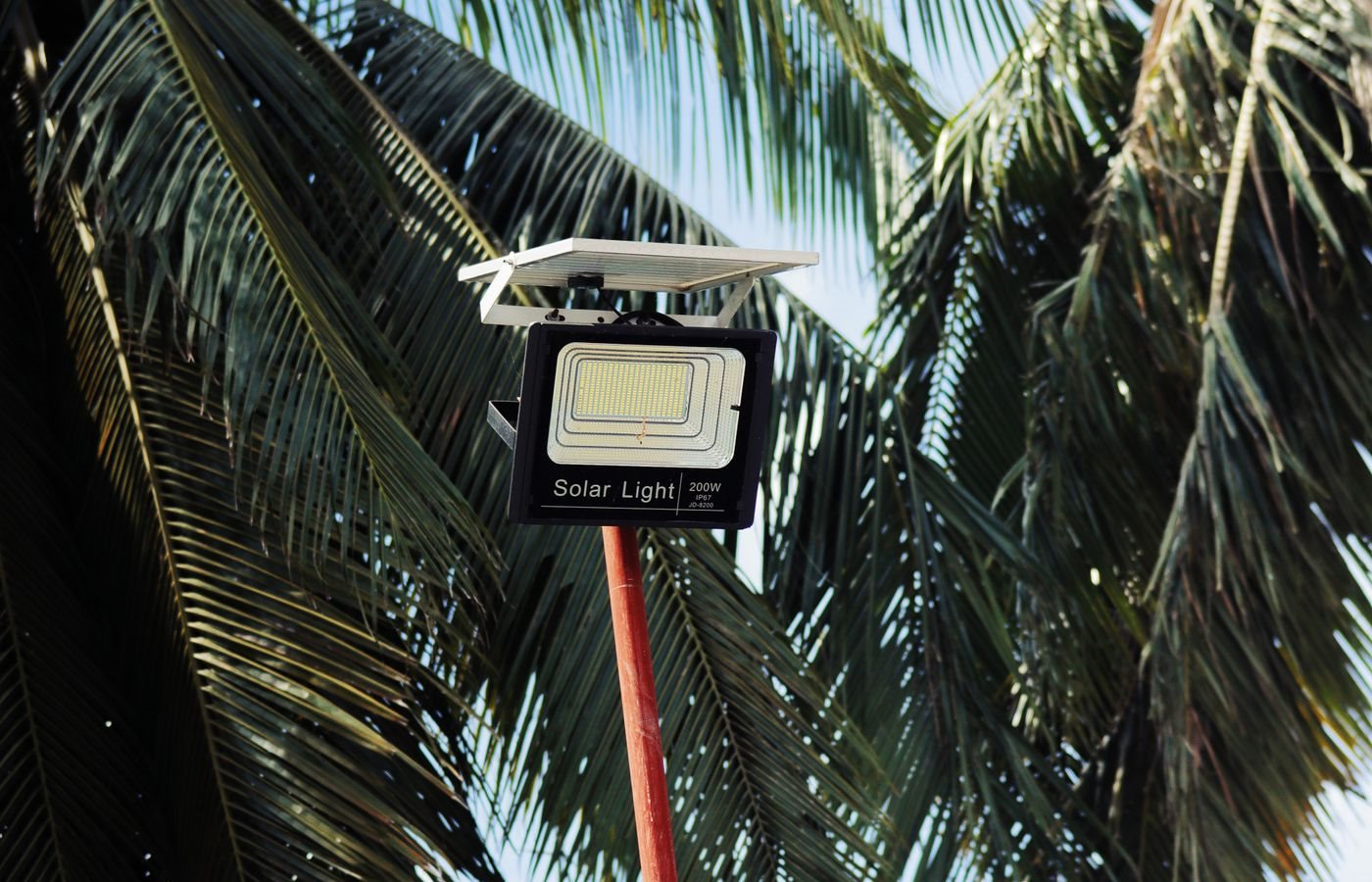
The two families do different jobs, and most disappointment comes from putting the right light in the wrong place. A solar flood light throws a wide wash from a compact head, usually on a wall bracket or short pole, angled down across an area. It is the tool for flooding a space: the yard between buildings, the front of a store, the stock boma. Fuga stocks flood lights in advertised ratings from 30W to 500W, many with the panel on a separate lead so the lamp can sit under an eave while the panel sees the sky.
A solar street light puts its LEDs in a flat head on top of a pole and drops a long, rectangular pool straight down and outward, the same geometry as town road lighting. It is the tool for lines and points: the gate, a driveway, the path to the poultry unit. Our street light range runs from advertised 50W to 1000W, including 360-degree heads that light a full circle from one central pole, useful where a single pole in an open compound must serve every direction. Browse the current range on our solar equipment page.
A simple rule covers most farms: corners get floods, lines get street lights. A flood on each of two diagonal corners cross-lights a yard and leaves no shadowed wall to hug. A street light belongs above the gate, lighting faces and number plates rather than silhouettes, and along paths at intervals so the pools overlap.
What the Watts on the Box Really Mean
Here is the part of the shop conversation most buyers never hear. The wattage printed on a solar light is an advertised rating, and across the industry it has drifted into being a size class rather than a measured electrical figure. A "200W" solar flood light is not drawing 200 watts the way a mains flood light would; the label roughly ranks it against the "100W" and "300W" boxes beside it. Two lights with the same advertised number can differ widely in real brightness and in how long they hold it through the night.
What actually decides performance is the chain behind the LEDs. The panel decides how much energy is harvested each day: a physically bigger panel harvests more, full stop. The battery decides how much of that harvest is stored for the night, and its capacity in watt-hours or amp-hours is the single best number on the specification sheet. The controller decides how the store is spent: most units quietly step brightness down through the night to last until dawn. The LEDs merely spend what the other three deliver.
So when comparing two lights, ignore the headline number and compare physical panel area, printed battery capacity, the IP weatherproof rating, and the warranty. A larger panel with a mid-size battery outperforms a huge advertised wattage behind a tiny panel every cloudy week of the long rains. The same harvest-store-spend logic drives every solar purchase; for the deeper arithmetic, see our guide to solar panel sizing and cost in Kenya.
Mounting Height and Spacing: Put the Light Where the Risk Is
Height is a trade. Mount low and you get a small, intense, glary pool; mount high and the same light spreads into a wider, gentler wash. For yard floods, gable height, roughly four to six metres on most farm buildings, is the working compromise: wide enough coverage to matter, close enough that faces are recognisable. Street heads want pole height of five metres or more so the pool is long rather than harsh, and gate lights should sit high enough to light the visitor's face and vehicle rather than shining into your own eyes.
Angle matters as much as height. Aim floods outward and downward from the buildings, so an approaching person is lit while you stay in relative shadow behind the light: that asymmetry is the whole security value. Never aim a flood back at your own windows, and check the beam at the boundary; a light glaring into a neighbour's bedroom buys a dispute, not security. For spacing, walk the route at night and place lights so pools overlap slightly; any dark gap between pools becomes exactly the corridor an intruder will use.
One more rule that solar adds: the panel, not the lamp, chooses the site. The panel must see open sky through the middle of the day, clear of tree shade, roof lines, and tank shadows that move with the seasons. Separate-panel models earn their keep here: the lamp goes where the risk is, under an eave or inside a boma shade, while the panel goes where the sun is.
Motion Sensing, Dusk-to-Dawn, and the Camera Hybrids
Solar lights run one of two control philosophies. Dusk-to-dawn units switch on at nightfall and manage their battery to last until morning, usually by running at partial brightness and stepping down in the small hours. This is what you want where constant presence is the point: the gate, the main yard, the boma. Steady light also keeps stock calmer than a lamp snapping on and off above their heads.
Motion-sensing units idle off or at a dim glow, then jump to full power when their passive infrared sensor detects movement and heat. The advantages are real: the battery spends almost nothing while nothing happens, so the burst is genuinely bright, and the snap from dark to full light has a startle value steady lighting lacks. The honest weaknesses: the sensor's reliable range is modest, so it protects a spot rather than an area, and dogs, cats, bats, and wind-blown branches all trigger it. Mount it away from vegetation and expect some false alarms. The strongest setups mix both: dusk-to-dawn at gate and boma, motion units on paths, at the store door, and behind the house.
Then there are the camera hybrids, flood lights with a camera, SD-card recording, and a phone app built in. Assessed honestly, they are a genuine step up from a bare light for the price of one unit: reviewing a clip of what triggered the light at 2 a.m. beats wondering. But they are not CCTV. The lenses are small, footage lives on a card inside a unit an intruder can reach if mounted low, the app needs the light within Wi-Fi or hotspot range, and night image quality depends on the light's own beam. Treat a camera light as a recording deterrent for a gate or store front; if evidence-grade coverage is the real requirement, budget for a dedicated camera system and let the lights do the lighting.
No Trenches, No Bills: Installation and the Maintenance That Keeps Lights Bright
The installation case for solar is short. No cable run means no trenching across the compound, no mains wire where children play and cattle scratch, no electrician's visit, and nothing added to a monthly bill. A flood light installs with four bolts through a bracket; a street head clamps to any sound pole, including a treated timber post. Buildings far from the meter, a boma across the stream, a rented plot you cannot wire permanently: all stopped being lighting problems the day the panel moved onto the lamp. Mount units high with tamper-resistant fixings, because a light worth stealing is best kept out of arm's reach.
Maintenance is light but not zero, and the two items that matter are the panel and the battery. Dust, pollen, and bird droppings directly cut the day's harvest, and in the dry season the film builds faster than most owners expect: wipe panels with a damp cloth monthly, more often near a murram road. The battery is the consumable. Every rechargeable chemistry fades with cycles, and the symptom is a light that still comes on at dusk but dims or dies earlier each night. That is not a broken light; it is a battery due for replacement, so prefer models with a replaceable pack and swap the pack rather than the light. Once a season, check bracket bolts, wipe the motion sensor lens, and trim any branch that has grown over the panel or into the beam.
A Lighting Plan for the Whole Farm, Area by Area
Pulling it together, here is the plan we sketch for customers, scaled to a typical mixed smallholding. Start at the gate: one dusk-to-dawn street light, mounted high, pool covering the gate and the approach. The main yard takes flood lights on two diagonal corners of the buildings so the washes cross and kill shadows. The stock boma gets a dusk-to-dawn flood angled across the pens: steady light calms the animals, lets you check them at night without a torch, and takes away the darkness that night predators and stock thieves both use. The store, fuel point, and workshop get motion floods at the doors, where the snap to full brightness does its startle work and battery reserve stays deep. Paths between house and units take smaller street heads spaced for overlapping pools, and the rear of the house, the classic blind side, gets one motion flood. An open central compound can often swap several units for a single 360-degree street head on one tall pole.
You do not need to do it all in one purchase. Gate and yard first, because that is where deterrence pays fastest; boma next; paths and rear last. Current models and indicative pricing are on our price list, and stock moves, so confirm on WhatsApp before you travel.
Key Takeaways
- Lighting is the cheapest security layer: it deters opportunists and lets every other layer, dogs, neighbours, fences, work better. It will not stop a determined gang on its own.
- Corners get flood lights, lines get street lights: floods wash yards and bomas, street heads pool light over gates, drives, and paths; 360-degree heads suit open central compounds.
- The wattage on the box is an advertised size class. Compare physical panel area, battery capacity, IP rating, and warranty instead.
- Mount floods at roughly gable height, aim them outward so intruders are lit and you are not, and overlap pools so no dark corridor remains.
- Use dusk-to-dawn lights at the gate and boma, motion lights at doors, paths, and the rear of the house.
- Camera hybrids are a worthwhile recording deterrent, not a CCTV replacement.
- No wiring means no trenching, no electrician, and no bills, but panels need monthly cleaning and batteries fade over years; prefer replaceable packs.
Frequently Asked Questions
Are solar security lights bright enough for a farm compound?
Yes, if you match the light to the area and buy on panel and battery rather than the advertised wattage. A well-specified flood light covers a typical yard, and a street head lights a gate properly. Where one small light disappoints, the fix is usually placement and overlap, two mid-size lights cross-lighting an area beat one big one in a corner.
Why does my solar light go dim in the middle of the night?
Either the controller is pacing a small battery to make it last until dawn, which is normal behaviour, or the battery has aged and no longer holds a full night's charge. First clean the panel and check nothing shades it during the day; if run time keeps shrinking after that, the battery pack is due for replacement.
Should I choose motion-sensor or dusk-to-dawn lights?
Both, in different places. Dusk-to-dawn suits the gate, yard, and boma, where constant visible presence is the deterrent and steady light keeps stock calm. Motion sensing suits store doors, paths, and the rear of the house, where the sudden snap to full brightness startles and the battery stays in reserve. Expect occasional false triggers from animals and moving branches.
Do solar camera lights replace CCTV?
No. They are a useful step up from a plain light: you get a clip of whatever triggered the light, viewable on your phone when in range. But storage sits on a card inside the unit, lenses are basic, and night footage depends on the light's own beam. Use them at gates and store fronts as a recording deterrent, and fit dedicated cameras if evidence-grade footage is the requirement.
How much do solar flood and street lights cost at Fuga?
We stock flood lights from advertised 30W to 500W and street lights from 50W to 1000W, including 360-degree and motion or camera variants, and prices move with stock and the exchange rate. Check the price list for current models, confirm on WhatsApp at wa.me/254716961018, or call 0734 263958.