A farmer near Nakuru buys four good panels, a sound battery and a proper controller, then has a fundi lay the panels flat on the store roof. By the second short rains the panels are filmed with dust and bird droppings that never wash off, a young gum tree planted by the gate shades one corner every afternoon, and a storm has lifted one panel because it was screwed only into the iron sheet. Nothing was wrong with the equipment. Everything was wrong with where and how it was mounted.
Mounting is the part of a solar job that buyers think about least and pay for longest. The frame, the angle, the direction and the shade around a panel decide how much sun it gets for the next twenty years or more. Getting it right costs a little planning and a few extra bolts; getting it wrong costs output every day.
This guide covers the mounting decisions for a Kenyan farm system: which way panels should face this close to the equator, how much tilt they need, how to read shade before it costs you, whether to use the roof, the ground or a pole, and how to fix panels so the October and November storms do not move them. Where installers differ, we say so; the manufacturer's installation manual for your panel always takes priority over any general rule.
Which Way Should Panels Face in Kenya?
Most solar advice online is written for places far from the equator, where the sun sits well to one side of the sky and direction matters a great deal. Kenya is different. The country lies within roughly five degrees of the equator, and Nairobi, Nakuru and Eldoret are all within about one and a half degrees of it. Here the midday sun passes almost overhead, a little to the north for part of the year and a little to the south for the rest.
The practical result is that compass direction matters much less in Kenya than in those countries. The general rule is that a fixed panel should face the equator: south if you are north of it, north if you are south of it. Eldoret sits just north of the equator; Nairobi, Nakuru, Machakos and Mombasa sit south of it. But at such a low latitude the difference between the best direction and a reasonable second choice is small, and the far bigger risks are a panel laid flat and a panel in shade.
East and west faces also have a place. A panel facing east catches more morning sun and a panel facing west more afternoon sun. If the only clear roof face points east or west, use it rather than putting panels somewhere shaded; the loss from the direction is usually much smaller than the loss from shade. Some farmers split an array across an east and a west roof face to spread production through the day, which suits loads such as a solar water pump that can run all day. If you split an array this way, ask the installer how the panels will be wired, because panels facing different ways should not normally share one series string.
Tilt: Why Flat Panels Fail
Because the sun is nearly overhead, it is tempting to think the best angle in Kenya is flat. In pure geometry, a panel near the equator collects close to its maximum with very little tilt. In practice, flat panels perform badly, and the reason is water and dirt rather than sunlight.
A flat or nearly flat panel holds rainwater in puddles along the frame. As the water evaporates it leaves a ring of dust and mineral residue at the lower edge, exactly where it shades the bottom row of cells. Bird droppings, leaves and dust from dry-season winds settle and stay. A tilted panel lets rain run off and carry much of that dirt with it, so the short rains become a free cleaning service instead of a source of grime.
For this reason installers working near the equator commonly recommend a minimum tilt of around 10 to 15 degrees, even though the sun alone would not ask for it. Check the panel manufacturer's manual, since some specify their own minimum. Many corrugated and tile roofs in Kenya are already pitched at or above that angle, which is one reason roof mounting often works well here. On a flat concrete roof or a low-pitched store, the frame itself must provide the tilt.
Reading Shade Before It Costs You
Shade is the most expensive mounting mistake because its effect is out of all proportion to its size. A crystalline solar panel is made of many cells wired in series, and in a series chain the weakest cell limits the current of the whole chain. Panels have bypass diodes that let current skip a shaded section, which limits the damage, but a shadow across part of one panel still cuts that panel's output by much more than the shaded area suggests. When several panels are wired in series in a string, one shaded panel pulls the whole string down.
So the question is not whether the site gets sun at noon. It is whether every panel gets sun from mid-morning to mid-afternoon, which is when most of the day's energy arrives, on every day of the year. Walk the site and look for:
- Trees, including young ones that will be tall in three years. Grevillea, gum and cypress planted as windbreaks are frequent culprits.
- Neighbouring buildings and water tanks, especially a raised tank on a stand next to the roof you plan to use.
- Chimneys, vent pipes and aerials on the same roof, which throw thin shadows that move across the array through the day.
- Hills and ridges to the east and west that delay sunrise or bring an early sunset on the panels.
- Overhead lines and poles, whose thin shadows still matter on a series string.
Check the site at around nine in the morning, at noon and at around three in the afternoon. Because the sun swings slightly north and south over the year, an object beside the array may shade it in some months only. It is far cheaper to run a slightly longer cable to a clear spot than to live with a shaded array, provided the cable is sized for the length, as our guide to PV cable and MC4 connectors explains.
Roof, Ground or Pole: Choosing the Mount
The right mount depends on the roof you have, the space around the homestead, the risk of theft and access for cleaning.
| Mount | Works well when | Watch out for |
|---|---|---|
| Roof (iron sheet or tile) | The roof is sound, clear of shade and pitched at a useful angle | Fixing only into the sheet, leaks at fixings, hard access for cleaning, heat under the panels |
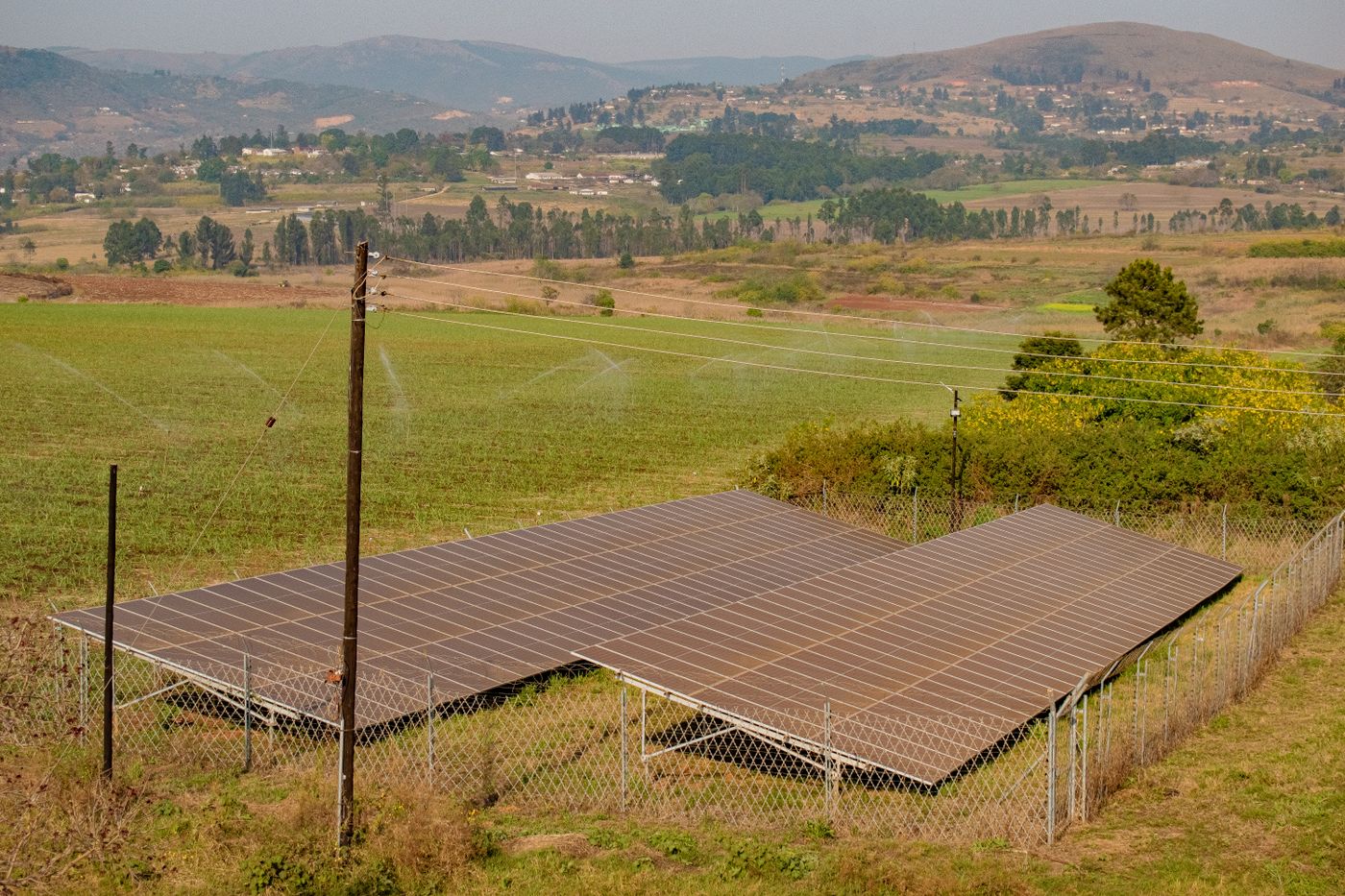
| Ground frame | There is open, unshaded land near the house or pump | Livestock, grass and mud splash, theft, need for a fence and a firm foundation |
| Pole mount | One or two panels for a pump, fence energiser or security light | Wind load on a single post, foundation depth, theft at low height |
| Shade structure or carport | You want shelter for a vehicle, tools or a milking area as well as power | Higher frame cost, needs a fundi who understands structural loads |
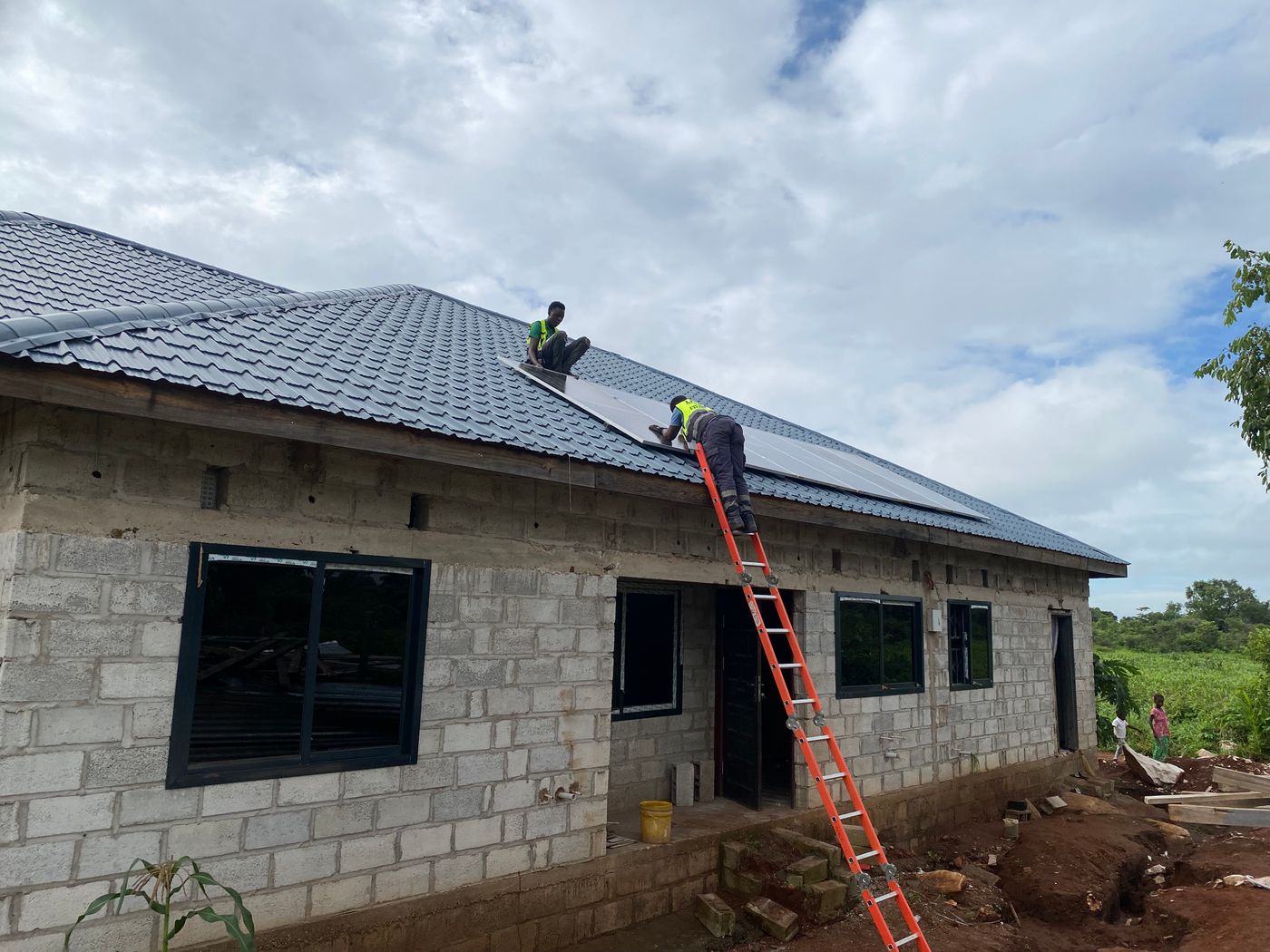
Roof mounts are the commonest choice because the roof is already there, out of reach of animals and harder to steal from. Have the roof structure checked first; a sagging store roof on light timber is not the place for an array. On corrugated iron, the rails must be fixed through to the purlins or rafters with suitable brackets and sealed fixings, not screwed only into the thin sheet. On tiles, use tile hooks designed for the tile type rather than drilling through tiles.
Ground frames are easier to clean and inspect, and they let you set the exact tilt and direction you want. They need a firm concrete footing, a fence against goats, cattle and children, and enough clearance that grass and mud splash do not reach the lower edge. Keep the grass cut, because grass in front of the bottom row is shade like any other.
Pole mounts suit small, dedicated loads such as a panel beside a borehole or cattle trough. The foundation must suit the wind load, which is larger than people expect for glass on a tall post.
Fixing Panels So Storms Do Not Move Them
Wind lifts panels the way it lifts iron sheets, and a tilted panel acts like a wing in a short rains thunderstorm. Most mounting failures come from the fixing chain: panel to rail, rail to bracket, bracket to roof structure.
A few rules hold for almost every installation:
- Clamp panels only where the manual allows. Panel manuals mark the zones on the frame where clamps may go. Clamping elsewhere can flex the glass and crack cells you cannot see.
- Use rails and brackets made for solar. Improvised angle iron and roofing nails rust, loosen and fail. Galvanised or aluminium rails with stainless fasteners last.
- Seal every penetration. A leak over the store or the bedroom is a common complaint after a careless solar job. Use proper sealing washers and keep fixings on the crest of corrugated sheets, not in the valley where water runs.
- Leave an air gap under the panels. Panel output falls as the cells heat up; the datasheet gives this as a temperature coefficient. A gap of several centimetres between panel and roof lets air flow and keeps the panels cooler than if they sit tight against hot iron.
- Earth the frames and rails. Metal frames should be bonded to an earth connection, which is also part of the protection against lightning surges discussed in our guide to solar performance in the rainy season.
- Use anti-theft fasteners on ground and pole mounts and on low roofs. Panels are easy to resell, and special-head bolts slow a thief down.
Access for Cleaning and Inspection
A panel you cannot reach is a panel nobody will clean. In dusty areas of the Rift Valley and the drier counties, dust between rains can noticeably cut output, and our panel cleaning guide explains how to measure your own loss and when cleaning pays. Plan access now: a ladder position that is safe, gaps between rows on a larger array, and ground frames low enough to clean with a soft brush.
After the first big storm of the season, and at least once a year, check the clamps, bolts, roof seals and cable runs. Loose clamps and cables rubbing on sharp sheet edges are easy to fix when caught early.
Mounting Checklist Before the Fundi Starts
- The array site is clear of shade from mid-morning to mid-afternoon, allowing for trees that are still growing.
- Panels face the equator where possible, tilted at least 10 to 15 degrees or the manual's minimum.
- The roof structure has been checked and can carry the array; fixings go into purlins or rafters.
- Solar rails and clamps are used, penetrations are sealed, there is an air gap and frames are earth-bonded.
- Ground and pole mounts have firm foundations, fencing and anti-theft bolts.
- There is safe access for cleaning and an agreed date to check fixings after the first storm.
Mounting is only one part of a working system. If you have not yet worked out how many panels you need, start with our solar sizing guide, then come back to this checklist before installation day.
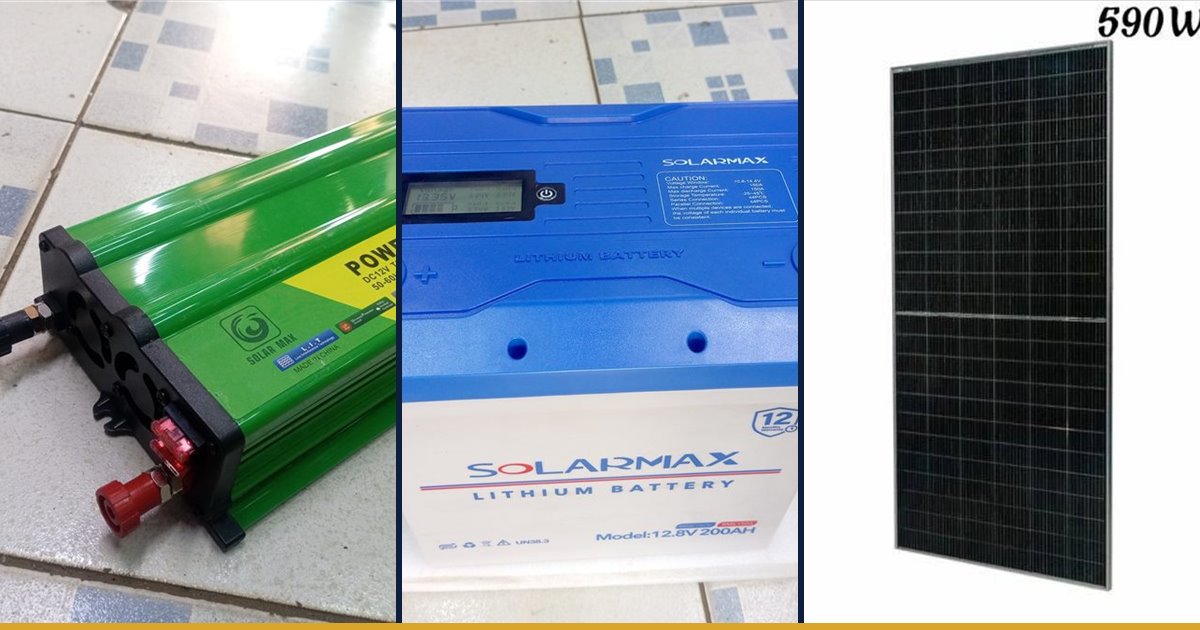
Fuga Equipment stocks solar panels, charge controllers, inverters and lithium batteries at our Eldoret, Nairobi and Nakuru branches. Browse the solar equipment range, or contact the team with a photo of your roof or site and we will help you plan the array, the mounting and the cable run before you buy.
Key Takeaways
- Kenya lies within about five degrees of the equator, so compass direction matters far less than in Europe or South Africa; face the equator where you can, but never trade direction for shade.
- Do not mount panels flat: a tilt of around 10 to 15 degrees, a common installer guideline near the equator, lets rain wash dust off the glass.
- Shade on part of one panel cuts output far more than its size suggests, so check the site in the morning, at noon and in the afternoon, and allow for trees still growing.
- Choose roof, ground or pole mounts by shade, space, theft risk and access; ground frames need fencing and a firm footing.
- Fix rails into purlins or rafters, clamp panels only where the manual allows, seal every roof penetration and earth-bond the frames.
- Plan safe access for cleaning and recheck all fixings after the first big storm of the season.
Frequently Asked Questions
Which direction should solar panels face in Kenya?
A fixed panel should generally face the equator: south in places north of it, such as Eldoret, and north in places south of it, such as Nairobi, Nakuru and Mombasa. Because Kenya is so close to the equator, the difference between directions is small, and an east or west roof face is usually better than a shaded one facing the ideal way.
What is the best tilt angle for solar panels in Kenya?
Near the equator the sun alone asks for very little tilt, but flat panels hold water and dirt. Installers commonly use a minimum of around 10 to 15 degrees so rain can wash the glass. Follow the panel manufacturer's manual if it specifies a different minimum, and avoid very steep angles unless the roof forces them.
Can I mount solar panels directly on an iron sheet roof?
Yes, using rails and brackets made for solar that are fixed through to the purlins or rafters, not only into the thin sheet. Place fixings on the crests of the corrugations, seal every penetration, leave an air gap under the panels and have the roof structure checked first.
How much does a small shadow affect a solar panel?
More than most people expect. Cells in a panel are wired in series, so a shaded section limits the current of the chain it belongs to. Bypass diodes reduce the loss, but a shadow across part of a panel still cuts that panel's output by much more than the shaded area, and one shaded panel can drag down a whole series string.
Is a ground mount better than a roof mount on a farm?
It depends on the site. Ground frames are easier to clean and let you set the exact angle, but they need a firm footing, fencing against livestock and theft, and clearance from grass and mud splash. A sound, unshaded roof at a useful pitch is often the simpler choice.