Every year the same story plays out on Kenyan vegetable plots. The short rains bring the kale, tomatoes, onions and capsicum up beautifully through November. Then in December the rain stops, the sun comes out hard, and within two or three weeks the crop is wilting at midday, the tomatoes are cracking, and the plot that promised January income is being watered by bucket every evening, or abandoned.
The dry weeks after the short rains are also when prices are best. Vegetables are scarce in many markets in January and February, households are back from the holidays, and every farmer who can keep a crop going has buyers. The difference between those who can and those who cannot is rarely a borehole. More often it is a small tank, a gravity drip kit, and a plan for how far the water has to stretch.
Our other guides cover drip line installation and layout and filters and fertigation in detail. This article is about using drip as a bridge: budgeting the water you have, setting up a low-cost gravity system before the rains end, and squeezing the most crop out of every litre through the dry spell.
Why Drip Is the Right Tool for a Dry Spell
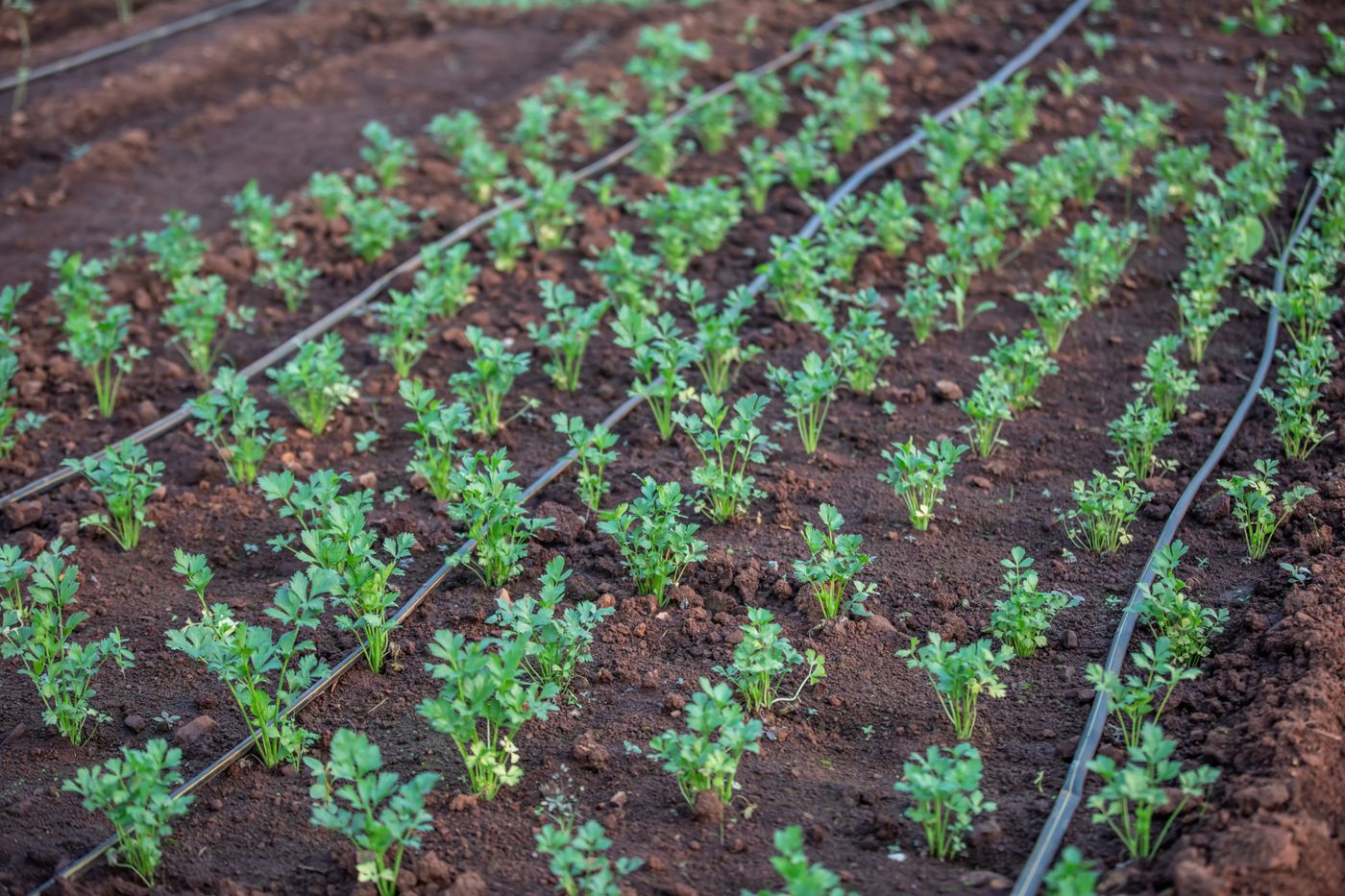
When water is limited, how much of it reaches the roots is what matters. Water poured over the surface, sprayed into the air or run down a furrow is partly lost to evaporation, runoff and deep drainage beyond the root zone. Drip delivers water slowly, right at the base of each plant, and wets only a small part of the soil surface.
Published efficiency tables, such as one reproduced by the USDA Agricultural Research Service, put furrow irrigation at roughly 50 to 70 percent application efficiency and micro or drip irrigation at roughly 80 to 95 percent. A well run surface system can do better than those figures and a neglected drip system can do worse, but on a smallholding with a limited tank, drip usually stretches the same water over more plants. Our comparison of drip irrigation versus sprinklers explains when each makes sense.
Drip has two further advantages in the weeks after the rains. Because the leaves stay dry, foliar diseases that took hold in the wet season spread less. And because only the planting row is wet, fewer weeds germinate between the rows.
Budget the Water Before You Plant It
The question that decides everything is simple: how many litres do you have, and how many do your plants need each day? Work it out before the dry spell, not in the middle of it.
Crop water use is measured in millimetres per day, and one millimetre over one square metre is one litre. In hot, dry, sunny weather, a full grown vegetable crop can use several millimetres a day; the exact figure depends on the crop, its growth stage and your local weather, and your extension officer or agronomist can give you a figure for your area. Use a cautious estimate and check the soil, rather than trusting the number blindly.
The worked example makes the point. A 100 square metre plot using 5 mm a day needs about 500 litres at the plants, or a little over 550 litres from the tank once losses are allowed for. A 5,000 litre tank empties in under two weeks with no rain or refill. That is not a reason to give up. It is a reason to decide early how big a plot you will carry through, to refill the tank from every remaining shower, and to use every trick that cuts daily demand.
Setting Up a Gravity Drip System
For a smallholding, the simplest bridge is a raised tank or drum feeding a low pressure drip kit by gravity. No pump runs during irrigation, and nothing needs fuel or power once the tank is full.
Raise the tank. Every metre of height gives roughly 0.1 bar of pressure at the outlet. Many smallholder drip kits are designed to work from a tank raised a metre or more above the beds; check the instructions that come with your kit. Our guide to tank stands and gravity flow covers building a safe stand.
Filter first. Drip emitters have small openings that block easily. Fit a filter between the tank and the lines, and clean it often. Water from roofs, pans and rivers carries silt and organic matter.
Keep lines short and level. Gravity systems have little pressure to spare, so long lines or lines running uphill water unevenly. Run laterals along the contour, keep each one within the length the kit recommends, and put the tank at the high side of the plot.
Fill the tank cheaply. Top up from roof catchment, a water pan, a shallow well or a river. A small solar water pump can lift water into the raised tank during the day without fuel, and a high pressure water pump fills it quickly where you have a nearby source. Our guide to pumping irrigation water from a river covers the rules and practicalities.
Fuga's irrigation kits come in sizes for different plot areas. Install the system while the rains are still falling, so you can test it, fix leaks and learn its quirks before the crop depends on it.
Cut the Crop's Thirst: Mulch, Timing and Priorities
Every litre the soil does not lose to evaporation is a litre that stays in the tank. Three habits make a large difference.
- Mulch the rows. A layer of dry grass, straw or crop residue over the drip line shades the soil, keeps it cooler and slows evaporation. It also suppresses weeds. Keep mulch a few centimetres away from plant stems to avoid rot.
- Water early. Run the system in the early morning, when evaporation is lowest and plants are ready for the day's heat. Avoid midday runs.
- Prioritise the money crop. If water runs short, protect the crop closest to harvest and the one buyers pay most for. A tomato crop at fruit fill or onions at bulbing suffer more from water stress than plants still establishing.
Which Crops to Carry Through
Not every crop is worth carrying into the dry spell. The best candidates are those that sell well in January and February, that are already established when the rain stops, and that give income within a few weeks of the end of the rains.
| Crop | Why it suits a drip bridge | Watch for |
|---|---|---|
| Kale and spinach | Picked weekly; steady cash; shallow roots suit drip | Aphids in dry weather |
| Tomatoes | Strong prices when supply is short; drip cuts leaf disease | Irregular watering causes cracking and blossom end rot |
| Onions | Stores well; good prices later in the season | Stop watering before harvest so bulbs cure |
| Capsicum and chillies | Long picking season; good margins | Water stress at flowering drops flowers |
| Watermelon | Demand peaks in the hot months | Reduce water near ripening for sweetness |
Planting a new crop into the dry spell is harder, because young plants need frequent water and the tank empties faster. If you plan to, start seedlings in a nursery while there is still rain, using planting trays, and transplant them in the evening with a seedling transplanter straight onto drip lines.
Feeding the Crop Through the Drip
A crop carried into the dry season still needs nutrients, and the drip line is an efficient way to deliver them. Soluble fertilisers dissolved in the tank, or injected through a simple venturi or fertiliser tank, go straight to the root zone with the water. This is called fertigation, and it lets you give small, frequent doses instead of one large application that can scorch roots in dry soil.
Ask your agronomist for a fertigation programme matched to your crop and soil, and follow three safety rules. Use only fertilisers that are fully water soluble, because undissolved granules block emitters. Flush the system with clean water after each fertigation run. And never fertigate from a tank that also supplies drinking water. Our guide to drip filters and fertigation covers the equipment in more detail.
A Simple Plan From November to February
Most of the work that decides whether a crop survives the dry spell happens before it starts. A simple timeline helps.
| When | What to do |
|---|---|
| Early to mid November | Decide the plot size from your water budget; buy and install the kit; raise and fill the tank |
| Late November | Test the system, fix leaks and uneven lines; raise any seedlings still needed |
| As the rains taper off | Mulch the rows; start drip runs when the soil check says so; refill the tank from every shower |
| December to February | Early morning runs; weekly filter cleaning; fertigation on agronomist advice; pick and sell |
| End of season | Flush, drain and store the lines; note what worked for next year |
Keeping the System Running
A drip system needs a few minutes of attention every week, and much of it is about blockages.
- Clean the filter regularly; a blocked filter starves the whole system.
- Flush the end of each line from time to time by opening the end cap and letting dirty water run out.
- Walk the lines while they run and look for dry plants, which mark blocked emitters, and wet patches, which mark leaks.
- Keep the tank covered so algae and mosquitoes cannot grow in it.
- At the end of the season, flush, drain and roll up the lines and store them out of the sun.
Your Dry Spell Drip Checklist
| Task | Check |
|---|---|
| Budget | Litres available and daily need worked out; plot sized to the water |
| Tank | Raised, covered, on a safe stand; refill source and pump ready |
| System | Filter fitted; lines short and on the contour; tested before the rains end |
| Saving water | Rows mulched; early morning runs; soil checked before each run |
| Crops | Market crops prioritised; seedlings raised while it still rains |
| Maintenance | Filter cleaned weekly; lines flushed; leaks and blockages fixed |
Drip Equipment From Fuga
Fuga stocks irrigation kits for different plot sizes, solar water pumps for filling raised tanks, braided hose and lay flat hose for moving water, and sprinklers where drip is not the right tool. For current prices and stock, check the price list or the full water and irrigation range, or WhatsApp 0716 961 018 with your plot size and water source and we will help you size a kit.
Key Takeaways
- Published tables put drip at roughly 80 to 95 percent application efficiency against 50 to 70 percent for furrows.
- Budget the water first: one millimetre over one square metre is one litre, so work out daily need against the litres you hold.
- Plant to the water, not the land: a small plot carried through to harvest beats a large one that dies halfway.
- Raise the tank for pressure, roughly 0.1 bar per metre, filter the water and keep lines short and on the contour.
- Mulch, water early in the morning and check the soil before each run to stretch every litre.
- Install and test the system while the rains are still falling, and clean the filter weekly.
Frequently Asked Questions
How long will a 5,000 litre tank last on drip?
It depends on plot size, crop and weather. As an illustration, a 100 square metre vegetable plot using 5 mm a day needs a little over 550 litres a day from the tank, so 5,000 litres lasts about nine days without rain or refilling. Mulch and refills stretch it further.
Can drip irrigation work without a pump?
Yes. Many smallholder drip kits run by gravity from a tank raised a metre or more above the beds. Each metre of height gives roughly 0.1 bar of pressure. Check your kit's instructions for the height it needs.
Which crops are worth carrying through the dry season on drip?
Crops that are already established and sell well in January and February, such as kale, spinach, tomatoes, onions, capsicum and watermelon. Protect the crop closest to harvest first if water runs short.
How do I stop drip emitters blocking?
Fit a filter between the tank and the lines and clean it often, flush the line ends regularly, keep the tank covered, and walk the lines while they run to spot dry plants that mark blocked emitters.