Beans are the crop that keeps a Kenyan smallholding fed between harvests. They mature fast, they fix some of their own nitrogen, they fit between maize rows or on their own plot, and a bag of dry beans in the store in January is worth a lot when school fees are due and food prices are climbing. In much of the country the short rains are the ideal window: the crop goes in with the first good rain and comes out in the dry weeks that follow.
Yet many bean plots give a fraction of what they could. The seed is often last season's grain from the kitchen, the rows are too crowded or too sparse, weeding comes late, and a few wet weeks bring anthracnose and blight that strip the leaves just as the pods fill. None of these problems needs expensive inputs to fix. They need the right variety, the right spacing and good timing.
This guide covers choosing a variety for your area and your market, preparing seed, spacing for pure stands and intercrops, the weeding windows that matter, and the pests and diseases to watch for in a wet season. For the work at the end of the season, our separate guide to bean harvesting, drying and threshing picks up where this one stops.
Choose a Variety for Your Rain, Not Just Your Taste
The short rains are short. In many semi arid parts of Eastern Kenya and other dry areas, the reliable rain may last little more than two months. A bean that needs three and a half months will run out of water at pod filling. In wetter highland areas the season is longer, but cool, wet weather raises disease pressure. So the first question is how long your rain usually lasts, and the second is which diseases are common where you farm.
The Kenya Agricultural and Livestock Research Organization (KALRO) has released many bean varieties for different zones. A few examples farmers will hear about:
- KAT B1 and other Katumani releases were bred for the drier, warmer parts of Eastern Kenya. Published descriptions give KAT B1 a maturity of about 60 to 65 days and good heat tolerance, and a short rains trial at the Katumani research centre found it among the highest yielding lines tested.
- Nyota is a KALRO bean bred for higher iron and zinc. Its production manual gives a maturity of about 60 to 70 days and describes it as drought tolerant and disease resistant.
- Traditional market types such as Rosecoco, Mwitemania and Wairimu remain popular with buyers. Where you plant them, use certified seed of an improved selection and watch disease closely.
Your county agriculture office or the nearest KALRO centre can tell you which released varieties suit your sub county. Ask before you buy, and then buy certified seed from a registered agro-dealer, keeping the packet and the receipt.
Seed: The Cheapest Place to Gain Yield
Several of the most damaging bean diseases, including anthracnose and common bacterial blight, are carried on the seed. Planting grain from last season's harvest, or from the market, can introduce disease into a clean field on day one. KALRO's bean production guidance lists certified seed and crop rotation among the first controls for bacterial blight, ahead of any spray.
If you must use your own seed, sort it by hand. Discard shrivelled, discoloured, spotted, cracked or insect damaged grains, and keep only plump, clean seed of one type. Mixed seed matures unevenly, which complicates harvest and lowers the price.
Two seed treatments are worth asking your agro-dealer or extension officer about:
- Seed dressing. Registered seed dressings help protect young plants from soil pests and seed-borne disease. Use only products registered by the Pest Control Products Board for beans, follow the label, wear gloves, and never eat or feed treated seed.
- Rhizobium inoculant. Beans form root nodules with rhizobium bacteria that fix nitrogen. Where beans have not been grown recently, or soils are poor, an inoculant mixed with the seed just before planting can improve nodulation. Keep inoculant cool and out of the sun, and do not mix it with a chemical seed dressing unless the label says they are compatible.
Spacing for a Pure Stand and for an Intercrop
Spacing decides how many plants share the water, light and nutrients on each square metre. Too few plants waste land; too many shade each other, stay damp and invite disease. KALRO's Nyota manual recommends either 50 cm between rows and 10 cm between plants, or 45 cm by 15 cm, with a seed rate of about 20 to 25 kg per acre and a planting depth of 4 to 5 cm. Many bush bean varieties are planted on similar spacing, but check the recommendation for your variety.
In a maize and bean intercrop, the common smallholder pattern is one row of beans between each pair of maize rows. The beans get light early, before the maize canopy closes, and are often harvested first. Because the beans share space, each bean row is usually planted at the same in-row spacing as a pure stand, but the total bean population per acre is lower. Our guide to short rains planting, seed and spacing shows how to mark the rows quickly with a line and pegs.
Plant at the depth the seed will reach moist soil, about 4 to 5 cm in most loams, slightly deeper in light sandy soil. Two seeds per hole is common where germination is uncertain; thin to the stronger seedling or leave both if your agronomist advises it for your spacing. A double barrel seed planter or a fertilizer applicator helps you place seed and fertiliser at an even depth without bending all day.
Fertility: Feed the Soil, Not Just the Plant
Beans fix part of their nitrogen once the nodules are working, but they still need phosphorus to build roots and nodules, and many Kenyan soils are low in it. Well rotted manure or compost worked into the planting furrow improves structure and moisture holding as well as fertility. Where you use fertiliser, ask your extension officer or agronomist for a recommendation based on a soil test, rather than copying what a neighbour applies to maize.
Check that nodulation is happening. About four weeks after emergence, carefully dig up two or three plants with the soil around the roots, wash the roots gently and look for small round nodules. Cut one open: a pink or red inside means it is fixing nitrogen; white or green means it is not. Few or no working nodules suggest the soil lacks the right bacteria, which is worth discussing with your extension officer before next season.
Weeding: Two Windows That Decide the Crop
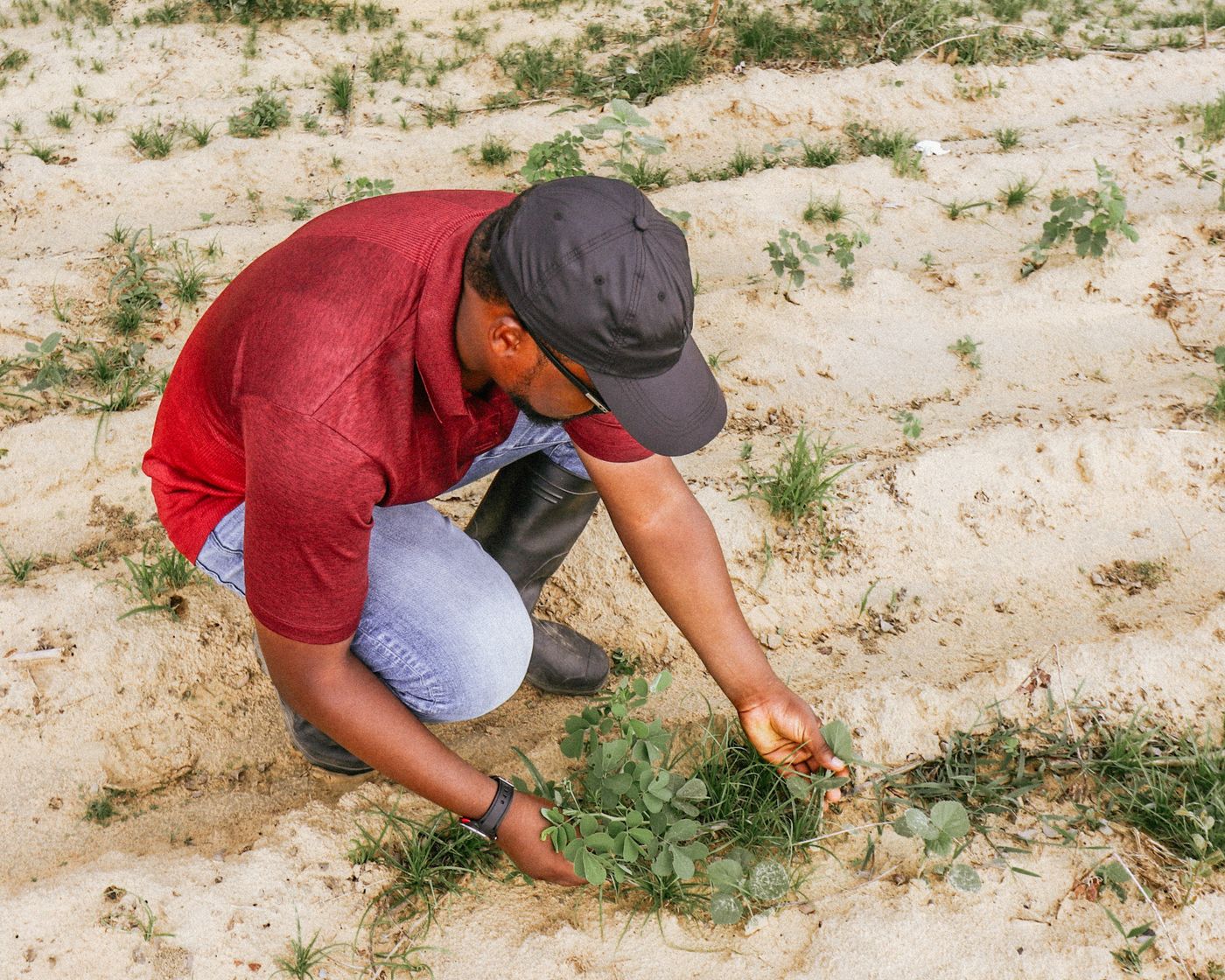
Bean plants are short and slow to cover the ground, so weeds compete hard in the first weeks. KALRO's bean production manual recommends at least one or two weedings: the first about two weeks after emergence and the second before flowering. Other East African guidance places the first weeding at two to three weeks. Either way, the point is to keep the crop clean through the early weeks, then stay out of the field once it flowers.
Two rules protect the crop while you weed. First, do not weed when the plants are wet with rain or dew. Moving through wet bean foliage spreads the spores and bacteria of anthracnose and blight from plant to plant on your hands, clothes and tools. Second, avoid weeding at flowering, because disturbing the plants and roots then can cause flower drop. KALRO's manual warns that weeding during flowering or in wet weather can lead to flower abortion or disease attack.
Bean roots are shallow, so weed with a light touch. A sharp, narrow jembe drawn shallowly between rows, with hand pulling close to the plants, does less root damage than deep digging. Our guide to weeding maize and beans in the short rains covers technique, labour planning and when herbicides are worth discussing with your extension officer.
Pests and Diseases in a Wet Short Rains Season
Rain and warmth are good for beans, and also good for the organisms that attack them. Scout the field at least once a week, walking a zigzag path and looking at leaves, stems and young pods.
| Problem | What you see | Prevention first |
|---|---|---|
| Anthracnose | Dark, sunken spots on pods; dark veins under leaves | Clean certified seed; rotation; stay out of the field when wet |
| Common bacterial blight | Brown leaf spots with a yellow halo; spots on pods and grain | Certified seed; rotation; seed dressing on advice |
| Angular leaf spot | Angular grey or brown spots bounded by leaf veins | Clean seed; rotation; remove crop residue |
| Root rots | Yellowing, stunted plants; rotten brown roots | Good drainage; manure; tolerant varieties where common |
| Bean fly (bean stem maggot) | Young plants wilt and die; swollen, cracked stem base | Early planting; seed dressing on advice; healthy, vigorous seedlings |
| Aphids | Clusters of small black insects on shoots and pods | Scout weekly; act early; spray only on advice |
Anthracnose is the clearest example of why wet weather matters. Published guidance notes that new infections are favoured by mild temperatures, high humidity and frequent rain, especially wind-driven or splashing rain, and recommends not cultivating or harvesting an affected crop when it is wet. That is the same discipline as the weeding rule: keep your hands and tools out of wet bean foliage.
When a spray is justified, ask your extension officer or an agronomist which products are registered for beans in Kenya, the dose and the pre-harvest interval, and follow the label. Spray in calm weather in the early morning or late afternoon, with a manual knapsack sprayer that you have calibrated. Our guide to spraying in the rainy season explains how to avoid product washing off before it works.
Timing the Harvest for the December Market
A crop planted with the first reliable short rains in late October or early November is ready, in most areas, from late December into January, depending on variety. That is when households are restocking after the holidays and when cash for the January school term is tight. A bag of clean, well dried beans can be sold then or kept as food through the dry season.
Harvest when most pods have turned yellow to brown and the beans rattle, not before. Pull or cut the plants in the morning, dry them on a tarpaulin rather than bare ground, and thresh only when fully dry. Our guide to bean harvesting, drying and threshing covers that stage in detail, and our post-harvest grain storage guide shows how to keep weevils out of the store.
Your Short Rains Bean Checklist
| Stage | Check |
|---|---|
| Variety | Released variety for your zone; matures within your usual rains with time to spare; a type traders want |
| Seed | Certified, or hand sorted clean seed; seed dressing and inoculant discussed with your agro-dealer |
| Spacing | Pure stand around 50 by 10 cm or 45 by 15 cm; one bean row between maize rows in an intercrop |
| Fertility | Manure or compost in the furrow; fertiliser on soil test advice; nodules checked at about 4 weeks |
| Weeding | First about 2 weeks after emergence, second before flowering; never when wet |
| Scouting | Weekly walk; anthracnose, blight, bean fly and aphids; registered products only |
| Harvest | Pods dry and rattling; dried on tarpaulins; threshed and stored dry |
Tools for the Bean Season
A good bean crop needs very little machinery, but the right hand tools save hours across a season. A sharp jembe and a panga for land preparation and weeding, a seed planter for even depth, and a calibrated knapsack sprayer for the times a spray is genuinely needed. For current prices on all of these, see the Fuga price list or the full farm equipment range, and WhatsApp 0716 961 018 if you want help putting together a kit for your plot.
Key Takeaways
- Pick a released variety for your zone that matures well inside your usual short rains, in a bean type traders want.
- Use certified seed or carefully hand sorted seed; anthracnose and bacterial blight are carried on seed.
- KALRO's Nyota manual recommends 50 x 10 cm or 45 x 15 cm at 20 to 25 kg of seed per acre, 4 to 5 cm deep.
- Weed about two weeks after emergence and again before flowering, never at flowering and never when plants are wet.
- Scout weekly for anthracnose, blight, bean fly and aphids, rotate fields and spray only registered products on advice.
- A crop planted with the first reliable short rains is ready from late December into January, when beans sell well.
Frequently Asked Questions
What is the best bean variety for the short rains in Kenya?
It depends on how long your rains last and which diseases are common. In drier areas, early maturing Katumani releases such as KAT B1 suit short seasons; KALRO's Nyota matures in about 60 to 70 days. Ask your county agriculture office or KALRO centre which released varieties suit your sub county.
What spacing should I use for beans?
KALRO's Nyota production manual recommends 50 cm between rows and 10 cm between plants, or 45 cm by 15 cm, planted 4 to 5 cm deep. In a maize intercrop, plant one bean row between each pair of maize rows. Check the recommendation for your variety.
When should I weed beans?
KALRO guidance is to weed at least once or twice: about two weeks after emergence and again before flowering. Avoid weeding at flowering, which can cause flower drop, and never weed when the plants are wet, because it spreads disease.
Can I plant beans from last season's harvest?
You can, but it is risky, because anthracnose and bacterial blight are carried on seed. Certified seed is safer. If you use your own, sort it carefully and discard shrivelled, spotted, discoloured or damaged grains.