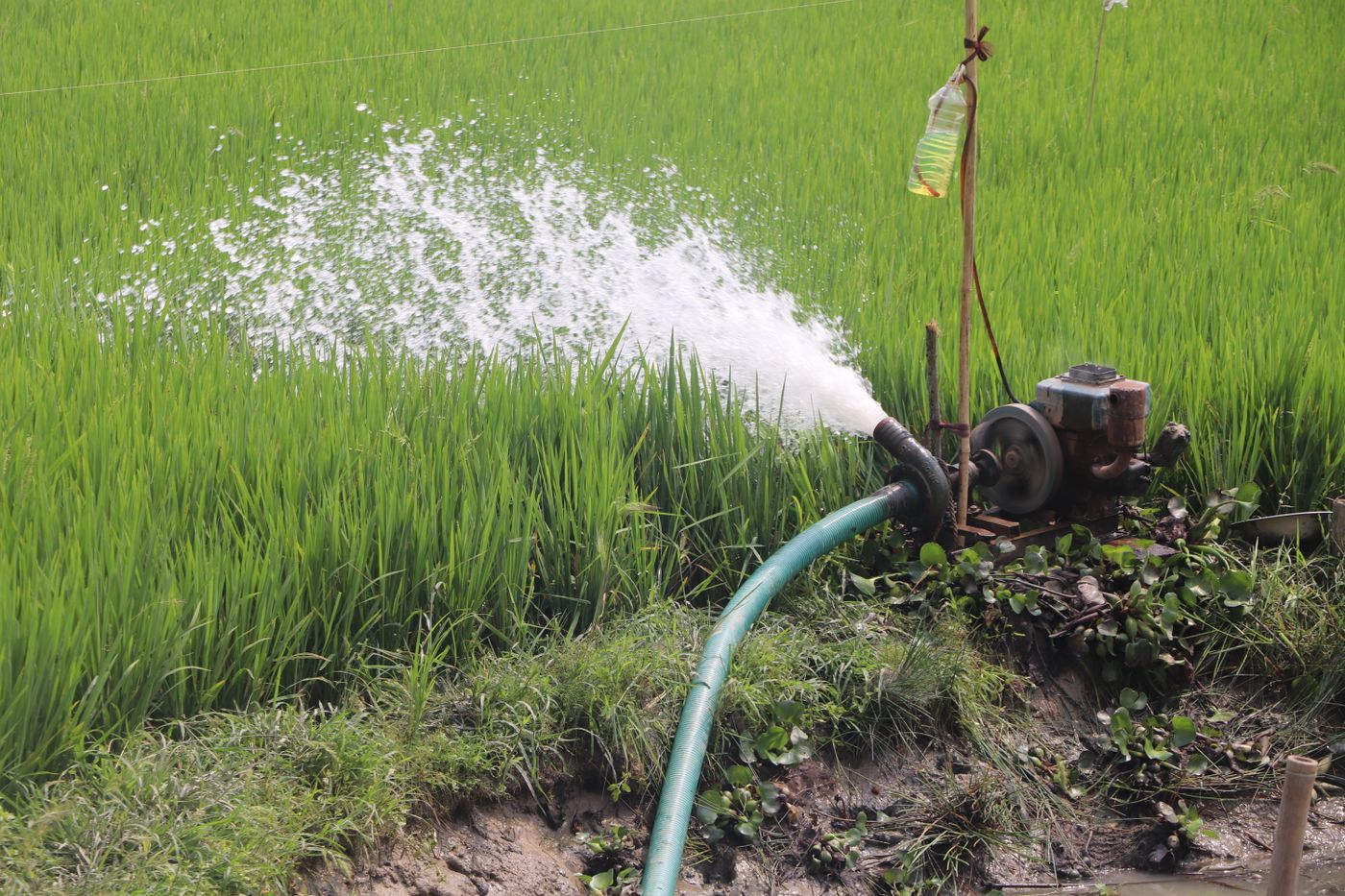
A pump arrives from town. The label says one and a half horsepower, more than the neighbour's, and the price was right. It runs, water comes out at the pump housing, and the pipe climbs the hill toward the tank. Somewhere on that slope the water stops arriving. The pump is still running. The tank is still empty.
This is the most common failure in water systems on Kenyan farms and homes, and it is almost never a fault in the pump. The pump is doing what it was built to do. It was never asked the right question before it was bought.
That question has two parts, and horsepower is neither of them. The numbers that decide whether a pump works on your site are total head and flow rate. Get them wrong and no horsepower rating rescues the installation.
Horsepower Is Not the Number You Are Buying
Horsepower describes what goes into the motor, not what comes out of the pipe. Two pumps of the same power can behave in opposite ways: one built to push a little water very high, the other to move a lot of water a short distance.
What a pump produces is a trade between two quantities. Head is how high it lifts water, in metres. Flow is how much it moves in a given time, in litres per hour. No pump maximises both. Ask for more height and it gives less water. Ask for more water and it cannot push as high.
That trade is printed on a graph the manufacturer supplies with every serious pump, called the pump curve. A unit advertised as "50 metres head, 3,000 litres per hour" is quoting the two ends of that curve, not promising both at once.
Total Head: Every Metre the Pump Has to Fight
Total head is the whole load on the pump, expressed as a height of water. It has three parts, and most people count only the first.
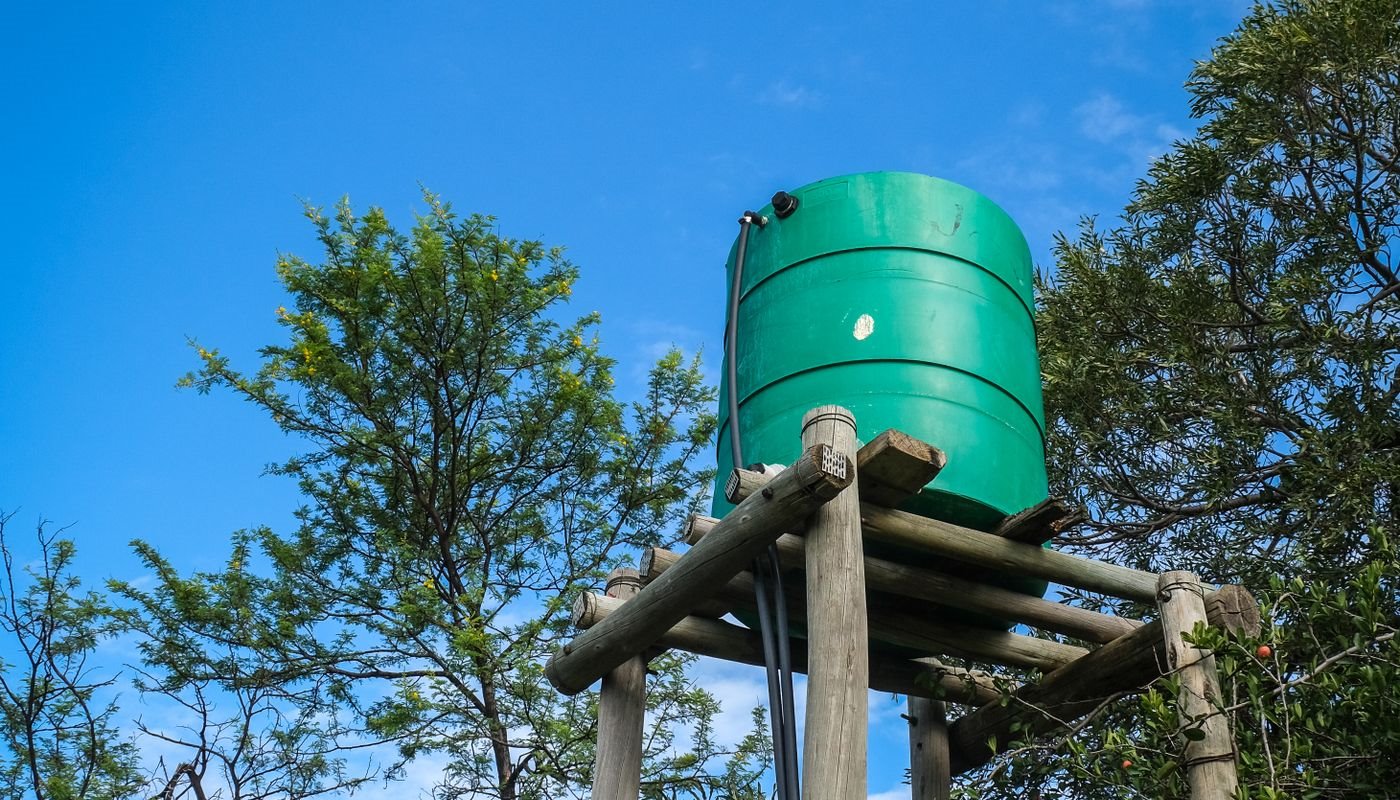
Static lift is the vertical distance from the water surface to the discharge point. On a borehole that surface is the pumping water level, not the top of the casing; on a river or shallow well it is the surface at its lowest seasonal point. It ends at the tank inlet, which on a raised tank means the top of the tank, not the ground.
Friction loss is head consumed by water rubbing through pipe, bends, valves and fittings. It is invisible, usually larger than people expect, and entirely under your control when you buy the pipe.
Residual pressure is any pressure still needed at the far end: a sprinkler, an upstairs shower, a drip emitter. One bar is about ten metres of head, so this is no small allowance.
Add the three and you have total head. Notice what is missing: horizontal distance adds no static lift. A pipe running 300 metres across flat ground adds friction, sometimes a great deal, but not one metre of height.
How to Measure Your Own Head
You do not need a surveyor, only a reliable way to establish vertical difference. Three practical methods.
A clear hose full of water. Water finds its own level, which makes transparent hose the cheapest accurate level ever invented. Fill it with no air bubbles, hold one end at the source and walk the other uphill. Where the water stops rising is exactly the height of the source. Mark it and repeat from the mark.
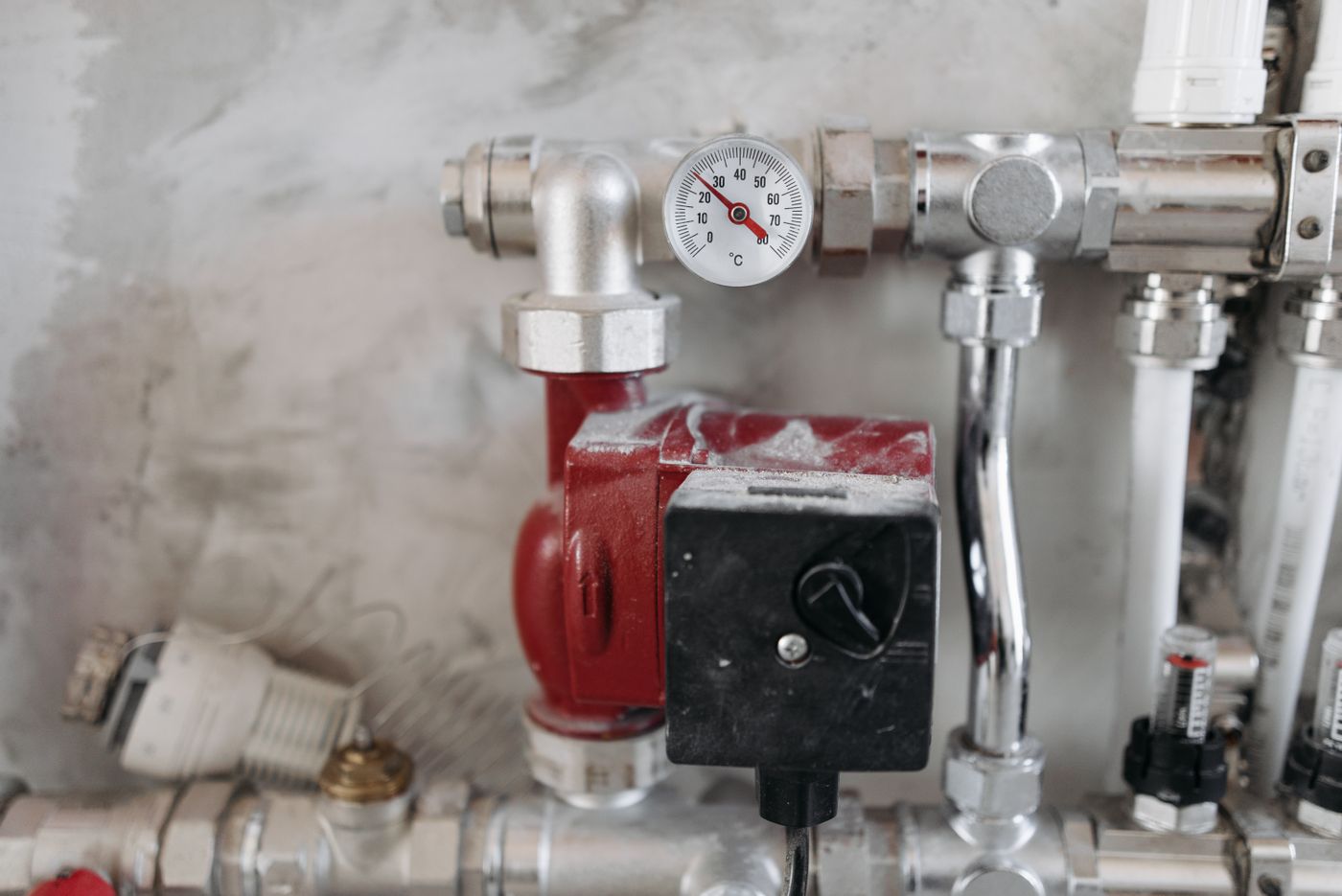
A pressure gauge. If a pipe already runs from source to tank position, cap the top, fill the pipe and read a gauge at the bottom. Every bar stands for about ten metres of vertical rise, and that is static head measured directly.
The driller's test report. For a borehole this is not optional reading. It gives total depth, standing water level, pumping water level at a stated rate, and yield: four figures that decide both numbers you are sizing. If it is lost, a level meter down the casing gives the standing level.
Then measure the pipe: total run in metres, internal diameter, and a count of the elbows, tees, non return valves and gate valves. Every fitting behaves like extra pipe. Write it all on one sheet of paper before you talk to anybody about a pump.
Friction Loss: The Head Hiding Inside Your Pipe
Friction is where most of the money is quietly lost, because it is decided by a choice about pipe rather than a choice about pumps.
The physics is unforgiving in a useful way. For a given flow, friction climbs steeply as diameter falls, because a narrower pipe forces the same water through a smaller opening at higher velocity. The standard hydraulic formulas put the relationship close to the fifth power of diameter: doubling the internal diameter of a pipe cuts friction loss by roughly thirty times at the same flow.
One pipe size up is very often cheaper than one pump size up, and unlike the pump it keeps saving money every hour the system runs. Pipe, fittings and valves are listed with current prices on our price list.
The practical target is water velocity: around one to two metres per second in the delivery line. Above that, friction climbs sharply and you invite water hammer, the pressure shock that splits fittings when a valve slams. Suction lines should always be one size larger than the delivery line.
Flow Rate: Start From What You Actually Need
Flow is the easier number, because it is a question about your own life rather than about physics.
For a household, size on tank filling rather than on taps. A 5,000 litre tank that must fill in two and a half hours needs 2,000 litres per hour. The tank absorbs the peaks, so the pump never has to match a shower and a washing machine at once.
For irrigation, work from the emitters. Count the drippers or sprinklers running at one time, multiply by the flow each is rated for, and add a margin. Settle this before the pipework is bought.
For livestock, size on daily consumption plus a reserve, then divide by the hours you will run the pump. Cattle drink unevenly, so storage matters as much as pump capacity.
Then apply the ceiling. A borehole cannot give more than it yields. If the test says the hole sustains 2,500 litres per hour, a pump asked for 5,000 pulls the level to the intake, runs dry and burns out. No pump negotiates with its source.
What Oversizing and Undersizing Each Cost You
Undersizing has the obvious failure, the one in the opening paragraph. Every pump has a shut off head, the height at which it delivers exactly nothing. Ask for more than that and flow is zero, not slow. Ask for slightly less and you get a trickle, which looks like a fault somebody might be able to fix.
Oversizing is the expensive failure, and it is far more common, because it feels like the safe choice.
An oversized pump runs off the efficient part of its curve, so you pay for energy that becomes heat and noise instead of water. It draws the borehole down faster than the aquifer refills, risking dry running, the quickest way known to destroy a submersible. It pushes velocity past what the pipework was chosen for, bringing water hammer and split fittings. And it can cavitate: pressure at the impeller falls low enough for vapour bubbles to form and collapse, eroding the metal from inside.
It also costs more to buy, more to run and more to replace when it fails early. Bigger is not a safe default.
Reading a Pump Curve Without an Engineering Degree
Once you have total head and required flow, the curve does the rest of the work.
Find them on the graph: flow along the bottom, head up the side. Plot your requirement as a single point. If it sits below the pump curve, the pump can do the job. If it sits above the line, it cannot, whatever the box says.
Your system has a curve too. At zero flow it starts at your static lift, because that height must be beaten before a drop moves. As flow rises, friction rises with it, roughly with the square of flow, so the system curve climbs. Where the two curves cross is the duty point: the flow and head your installation genuinely settles at. Not the catalogue figure. This one.
Aim to land near the middle of the curve, where efficiency is highest. Far left, close to shut off, means a throttled pump running hot. Far right means an overworked pump drawing more current than it should. Ten to fifteen percent above your calculated head is sensible. A hundred percent margin is not caution, it is an oversized pump.
A Worked Example You Can Copy
A borehole on a farm outside Nakuru. The test report gives a pumping water level of 38 metres and a sustainable yield of 2,500 litres per hour. The tank sits on a 4 metre stand, on ground 6 metres higher than the wellhead. The delivery run is 120 metres of 32 mm pipe with a few elbows and a non return valve.
Static lift is 38 metres up the hole, plus 6 of slope, plus 4 of stand: 48 metres. Friction through that pipe at 2,000 litres per hour comes to roughly 5 metres from the pipe table, and the fittings add about 2 more. Total head is about 55 metres at 2,000 litres per hour, comfortably inside the yield of the hole.
Take that pair of numbers to a supplier and the conversation is short and correct. Without them it is a conversation about horsepower, which is how the pump in the opening paragraph got bought.
If the numbers come out awkward, revisit the pipe before the pump. Here, 25 mm pipe would have added around 19 metres of friction instead of 5, pushing total head near 70 metres and forcing a thirstier pump for its whole working life.
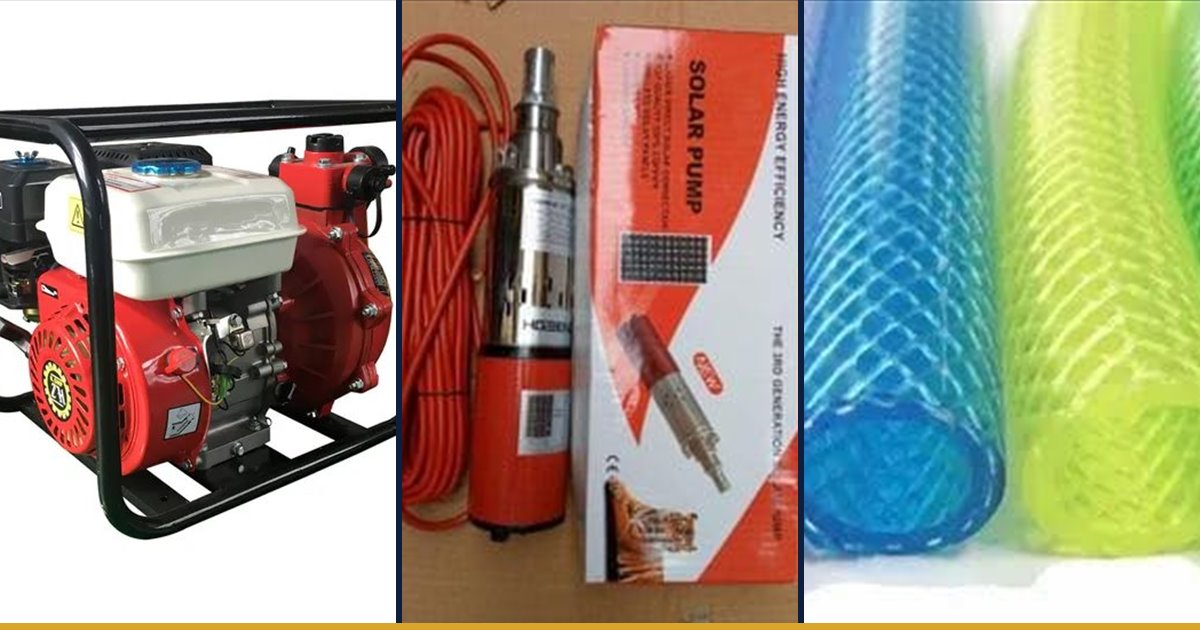
Bring your sheet of paper into any of our six branches, or send a photo on WhatsApp. Our water equipment range covers surface, submersible, booster and pressure pumps, and if grid power rather than head is your real constraint, the solar equipment page covers pumping straight from panels.
Key Takeaways
- Horsepower tells you nothing useful. Total head in metres and flow in litres per hour decide whether a pump works on your site.
- Total head is static lift plus friction loss plus any residual pressure. Horizontal distance adds friction but no lift.
- In a borehole, measure from the pumping water level, never the standing level. Drawdown strands a pump that started well.
- Doubling internal pipe diameter cuts friction by roughly thirty times. One pipe size up beats one pump size up.
- Oversizing wastes fuel, risks dry running, invites water hammer and can cavitate the impeller. Ten to fifteen percent margin is enough.
Frequently Asked Questions
How do I calculate total head for a water pump?
Add three things: static lift, friction loss and residual pressure. Static lift runs from the pumping water level to the tank inlet, which on a raised tank means the top of the tank, not the ground. Friction comes from your pipe supplier's table for that diameter and flow. Residual pressure is whatever the far end still needs, at about ten metres per bar.
What is the difference between head and flow rate?
Head is how high a pump can push water, in metres. Flow rate is how much it moves in a given time, in litres per hour. They trade against each other: ask for more height and you get less water, ask for more water and it cannot push as high. A pump advertised as fifty metres and three thousand litres per hour is quoting the two ends of that trade, not both together.
Why is my pump running but not filling the tank?
Almost always because the total head on site is higher than the pump can deliver. Every pump has a shut off head, the height at which it delivers nothing at all, and past that point flow is zero rather than slow. Common causes: counting only the visible lift and ignoring friction, using the standing water level instead of the pumping level, or a delivery pipe one or two sizes too small.
Does pipe size affect pump performance?
Enormously. Friction loss rises close to the fifth power of diameter, so doubling the internal diameter cuts friction by roughly thirty times at the same flow. One pipe size up is often cheaper than one pump size up and it keeps saving fuel or power. Make the suction line one size larger than the delivery line.
Is a bigger pump always better?
No, and oversizing is the more expensive mistake. An oversized pump runs off the efficient part of its curve, so you pay for energy that becomes heat and noise. It draws a borehole down faster than the aquifer refills, risking dry running. It pushes velocity past what the pipework was chosen for, bringing water hammer. Ten to fifteen percent above your calculated head is margin enough.