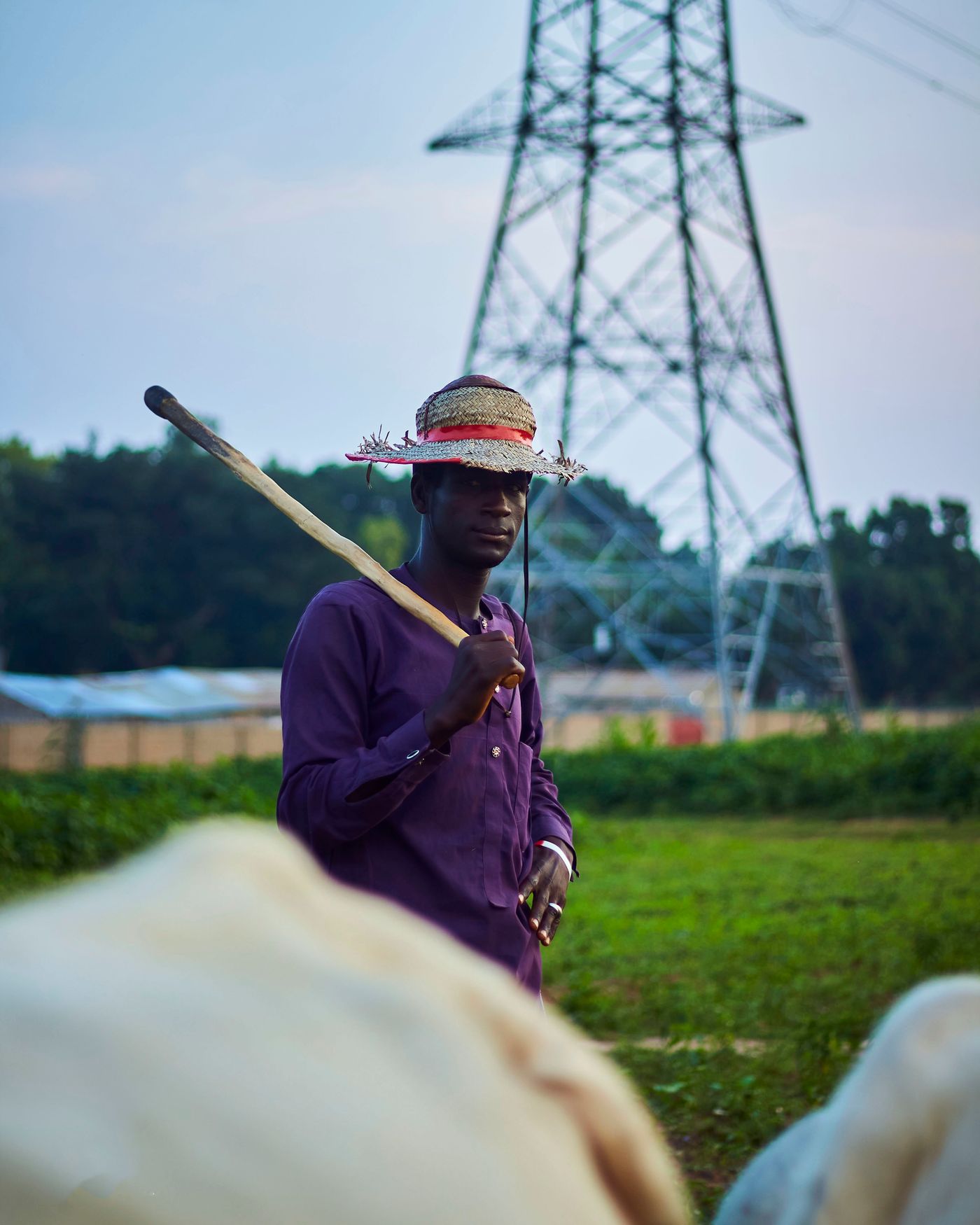
The power line runs along the main road, a long walk from the new farm gate. The farmer has bought the plot, fenced it, sunk a well and planned a poultry house and a small dairy unit. Now comes the question that will shape every equipment decision for years: pay to bring the KPLC line in, go off-grid with solar, or run on a generator until something better comes along?
There is no single right answer, and the wrong one is expensive in either direction. Bring the grid to a farm whose loads are small and mostly daytime, and you have paid for poles and a meter that a modest solar system could have replaced. Go off-grid on a farm that needs to run a posho mill or a large chaff cutter, and you will find that solar sized for heavy motors costs more than the line would have.
This guide sets out how to make the decision for a Kenyan farm: what a grid connection involves, what solar does well and badly, where a generator fits, why many farms end up with a hybrid, and a simple way to compare the options over the years you will actually own them. It deliberately avoids quoting connection charges or tariffs, which change and depend on your site; it shows you what to ask for so you can put your own numbers in.
What Bringing the Grid In Actually Involves
Connecting a farm to the national grid starts with an application to Kenya Power (KPLC). For a site close to an existing transformer with spare capacity, a connection can be straightforward. For a site some distance from the line, KPLC surveys the route and gives a quotation based on what must be built: poles, conductor, and sometimes a new transformer. The further the farm is from existing infrastructure, the more that quotation grows.
Several things catch farmers out. If the new line must cross neighbouring land, the owners' consent (a wayleave) is needed, and a single refusal can force a longer route. Connection times vary and can stretch for months on a long extension. Government programmes, such as the Last Mile Connectivity Project, have at times reduced connection charges for homes close to existing transformers; whether anything applies to your plot is a question to put to your local KPLC office, not something to assume.
Also ask what supply you will get. Most rural connections are single-phase. Some farm machinery, including many larger posho mills and some big chaff cutters and pumps, is designed for three-phase power, and a three-phase connection is a separate and usually costlier request. Our guide to single-phase versus three-phase power explains which machines need which.
What Off-Grid Solar Does Well, and Where It Struggles
Solar is at its strongest on loads that run in daylight and do not need huge bursts of power. A solar water pump that fills a tank during the day, lights for the house and poultry unit, phone charging, a small fridge, an electric fence energiser and security lights are all natural solar jobs. Water pumping is the classic example, because the tank becomes the store of energy and the pump needs no battery at all; our guide to solar water pumps covers when that pays.
Solar gets expensive in three situations. First, heavy motors: a posho mill, a large chaff cutter, a welding machine or a big borehole pump draws a lot of power, and starting a motor takes several times its running power for a moment. Panels, battery and inverter must all be sized for that, and the cost rises steeply. Second, heavy night loads: anything that must run after dark comes out of the battery, and batteries are usually the most expensive part of an off-grid system and the part that wears out. Third, long cloudy spells: during the long and short rains, output drops, and a system must either be oversized or backed up. Our guide to solar in the rainy season covers how to plan for grey weeks.
Solar's great advantage is that once it is paid for, the sun sends no bill. Its great disadvantage is that you pay for most of your energy upfront, and the battery must be replaced at the end of its life. Lithium batteries generally last longer than lead-acid; our comparison of solar battery types explains the trade-off.
Where a Generator Fits
A generator is the fastest power you can buy: it can arrive this week and run a heavy motor tomorrow. It is cheap to buy compared with a long grid extension or a large solar system, which is why many farms start with one. The catch is the running cost. Every hour of use burns fuel and adds wear, and the cost of servicing and repairs adds up over the years. A generator that runs a posho mill for a few hours a day is often sensible; a generator that runs the farm all evening, every evening, is usually the most expensive power on the farm.
Noise, fumes and security matter too. A generator must run in a ventilated place away from houses and animal pens, never indoors, and fuel stored on the farm is both a fire risk and a target for theft. Someone has to start it, refuel it and keep the oil changed, which is easy to forget on a busy farm.
For most farms, the generator's natural role is as a backup or a dedicated machine for heavy, occasional work, rather than the main source of power. Our guide to choosing a diesel generator helps size one for the jobs it will actually do.
Comparing the Options Over Time
The mistake most buyers make is to compare only the price on day one. A fair comparison looks at total cost over the years you expect to farm the land: connection or purchase cost, plus running costs (bills, fuel, servicing), plus replacements (batteries, generator overhauls), over perhaps ten years. The shape of those costs differs sharply between the options.
To make the comparison real, put your own numbers into the same three shapes. For the grid: the KPLC quotation plus an estimate of monthly bills from your expected loads. For solar: the quoted system price, an estimate of battery replacement at the end of its expected life, and any generator backup. For a generator: purchase price plus fuel per running hour times hours per year, plus servicing. Our guide to solar sizing shows how to turn a list of loads into daily energy, which is the starting figure for all three.
Count reliability as well as shillings. A grid supply that drops out for hours at a time costs a poultry or dairy farmer in lost hatches or spoiled milk, and that cost belongs in the comparison. Equally, an off-grid system with a small battery that runs flat after two grey days carries a hidden cost. Ask neighbours already on the local line how often it fails, and ask any solar supplier how many days the proposed battery will carry your essential loads without sun.
Matching the Power Source to the Farm
Most farms are a mix of loads, and the table below shows which source tends to suit which. It is a starting point for discussion with your supplier and KPLC, not a rule.
| Load or situation | Usually suits | Why |
|---|---|---|
| Lighting, phone charging, security lights | Solar | Small loads, easy to store in a modest battery |
| Daytime water pumping to a tank | Solar, direct-driven | The tank stores the energy; no battery needed |
| Electric fence energiser | Solar | Very small, steady load |
| Incubator or milk cooler that must never stop | Grid with battery backup, or solar with ample battery | Needs reliable round-the-clock power |
| Posho mill, large chaff cutter, welding | Grid (often three-phase) or generator | Heavy motors and starting surges are costly on solar |
| Remote plot far from the line, light loads | Off-grid solar | Grid extension cost is hard to justify |
| Grid nearby but unreliable | Grid plus solar or battery backup | Covers outages without paying for a full off-grid system |
Why Many Farms End Up With a Hybrid
The honest answer for many mid-size farms is a combination. A common pattern is grid power for the heavy machinery, with a solar and battery system carrying lights, the incubator or cooler and the essentials through outages. Another is off-grid solar for daily needs with a generator for milling days and long cloudy spells. A third is grid now, with solar added later to cut bills on daytime loads such as pumping.
Hybrids need planning so the parts work together. If the grid and a solar inverter will both feed the same wiring, the inverter must be designed for that, and changeover must be safe so that no power can flow back into KPLC lines while technicians work on them. Our guide to backup power for incubators and milk coolers covers how switch-over works, and a voltage stabiliser can protect sensitive equipment on a grid supply that fluctuates.
Questions to Ask Before You Commit
- Have I listed every load, its rating, its daily hours and whether it runs at night?
- Do any of my machines need three-phase power, now or in the next few years?
- What does KPLC's written quotation say, and what is the realistic connection time?
- Will the line need wayleaves across neighbours' land, and are they willing?
- What does a correctly sized solar system cost, including battery replacement over ten years?
- How many hours a year would a generator run, and what would the fuel and servicing cost?
- Which loads must never stop, and what backup covers them under each option?
- How does each option grow if the farm expands?
The Short Version
Farms close to the line with heavy machinery usually do best on the grid, often with solar or battery backup for essentials. Farms far from the line with light, mostly daytime loads usually do best on off-grid solar, sometimes with a small generator for occasional heavy work. Everything in between is a numbers question, and the numbers are easy to gather once you have a load list and a written KPLC quotation. For milling in particular, our guide to posho mill power options works through the same choice for one of the heaviest loads on a farm.
Fuga Equipment supplies solar panels, charge controllers, inverters, lithium batteries, solar water pumps and generators at our Eldoret, Nairobi and Nakuru branches. Browse the solar equipment range, or contact the team with your load list and we will help you compare solar, generator and hybrid options for your farm.
Key Takeaways
- Get a written KPLC quotation and timeline for your plot before comparing anything; the cost of a grid connection depends on how far the line must come and what must be built.
- Off-grid solar is strongest on daytime and light loads such as pumping to a tank, lighting and fence energisers, and gets expensive for heavy motors and heavy night loads.
- A generator is quick and cheap to buy but costly to run every day; it usually works best as backup or for heavy, occasional jobs.
- Compare total cost over about ten years, including bills, fuel, servicing and battery replacement, not just the price on day one.
- Many farms end up with a hybrid, such as grid for heavy machinery plus solar and battery backup for essentials.
- Check whether any machine needs three-phase power, and plan for how the farm will grow.
Frequently Asked Questions
How much does it cost to connect a farm to KPLC?
It depends on your site. For a plot near a transformer with spare capacity it can be straightforward; for a plot further away KPLC surveys the route and quotes for the poles, conductor and any transformer needed. Ask your local KPLC office for a written quotation, and ask whether any government connection programme applies to your plot.
Is off-grid solar cheaper than a KPLC connection?
Sometimes. For a remote plot with light, mostly daytime loads, off-grid solar is often the better value because a long grid extension is costly. For a farm near the line that runs heavy motors such as a posho mill or a large chaff cutter, the grid usually wins, because solar sized for heavy motors and starting surges is expensive.
Can solar run a posho mill or chaff cutter?
It can, but the panels, battery and inverter must be sized for the motor's running power and its much larger starting surge, which raises the cost sharply. Many farms run heavy machines on the grid, often three-phase, or on a generator, and use solar for lighter loads.
Can I combine KPLC power and solar on my farm?
Yes, and many farms do. A common setup is grid power for heavy machinery with a solar and battery system carrying essentials through outages. The inverter must be designed for use alongside the grid and changeover must be safe, so that no power can flow back into KPLC lines.
When does a generator make sense instead of solar or the grid?
When you need power quickly, for heavy jobs a few hours at a time such as milling, or as backup during outages and long cloudy spells. Running a generator every evening for everyday loads is usually the most expensive way to power a farm once fuel and servicing are counted.