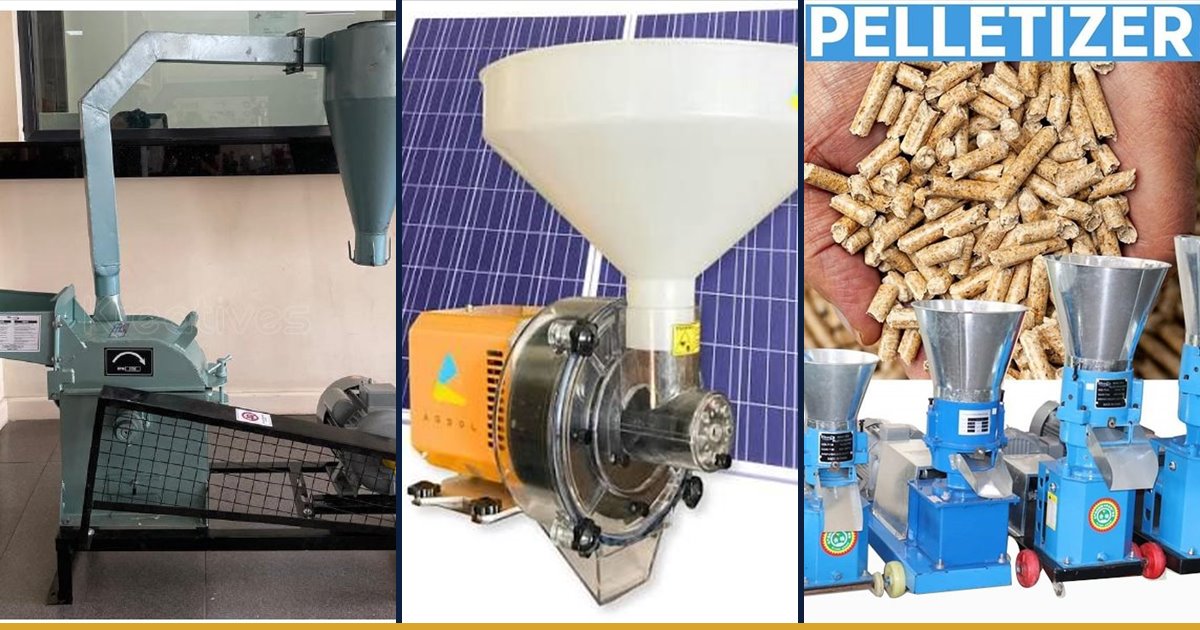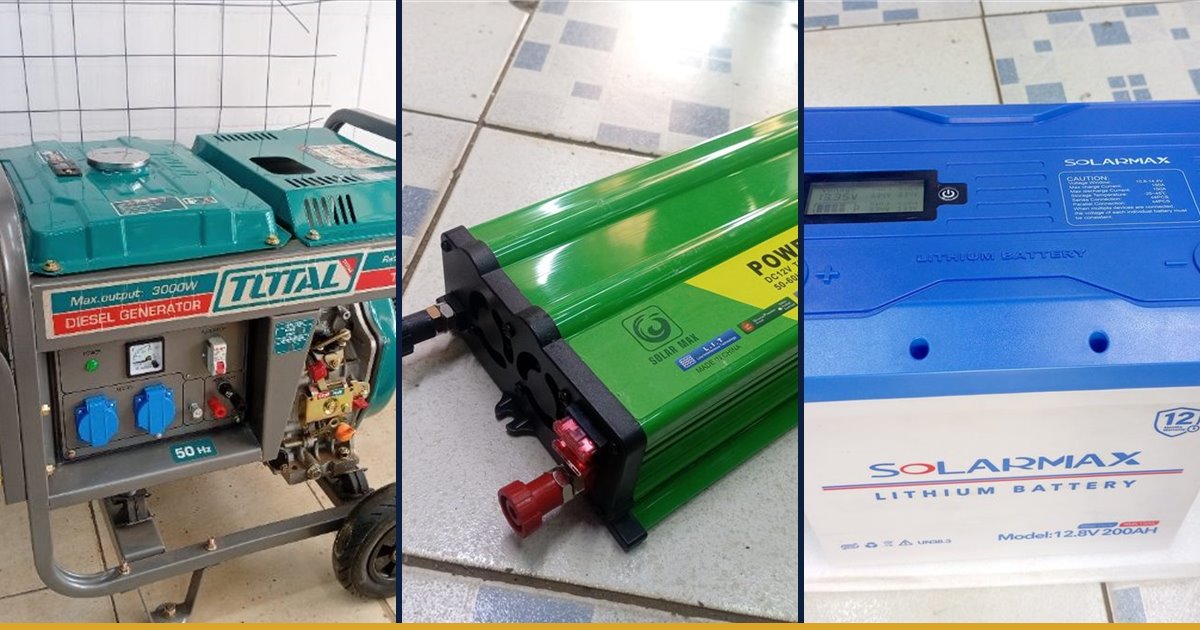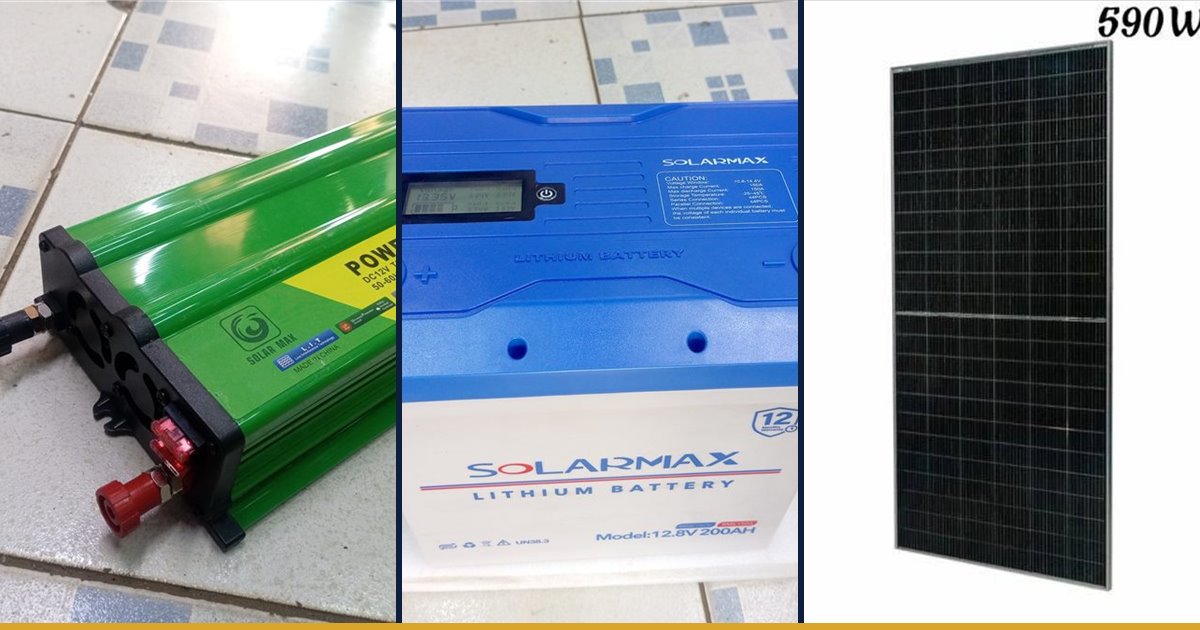
A trader finds a solid hammer mill, gets it home, and bolts it down in the shop that already runs the lights and the fridge. He wires it to the same single-phase socket, feeds in the first tin of maize, and presses start. The lights dip, the motor lets out a long groan, and the breaker trips before a single grain is ground. Nothing is wrong with the machine. The power behind it was never going to start it.
This is the quiet trap in the milling business. Buyers spend weeks comparing mills and almost no time on the thing that decides whether the mill ever earns: the power source standing behind it. The machine is the easy decision. The power is the one that determines whether the shop grinds all day, sits idle through every outage, or slowly bleeds its profit into fuel and repairs.
This guide walks through the whole power question for a Kenyan mill: why milling is such a brutal load to start, how to size the motor, how single-phase and three-phase mains differ, when a diesel or petrol engine beats the grid, how to size a generator that will actually spin the mill up, and the honest limits of solar. If you are still choosing the machine itself, start with our guide to the posho mill business and come back here for the power.
Why a Mill Is One of the Hardest Loads You Will Ever Start
A posho mill, whether a hammer mill hurling grain against a screen or a burr mill grinding it between two plates, has to drag a heavy rotor from dead stop up to full speed, and then hold that speed while grain fights back against it. That is a fundamentally harder job than running a fan, a light or even a water pump.
Two things make it hard. The first is starting torque: the motor must break away a heavy spinning mass and beat static friction before anything useful turns. The second is inrush current. An electric motor started direct-on-line, meaning switched straight onto the mains, which is the cheapest and most common method, draws a large surge of current for the first few seconds until it reaches speed, many times the current it draws once running steadily.
The surge never appears on the nameplate, but it is what trips your breaker, dims the neighbours, and quietly cooks an undersized cable. A mill that pulls a modest current while grinding can demand a brief gulp several times larger at the instant of starting. A hammer mill is worse than a burr mill, because its heavier, faster rotor carries more inertia, which is also why a mill starts harder than a pump of the same nameplate rating.
The load that matters is the one you cannot see. Size the supply for the starting surge, not the running figure on the plate. A supply that comfortably runs a mill can still fail, every time, to start it.
Sizing the Motor to the Mill, Not the Mill to the Motor
The mill sets the requirement and the motor serves it, never the other way round. Every mill has a recommended power input on its plate or in its manual, in kilowatts or horsepower, and a design speed in rpm. Your job is to feed it a motor that meets or slightly exceeds that input and turns it at the right speed.
Undersizing is the classic and most expensive mistake. A motor that is a little too small starts slowly, runs hot, loses torque as it heats, and either trips on overload or burns its windings inside a season. It also grinds slower, which quietly steals throughput, the thing you are actually selling.
Modest headroom is cheap insurance. A motor with a little margin over the mill's rated input starts cleanly, holds speed when a hard cob or a stray stone passes through, and runs cooler. Running temperature is the single biggest factor in how long a motor lasts, so a motor that is never stressed to its limit keeps working for years.
Match the drive as well as the power. Mills are belt driven and the pulley diameters set the speed, so take the ratio from the mill maker and keep the belts tensioned and aligned, because most mill stoppages are drive faults rather than motor faults.
Finally, check the duty rating. A mill grinds for hours, so it needs a continuous-duty motor, not a short-time rating borrowed from a burst-use tool, and this is one place a cheap motor hides its weakness. It is why we supply matched sets: our electric posho mill and AGSOL hammer miller come with the motor and drive already worked out for the machine.
Single-Phase or Three-Phase Mains: The Decision That Sets Your Ceiling
If you plan to run on the grid, the first real question is how many phases arrive at your plot. Kenyan homes and small shops usually receive single-phase power, nominally 240 volts, two wires and an earth. Larger premises, industrial plots and many established market centres can receive three-phase power, nominally 415 volts between the phases. Which one you have quietly sets the ceiling on the mill you can run.
Single-phase is perfectly fine for small mills, but it has a hard limit. A single-phase motor is harder to start, needs extra starting components, and above a certain size becomes impractical and costly. Force a large hammer mill onto a single-phase line and you fight starting current, voltage dip and nuisance tripping every working day, and you shorten the life of everything in the circuit.
Three-phase changes the physics in your favour. A three-phase motor is inherently self-starting, produces smoother torque with no pulsing, and delivers more power from a smaller, cheaper, lighter frame. The same power travels down thinner cable at higher voltage with less loss along the way. For any serious commercial mill, three-phase is simply the right home, and the difference is felt every time the machine starts.
To find out what you have, count the wires into the meter or ask the utility. If your plot carries only single-phase and you want a large mill, apply for a three-phase supply early, before you buy the machine, because a new connection can take time and the cost depends heavily on how far the nearest three-phase line runs from your plot. Know that number before you commit to a mill that needs it.
One caution on shortcuts. Phase converters that make a single-phase supply pretend to be three-phase compromise starting torque and reliability, the two things a mill needs most. Fix the supply properly rather than working around it.
Three-phase is not a luxury for a mill, it is the cheaper answer per bag ground. The motor is smaller, the cable is thinner, the start is smoother and the whole installation runs cooler. If a large mill is your plan, chase the three-phase connection before you chase the machine.
Diesel and Petrol Engines: When the Mill Carries Its Own Power
Away from a reliable three-phase line, many Kenyan mills skip electricity altogether and are driven straight off an engine through a belt. This is not a compromise or a fallback. In the right site it is the best design there is, and it has ground grain across rural Kenya for generations.
Diesel is the workhorse. It makes high torque at low speed, exactly what a mill asks for, uses fuel more slowly than petrol for the same work, and is built for long hours under load. Most of the single-cylinder engines you see bolted next to a mill in a trading centre are diesels for these reasons, and they run all day if looked after.
Petrol has its place at the small and portable end. A petrol engine is lighter, cheaper to buy and easy to start by hand, which suits a small mill that moves between sites or grinds only a few hours a week. It costs more per hour and reaches fewer total hours before an overhaul, so treat it as the tool for mobile or occasional duty, not a shop grinding from dawn.
Mind the governor, too. An engine-driven mill leans on it to hold speed as grain feeds in and out, and a worn or badly set one lets the speed sag under load, which ruins the grind and lugs the engine.
Altitude is a real tax in the highlands. A naturally aspirated engine loses power as it climbs, because thinner air carries less oxygen into each stroke, and the common engineering rule of thumb is a loss of roughly one percent of rated power for every hundred metres above sea level. In Eldoret at around 2,100 metres, or Nakuru near 1,850, that is a meaningful slice of rated output gone before the engine turns the first pulley, so size it with that loss already counted.
Fuel Versus Electricity: Cost, Reliability and Wear
The honest comparison is a set of trade-offs, not a single number, and the right answer depends entirely on your site and your hours. On running cost, grid electricity is generally the cheaper way to turn a shaft wherever a reliable supply exists, because you pay only for the units you use and there is no engine to feed and service. A diesel engine buys you independence, but you pay for it in fuel and in maintenance. We do not quote tariffs or fuel prices in this guide because they move, so check current figures yourself and put your own numbers on the page. For machine and motor pricing, see our price list.
On reliability, the picture flips depending on where you are. In a town with a steady supply, the grid wins on convenience. In an area with frequent or long outages, a mill tied only to the grid sits dead exactly when a queue of customers arrives, while a diesel that owes nothing to the utility keeps grinding. Reliability here is measured in customers served and customers turned away.
On wear and attention, an electric motor is close to fit-and-forget: keep it cool, clean and protected and it runs for years. An engine needs oil changes, filters, clean fuel and a listening ear, and it will not forgive neglect. That maintenance is the price of the independence the engine gives you, and it belongs in the plan from day one.
Many of the most successful mills run both: grid or three-phase as the cheap, clean primary drive, with a diesel standing by to cover outages so the shop never turns a customer away.
Sizing a Generator That Will Actually Start the Mill
If you run on a generator, as backup in town or as the primary source off-grid, the sizing rule is the one that catches nearly everyone: size the set for the start, not the run.
Generators are rated in kVA, and a mill motor's brief starting surge is several times its running demand. A generator chosen to match only the running figure will bog down, its voltage will collapse at the instant of start, and the mill will simply refuse to spin. As a working rule, a genset feeding a direct-on-line mill motor needs to be substantially larger than the motor's running rating so it can swallow that surge without stalling.
Do not oversize blindly either, because that has its own penalty. A large diesel generator run lightly loaded suffers wet stacking, where unburned fuel glazes the bores and fouls the exhaust, so the aim is a set comfortably matched to the mill and loaded into its efficient band, not one idling far below its rating. Our guide to choosing a diesel generator works through the kVA arithmetic, single against three-phase gensets, and silent against open-frame options.
Where Solar Can and Cannot Help
Solar is the question everyone asks, so here is the honest answer up front: solar is excellent for some parts of a milling site and poor at the one thing the mill itself needs most. Pretending otherwise wastes a lot of money.
Take the hard truth first. A large hammer mill started direct-on-line demands a big, sudden surge, while solar panels produce a steady, modest flow through the day. Even with batteries and an inverter, delivering that surge and then a heavy continuous draw for hours calls for a large, expensive battery and inverter system. For a big commercial mill grinding all day, solar as the sole drive is rarely sensible at today's costs.
Now the good news, because it is real. Solar comfortably runs everything around the mill: lighting, phone charging, an office, security, a small water pump, a packing bench. Powering those from the sun frees the grid or the engine to do nothing but grind. The mill runs on mains or diesel, the rest of the yard runs on solar, and each does what it is good at.
There is also a genuine case for solar driving a mill directly, in the right form. A small burr mill, a low-hours operation, or a mill fitted with a soft starter or variable frequency drive that tames the surge can be a real candidate for a properly sized solar and battery system, especially for daytime batches while the sun is high. The soft starter is the key that turns a brutal instantaneous surge into a gentle ramp, and it is what makes the sums add up.
Whatever you attempt, size it honestly, because solar for any real load is an engineering exercise, not a hopeful guess. Our guides to sizing a solar system and sizing an inverter for a farm and workshop show how to do the arithmetic before any money is spent.
Solar does not remove the starting-surge problem, it makes you pay for it up front in battery and inverter capacity. Solve the surge first, with a small mill or a soft starter, and solar moves from wishful to workable.
Matching the Power Source to the Site
Put it together and the decision comes down mostly to where the mill will stand. The same machine wants very different power depending on the plot around it.
In a town or market centre with three-phase available, take three-phase mains as the primary drive and add a diesel generator sized to start the mill for outages. That combination is the cheapest to run and most reliable overall, and it is the setup to aim for wherever the connection can be had.
In a town with only single-phase, run a small or medium mill if the supply is steady, or apply for three-phase before buying a large machine, and keep a small generator for when the grid drops.
Off-grid, or on a supply so poor it barely counts, a diesel-engine mill or a diesel generator feeding an electric mill is usually the right answer, with solar carrying the lights and ancillaries. For a mobile or very small operation, a petrol-engine mill wins on portability, at the cost of higher running expense for the freedom to take the mill to the grain.
The mill on the shop floor can be identical in every case. What changes is the power behind it, and that choice, made before the machine is bolted down, quietly decides whether the business runs at a profit or fights itself all day.
Key Takeaways
- A mill is a heavy starting load. The direct-on-line starting surge is several times the running current, and it is the surge, not the running figure, that must size your supply.
- Size the motor to the mill's rated input with modest headroom, drive it at the right speed on tensioned belts, and use a continuous-duty motor for continuous grinding.
- Single-phase suits small mills but has a hard ceiling. Three-phase starts a large mill smoothly and costs less per bag ground, so chase the connection before buying a big machine.
- Diesel buys independence from outages at the cost of fuel and maintenance, and highland altitude quietly robs a naturally aspirated engine of power, so size it with that loss counted.
- A generator must be sized for the starting surge, not the running load, and comfortably loaded to avoid wet stacking. Solar runs lights and ancillaries well, and drives a mill only when it is small or soft-started.
Frequently Asked Questions
What size motor do I need for a posho mill?
Match the motor to the mill's rated power input on its plate or in its manual, with a little headroom on top, and make sure it is a continuous-duty motor driven at the mill's design speed through correctly sized pulleys. Undersizing is the commonest and most expensive mistake, because a small motor runs hot, loses torque and grinds slowly before it eventually fails.
Can I run a posho mill on single-phase power in Kenya?
Yes for small mills, if the supply is steady, but single-phase has a size ceiling. Larger commercial mills belong on three-phase, which is self-starting, smoother and cheaper per bag ground. If a large mill is the plan, apply for a three-phase connection before you buy, because it can take time and the cost depends on how far the nearest line runs.
What size generator do I need to start a mill?
Size the generator for the starting surge, not the running figure. A mill motor's brief inrush is several times its running draw, so the genset must be substantially larger than the motor's running rating, and comfortably loaded so it does not sit lightly loaded and wet-stack. Our diesel generator guide works through the kVA arithmetic for both backup and off-grid use.
Can solar power a posho mill?
Solar can drive a small burr mill or one fitted with a soft starter, especially for daytime batch milling, and it easily powers lights, an office and a water pump. As the sole drive for a large hammer mill grinding all day it is rarely economic today, because the sudden starting surge and heavy continuous load need a large, costly battery and inverter system.
At Fuga we help mill owners get this decision right before a shilling is spent on the wrong power. We supply the mills, the matched motors and the generators, and we will talk through your plot: what supply you have, what outages look like, and whether three-phase, diesel, solar or a mix fits the site. Bring the mill you are considering, or send its nameplate, through our contact page or on WhatsApp, and we will size the power with you.