Chicken eggs take 21 days to hatch, so one incubator that is reloaded every three weeks can run about 17 batches in a year. How many eggs you set each time should be the number you can gather fresh, rounded up to the next machine size, as Fuga's incubator price page advises.
Farmers often ask two questions at once: how big a machine, and how many chicks a year. They are the same question. Once you know how many eggs one batch can hold and how many batches you will run, the rest is arithmetic. This guide gives you the arithmetic and the cautions that go with it, using only the 21-day hatch and the batch advice that Fuga states on its egg incubator price page.
How long does one batch really take?
21 days is the hatching time for chicken eggs, but a batch occupies your time for longer than that. You gather eggs for several days before you set them, you clean and prepare the machine before loading, and you clean and rest it after the hatch. Our guide to lockdown on days 18 to 21 explains the last days of a batch, when the work changes from turning eggs to waiting for the hatch.
So 17 batches a year is a ceiling, not a target. It assumes every batch starts the day the last one ends, which almost nobody manages. A realistic plan allows a few days between batches for cleaning and for gathering the next set of eggs.
How many batches can I fit in a year?
| If you set a new batch every | Batches in 365 days | Egg places a year, 64-egg machine | Egg places a year, 128-egg machine |
|---|---|---|---|
| 21 days (back to back) | about 17 | about 1,088 | about 2,176 |
| 28 days (a week between) | about 13 | about 832 | about 1,664 |
| 42 days (every second cycle) | about 8 | about 512 | about 1,024 |
| 63 days (every third cycle) | about 5 | about 320 | about 640 |
Read the last two columns as egg places, not chicks. A 64-egg machine reloaded every 21 days offers about 1,088 places in a year. Whatever your hatch rate turns out to be is the fraction of those places that become chicks. Our guide to improving hatch rate shows where the losses come from.
How many eggs should go in each batch?
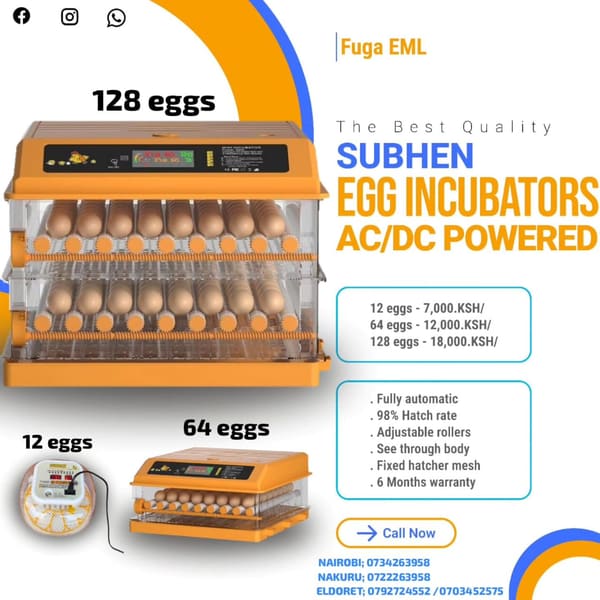
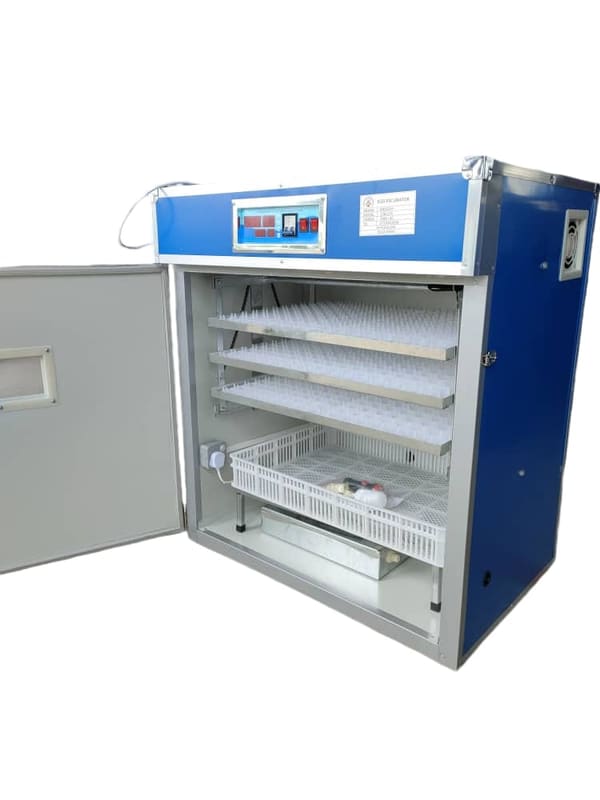
Fuga's price page gives a simple rule: count the eggs you will set in one batch, then pick the next size up so a few extra eggs never get left out. It then gives a size guide: up to 60 eggs a batch suits the 64-egg automatic incubator, 60 to 200 eggs suits the 120, 128 or 210-egg models, and 300 eggs and above suits the Broody cabinet incubators of 300 to 2,112 eggs.
The word "fresh" matters. Eggs for setting should be gathered over a short window, kept clean and not washed. Our guide to egg handling and storage explains why. If you only collect 40 good eggs in the window you are willing to store them, set 40 and accept an incubator that is not full, rather than waiting for old eggs to make up the numbers.
Should I run one big batch or small staggered batches?
Two common patterns exist. In the first, you set one large batch at a time and clean the machine between batches. This suits a single machine and a farmer who wants chicks in a block, for example for a broiler or a December market. In the second, you set smaller batches more often, so chicks arrive steadily. Our guide to setter versus hatcher explains how bigger operations stagger batches by using a separate hatching machine.
What should I check about the machine before I plan a whole year around it?
- Power. A 21-day batch can be spoiled by long outages. Read our guide to backup power and ask about the 210-egg AC/DC model that switches between mains and a 12 V battery, as the price page says.
- Spares. Controllers, heaters, humidifiers, motors and sensors are listed on the price page as kept in stock. A fault in week two of a batch should not mean a lost batch.
- Records. Write down the date, number set, number that hatched and anything unusual for every batch. Our guide to hatchery record keeping shows a simple sheet.
What is a common mistake when planning batches?
The usual one is planning from the machine's box number. A 128-egg machine does not produce 128 chicks 17 times a year. It offers 128 egg places 17 times at most, and every step from gathering the eggs to the last day of hatching takes some of them. Plan on a conservative figure, and let the real results from your first two or three batches set the number you use afterwards.
Our guide to planning hatches for the December and Easter markets shows how to count backwards from a sale date: chicks take weeks to reach the size a buyer wants, so the batch date is set by the market, not by the calendar of the machine.
A worked example: a farmer with a 128-egg machine
Suppose a farmer owns a 128-egg automatic incubator and can gather about 100 clean eggs in the window she is willing to store them. She sets 100 eggs, not 128, because she would rather have a few empty places than old eggs. She plans a new batch every 28 days, which gives her a week to clean the machine, gather the next eggs and check the spare parts. In a year that is about 13 batches, or about 1,300 egg places used. If her hatch rate in the first two batches is lower than she hoped, she uses her records to see where the losses were, fixes the storage or the humidity, and plans the third batch with the corrected number. Nothing in this plan depends on a figure from a brochure; it depends on her own eggs and her own records.
How Do I Get a Price or Stock Check From Fuga?
Bring your plan to the branch: how many chicks you want, how often, and by which month. Ask which incubator size matches it and whether the model you like is in stock today.
Fastest route: tap here to WhatsApp Fuga on 0716 961 018 with this guide's name already in the message, or call 0734 263 958. Tell the branch your town, what you want to do with the machine and, if you can, the power you have on site. Our full price list shows the stock list, and each product page shows a guide price you can confirm.
Fuga's product pages say that stock is held across six branches and that you should message to confirm the branch nearest you has the item before you travel. They also say equipment is sent to customers countrywide (tell your town on WhatsApp and the cost and timing are confirmed for your order), that every machine carries a minimum one-year warranty with a technical team for installation and maintenance, and that payment is arranged with your branch when you order. The six branches are:
- Nairobi Main, Ngara: City View Plaza, Musindi Rd · 0734 263958
- Nairobi, Haile Selassie Ave: Gogo Mall, Shop B51 · 0746 080808
- Eldoret, Uganda Road: Opp. Eldo-centre Quickmart · 0703 452575
- Eldoret, Langas: Sokoni, behind Langas Stage · 0792 724552
- Nakuru: Lee Njiru Rd, Wamotho House Rm 35 · 0722 263958
- Coast, Kanamai: Mombasa-Malindi Rd · 0780 263958
Key Takeaways
- Chicken eggs take 21 days to hatch, so one incubator can run about 17 batches a year if it is reloaded straight away, which is a ceiling, not a target.
- Set the eggs you can gather fresh, and pick the next size up from that number, as Fuga's price page advises.
- The machine's number counts egg places, not chicks: your hatch rate decides the fraction that become chicks.
- Allow rest days between batches for cleaning, and keep a record of every batch.
- Plan around power cuts and spares before you commit a whole year to one machine.
Frequently Asked Questions
How many batches can one incubator hatch in a year?
Fuga's price page says chicken eggs take 21 days to hatch, so a farmer who sets a new batch every three weeks gets about 17 batches a year from one machine. Allowing rest days for cleaning, most farmers will manage fewer.
How many eggs should I set at one time?
Set the eggs you can gather fresh and clean, then choose a machine whose size is the next one up from that number. Up to about 60 eggs a batch matches the 64-egg automatic incubator on Fuga's price page.
Do I get one chick for every egg I set?
No. The hatch depends on how fertile the eggs are, how they were stored, and how steady the temperature and humidity were. Treat the machine size as egg places, not as chicks.
Can I run an incubator all year?
Yes, as long as you clean it between batches, keep spares for parts that fail, and have a plan for power cuts. Check with your branch which spares are in stock for your model.
How do I choose between a 64-egg and a 128-egg machine?
Start from the number of eggs you can set in one batch. If it is about 60 or fewer, the 64-egg machine will usually run full. For more, look at the 120, 128 or 210-egg models, and confirm stock with your branch.