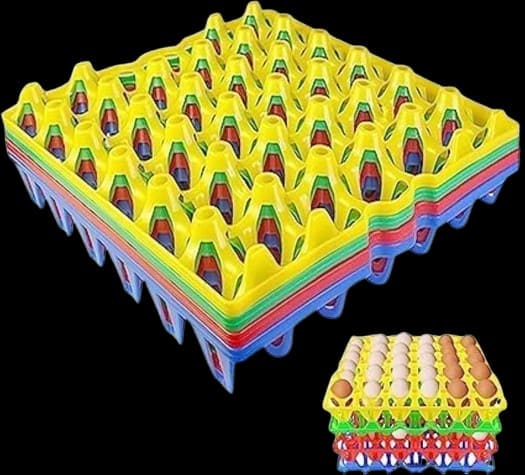
Divide your daily egg count by 30 and round up: that is the trays you fill each day. Then add a few extra for the trays that are out with buyers. Fuga's wholesale page lists 30-egg plastic trays in several colours, and the trays are made on Fuga Center's injection moulding line.
A layer farmer's sales depend on trays: a buyer who carries eggs away needs somewhere to put them, and trays that are cracked or dirty reflect on the eggs. This guide explains the simple arithmetic of how many trays you need and shows how to look after them. It uses Fuga's plastic egg tray page and wholesale page, and does not state any price.
How many trays do I fill a day?
A 30-egg tray holds 30 eggs. So the number of trays you fill is your daily egg count divided by 30, rounded up. If you sell every day and the buyer takes the trays with the eggs, you need to replace those trays. If buyers return trays, you need enough in circulation to cover the days between returns.
| Eggs collected a day | Trays filled a day | Trays filled a week (7 days) |
|---|---|---|
| 30 | 1 | 7 |
| 60 | 2 | 14 |
| 90 | 3 | 21 |
| 150 | 5 | 35 |
| 300 | 10 | 70 |
| 600 | 20 | 140 |
The table is arithmetic, not a forecast of how many eggs your hens will lay, which depends on breed, age, feed and season. Use your own daily count from your records. Our guide to poultry farm records shows a daily sheet.
How many extra trays should I keep?
It depends on how you sell. A farmer who sells to the same buyer who returns trays can work with a few extra. A farmer who sells to many small buyers who keep the trays will lose trays every week. Decide whether the tray is part of the price or something the buyer returns, and say so to every buyer. Many farmers keep one or two days of trays spare so that a missed return does not stop a sale.
What do Fuga's pages say about the trays?
The wholesale page lists "plastic egg trays: 30-egg trays in several colours" among the lines agrovets can stock. The price page says egg trays come off Fuga Center's own moulding line along with feeders, drinkers and sprayer pumps. The pages do not state a tray's weight, material grade or stacking limit, so ask the branch if those matter to you.
How do I keep eggs and trays clean?
Dirty trays pass dirt to eggs. Wipe or wash plastic trays after use, let them dry fully before filling and store them off the floor. Our guide to egg handling and storage explains why eggs should be kept clean and not washed in the usual way, and our guide to egg grading and packing shows how to grade by size and quality before you fill a tray.
Can I use the same trays for hatching eggs?
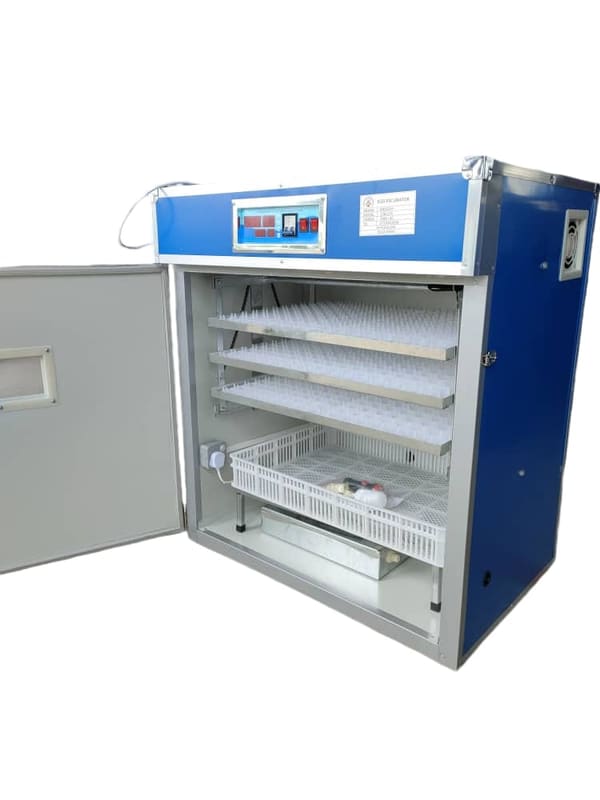
Hatching eggs have different needs from table eggs: they are kept clean and collected for setting, not washed. A tray that carries them to the incubator is a handling tool, not an incubator setter tray, which is a different part. The incubator spare parts on Fuga's price page include setter trays and hatching baskets by size; if you need those, ask the branch for the right part for your machine, and read our guide to incubator spare parts to keep.
What if I run an agrovet or a farm shop?
Egg trays are a steady seller for a shop that serves layer farmers, because a farmer who sells eggs needs trays every week. The wholesale page lists them among the lines you can stock. Ask the branch nearest your shop for its stockist price list, and see our guide to asking for stockist prices for the questions to put in writing.
A worked example: 200 layers selling at the roadside
A farmer with 200 layers collects about 150 eggs a day in a good week, which is five full trays a day by the table above, or 35 a week. She sells to neighbours and a roadside kiosk. She gives the kiosk owner trays on a swap system: one clean tray back for each full tray taken. She keeps ten extra trays so that a late return does not stop a sale, writes the number out and back in her notebook each evening, and washes and dries returned trays before refilling. When a tray cracks she replaces it that day. After a month she knows how many trays she really loses and adjusts her stock accordingly.
How do I price trays into my egg sales?
Decide one of three ways and tell every buyer. Either the tray is part of the sale and the buyer keeps it, so you add its cost to the price; or the buyer returns clean trays, so you keep a deposit or swap; or you sell eggs loose and the buyer brings a container. Each has a cost: trays that leave are money gone, deposits are awkward with small buyers, and loose eggs break more easily. Choose the one that matches your buyers, write the rule where they can see it, and check your tray count every week so that losses do not go unnoticed. A tray that costs little is easy to ignore, but across a few hundred a year it adds up.
What mistakes do egg sellers make with trays?
- Stacking too high. Heavy stacks crush the bottom eggs. Stack only as high as is safe for the trays you have, and ask the branch about the tray.
- Reusing dirty trays. Dirt and broken egg on a tray spoil the next eggs. Wash, rinse and dry before refilling.
- Mixing sizes in one tray. Eggs of very different sizes sit unevenly and break. Grade first.
- Not counting trays. Without a daily count you cannot tell what you lose.
- Storing trays on the floor. Keep them on a shelf, away from dust, rodents and damp.
Trays are a small cost that touches every sale, so the habits matter more than the price.
How Do I Get a Price or Stock Check From Fuga?
Tell the branch how many eggs you collect a day and how often you sell, and ask how many 30-egg trays it has and in which colours. If you buy for a shop, ask about stockist terms.
Fastest route: tap here to WhatsApp Fuga on 0716 961 018 with this guide's name already in the message, or call 0734 263 958. Tell the branch your town, what you want to do with the machine and, if you can, the power you have on site. Our full price list shows the stock list, and each product page shows a guide price you can confirm.
Fuga's product pages say that stock is held across six branches and that you should message to confirm the branch nearest you has the item before you travel. They also say equipment is sent to customers countrywide (tell your town on WhatsApp and the cost and timing are confirmed for your order), that every machine carries a minimum one-year warranty with a technical team for installation and maintenance, and that payment is arranged with your branch when you order. The six branches are:
- Nairobi Main, Ngara: City View Plaza, Musindi Rd · 0734 263958
- Nairobi, Haile Selassie Ave: Gogo Mall, Shop B51 · 0746 080808
- Eldoret, Uganda Road: Opp. Eldo-centre Quickmart · 0703 452575
- Eldoret, Langas: Sokoni, behind Langas Stage · 0792 724552
- Nakuru: Lee Njiru Rd, Wamotho House Rm 35 · 0722 263958
- Coast, Kanamai: Mombasa-Malindi Rd · 0780 263958
Key Takeaways
- Trays filled a day equals your daily egg count divided by 30, rounded up.
- Keep a few extra trays for buyers who do not return them, and decide whether the tray is part of the price.
- Fuga's wholesale page lists 30-egg plastic trays in several colours; they are made on Fuga Center's moulding line.
- The pages do not state weight or stacking limits, so ask the branch if those matter to you.
- Keep trays clean and dry and store them off the floor.
Frequently Asked Questions
How many eggs does a plastic egg tray hold?
Fuga lists 30-egg plastic trays. Each holds 30 eggs.
How many trays do I need for 300 eggs a day?
Ten trays a day (300 divided by 30), or 70 a week if every egg is sold on a tray. Keep a few extra for trays that do not come back.
Does Fuga sell egg trays wholesale?
The wholesale page lists plastic egg trays among the lines agrovets can stock. Ask the nearest branch for its stockist price list and minimum order.
Are Fuga's egg trays made in Kenya?
The price page says egg trays come off the injection moulding line at Fuga Center, Fuga's own factory.
Can I use egg trays in an incubator?
Ordinary egg trays are for carrying and selling eggs. Incubators use their own setter trays and hatching baskets; ask the branch for the right part for your machine.