The hen does the difficult part. She converts feed into a sealed, sterile, portable package of protein, lays it, and walks away. Everything that happens to that egg over the next fortnight is down to you.
The gap between lay and sale is where most Kenyan egg producers quietly lose money, in ways that never appear on a record sheet. A cracked egg is a sale that does not happen. A dirty egg is a discount or a hatchery rejection. An egg held ten days in a hot store is still saleable and visibly poorer, and the customer who breaks it into a pan remembers. Added up across a year, that is the difference between a margin and a hobby.
This guide covers the handling chain: the cuticle and why washing backfires, collection frequency, nest hygiene, storage temperature and humidity, which end goes down, candling for cracks, and packing so eggs reach market whole.
The Cuticle Is the Only Protection an Egg Will Ever Get
An eggshell is not a solid wall. It is a porous ceramic with thousands of microscopic channels running to the membrane beneath, because a developing embryo has to breathe. Gases pass both ways, and so can bacteria, given a film of liquid water to travel in.
The hen's answer is the cuticle, often called the bloom: a thin protein coating laid over the shell in the final minutes before the egg emerges, plugging those pores. While it is intact, an egg can sit at room temperature for days and stay sound. It is also fragile. Wet it, scrub it or wipe it hard and it is gone. Which is why the most damaging thing many producers do to their eggs is wash them.
Consider the physics. A warm egg dropped into cooler water has contents that contract as they cool, pulling a partial vacuum inside the shell. Water on the outside is drawn through the pores, carrying anything living in it. A wash that looks like it improved the egg has often just moved surface contamination inside, and stripped the cuticle on the way.
Commercial washing exists and works, but only because of controls a farm bucket does not have: water held warmer than the egg, a measured sanitiser, forced drying, and unbroken refrigeration afterwards. Kenya's egg trade is overwhelmingly unwashed and unrefrigerated, and in that chain an intact cuticle beats a clean looking shell.
Collection Frequency Is the Cheapest Intervention You Own
An egg leaves the hen at roughly body temperature and cools from that moment. Every additional hour in the nest is an hour it can be stepped on, cracked by the next hen settling on top of it, soiled by droppings, or found by a bird that develops a taste for eggs.
Egg eating deserves its own warning because it is learned and it spreads. A hen who breaks an egg by accident and finds food inside starts looking for the next one, and her neighbours copy her. Frequent collection removes the opportunity before the habit forms.
Most hens lay in the first half of the day, so the round is weighted toward the morning. A workable routine is four collections: mid morning once the peak has passed, around midday, mid afternoon, and a final sweep before the birds roost so nothing sits overnight. Three is the floor.
Order matters. Start with the clean nests and finish with the known problem nests, so you are not carrying contamination backwards on your hands. Floor eggs go into a separate container from the moment you pick them up and stay a separate product: they have lain in litter, they carry the heaviest bacterial load on the farm, and they should never be graded into a tray of nest eggs or sent near a hatchery.
A Dirty Nest Is a Money Problem, Not a Housekeeping One
Nest hygiene decides how many eggs reach the tray clean, and clean is a price, not an aesthetic. Provide roughly one nest per four to five layers, fitted, bedded and open before the first birds come into lay. Nests introduced after a flock has started laying on the floor are fighting a habit already set.
Hens choose whatever is darkest, quietest and most sheltered, so if the floor corners beat the nests, the birds use the corners. Site nests against a wall, shade the entrance, and keep the litter inside deeper and softer than anything on the floor. Set them below perch height, because birds roost on the highest point available and a nest that doubles as a roost is fouled nightly.
Change nest litter on a schedule rather than when it looks bad, because caked litter or one broken egg produces dirty eggs all day as every visiting hen carries the mess onward. Roll away nests solve this differently: the floor slopes so the egg leaves the nest seconds after it is laid and rests in a covered channel, out of reach of feet and droppings. We stock laying nests in plastic and metal, priced on the price list.
The economics are blunt. A dirty egg cannot be repaired: wash it and lose the cuticle, discount it, or eat it, and all three are losses. Worse, one cracked egg leaking in a tray smears the thirty around it in a single journey.
Storage: Why a Cool Room Beats a Fridge for Table Eggs
From collection onward an egg declines in ways you can slow but not reverse. Water and carbon dioxide escape through the pores, the air cell grows, the thick albumen thins and the yolk membrane weakens. That is what the Haugh unit measures: a fresh egg stands tall in the pan, an old one spreads flat.
Temperature is the master variable and humidity is second. Table eggs want a store held around 13 to 18 degrees Celsius at 70 to 80 per cent relative humidity. Hatching eggs want a narrower band, roughly 15 to 18 degrees at the same humidity, set within about a week. One more number matters: around 21 degrees, the threshold called physiological zero, a fertile egg's embryo begins to develop. In a store drifting above and below that line, development starts and stops repeatedly and no incubator can undo the damage.
So why not use a fridge? It runs near 4 degrees and dries the air, but the real damage happens on the way out. Carry a cold egg into a 26 degree market and moisture condenses on the shell within minutes, and that film of water lifts the cuticle and gives every bacterium on the surface a road into the pores.
Building one needs no refrigeration plant. Use the coolest, most shaded side of a building and insulate under the iron sheets, because a bare roof turns a store into an oven by two in the afternoon. Stand eggs on slatted racks off the floor, ventilate gently rather than blowing a draught across the trays, and lift humidity with a shallow tray of water in the room.
Keep the store for eggs only. The pores that let moisture out let odour in, and paraffin, diesel, pesticide, onions and fresh paint will all be tasted in an egg stored beside them. Log store temperature and humidity daily in the Fuga FarmKit app, so a drift shows up as a trend rather than a complaint.
Pointed End Down, and When to Turn
The air cell forms under the blunt end as the contents cool and contract after lay, and it grows for as long as the egg is held. Which way up you stand the egg decides where the yolk floats.
Store pointed end down. That keeps the air cell uppermost and the yolk suspended centrally, held clear of the shell membrane by the thick albumen. Blunt end down forces the air cell sideways while the yolk drifts toward the membrane, where it can stick and take up whatever has crossed the shell. For table eggs held under a week, that is the entire technique.
Hatching eggs held longer than about three days need turning as well. Without it the yolk settles against the membrane and adheres, and an adhered yolk will not hatch whatever the machine does afterwards. The cheap method needs no equipment: put a timber block under one end of the tray stack so it tilts, then move the block to the other end morning and evening.
Set hatching eggs within seven days of lay wherever you can, because hatchability begins to fall after about a week and falls faster beyond ten days. Mark the collection date on every tray and always set the oldest first. The incubators themselves are on our poultry equipment pages.
Candling: Finding the Cracks Before Your Buyer Does
A hairline crack is close to invisible on a shell in daylight and completely obvious with a light behind it. That single fact is why candling belongs in your routine.
Candling means holding a bright, focused light against the shell in a darkened room. A crack shows as a bright line branching across the shell, often in the star shape a knock produces. A very large air cell means the egg is older than the tray suggests, and a yolk that swings freely indicates weak albumen and age. A purpose made candler is best because it seals against the shell and wastes no light, but a bright torch in a short cardboard tube will find every crack you need to find.
For table eggs, candling a sample from each collection tells you whether your handling has a problem. For hatching eggs, candle every one before it goes near a setter: a cracked hatching egg will not hatch, and if it goes bad in a warm machine it can burst and contaminate the good eggs around it. Cracked eggs belong in the kitchen the same day, cooked through, never in a graded tray.
Grading and Packing So Eggs Arrive Intact
Grading is sorting by weight and shell quality before a buyer does it for you at a lower price. A basic scale and four or five size classes is all it takes, and it pays twice: uniform trays present better, and eggs of the same size sit evenly in the cups instead of rattling on a rough road. Pull out anything with a crack, a thin shell or an odd shape.
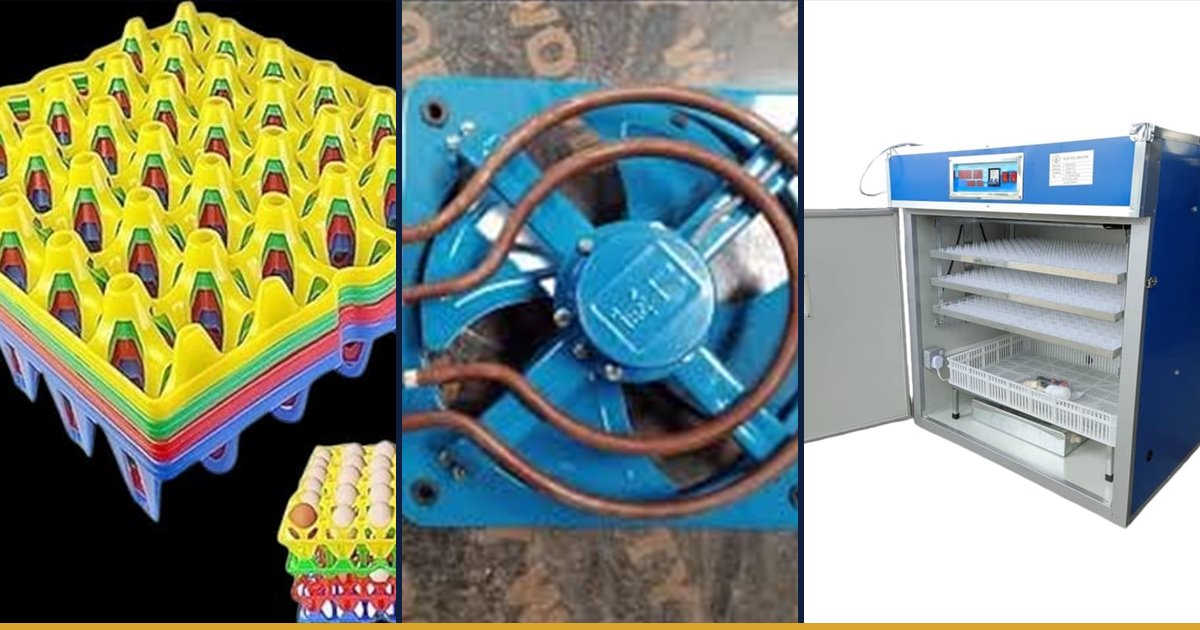
Trays matter too. Moulded pulp trays are cheap and absorb shock well, but they hold moisture and cannot be disinfected, so treat them as single use for anything going to or from a hatchery. Plastic trays wash, disinfect and last for years, which makes them the right choice for eggs moving between farms.
Eggs rarely break from one big bump. They break from sustained vibration through a rigid stack. Load trays inside a crate rather than loose on a metal bed, put an inverted empty tray on each stack as a lid, and set the load on a sack, away from the wheel arch.
Travel in the cool of the early morning, keep the load shaded, and unload by hand, passing trays down rather than sliding them. Loading and unloading, not the road, is where most breakage happens.
The Routine Is the Equipment
Almost nothing here requires a purchase. Collect four times instead of once. Clean dry, never wet. Keep floor eggs separate. Date every tray. Stand them pointed end down in the coolest, darkest room you have and sell the oldest first. Candle before you pack, then pack into a crate on a cushion and travel early.
Where equipment does help it helps a lot: roll away nests, plastic trays that can be disinfected, a candler, a scale and a crate that survives the road, all on the poultry equipment pages and priced on the price list. But the sequence comes first. A farm with a good routine and cheap trays beats a farm with good trays and no routine.
Key Takeaways
- The cuticle is the shell's only defence. Never wash eggs you intend to sell or set. Dry clean light soiling and eat the rest.
- Collect three to four times a day. Eggs are cracked, soiled and eaten while they wait in the nest, not afterwards.
- One nest per four to five hens, dark, bedded and below perch height, or the birds will lay on the floor.
- Hold table eggs at 13 to 18 degrees and 70 to 80 per cent humidity. A fridge starts a cold chain that Kenyan retail cannot finish.
- Pointed end down always. Turn hatching eggs twice a day if they are held more than three days, and set within a week.
- Candle for hairline cracks before packing. One leaking egg will downgrade the thirty around it in a single journey.
Frequently Asked Questions
Should I wash eggs before selling them?
No, not with water on an ordinary farm. Washing removes the cuticle, the natural protein layer that plugs the shell pores, and if the water is cooler than the egg the contents contract and draw water and bacteria inward through those pores. Clean light soiling dry, with a fine abrasive pad, sandpaper or a dry cloth. An egg too dirty to clean dry is a household egg to be eaten that day, not a graded egg and never a hatching egg.
How often should eggs be collected from the nests?
Three times a day at the absolute minimum and four is better: mid morning after the main laying peak, around midday, mid afternoon, and a final sweep before the birds go up to roost. Every extra hour an egg spends in the nest is another hour it can be cracked by the next hen, soiled, warmed by the afternoon or found by a bird that develops an egg eating habit.
What temperature should eggs be stored at?
Table eggs keep best in a cool store held around 13 to 18 degrees Celsius with relative humidity around 70 to 80 per cent. Hatching eggs want a narrower band, roughly 15 to 18 degrees at the same humidity, and should be set within about a week. Above roughly 21 degrees a fertile egg begins stop start embryo development that no incubator can undo, which is why a warm store is worse than a cool one.
Why is a cool room better than a fridge for table eggs?
Because refrigeration is a commitment, not a step. A domestic fridge runs near 4 degrees and dries the air, and the real damage happens on the way out: a cold egg carried into a warm market sweats, and that film of condensation lifts the cuticle and carries surface bacteria into the pores. Once an egg is chilled it must stay chilled all the way to the kitchen, and most Kenyan retail chains cannot do that. A cool room needs no unbroken cold chain.
Should eggs be stored pointed end up or down?
Pointed end down. The air cell sits under the blunt end, so standing an egg point down keeps the air cell uppermost and the yolk floating centrally, held clear of the shell membrane by the thick albumen. Blunt end down lets the yolk drift against the membrane where it can stick and pick up anything that has crossed the shell. Hatching eggs held more than about three days should also be turned once or twice a day.