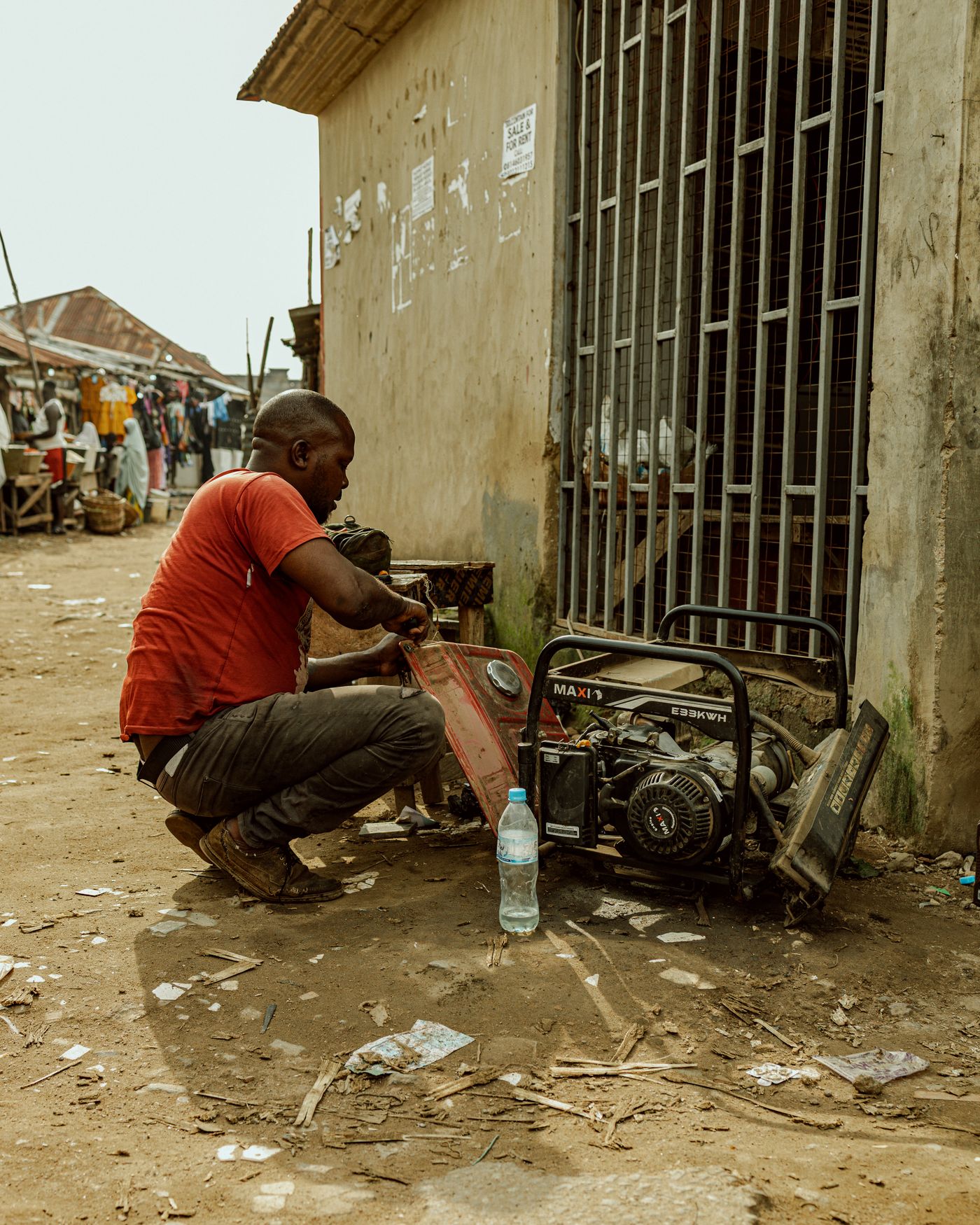
The lights go off at four in the afternoon. In the salon, a client sits with half-dried hair. At the cyber café next door, three customers lose the forms they were typing. The butcher across the road watches his freezer and counts the hours. Down the lane, a fundi pulls the cord on his generator and keeps working, while his neighbours cover their ears.
For a small business in Kenya, a power outage costs money in lost sales, spoiled stock and customers who go elsewhere. The two common answers are a generator or a battery backup system charged from the grid, from solar panels, or both. Each is right for some businesses and wrong for others, and many owners buy the wrong one because a neighbour did.
We have written about backup for incubators and milk coolers on farms and about choosing a diesel generator. This guide is for shops, salons, cyber cafés, butcheries, agrovets and small workshops: how to read your outage pattern, sort your loads, compare a generator with solar and battery backup honestly, and when a combination of both makes sense.
Keep an Outage Diary First
Before you buy anything, write down every outage for two to four weeks: the day, the time it started and how long it lasted. This costs nothing and it changes the decision more than any sales pitch.
Outages tend to fall into a pattern. Some areas see frequent short interruptions, a few minutes to an hour or two. Others see fewer but longer ones, half a day or more, often during storms in the rainy season or during planned maintenance. Many see both. Short, frequent outages favour a battery system that switches over instantly and silently. Long outages and heavy loads favour a generator, or a much larger battery and solar system.
Sort Your Loads: Essential, Useful and Heavy
Walk round the business and list every electrical item with its wattage, from the label or the manual. Then sort them.
Essential. What must keep running for you to trade: lights, phone and M-Pesa charging, the router, the till or point of sale, a laptop, CCTV, and for a butchery or drinks shop, the freezer or fridge.
Useful. What makes trading easier but can wait: fans, a television, extra lights, a printer that is used now and then.
Heavy. Items that draw a lot of power: hair dryers and steamers in a salon, welding machines, compressors, grinders and other motors, electric cookers, kettles and water heaters. Motors also draw a surge when they start. Our guide to inverter sizing explains starting surges and why they trip small systems.
The size and cost of a battery system rise quickly with heavy loads, while a generator handles them more cheaply. That single fact settles many decisions.
How the Two Options Compare
Battery backup, with or without solar
An inverter with a battery bank sits between the grid and your essential sockets. When the grid fails it switches over almost instantly, so laptops, routers and tills keep running and customers barely notice. When power returns, it recharges the battery from the grid. Add solar panels and the battery also charges from the sun, which cuts your electricity bill and keeps you going through daytime outages that last longer than the battery alone could cover.
There is no noise, no fumes and no fuel to buy, and running costs are low. The limits are stored energy and power. A battery holds a fixed amount of energy, so long outages or heavy loads need a much bigger and costlier battery bank. Our guide to lithium versus lead-acid batteries explains why lithium usually lasts longer and gives more usable capacity.
Generator
A petrol or diesel generator produces as much power as its rating allows for as long as there is fuel. It handles heavy loads such as dryers, welders and compressors, and long outages, for less upfront money than a battery system of similar power.
The costs come every hour it runs: fuel, oil changes, filters and servicing. It must be started, unless you pay for an automatic unit, so there is a gap when power fails. It is noisy, and Kenya's noise and vibration regulations of 2009, enforced by county governments according to NEMA, prohibit unreasonable noise, which matters in a busy market or near homes. Generators are also a favourite target for thieves. Our guide to generator maintenance covers the routine that keeps one reliable.
A Worked Example: Sizing Battery Backup
Here is how to size a battery system for essential loads. The numbers are illustrative; use your own labels and your outage diary.
A small cyber café's essential loads are lights, a router, two laptops, a printer used briefly and phone charging, adding up to about 300 watts while running. The outage diary shows outages of up to 3 hours. Energy needed is 300 W × 3 h, which is 900 watt-hours. If you plan to use about 80 percent of a lithium battery, you need roughly 1,125 watt-hours of capacity, which is about one 12 volt, 100 amp-hour lithium battery. The inverter must cover the 300 watt load with headroom for start-up surges, so a 500 to 1,000 watt inverter is a sensible starting point, depending on the equipment.
Now add a heavy load. A salon hair dryer can draw well over a thousand watts, many times the cyber café's whole essential load. Covering several dryers for hours on battery needs a large inverter and battery bank. That is the point where a generator, or a generator alongside a battery system, usually makes more sense.
When a Generator Is the Better Choice
A generator is often the better buy if your business depends on heavy loads, such as welding, compressors, grinders, salon dryers or large freezers; if your outages often last many hours or days; or if you cannot afford the upfront cost of a battery system large enough for your loads. Our guide to choosing a diesel generator explains sizing in kVA.
Run it safely. Generator exhaust contains carbon monoxide, which has no smell and can kill within minutes in an enclosed space. Never run a generator inside a shop, a store, a corridor or under a closed shutter; place it outside, away from doors and windows, with the exhaust pointing away from people. Store fuel in proper containers away from the business and any flame. Our guide to safe use of small petrol generators covers the rules.
Have a qualified electrician install a proper changeover switch. A generator plugged into a building's wiring without one can feed power back into the grid and endanger electricity workers repairing the line, and can destroy the generator when the grid returns.
Often the Best Answer Is Both
Many businesses end up with a combination. A battery system covers essential loads through the frequent short outages, silently and automatically, and solar panels on the roof cut the daytime bill. A generator is kept for long outages and for the heavy loads the battery cannot carry, and some inverters can recharge the battery from the generator too. The generator then runs for fewer hours, so fuel and servicing costs fall and it lasts longer.
Whatever you choose, have the system installed properly. In Kenya, solar PV installations are regulated by EPRA, which licenses solar technicians and contractors; our guide to hiring a licensed solar installer shows what to ask for. Ventilate battery and inverter spaces, protect panels and batteries from theft as our theft protection guide describes, and protect sensitive equipment from voltage swings when the grid returns; our guide to voltage stabilisers explains how.
Your Backup Power Decision Checklist
| Step | Check |
|---|---|
| Outages | Two to four weeks of diary: how often, how long, what time of day |
| Loads | Every item listed with watts; sorted essential, useful and heavy |
| Battery option | Essential load × outage hours ÷ usable share; inverter with surge headroom |
| Generator option | Sized for heavy loads and starting surges; fuel and servicing budgeted |
| Combination | Battery for short outages, generator for long ones and heavy loads |
| Safety | Generator outside only; changeover switch; fuel stored safely |
| Installation | EPRA licensed solar installer; ventilation; theft protection; voltage protection |
Backup Power Equipment to Look At
Prices change, so we do not print them here. See each product page or the Fuga price list for current prices and stock.
| Item | Where it fits |
|---|---|
| 500W inverter | Light essential loads: lights, router, phones |
| 1000W inverter | Essential loads with laptops, till and a small fridge |
| 1500W inverter | Larger essential loads with more surge headroom |
| 100 amps lithium battery | Storage for short outages on essential loads |
| 200 amps lithium battery | Longer outages or bigger loads |
| 590 Solar panel | Charging the battery and cutting the daytime bill |
| Generators | Heavy loads and long outages |
Keep an outage diary, sort your loads, size a battery for the essentials and keep a generator for what a battery cannot carry. See our solar range and generators, or WhatsApp 0716 961 018 with your list of loads and your outage pattern, and we will help you choose.
Key Takeaways
- Keep an outage diary for two to four weeks; frequent short outages favour batteries, long ones and heavy loads favour a generator.
- List every load with its watts and sort it into essential, useful and heavy before sizing anything.
- Size battery backup as essential load times outage hours divided by the usable share of capacity, with inverter surge headroom.
- Generators suit heavy loads such as dryers, welders and compressors and long outages, but cost fuel and servicing and are noisy.
- Never run a generator indoors, and have an electrician fit a changeover switch so it cannot feed the grid.
- Many businesses do best with both: batteries and solar for short outages, a generator for long ones and heavy loads.
Frequently Asked Questions
Is a generator or solar backup better for a small shop in Kenya?
It depends on your outages and loads. For lights, router, laptops, till and phone charging through frequent short outages, a battery system with an inverter, ideally charged by solar too, is silent, automatic and cheap to run. For heavy loads or outages lasting many hours, a generator is usually more affordable.
How big a battery do I need to run my business through an outage?
Add up the watts of your essential loads, multiply by the longest outage you want to cover in hours, and divide by the usable share of the battery, around 0.8 for many lithium batteries. A 300 watt load for 3 hours needs roughly 1,125 watt-hours, about one 12 volt 100 amp-hour lithium battery.
Can a solar inverter system run a salon hair dryer?
Hair dryers can draw well over a thousand watts each, so running several for hours needs a large inverter and battery bank. Many salons use a battery system for lights and small loads and a generator for dryers during long outages.
Is it safe to run a generator inside my shop?
No. Generator exhaust contains carbon monoxide, which has no smell and can kill in an enclosed space. Run it outside, away from doors and windows, with the exhaust pointing away from people, and have an electrician install a proper changeover switch.