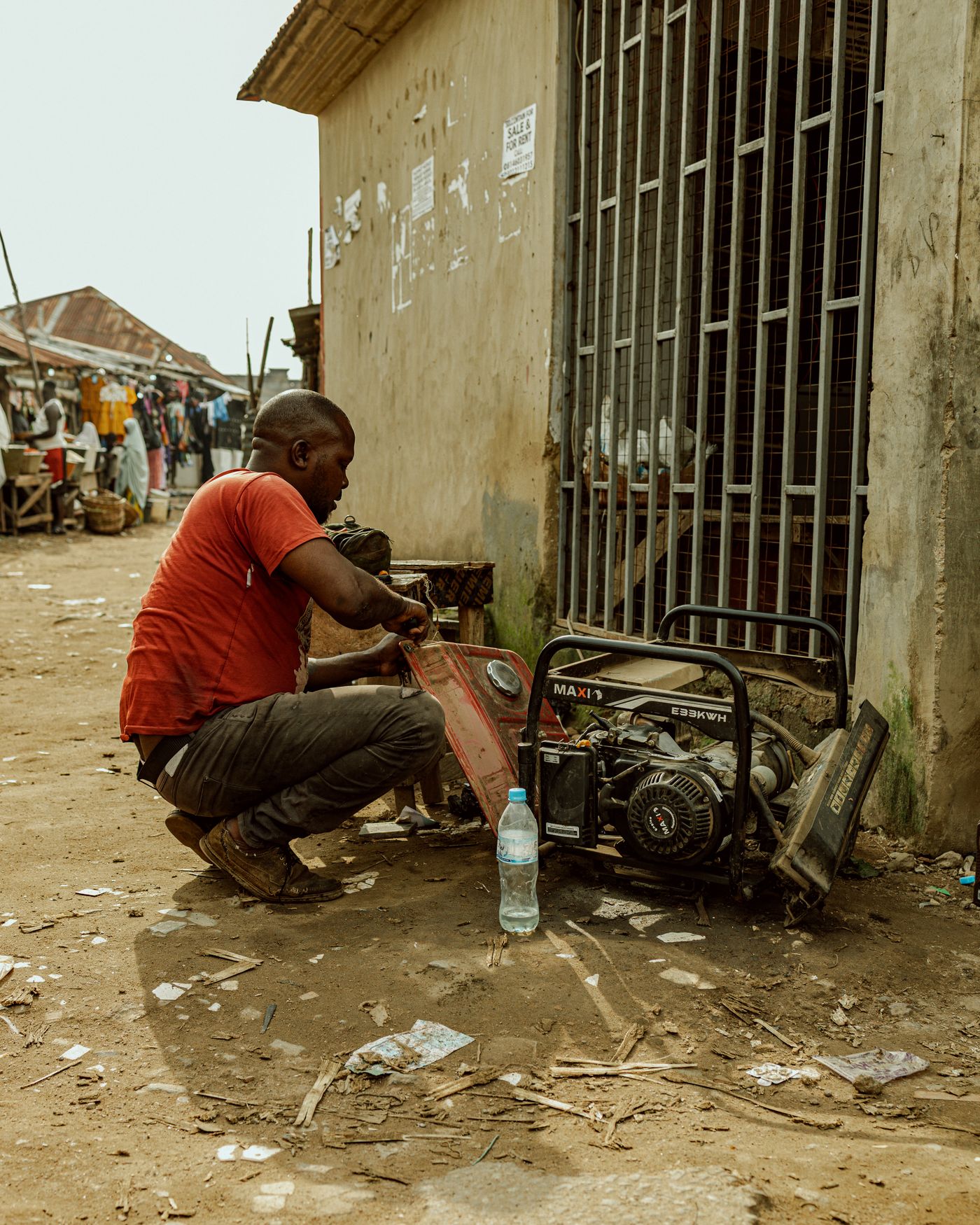
The short rains bring storms, and storms bring blackouts. On many farms the answer is a small portable generator: a 2 or 3 kVA set wheeled out of the store, filled from a jerrycan and pulled into life to keep the lights on, the fridge cold and the phones charged. Small generators are cheap to buy and simple to run, which is exactly why they are so often run badly.
The mistakes are predictable. The set is run in a kitchen doorway or a closed store because it is raining outside. It is asked to start a water pump it was never big enough for. It is refuelled while hot. It sits for three months with old petrol in the carburettor and refuses to start on the one night it is needed. Some of these cost money. Running a generator in an enclosed space can cost a life.
This guide is for the owner of a small generator in the 1 to 3.5 kVA range. It covers what such a set can really run, how to place it safely in wet weather, how to handle fuel, how to connect it to the house without danger to anyone, and the simple care that keeps it starting. If you are choosing a bigger standby set for a dairy or workshop, our guide to choosing a diesel generator covers that decision.
What a Small Generator Can Really Run
Generators are rated in kVA, while appliances are labelled in watts. For resistive loads like bulbs and kettles the two are close, but many small generator makers rate the set's usable power at around 80 percent of its kVA figure, so a 2.0 kVA set is often good for about 1,600 watts. Check the watt rating on the generator's own plate, and treat the lower continuous rating, not the peak, as the number you plan around.
The second number that matters is starting power. Anything with an electric motor, such as a fridge compressor, a freezer, a water pump or a power tool, draws several times its running power for a moment as it starts. A pump that runs at 750 watts can need far more than that to start, and a small generator that copes with the running load can stall, trip or drag its voltage down at the start. Lights, phone chargers, a television and a laptop are easy loads. Motors are the ones that catch people out.
Size it the simple way. List what you actually want to run at the same time, add up the running watts from the labels, then add the starting surge of the single biggest motor, because you will start motors one at a time. Keep the continuous total comfortably below the generator's rated output. A set worked flat out for hours runs hot, uses more fuel and wears faster. Our backup power guide walks through the same sums for incubators and milk coolers.
As a rough picture, a 1 kVA set handles lights, phone charging, a radio, a television and a laptop. A 2 to 3.5 kVA set can usually add a fridge or a small domestic pump, provided you start them one at a time. Welders, posho mills, large pumps and electric water heaters need a much bigger set or a different solution.
Where to Put It: Outside, Away and Downwind
A petrol engine produces carbon monoxide, a gas you cannot see or smell. In an enclosed or partly enclosed space it builds up quickly, and it can make people drowsy, unconscious or worse before they realise anything is wrong. This is not a remote risk; generator exhaust indoors is a well-known cause of carbon monoxide deaths around the world.
The rules are simple and they are not optional. Never run a generator inside a house, a kitchen, a store, a garage, a poultry house or a cow shed, even with the doors and windows open. Never run it on a veranda under the eaves next to a window or door. The US Consumer Product Safety Commission advises placing a portable generator at least 20 feet, about 6 metres, from the house, with the exhaust pointed away from doors, windows and vents. That is a sensible minimum on a Kenyan farm too, and further is better, especially from bedrooms and animal houses.
Wet weather brings its own electrical risk. Keep the generator on a firm, dry, level base such as a slab or pallet, not in a puddle. Keep plugs, sockets and extension leads off wet ground. Dry your hands before touching switches or plugs, and never connect or disconnect leads in the rain. Our guide to extension cables and electrical safety explains choosing an outdoor lead of the right size and why an RCD is worth having.
Connecting to the House Without Danger
For a few appliances, the simplest and safest arrangement is to plug them straight into the generator's own sockets, or into a properly rated outdoor extension lead run from it. Do not overload a thin household extension reel, and unwind any reel fully before use because a coiled reel under load can overheat.
If you want the generator to supply the house wiring, it must go through a changeover switch fitted by a licensed electrician. Never make up a lead with a plug on both ends to back-feed a wall socket. Apart from the danger at the plug itself, a generator connected without a changeover can push power back out onto the Kenya Power line and endanger linesmen working on it during the outage. The changeover switch makes it physically impossible for the house to be connected to the grid and the generator at the same time.
Earthing is the other part of the electrician's job. Many portable generators have an earth terminal, and the manual will say whether and how the set should be earthed in your installation. Follow the manual and your electrician rather than improvising with a rod and a bit of wire.
Fuel: Storage, Refuelling and Stale Petrol
Petrol is the most dangerous thing in the generator setup. Store it in proper fuel containers with sealed caps, never in old water bottles or open tins, and keep it in a cool, ventilated place away from the house, from cooking fires and from anything that sparks. Keep only what you need.
Always switch the generator off and let it cool before refuelling. Petrol spilt on a hot exhaust or engine can ignite. Use a funnel, do not fill the tank to the brim, and wipe up any spill before starting again. No smoking anywhere near.
Petrol does not keep forever. Over weeks and months it oxidises and leaves gum and varnish in the small passages of the carburettor, and a set that has sat with old fuel in it often will not start, or starts and then surges and dies. If the generator will stand unused for more than about a month, either add a fuel stabiliser following the product's directions and run the engine briefly so treated fuel reaches the carburettor, or close the fuel tap and run the engine until the carburettor is empty, as your manual describes. The same care applies to a petrol water pump or any other small engine on the farm.
Simple Care That Keeps It Starting
Small petrol generators are four-stroke engines, and most of their failures come from oil, air and fuel. Check the oil before every run with the set on level ground. Many sets have a low-oil sensor that stops the engine or prevents starting, which protects the engine but also explains why a set that is low on oil will not start. Change the oil at the intervals in the manual. Most makers ask for an early first change after the running-in period, then regular changes by running hours.
Keep the air filter clean, especially in dusty dry spells, and replace it when it is damaged or clogged. Check the spark plug for fouling and the gap the manual specifies, and keep a spare. Keep the cooling fins and air openings clear of dust, grass and nesting insects, because a small air-cooled engine relies on airflow to stay cool. Our generator maintenance guide explains why running hours, not months, set the service schedule.
Before switching off, remove the loads and let the engine run for a minute without them. When starting, switch loads off first, start the engine, let it settle, then switch loads on, biggest motor first.
Small Generators at Fuga, With Prices
These are the small generator sizes on the Fuga price list at the time of writing. Prices change, so check the price list or ask a branch for current prices and stock. Sets in this size range are usually petrol, but confirm the fuel type, the continuous watt rating and the starting method of a particular model with the branch before you buy.
| Item | Stock code | Price |
|---|---|---|
| GENERATOR 1.0 KVA | 6464 | KSh 20,000 |
| GENERATOR 1.2 KVA | 6239 | KSh 18,000 |
| GENERATOR 2.0 KVA (KEY START) | 6588 | KSh 22,500 |
| GENERATOR 3.0KVA (KEY START) | 6589 | KSh 23,750 |
| GENERATOR 3.5KVA (KEY START) | 6590 | KSh 25,000 |
Before Every Run: A Quick Checklist
- Generator outside, at least about 6 metres from the house, exhaust pointing away, never in a closed space.
- Dry, level base and an open-sided cover if it is raining.
- Oil level checked on level ground; fuel topped up only with the engine off and cool.
- Loads switched off before starting; biggest motor started first, others added after.
- Total running load comfortably below the continuous rating.
- House wiring fed only through a changeover switch fitted by a licensed electrician.
- Monthly test run, and stale fuel dealt with before long storage.
For help choosing the right size of generator for what you actually want to run, bring a list of your appliances to any Fuga branch in Eldoret, Nairobi or Nakuru, or WhatsApp 0716 961 018.
Key Takeaways
- Plan around the generator's continuous watt rating, not the kVA headline; many small sets deliver about 80 percent of their kVA as usable watts.
- Motors in fridges, pumps and tools draw a large surge to start; add the surge of the biggest motor and start motors one at a time.
- Never run a generator indoors or in a closed shed; keep it outside, at least about 6 metres from the house, exhaust pointing away.
- In rain, use an open-sided cover and a dry base, keep plugs off wet ground and never handle leads with wet hands.
- Feed house wiring only through a changeover switch fitted by a licensed electrician; never back-feed a socket.
- Refuel only when the engine is off and cool, deal with stale petrol before storage, check oil every run and test the set monthly.
Frequently Asked Questions
What can a 2 kVA generator run?
Check the continuous watt rating on the plate; many 2 kVA sets give around 1,600 watts. That comfortably runs lights, phone charging, a television, a laptop and usually a fridge, started one at a time. A small water pump may run, but its starting surge can be the limit, so check the pump's rating and start it before other loads.
Can I run a generator in my store or garage if the door is open?
No. Generator exhaust contains carbon monoxide, which you cannot see or smell and which builds up dangerously even with doors open. Run the generator outside, well away from the house and animal houses, with the exhaust pointing away from doors and windows. The US Consumer Product Safety Commission advises at least 20 feet, about 6 metres.
How do I use a generator in the rain?
Put it on a dry, level base under a cover that keeps rain off the top but is open on all sides for ventilation. Keep plugs and leads off wet ground, use a proper outdoor extension lead, dry your hands before touching switches, and never move it into an enclosed space to keep it dry.
Can I plug my generator into a wall socket to power the house?
No. A lead with a plug on both ends is dangerous at the plug and can feed power back onto the Kenya Power line, endangering linesmen. To supply house wiring, have a licensed electrician fit a changeover switch so the house is connected to either the grid or the generator, never both.
Why won't my generator start after sitting for months?
The most common causes are stale petrol that has left gum in the carburettor, low oil triggering the low-oil cut-out, and a fouled spark plug. Before storage, use a fuel stabiliser or run the carburettor dry as the manual describes, check the oil on level ground, and start the set monthly.