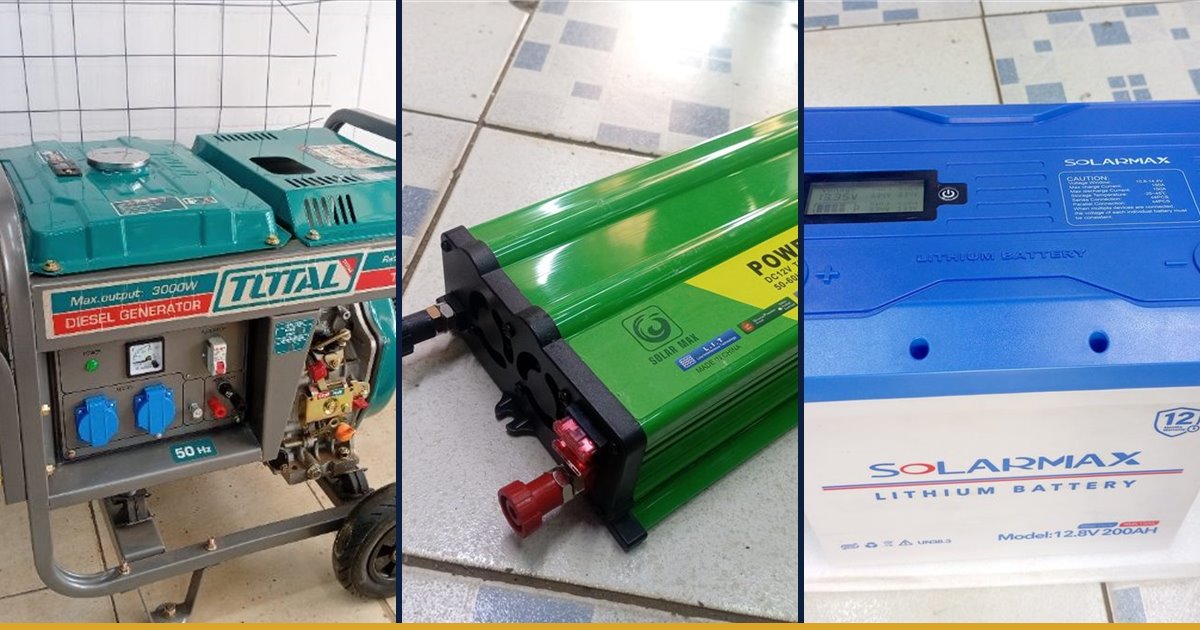
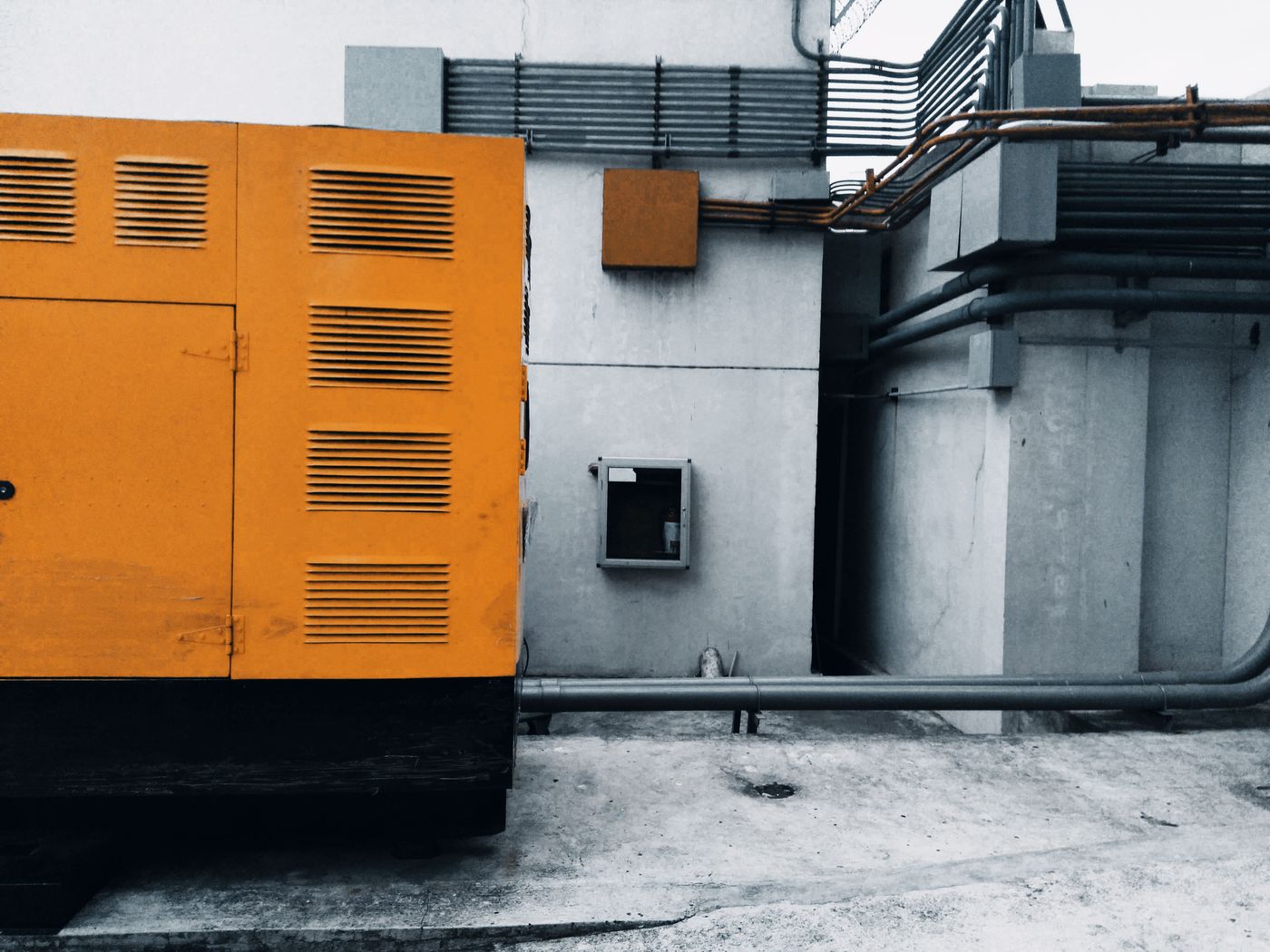
The generator that fails is almost never the generator that broke. It is the one serviced when somebody remembered, topped up with whatever oil was in the store, fed diesel from a drum that stood open in the rain, and left to idle for hours with nothing switched on. When it dies mid-milking, the owner calls it bad luck. The engine would tell a different story.
Diesel generating sets are tough machines with a short list of things that kill them: dirty oil, blocked air, wet fuel, hot coolant, a flat battery and light loading. Every one is preventable, and prevention costs a fraction of the repair. Filters and a few litres of oil are a small purchase. A new injection pump is not.
This is the ownership half of the story; if you are still choosing a set, start with our guide to choosing a diesel generator for a Kenyan farm. What follows keeps that set alive: how to schedule service by running hours, what each item protects, and which failures are really neglect.
Running Hours, Not Months, Is the Unit That Matters
Almost every generator manual states its service intervals in engine running hours, for a good mechanical reason. Wear inside a diesel is a function of revolutions, combustion cycles and heat, not of dates on a calendar. A set that ran forty hours last month has done four times the work of one that ran ten.
That makes the hour meter the most important instrument on the panel. A set without a working one is being serviced by guesswork, and guesswork always drifts towards "later".
The calendar still matters as a backstop, because oil oxidises and absorbs moisture even when the engine stands, coolant additives deplete and rubber ages. Hence intervals written as "every 250 hours or six months, whichever comes first". Standby sets that run only during power cuts hit the time limit long before the hour limit, and they still need the service.
A Typical Service Schedule, and Why the Manual Wins
Intervals differ significantly between manufacturers, engine families and duty ratings: an air-cooled single cylinder set and a water-cooled prime power set do not share a schedule, and two sets of the same size may specify oil changes hundreds of hours apart. Treat the figures below as typical guidance only. Your manual governs, and if the set arrived without one, ask the supplier before the first service falls due.
Oil and Filters: The Wear You Cannot See
Engine oil in a diesel lubricates, carries heat away from pistons and bearings, seals the gap between rings and cylinder wall, and holds combustion soot in suspension so it cannot form abrasive deposits. Diesel oil goes black quickly precisely because it is doing that fourth job.
What ends its life is soot loading, acid formation and the loss of the additive package that keeps particles dispersed. Once the additives are exhausted, soot drops out and begins polishing bearings and bore, silently, until compression falls and the set starts smoking and using oil.
Use the oil grade the manual calls for, not the cheapest tin on the shelf: generator engines run at constant speed under sustained load, harder duty than most vehicle engines see. Change the filter with every oil change, because a loaded element opens its bypass valve and passes unfiltered oil straight to the bearings. Drain the oil warm so suspended soot leaves with it.
Air Filters and the Kenyan Dust Problem
A diesel swallows an enormous volume of air for every litre of fuel it burns, and every particle of dust in that air is an abrasive travelling at speed into the cylinder. Dust past the filter scores bores and rings first, then reaches the oil and continues its work at the bearings. It is one of the few faults that can wear out an engine in a single season rather than a decade.
Kenyan conditions make this the most underrated item on the list. A set beside a murram road, next to a maize sheller or on a dry-season construction site is breathing far more particulate than the manufacturer's interval assumed.
So inspect more often and act on what you see. Check the element weekly in dusty work, and where the set has a restriction indicator, trust that gauge over any interval. Cleaning a paper element in the field, by tapping it gently or blowing from the inside outward, buys time rather than restoring it. Never run the engine without the element fitted, and never wash a dry element in water or diesel.
Fuel Quality and the Water Problem
Diesel fuel does more than burn: it lubricates and cools the injection pump and injectors, which are made to tolerances measured in microns. Anything in the fuel that is not fuel becomes a problem, and the two that matter most here are dirt and water.
Water condenses on the walls of a part-empty tank as the air inside cools overnight, a cycle that repeats daily in highland areas. It also arrives with fuel bought in open drums or transferred in the rain. Because water is denser than diesel it settles to the bottom of the tank, exactly where the fuel pick-up sits.
The damage is worse than a misfire. Water flashes to steam at the injector tip and can blow it, corrodes precision surfaces in the pump, and removes the lubricating film so metal touches metal. At the diesel and water interface it supports the microbial sludge often called diesel bug, which blocks filters and holds acid against the tank floor.
Coolant and Overheating
Overheating destroys engines quickly, and warped heads, blown gaskets and scuffed pistons follow the same few causes: low coolant, a blocked radiator core, a failed thermostat, a slack belt, or airflow with nowhere to go.
Use a proper coolant mixture rather than plain water. Its additive package prevents internal corrosion, protects cylinder liners against cavitation damage and lubricates the water pump seal, while plain water leaves scale in the block and rust in the radiator. Scale is a thermal insulator in the one place you least want insulation. Those additives deplete, which is why manuals give a coolant change interval in hours and in years.
Airflow deserves equal attention. Sets in enclosures need a clear inlet and discharge, because hot air recirculating into the radiator raises intake temperature until the engine derates or shuts down. Chaff, cobwebs and dust mat radiator fins, so clean the core gently from the fan side outwards. Check belt tension weekly: a slack belt slips, the fan under-runs, and the temperature climbs on the day you need full output.
Batteries: Why Standby Sets Fail to Start
Ask anyone who services standby generators which component causes the most no-start callouts and you will hear the same answer: the battery. It is the one part guaranteed to deteriorate while the set does nothing, and it reveals the failure only at the moment of demand.
A lead-acid battery self-discharges while standing, and a partly discharged battery sulphates, losing capacity permanently. Heat accelerates that, so coastal installations are harder on batteries than highland ones. Add corroded terminals and their extra resistance, and a battery that looks adequate on a meter still cannot spin a cold diesel fast enough to fire.
The fixes are ordinary. Keep terminals clean, greased and tight, and the battery charged between runs, from the set's own charging circuit or a trickle charger. Top up serviceable batteries with distilled water only, replace on age rather than after a failure, and write the fitting date on the case. Where mains power is unreliable, a small solar charger keeps it topped up, and our guide to solar panel sizing and cost in Kenya covers the sizing logic.
Exercise Under Load, Because No-Load Running Harms a Diesel
A standby set needs regular exercise. Running it warms and circulates the oil, charges the battery, keeps seals from drying and proves the set will start. The mistake is to idle it with no load for half an hour and call that maintenance.
A diesel is designed to reach a certain combustion temperature under load. Run light or unloaded, cylinders stay too cool for complete combustion, and unburnt fuel and soot collect in the exhaust as wet, oily deposits, a condition engineers call wet stacking. It shows as black or wet exhaust, oil weeping from exhaust joints, sooty injectors and eventually glazed bores that never seal properly again.
Manufacturers therefore specify a minimum load for extended running, commonly a substantial fraction of the rating rather than a token few percent. Check the figure for your own set; the principle is universal.
The Running Log, Storage and the Failures That Are Really Neglect
The cheapest maintenance tool in existence is an exercise book kept in a plastic bag on the set. Record the date, hour meter reading, fuel and oil added, running temperature, and every service with the parts fitted. Treat the water separator drain as part of that routine too.
A log turns vague impressions into evidence. It shows that oil consumption has doubled, or that the set runs hotter than last year, and it answers the question the schedule depends on: how many hours since the last service. When you sell the machine, that log is proof of care.
Storage between seasons deserves the same discipline. Change the oil and filter before storage, not after, so the engine does not sit for months full of acidic used oil. Fill the tank to reduce condensation space, drain the water trap, and disconnect the battery or keep it on charge. Cover the exhaust outlet against rain and rodents, and cover the set without wrapping it airtight.
That is the honest summary of generator failure in Kenya. Seized engines mean oil that was never changed. Blown head gaskets mean overheating that showed on the gauge first. Ruined injection pumps mean water in fuel. No-start callouts mean batteries. Heavy smoke and lost power mean a starved air filter or years of light-load running. Very little of it is bad luck.
Filters, oil, coolant, belts and batteries are stocked items, and the indicative ranges on our price list show what a service kit costs. If you are unsure which consumables suit your set, send us the engine and set model and we will confirm the correct parts.
Key Takeaways
- Service by running hours, with a calendar backstop: whichever limit arrives first triggers the work.
- Intervals vary by manufacturer and duty rating, so your manual is the final authority.
- Change the oil filter with every oil change, using the specification the manual calls for.
- In dusty conditions, inspect air filters weekly rather than trusting a generic interval.
- Water in diesel corrodes the injection pump; drain the separator often and store the set with a full tank.
- Use proper coolant, and keep the radiator core, belt and airflow clear.
- Batteries cause most standby no-starts; keep them charged, clean and replaced on age.
- Exercise standby sets under genuine load, because no-load running causes wet stacking.
- Keep a running log, and prepare the set properly before it stands idle.
Frequently Asked Questions
How often should I change the oil in a diesel generator?
Many small and medium diesel sets specify an oil and filter change around every 250 running hours or six months, whichever comes first, but this varies widely by manufacturer and duty rating, so check your own manual. In dusty conditions or at sustained heavy load, shorter intervals are often advised.
Can I run a generator with no load connected?
Briefly, yes, for starting and stopping. Extended no-load running is harmful: cylinders stay too cool for complete combustion, and unburnt fuel and soot build up in the exhaust, a condition known as wet stacking. Exercise a standby set with real load and let it reach full operating temperature.
Why does my generator start hard or not at all after standing for weeks?
The battery is the first suspect, since lead-acid batteries self-discharge and sulphate while standing, and corroded terminals add resistance. Check charge and terminals first, then fuel: stale or water-contaminated diesel and a blocked fuel filter are the next most common causes.
How do I stop water getting into my generator fuel?
Store the set with a full tank so there is less air space for overnight condensation, drain the water separator regularly, keep the filler cap sealed, and let drum fuel settle before drawing from the top. If your set has no separator, fitting one is a worthwhile upgrade.
What does a generator service cost in Kenya?
It depends on engine size, the consumables it takes and whether the work is routine or corrective, so we quote against your specific set rather than a flat figure. Indicative ranges are on our price list, and you can confirm current figures on WhatsApp at wa.me/254716961018 or by calling 0734263958.