Between the tabletop machines and the commercial cabinets sits a range that gets far less attention than it deserves. The 210 to 352-egg class is where most Kenyan poultry keepers should actually be, and where a lot of people skip straight past on their way to buying something too big.
This is the size that restocks a serious flock, supplies neighbours, and generates real income without requiring a dedicated building, a backup generator or a business plan. This page covers what these machines cost, why prices in this band vary so much for similar capacities, and how to choose between them.
Mid-Range Incubator Prices in Kenya
| Model | Stock code | Price |
|---|---|---|
| Incubator Broody 210*210 | 6719 | KSh 24,000 |
| Incubator Broody 176*88 | 6270 | KSh 45,000 |
| Incubator Broody 176*176 | 6269 | KSh 45,000 |
| Incubator Broody 352, 352*176 | 6280 | KSh 45,000 |
| Incubator Broody 300 Roller | 6268 | KSh 50,000 |
| Incubator Broody 264*88 | 6272 | KSh 55,000 |
| Incubator Broody 264*264 | 6271 | KSh 55,000 |
| Incubator Broody 350, 350*350 | 6273 | KSh 55,000 |
Prices come from the same stock system our branches use. The complete incubator range is on the price list.
Who This Size Is Actually For
Three fairly distinct buyers land in this band, and they want different things from it.
The keeper who has stopped buying chicks. If you run a few hundred layers or broilers, buying day-old chicks repeatedly is a permanent cost and a permanent dependency on somebody else's schedule and somebody else's biosecurity. A machine in this class lets you hatch your own replacements from your own flock, on your own timetable. For many farms this is the point where poultry stops feeling precarious.
The keeper starting to sell. Two hundred to three hundred chicks a cycle is enough to keep what you need and sell the rest locally. Chicks sell readily in most of Kenya, and at this scale you can build a customer base by word of mouth without committing to a hatchery.
The person who tried a small machine and is ready. If you have run a 64 or a 128 through several cycles, know your fertility, know your climate's humidity quirks and have your brooding sorted, this is the correct next step. It is a big enough jump to matter and small enough that the learning curve does not punish you.
The people this size is not for are first-time hatchers, who should start on a 64 or 128, and anyone already selling out every batch, who should look at the 528 class.
Roller Versus Tray Turning
One genuine mechanical difference in this band is worth understanding, because it changes what the machine is good at.
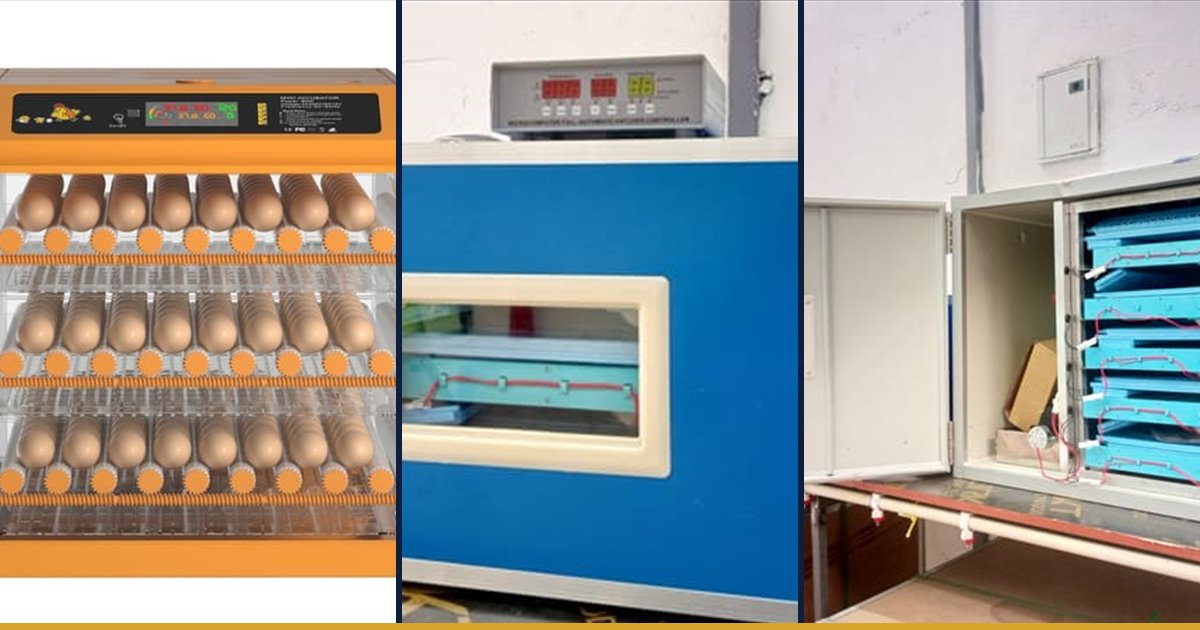
Tray or rack turning tilts a whole rack of eggs from side to side. Eggs sit pointed end down in individual cells, which is the correct orientation and gives a dense, orderly load. It is the standard commercial arrangement and it scales well.
Roller turning sits eggs on their sides on rollers that rotate them. It is more forgiving of mixed egg sizes and shapes, because eggs are not being fitted into moulded cells sized for a standard hen egg. If you hatch a mixture, including quail, duck, guinea fowl or indigenous kienyeji eggs that vary widely in size, roller turning handles that variety more easily.
If you hatch one uniform egg type, trays are efficient and straightforward. If your eggs come from mixed indigenous stock or several species, rollers earn their place.
What Changes When You Reach This Size
Four things that did not matter much on a 64 start to matter here.
Egg supply becomes a real constraint. Filling a 350-egg machine means collecting 350 fertile eggs no more than seven days old. From your own flock that needs enough hens laying and a proper cockerel ratio, roughly one to eight or ten. Many people buy this size and then run it half empty, which wastes most of the advantage. Work out where the eggs come from before you buy the machine.
Power backup stops being optional. A batch here represents real money and three weeks. A modest inverter and battery bank sized to carry the machine through a typical outage is a sensible companion purchase, and cheaper than one lost batch. Our solar and power equipment range covers it.
Brooding capacity has to match. Two hundred and fifty chicks arriving at once need heat, space, feeders and drinkers ready on day one. A great many chicks are lost in the first forty-eight hours by people who planned the incubation carefully and the brooding not at all. Read our guide to chick brooding equipment before the eggs go in, not after.
Records start paying. At this scale, knowing your fertility rate and your hatchability separately is what lets you fix problems. Candle at day seven, count the clears, and keep a note. Our guide to improving hatch rates covers how to read your own failures.
What to Check Before You Buy
Ask to see it running, not sitting on a shelf. Watch a full turning cycle complete and listen to the motor. Ask what the model name's two figures mean for that specific unit, and whether it can hatch and set simultaneously or must be emptied between batches. Ask what the controller, sensor, turning motor and fan cost as spares and whether they are held in stock. Ask about warranty length and what it covers. And check the machine holds temperature with the door closed for an hour before you accept it.
We stock incubators at all six branches along with controllers, motors, trays and spares, so a component failure is a repair rather than a write-off. Tell us your flock size and how many chicks you need per cycle, and we will point you at the right machine in this band, or tell you honestly if a different size fits better.
Key Takeaways
- The 210 to 352 egg class runs from KSh 24,000 to KSh 55,000 and suits most serious Kenyan poultry keepers.
- In this band price follows build class and the setting and hatching arrangement, not headline capacity, so a 352 can cost less than a 264.
- Roller turning handles mixed and indigenous egg sizes better; tray turning is denser and more efficient for uniform eggs.
- Work out where 300 fertile eggs per cycle will come from before you buy. A half empty machine costs the same to run as a full one.
- Have brooding, backup power and record keeping ready before the first batch, not after it hatches.
Frequently Asked Questions
How much is a 300 egg incubator in Kenya?
The Broody 300 Roller is KSh 50,000 and the Broody 350 at 350*350 is KSh 55,000. Below them the Broody 210*210 is KSh 24,000 and the Broody 352 at 352*176 is KSh 45,000. All current prices are on our price list, which runs off the same stock system our branch counters use.
Why does a 352 egg incubator cost less than a 264 egg incubator?
Because in this band price is driven by build class, the turning system and how the machine divides its setting and hatching space, rather than by egg count alone. The two figures in a model name describe that division, and a machine that sets and hatches separately is built differently from one that does both in the same space. Ask us to explain the arrangement on the specific unit.
What is the difference between roller and tray turning?
Tray turning tilts a rack of eggs held pointed end down in moulded cells, which is dense, orderly and the standard commercial arrangement. Roller turning rotates eggs lying on their sides, which handles mixed egg sizes far better. If you hatch indigenous kienyeji eggs or several species with varying sizes, rollers cope with that variety more easily.
Is a 350 egg incubator good for a beginner?
It is a good second machine rather than a first one. If you have already run a 64 or 128 through several cycles and know your fertility rate, your climate's humidity behaviour and your brooding setup, this is the right next step. Starting here without that experience means learning expensive lessons on large batches.
How many chicks will a 350 egg incubator produce?
Allowing for realistic fertility and normal hatchability, a full 350 set typically yields somewhere around 230 to 300 chicks. Your first few cycles will be lower, which is normal. Candle at day seven and record the clears so you know whether losses are a fertility problem or an incubation problem.