Sorghum is having a second life in Kenya. Long grown as a drought insurance crop in Kitui, Makueni, Tharaka, Siaya, Busia and Homa Bay, it is now also planted under contract for brewing, with white varieties such as Gadam bought for East African Breweries, and it is back on the table as flour for uji and ugali. In the drier short rains areas, it often yields when maize fails.
But sorghum makes you work for the money at the end of the season. Birds attack the heads as soon as the grain starts to fill. Heads cut too early shrink; heads left too long get soaked, mouldy or sprout in a wet spell. Threshing is dusty and slow, weevils and moths move into a careless store within weeks, and grain that goes to the posho mill damp or dirty makes poor flour. Each of those losses is avoidable with the right timing and a few simple tools.
This guide covers sorghum from the last weeks in the field to the flour bag: protecting the heads from birds, judging maturity, harvesting and drying the heads, threshing and cleaning, storing grain safely, and milling it into good flour. Maturity periods and moisture figures vary with variety and season, so check your seed pack and confirm the targets with your buyer or extension officer.
The Last Weeks: Birds and Maturity
From the time the grain reaches the milky stage until harvest, sorghum is a magnet for birds, including flocks of quelea in some areas. Loss can be severe on small, isolated plots and on early or late fields that ripen when nothing else nearby is available. Planting at the same time as your neighbours spreads the bird pressure across many fields, and active bird scaring in the early morning and late afternoon, when birds feed most, is still the main defence on smallholdings.
Brown, high-tannin varieties are less attractive to birds, but the tannin gives the grain a bitter taste and it is not what food and brewing buyers usually want. White varieties sell more easily and need more bird protection. Choose with your market in mind.
The sign of full maturity in sorghum is the black layer, a small dark spot that forms where the grain attaches to the head. Pull a few grains from the middle of several heads and look at the base; once most show the dark spot, the grain has stopped filling. At that point the heads are mature but the grain is still too moist to store, so plan to harvest soon and dry it well. Leaving the crop standing for weeks after maturity mostly adds bird losses, mould and, in wet weather, sprouting on the head.
Harvesting and Drying the Heads
Most smallholders cut the heads by hand with a sickle or sharp knife, leaving a short piece of stalk to make handling easier, and carry them in sacks or baskets. Cut in dry weather where possible, and do not leave cut heads in heaps in the field, where the inside of the pile heats up and moulds.
Dry the heads on tarpaulins, mats or raised racks in the sun, in thin layers, turning them once or twice a day. Cover them or bring them under a roof before dew and rain. Raised racks and simple solar dryers are especially useful in the short rains, when a few wet days can arrive just as the crop comes in. The stalks left in the field are useful too: cut and chopped, they make livestock feed.
Heads are ready to thresh when the grain comes away easily when rubbed in the palm and a grain cracks cleanly between the teeth rather than squashing. Grain that is still soft will smear rather than shatter, and threshing it only damages seed.
The arithmetic matters when you sell. A bag that weighed 100 kilogrammes at 20 percent moisture weighs about 92 kilogrammes once dried to 13 percent. That missing 8 kilogrammes was water that would have caused mould in the store. A buyer who weighs damp grain is paying for water and will discount it; a buyer who weighs dry grain is paying for sorghum.
Threshing and Cleaning
On small farms, sorghum is usually threshed by beating dry heads with sticks on a tarpaulin or by beating them inside a sack. Thresh on a clean tarpaulin, never on bare soil, or the grain picks up stones and grit that ruin flour and damage mill screens. Beat steadily rather than violently and stop when most grain has come off; very hard beating cracks grain. Wear a dust mask: sorghum dust and fine awns irritate the eyes, throat and skin.
Larger growers and farmer groups often hire or share a motorised thresher, which saves a great deal of labour. Feed it at a steady rate, set it according to the maker's instructions, and check the output for cracked grain; a machine set too aggressively turns a time saving into a price penalty.
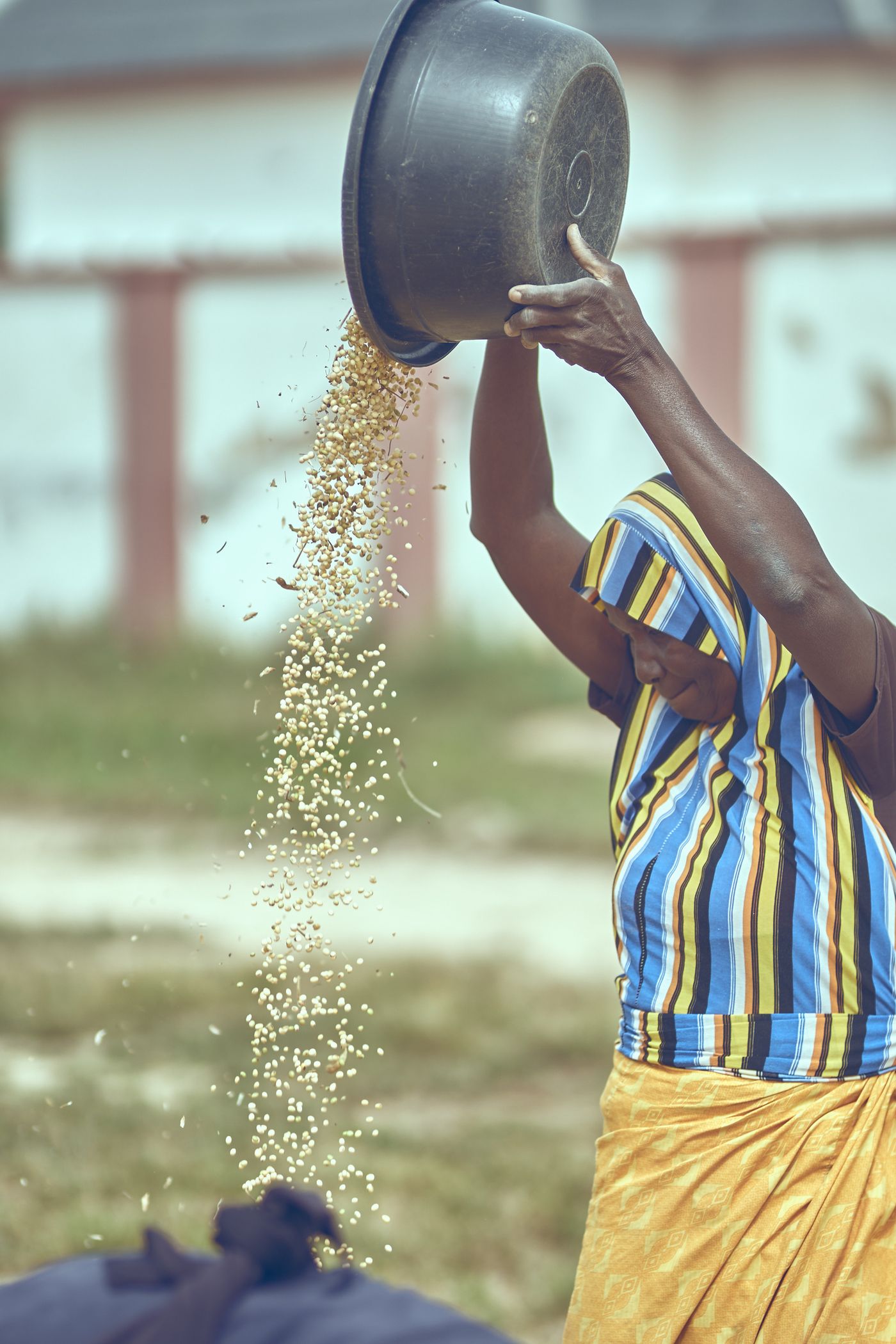
Winnow the threshed grain in a steady breeze, or with a winnowing basket, to remove chaff, glumes and dust, then sieve or hand pick out stones, unthreshed bits of head, shrivelled, mouldy and discoloured grain. Clean, uniform grain is what brewers, millers and cereal buyers pay for.
Storing Sorghum Grain
Stored sorghum is attacked by the same insects that attack maize, chiefly weevils and the Angoumois grain moth, whose larvae feed inside the grain. Infestation can begin in the field, so grain that looks clean at harvest can be riddled with holes and dust a few months later.
Store only grain that is properly dry. A safe storage moisture for cereal grain such as sorghum is commonly given as around 13 percent or below; confirm the figure with your buyer, especially under a brewing contract. Simple farm checks, such as the bite test and the salt-in-a-jar test, catch grain that is clearly too wet, and a moisture meter gives a precise reading for larger lots. Our guide to grain drying and moisture explains each method.
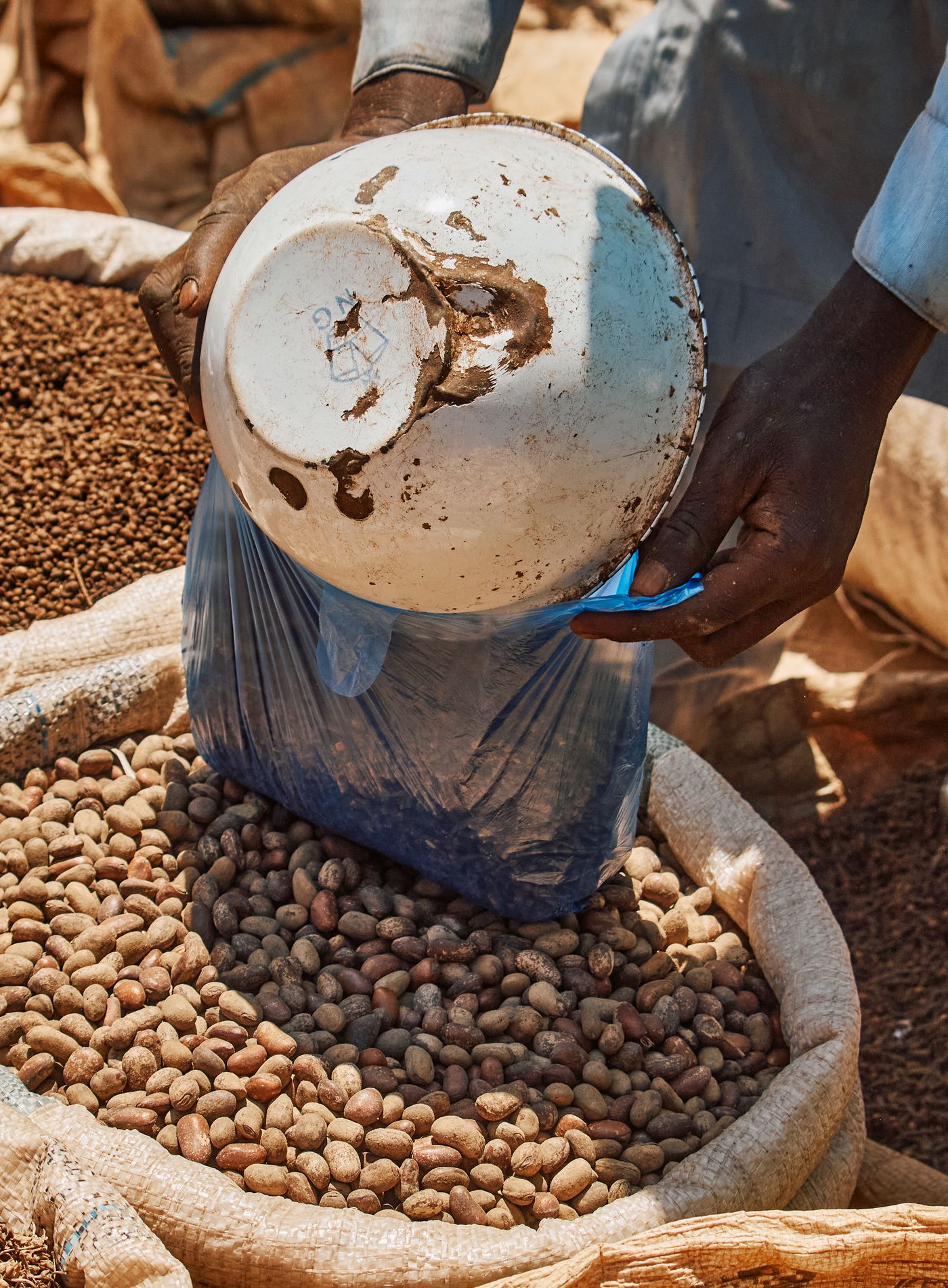
Clean the store and remove old grain before the new crop arrives. Keep bags on pallets, away from walls, in a dry, shaded store, and inspect them regularly. Hermetic bags, which starve insects of oxygen, are widely promoted in Kenya for cereals and pulses; ask the Fuga team which bags are hermetic before relying on them for long storage. If you use a grain protectant, choose one registered for stored sorghum and follow its label. Our grain storage guide covers store hygiene in depth.
Milling Sorghum Into Good Flour
Much of Kenya's sorghum is eaten as flour, either alone or blended with millet, maize or cassava for uji and ugali. Sorghum mills well in the same hammer mills and posho mills used for maize, but a few habits make a big difference to the flour.
First, mill only clean, dry grain. Damp grain clogs the screen, heats in the mill and gives flour that goes off quickly; stones and grit wear the hammers and screen and end up in the food. Second, choose the screen for the product. A finer screen gives the smooth flour preferred for uji, while a coarser one is faster and suits feed. Our article on hammer mill screens and sieve sizes explains the trade-off between fineness and throughput.
Third, consider dehulling. Removing the outer bran layer before milling, by hand pounding or with a dehuller at a service mill, gives a lighter, smoother flour with less bitterness from brown varieties. Whole grain flour keeps more fibre, so many households choose whole meal for porridge. Finally, clean the mill between batches, especially when switching between maize, sorghum and feed, so flavours and any contaminated grain do not carry over.
Do Not Waste the Stalks
A sorghum field produces a large amount of stover once the heads are cut, and in dry areas it is valuable dry season feed. Cut the stalks soon after harvest, while they still carry some green leaf, and dry them in the shade or under a roof so they keep their colour and do not mould. Chopping them before feeding reduces waste, because cattle and goats eat the short pieces they would otherwise leave on the ground. Our guide on choosing a chaff cutter covers the machines that make this quick.
One caution: young, regrowing sorghum shoots, especially after drought or frost stress, can contain prussic acid (hydrogen cyanide), which can poison livestock. Do not let hungry animals graze fresh regrowth on the stubble, and ask a vet or extension officer if you are unsure. Mature, well dried stover is the usual safe choice.
Sell Together, Sell Better
Brewing contracts, cereal buyers and millers prefer to buy in large, uniform lots. Farmers who dry, clean and bag to the same standard and then sell together through a group or cooperative can meet those buyers' volumes and often earn a better price than individual farmers selling small amounts at the farm gate. Weighed, tagged bags make the pooling fair, because every member's share is known to the kilogramme. Our weighing scales guide explains how to check that a scale reads true.
Sorghum Harvest Checklist
| Stage | Check | Tools |
|---|---|---|
| Grain fill | Scare birds at peak feeding hours | Labour, scarers |
| Maturity | Black layer on most grains from mid-head | Your eyes, a few sample heads |
| Harvest | Cut heads in dry weather, no heaps in the field | Sickle or knife, sacks |
| Drying | Thin layers off the ground, covered at night | Tarpaulins or racks |
| Threshing | Beat on a tarpaulin, stop before cracking grain; wear a mask | Sticks, sack, thresher for big lots |
| Cleaning | Winnow, sieve and hand pick | Basket or basin, sieve |
| Storage | Dry grain only, bags on pallets, regular checks | Storage bags, scale |
| Milling | Clean, dry grain; right screen; clean the mill | Hammer mill or posho mill |
Harvest, Storage and Milling Equipment, With Prices
These prices are from the Fuga price list at the time of writing; check the site or call a branch for current prices and stock.
| Item | Stock code | Price |
|---|---|---|
| SICKLE 12" | 6392 | KSh 130 |
| 100Kgs Storage bag | 6701 | KSh 300 |
| 100 KGS WEIGHING SCALE RAM G | 6526 | KSh 6,500 |
| CRUSHER MILL /GRAIN | 6165 | KSh 20,000 |
| Electric Posho Mill MF-5 | n/a | KSh 58,345 |
| Agsol hammer miller | 6814 | KSh 85,000 |
Guard the heads from birds, cut at the black layer, dry off the ground, thresh on a tarpaulin, clean well, store only dry grain and mill it clean. For sickles, storage bags, a scale, or a hammer mill or electric posho mill for flour, visit any Fuga branch in Eldoret, Nairobi or Nakuru or browse our machinery range. Choosing between mill types? Our hammer mill vs disc mill guide compares them.
Key Takeaways
- Scare birds at grain fill, in the early morning and late afternoon, and plant with your neighbours to share the bird pressure.
- Harvest when most grains from mid-head show the black layer at their base; mature grain is still too moist to store.
- Cut heads in dry weather and dry them in thin layers on tarpaulins or racks, never in heaps or on bare soil.
- Thresh on a clean tarpaulin, stop before cracking grain, wear a dust mask, then winnow and sort.
- Store only dry grain, commonly given as around 13 percent moisture or below, in bags on pallets, and confirm contract standards with your buyer.
- Mill only clean, dry grain, choose the screen for the product, and clean the mill between batches.
Frequently Asked Questions
When is sorghum ready to harvest?
When most grains taken from the middle of several heads show a small dark spot, the black layer, where they attach to the head. The grain has then stopped filling, but it is still too moist to store, so harvest soon and dry it well. Leaving it standing mostly adds bird losses and mould.
How do I reduce bird damage on sorghum?
Plant at the same time as neighbouring farms so bird pressure is spread, and scare birds actively from grain fill to harvest, especially in the early morning and late afternoon. Brown, high-tannin varieties are less attractive to birds but taste bitter and may not suit food or brewing buyers.
How dry should sorghum be for storage?
A safe storage moisture for cereal grain such as sorghum is commonly given as around 13 percent or below. Confirm the figure with your buyer, especially under a brewing contract. A moisture meter gives a precise reading for large lots.
Can I mill sorghum in a posho mill?
Yes. Sorghum mills in the same hammer mills and posho mills used for maize. Mill only clean, dry grain, use a finer screen for smooth uji flour, and clean the mill between maize, sorghum and feed batches. Dehulling first gives a lighter, smoother flour.
Is it safe to graze livestock on sorghum stubble?
Mature, well dried stover is the usual safe choice. Young regrowth on the stubble, especially after drought or frost stress, can contain prussic acid, which can poison livestock. Keep hungry animals off fresh regrowth and ask a vet or extension officer if you are unsure.