Beans planted with the short rains in October are usually ready around the turn of the year, and the last few weeks decide whether the crop sells at a good price or goes for whatever a trader offers. Pull the plants too early and the seed shrivels. Leave them too long and the pods split in the midday sun, scattering seed on the ground. Dry them on bare soil and the bags come out full of stones and grit. Bag them half dry and they mould or wrinkle in storage, and within a few months bean weevils have riddled them with holes.
None of that is bad luck. Beans are one of the most forgiving crops to grow and one of the least forgiving to handle after harvest, and nearly every loss between the field and the buyer comes from a handful of decisions about timing, drying surfaces, threshing and storage. They are also the decisions that cost the least to get right.
This guide walks through the post-harvest chain for dry beans on a Kenyan smallholding: when to harvest, how to dry and thresh without breaking seed, how to clean and sort for a better price, how to know the beans are dry enough to store, and how to weigh and bag them so you sell by the kilogramme rather than by guesswork. Maturity periods and moisture figures below are general guidance; your seed pack and county extension officer can give the figures for your variety.
When to Harvest: Read the Pods, Not the Calendar
The number of days to maturity printed on a seed pack is a guide, not an appointment. Bush bean varieties grown in Kenya range from early to late maturing, and the same variety matures faster in warm, dry weather than in cool, wet conditions. The plant tells you when it is ready.
The usual sign is that most of the pods have changed from green to yellow, straw or brown, the leaves have mostly dropped, and the seeds inside rattle or are firm and hard to dent with a thumbnail. Open a few pods from different parts of the field. If most seeds are firm and have their full variety colour, the crop is ready to pull. If many are still soft and pale, wait a few more days.
Two pressures push in opposite directions. Harvest too early and immature seeds shrink and wrinkle as they dry, lowering both weight and grade. Harvest too late and dry pods split open, especially in hot afternoons, so seed is lost in the field, and any rain on mature pods can stain the seed or make it sprout in the pod. A practical habit used by many farmers is to pull plants in the cooler morning, when the pods are slightly less brittle, and to finish the harvest within a few days once the field is ready.
Drying: Get It Off the Ground
Freshly pulled bean plants still carry a lot of moisture in the stems, pods and seeds. They need to dry further before threshing, and how you dry them affects every later step. Drying in heaps traps moisture and heat in the middle of the pile, which encourages moulds. Drying directly on bare soil picks up stones, soil and dung that end up in the bag, and seed in contact with damp ground takes up moisture again overnight.
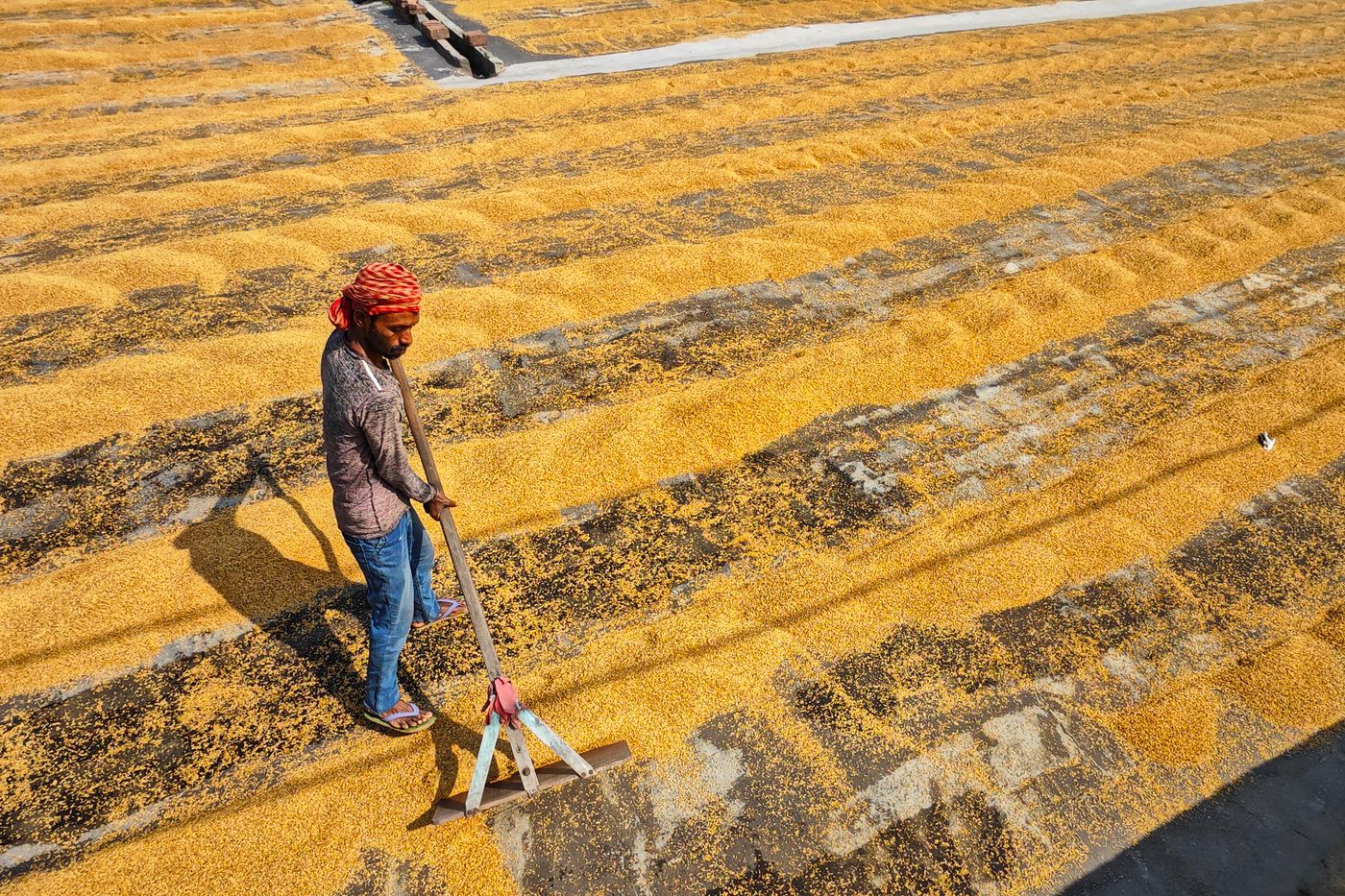
Spread the plants in a thin layer on a tarpaulin, mats or a raised platform, pods facing up, in an open, sunny place. Turn them once or twice a day. Gather them under cover, or cover them well, before evening dew and before rain. In the short rains the weather around harvest can still be mixed, so plan a covered place to bring the crop in quickly. A simple raised rack or the solar dryers described in our solar dryer guide can make a big difference in a wet spell, and the principles in our article on grain drying and moisture apply to beans too.
The plants are ready to thresh when the pods are brittle and split easily when squeezed or beaten. Under-dried pods are tough and the seed does not come out cleanly, which leads to harder beating and more broken seed.
Threshing Without Cracking the Seed
On smallholdings, beans are usually threshed by beating the dry plants with sticks on a tarpaulin, or by putting them in a sack and beating the sack. Both work. The risk is mechanical damage: beans that are beaten too hard, especially very dry beans, crack or split, and cracked seed sells at a discount, stores worse and does not germinate if you plan to keep it for planting.
Use a flexible stick rather than a heavy club, beat with moderate force, and stop when most pods have opened rather than beating until every last seed is out. A few unopened pods can be picked out by hand later. Thresh on a clean tarpaulin, never on bare ground, so stones do not end up mixed with the seed. Beating plants inside a sack keeps the seed from scattering and is easy on small quantities.
Winnowing and Sorting: Where the Price Is Made
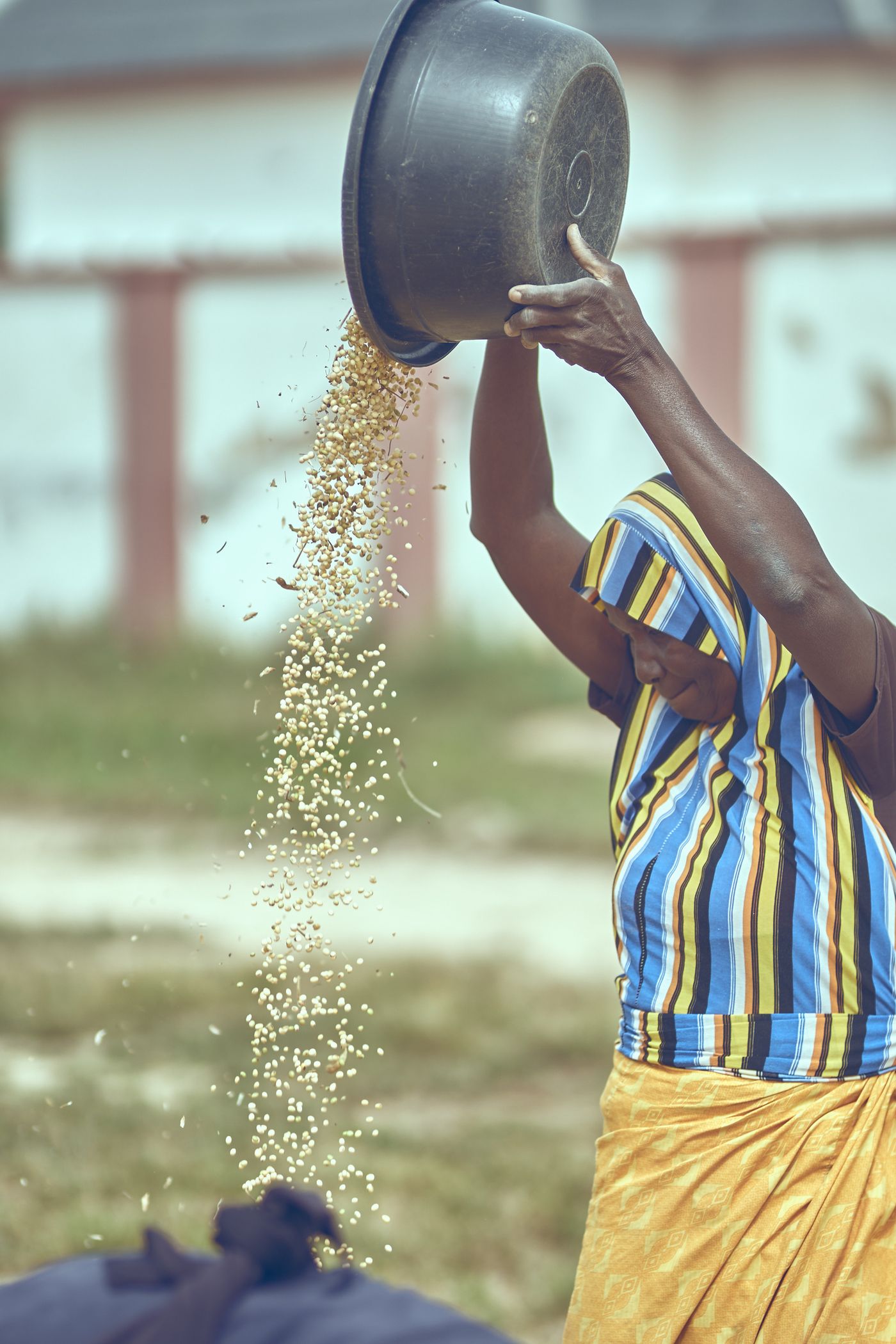
Threshed beans come off the tarpaulin mixed with pod pieces, leaf fragments, dust and the odd stone. Winnowing removes the light material: pour the beans slowly from a basin or bucket held at shoulder height in a steady breeze, so the chaff blows aside and the heavier seed falls onto a clean tarpaulin. Two or three passes usually clean the bulk well.
Hand sorting then removes what wind cannot: stones and soil clods, shrivelled and immature seeds, broken and split seeds, discoloured or mouldy seeds, seeds with weevil holes, and seeds of a different variety. That last point matters more than many farmers expect. Buyers in Kenyan markets pay for uniform lots, and a bag of one clean variety often sells better than the same beans mixed with others. Spread the beans thinly on a tray or tarpaulin in good light and sort in small batches; it is slow work, but it is where much of the price difference between a good bag and an ordinary one is made.
Keep the rejects separate. Clean but broken beans are fine for home cooking. Mouldy, discoloured or insect-damaged seed should not go into storage with the good lot, because it carries the problem with it.
Is It Dry Enough to Store?
Beans that are bagged too wet go mouldy, develop off smells and lose colour, and they store poorly even if they look fine at first. The safe storage moisture for dry beans is commonly given as around 13 percent or below; treat that as a rule of thumb and confirm the target with your buyer or extension officer, especially for long storage.
On the farm, the traditional tests are practical: well dried beans are hard and difficult to dent with a fingernail or teeth, they make a sharp rattling sound when a handful is shaken in a closed container or dropped onto a hard surface, and they split cleanly rather than squash when broken. These tests are good at catching beans that are clearly too wet. They are not precise, so if you store a large quantity or sell to a buyer who tests moisture, a moisture meter removes the guesswork; our grain storage guide explains why one pays for itself.
Drying also changes what you have to sell. Because water weighs something, a bag loses weight as it dries, and farmers sometimes feel they are losing beans. They are only losing water, and the worked example below shows how much.
The sum is simple. 100 kilogrammes of beans at 18 percent moisture contain 82 kilogrammes of dry matter. Dried to 13 percent, that dry matter makes up 87 percent of the new weight, so the bag weighs 82 divided by 0.87, about 94.3 kilogrammes. The 5.7 kilogrammes that disappeared was water that would otherwise have spoiled the beans in the store.
Storing Beans: The Weevil Problem
The main storage pests of dry beans in Kenya are bean bruchids, small beetles usually called weevils, whose larvae develop inside the seed and leave round exit holes. Infestation often starts in the field or from old stock in the store, so a lot that looks clean at bagging can be badly damaged a few months later.
Clean the store and remove old beans and residues before the new harvest comes in. Store only well dried, cleaned and sorted beans. Keep bags off the floor on pallets or timber, away from walls, in a dry, shaded, ventilated place, and check them regularly for holes, dust and live insects. Hermetic (airtight) storage bags are widely promoted in Kenya for grain and pulses because they cut off the oxygen the insects need; ordinary woven bags do not do this, so ask the Fuga team which type a given bag is before you rely on it for long storage. If you consider a storage protectant, use only a product registered for stored beans and follow its label. Our guide to storage pests and moulds covers store hygiene in more detail.
Weigh Before You Sell
Beans in Kenyan markets change hands by the bag, by the tin and by the kilogramme, and the farmer who does not know the weight of what is in the store is negotiating blind. Weighing each bag as it is filled, writing the weight on a tag, and keeping a simple record of bags and kilogrammes takes a few minutes and tells you exactly what you have. It also lets you compare a per-bag offer with a per-kilogramme price, and see whether a bag offered as a standard size really is one.
Knowing your weights also helps with timing. Many farmers sell in the weeks right after harvest, when cash is short and everyone else is selling too. Well dried, clean beans in sound storage give you the option to wait, sell in batches, or sell to a buyer who pays for quality, and a record of bags and kilogrammes lets you plan how much to keep for the household until the next harvest and how much is truly surplus. It also makes it easier to sell through a farmer group or cooperative that bulks produce, because every bag you bring already has a known, honest weight.
A hanging scale or a small platform scale is enough for bags up to 100 kilogrammes. Check it with a known weight before the selling season, as our weighing scales guide explains, because a scale that reads light or heavy costs you on every bag.
Post-Harvest Tools for Beans, With Prices
These are current prices from the Fuga price list; confirm stock with the team before you travel.
| Item | Stock code | Price |
|---|---|---|
| 50kgs storage bag | 6702 | KSh 250 |
| 100Kgs Storage bag | 6701 | KSh 300 |
| 30KGS WEIGHING SCALE | 6527 | KSh 4,500 |
| 100 KGS WEIGHING SCALE RAM G | 6526 | KSh 6,500 |
| 150KGS WEIGHING SCALE (FLAMMED) | 6782 | KSh 6,000 |
| PLASTIC BUCKETS | 6537 | KSh 438 |
| RAKE 10 TEETH | 6372 | KSh 200 |
| SICKLE 12" | 6392 | KSh 130 |
Harvest when most pods are dry, dry the plants off the ground, thresh gently on a tarpaulin, winnow and sort, check dryness before bagging, and weigh every bag. For storage bags and a weighing scale to match your harvest, talk to any Fuga branch or WhatsApp 0716 961 018. For maize harvested in the same season, our guide to maize harvest timing and drying covers the other half of the store.
Key Takeaways
- Harvest when most pods are dry and the seeds are firm with their full colour; too early shrivels the seed, too late loses it to splitting pods and rain.
- Dry pulled plants in thin layers on tarpaulins, mats or racks, never on bare soil, and cover them before dew and rain.
- Thresh gently with a flexible stick on a clean tarpaulin or in a sack, stopping when most pods have opened, to avoid cracked seed.
- Winnow, then hand sort out stones, broken, shrivelled, discoloured and weevil-holed seeds and other varieties; uniform, clean lots sell better.
- A safe storage moisture for dry beans is commonly given as around 13 percent or below; use the bite and rattle tests, or a moisture meter for large lots.
- Weigh and tag every bag so you sell by the kilogramme and know exactly what is in the store.
Frequently Asked Questions
When are beans ready to harvest?
When most pods have turned yellow, straw or brown, most leaves have dropped, and the seeds inside are firm and have their full variety colour. The days to maturity on the seed pack are a guide only, because weather changes the timing. Open pods from several parts of the field before deciding.
How do I thresh beans without breaking them?
Make sure the pods are dry and brittle first, then beat the plants with a flexible stick on a clean tarpaulin, or beat them inside a sack, using moderate force. Stop when most pods have opened and pick out the rest by hand. Very hard beating, especially of very dry beans, cracks and splits seed.
How dry should beans be before storage?
A safe storage moisture for dry beans is commonly given as around 13 percent or below; confirm the target with your buyer or extension officer. On the farm, well dried beans are hard to dent, rattle sharply when shaken and split cleanly. A moisture meter gives a precise reading for large lots.
How do I stop weevils in stored beans?
Clean the store and remove old stock before the new harvest, store only dry, clean and sorted beans, keep bags off the floor and away from walls, and check them regularly. Hermetic storage bags cut off the oxygen insects need. If you use a storage protectant, choose one registered for stored beans and follow its label.
Why do my beans lose weight after drying?
Drying removes water, not beans. In a worked example, 100 kilogrammes at 18 percent moisture dried to 13 percent weigh about 94.3 kilogrammes, because about 5.7 kilogrammes of water has gone. That water would otherwise have caused mould and poor storage.