Two farmers in the same sub-location harvest the same maize in the same week. One bags his crop after three good days on a tarpaulin because the cobs felt hard. The other turns his for two more days, checks it with a meter, then fills his bags. By February the first farmer is picking caked, musty grain out of the bottom of his store. The second is selling clean grain into a hungry market.
Nothing separated them except water. Grain keeps breathing after harvest, and the water inside each kernel decides how fast it breathes, whether moulds can colonise it and whether weevils find it comfortable. Everything else you do in the store is built on that one number.
Why Moisture, Not Time, Decides Whether Grain Keeps
Harvested grain is dormant, not dead. Each kernel respires slowly, consuming a little of its own starch and giving off heat and water vapour. The wetter the grain, the faster that respiration runs, and the heat warms the heap, which speeds respiration further. That feedback loop is why a bag of damp maize can turn hot and sour in weeks.
Moisture also decides who else can live in the heap. Storage moulds and insects need water, and below a certain dryness the grain cannot support them. Damp grain also cakes, mills poorly and loses germination if it was meant for seed. So drying is an outcome, not a duration: three days of sun in Kitale in July is not three days of sun in Machakos in February.
What Safe Storage Moisture Means, and Why Eyes Fail
Moisture content is the percentage of a kernel's weight that is water. Grain from the field sits above the level at which it will keep, and drying is the work of removing that water before you seal the crop away.
For maize, many extension officers in Kenya work to a target of around 13 percent for storage, and buyers commonly quote a similar figure at the gate. Treat that as a working benchmark rather than a universal law, since the number that matters depends on how long you store, how humid your area is and what your buyer specifies. Your county agricultural extension officer can confirm the target for your crop and market.
The traditional tests do carry information. Grain that dents under a fingernail is not ready, kernels that crack sharply between the teeth are drier than kernels that squash, and a hard rattle tells you something real. But they read the surface, and grain dries from the outside in: a kernel can feel hard while its centre still holds water that will migrate outwards inside a sealed bag. Judgement also drifts with incentive, and on the afternoon the lorry is booked the same handful feels drier.
The Moisture Meter: What It Measures and How to Trust It
A grain moisture meter does not weigh water directly. Most affordable handheld meters measure an electrical property of the grain, usually resistance or capacitance, that changes predictably with water content, then convert that reading into a percentage using a calibration curve for the crop you select.
Two things follow. Select the correct crop: maize, wheat, beans, rice and coffee all have different curves, and reading maize on a bean setting gives a confident, precise, wrong number. And temperature matters: grain straight off a hot tarpaulin reads differently from the same grain in the cool of the morning, so let a hot sample settle in the shade first.
Know your meter type too. Pin meters that push probes into a heap or bag suit a quick check, while cup meters that compress a measured sample tend to be more consistent. Either way, follow the manual's filling instructions, because how tightly grain packs into the chamber changes the reading. Prices move with stock, so use our price list for indicative figures.
Taking a Representative Sample: The Step Most People Skip
A meter reads the sample you give it, not the heap you own. Scoop from the sun-baked top of a drying floor and it tells you the truth about the driest grain on your farm and nothing about the damp layer underneath. Most stores that spoil despite a good reading spoiled because of a bad sample.
Sample from at least five points across the heap and at different depths: the shaded edges, the centre, and the bottom layer where drying is slowest. For bagged grain, use a sampling spear or open bags from different parts of the stack.
Combine the grabs in one bucket, mix thoroughly, then take your meter sample from that bucket and test three times, refilling the chamber each time. Close readings give you a real number. Readings that scatter mean the grain is drying unevenly and is not ready, whatever the average says.
Sun Drying Properly: Tarpaulins, Never Bare Ground
Sun drying is free and, for most Kenyan farms, entirely adequate. What decides whether it works is the surface underneath the grain and the discipline at the edges of the day.
Drying on bare ground is the most damaging habit in the post-harvest chain. Soil holds water and pushes it back up into the grain, so the bottom layer barely dries. It mixes in grit and stones that damage mills and cost you on quality. And it puts still damp grain in contact with soil borne fungi, including the Aspergillus species associated with aflatoxin. A heavy duty tarpaulin, a concrete slab or a raised drying table removes all three problems.
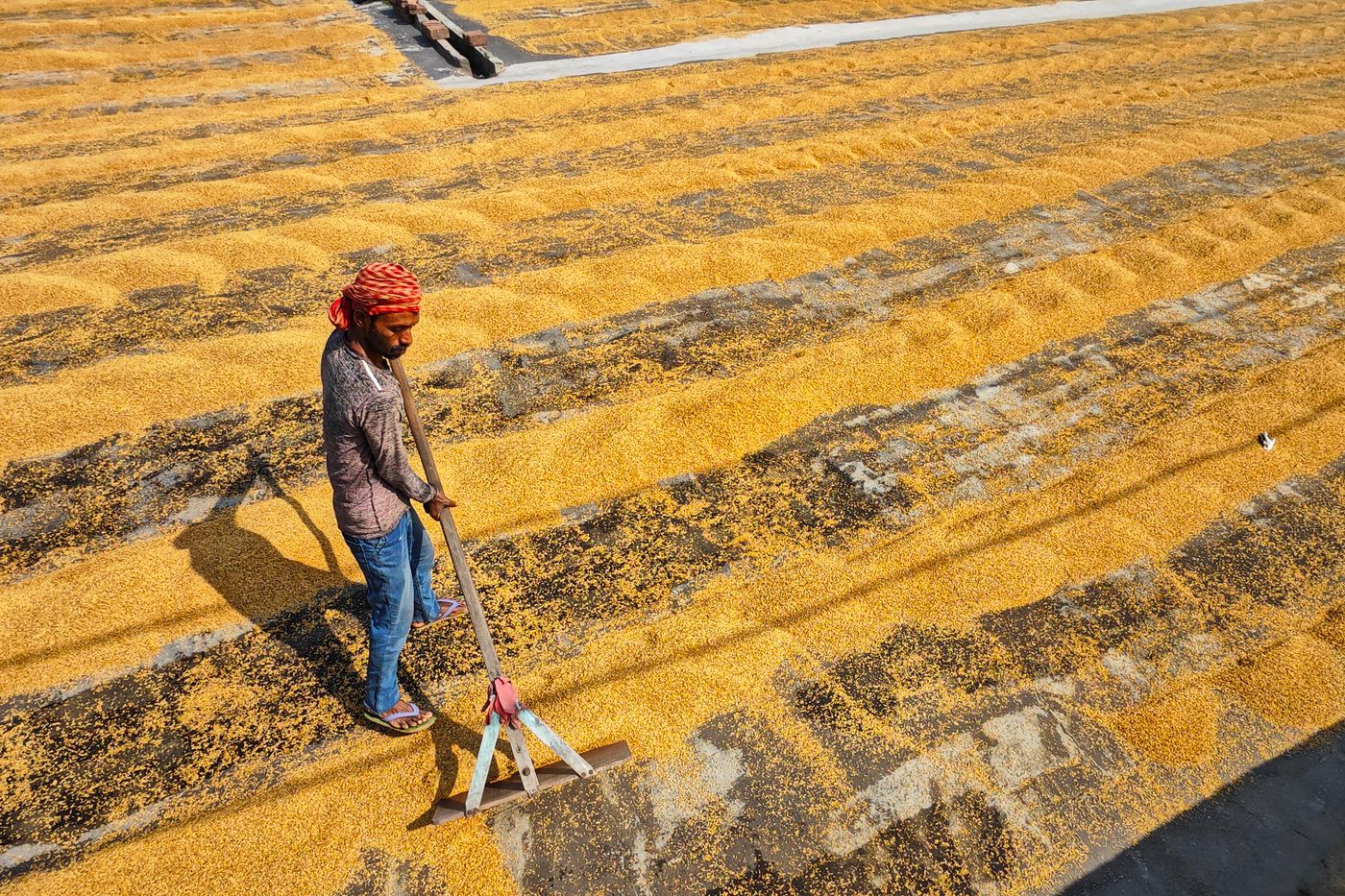
The rest is technique. Spread the grain a few centimetres deep rather than in a mound, because the sun only dries what it can reach. Rake it every couple of hours so the bottom layer takes its turn on top, break up clumps, and sweep the tarpaulin clean first, since last season's residue carries this season's mould spores.
The costliest mistakes happen at the ends of the day. Grain left out overnight reabsorbs moisture from dew, and grain caught by a shower can end up wetter than at harvest. Cover it before evening, and keep a second sheet ready when the sky is building.
Raised Cribs: Drying With Air Instead of Only Sun
A drying crib is a narrow, roofed structure with mesh or slatted sides, raised on legs, in which maize dries on the cob. It works on airflow rather than direct sun, which makes it valuable in humid weather where a tarpaulin sits idle for days.
Three design points do the work. The crib must be narrow, so wind crosses the whole width instead of stalling in the middle; one built too deep holds damp cobs at its core all season. It must sit across the prevailing wind. And it must be roofed and raised, with rat guards on the legs.
A crib buys time and protection rather than replacing the final drying step: cobs still need shelling, spreading and testing. How you shell matters too, because a sheller set too aggressively cracks kernels, and cracked kernels take up moisture and admit mould more readily than whole ones. Our guide to choosing a maize sheller covers that setting.
Mechanical and Mobile Dryers: When Volume Justifies the Cost
Mechanical dryers push heated air through grain in a controlled way. Batch dryers fill, dry and empty a fixed quantity; continuous flow dryers move grain past a heat source; mobile dryers mount the same idea on a trailer to serve several farms or a cooperative.
They buy three things sunshine cannot: independence from weather, so you harvest on the agronomically correct day; speed, so a large harvest leaves the danger zone in hours; and control, so every batch reaches a documented moisture. For anyone selling into a market that tests at intake, that last point often pays for the machine.
The counterweight is cost. A dryer burns fuel or electricity for every batch, needs a competent operator, and cracks kernels or damages seed viability if run too hot. As a rule of thumb, it earns its place when you handle many tonnes a season, dry for others as a service, or face rains that arrive during harvest. Below that, a tarpaulin, a crib and a meter give you most of the benefit for a fraction of the money.
Aflatoxin: The Reason Drying Speed Matters
Aflatoxin is a toxin produced by certain Aspergillus moulds that can grow on maize and groundnuts. It matters because it affects both food safety and market value, and because it cannot be reliably seen, smelled or tasted. Kenya has had incidents serious enough that maize aflatoxin is treated as a public health priority, particularly in parts of the eastern region.
The practical, non-alarmist reading is that this is largely a moisture and hygiene problem, so good practice does most of the work. Moulds need damp, warm conditions, and the window of risk is widest while grain is still wet. That is why how fast you dry matters as much as how far: grain left damp in a heap for four days has given moulds four days of ideal conditions. The habits that close that window are the ones in this article, from prompt harvest and clean drying surfaces to frequent turning, covering against dew, and sorting out damaged grain.
If you suspect a batch, do not guess and do not blend it into good grain. Keep it separate and speak to your county agricultural extension officer, who can direct you to testing. This is not a judgement to make with your eyes.
Clean and Grade Before You Store
Drying and cleaning are one job in sequence. Winnowing, or passing grain through a cleaner or grader, removes chaff, dust, cob fragments, soil and stones. That trash is usually wetter than the grain around it, so it seeds damp pockets inside an otherwise dry bag, it is where insect eggs and mould spores concentrate, and buyers deduct for foreign matter.
Grading goes further, separating out broken, shrivelled, insect bored and discoloured kernels. Damaged kernels have lost the seed coat that protects the starch inside, so they take up moisture faster and support mould more readily.
Do this after drying and before bagging, so what enters the store is dry, clean and uniform. Then hand over to the storage system, which is the subject of our companion guide to post-harvest grain storage. Drying decides what that system has to work with, and no bag or silo ever made wet grain safe.
Key Takeaways
- Moisture sets the speed of respiration, mould growth and insect activity, so dry to a measured outcome, never to a set number of days.
- Around 13 percent is the common working target for stored maize in Kenya, but confirm the figure for your crop and buyer.
- Fingernail and tooth tests read the surface only, and grain dries from the outside in.
- Select the correct crop on the meter, settle hot samples in the shade, and fill the chamber as the manual specifies.
- Sample from five or more points and depths, mix in a bucket, test three times, and believe the wettest reading.
- Never dry on bare ground: it pushes moisture back up, adds grit, and puts damp grain in contact with soil borne moulds.
- Cribs must be narrow, roofed, raised and set across the wind; dryers earn their cost on volume or service hire.
- Clean and grade before bagging, because trash and broken kernels create the damp pockets that spoil a store.
Frequently Asked Questions
What moisture content should maize be at for storage in Kenya?
Around 13 percent is the figure most Kenyan extension officers and grain buyers work to for stored maize, and it is a sensible planning benchmark. Treat it as a target to confirm rather than a fixed rule, since the right level depends on how long you store and what your buyer specifies.
How do I know if my maize is dry without a moisture meter?
The traditional checks give a rough guide: kernels should be hard, should not dent under a fingernail, should crack rather than squash between the teeth, and a handful should rattle. They help you decide whether to keep drying, but they read the surface only, so they cannot confirm grain is safe to seal away.
Is drying maize on bare ground really that bad?
Yes, and it is the first habit worth changing. Bare earth pushes moisture back into the bottom layer, mixes in soil and stones that cost you at the mill and at the sale, and puts damp grain in contact with soil borne fungi. A tarpaulin or a clean drying slab removes all of that for a small cost.
How much does a grain moisture meter cost at Fuga?
Handheld meters sit at the affordable end of farm equipment and cost a small fraction of the value of one harvest. Prices move with stock and the exchange rate, so check our price list for indicative ranges and confirm the current figure on WhatsApp at wa.me/254716961018, or visit any branch in Eldoret, Nakuru, Nairobi or the Coast.