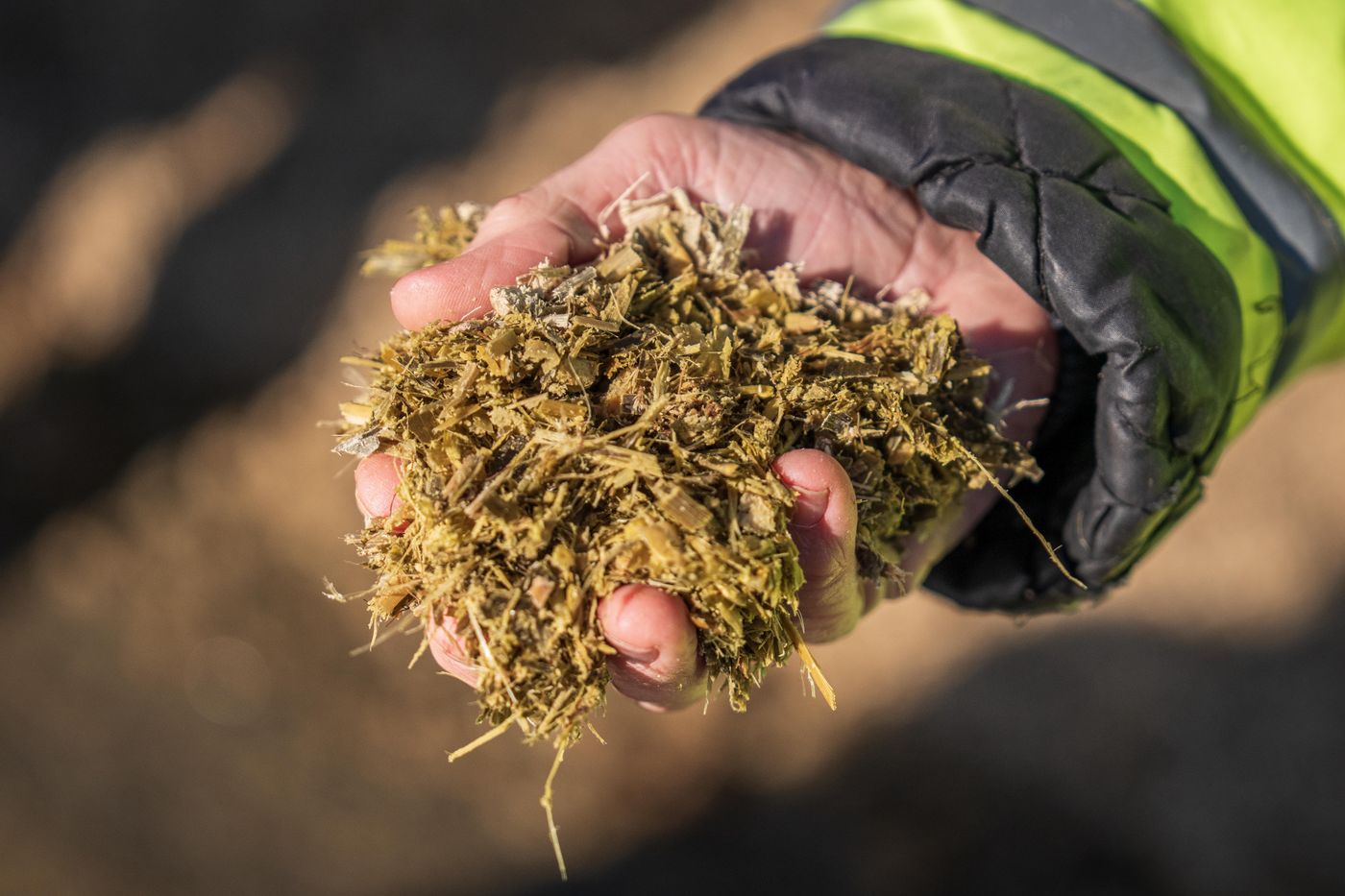
Walk onto most zero grazing units in Kiambu or Bomet at six in the morning and you will find the same scene: someone bent over a pile of napier with a panga, cutting by hand, and a heap of thick lower stalk already set aside because the cows will not touch it. That discarded stalk is the part the farmer paid to grow, carry and store.
A chaff cutter exists to stop that waste. It is usually the first machine a Kenyan dairy farm should buy, ahead of a milking machine, because it attacks the largest cost on the farm rather than the most visible one. Feed is where the money goes.
But "chaff cutter" covers machines from KSH 28,000 to KSH 140,000, and the gap between them is not simply size. This is how to work out which one your farm actually needs, what it will cost you to keep running, and the one setting that decides whether it helps your cows or quietly harms them.
What chopping actually does
Cows sort. Offered long napier, a cow will eat the soft leaf and leave the coarse stem, which is exactly the behaviour that turns a full manger into a half-eaten one. Chopping removes the choice. The leaf and the stem arrive in the same mouthful, so refusal drops and the fodder you grew is the fodder that gets eaten.
The second gain is bulk. Chopped fodder packs down, so the same manger holds more, and a cow eating in short bursts between milkings can physically take in more dry matter. On napier that matters, because napier is a high yielding grass rather than a rich one. Published reviews of napier nutrition put its crude protein at roughly 70 to 100 g/kg of dry matter and its energy around 6 to 8 MJ/kg, which is modest. When the feed is thin, intake is the lever you have.
What chopping does not do is improve the fodder. A chaff cutter cannot add protein to over-mature napier. The same research is blunt that cutting napier young matters far more than anything you do to it afterwards: farmers commonly let it reach 150 to 200 cm to maximise bulk, but nutritive value is markedly better if it is cut earlier. Chop stemmy, over-grown napier and you get short pieces of stemmy, over-grown napier.
Buy the machine, fix the harvest. A chaff cutter pays back through less refusal and higher intake. It cannot rescue fodder cut too late. If your napier is routinely head high before it is cut, the cutting interval is the cheaper problem to fix first, and it costs nothing.
Chop length: the setting most farms get wrong in both directions
Ask three farmers the right chop length and you will get three answers, usually "as short as it will go". That is wrong, and it is the expensive kind of wrong.
Kenyan extension guidance generally lands around 2 to 5 cm for dairy cattle, and there is a reason it is a range rather than a number. Too long and the cow sorts again, which defeats the purpose. Too short and you strip out the physically effective fibre, the coarse material that forces a cow to ruminate. Rumination produces saliva, saliva buffers the rumen, and a rumen that is not buffered drifts acidic. The visible symptoms are a drop in butterfat, loose dung and cows that go off feed, and almost nobody traces those back to the chaff cutter.
So the practical rule is to cut short enough that nothing is left in the manger, and no shorter. If your cows are cleaning up and still chewing the cud lying down for a good part of the day, your chop length is right.
The real price ladder
Our chaff cutters run from KSH 28,000 to KSH 140,000. The ladder is not smooth, and knowing where the steps fall stops you paying for capacity you will never use.
The important feature of that chart is the empty space. The blade machines top out around KSH 40,000 and the high speed machines start at KSH 100,000. There is nothing in between, so the choice is genuinely binary: a manual-feed blade cutter, or a high output machine. Farms that try to split the difference end up buying the biggest blade machine and outgrowing it in a season.
The crusher model at KSH 140,000 is worth singling out. It chops and crushes, which matters if you are feeding maize stalks or grain, because crushing cracks the kernel so it is digested rather than passed whole. If you feed only green napier, you are paying KSH 10,000 for a function you will not use.
Size it by daily fodder volume, not by herd
Herd size is a poor proxy because it ignores what you feed and how long you are willing to stand at the machine. Work it the other way round.
Estimate the weight of green fodder you cut in a day. A dairy cow in milk eats a lot of green material daily, and on a cut and carry system that all passes through the cutter. Multiply by your cows, then decide how long you are prepared to spend feeding the machine. If the answer is more than about an hour, you are buying a job rather than a machine.
Electric or petrol
At the high speed end the same machine is offered both ways, and the petrol version costs about KSH 10,000 more up front. That is where the simple comparison ends.
Electric is cheaper to buy and far cheaper to run, quieter, and needs almost no maintenance beyond belts and bearings. It is also useless during an outage, and it needs wiring that can carry the motor's starting surge. That surge, not the running load, is what trips undersized supply and what determines the inverter if you are running from solar or battery backup.
Petrol goes where the power does not, which on many farms means the fodder plot rather than the shed. It costs more every hour it runs, needs servicing, and will not start for someone who has let it sit through a dry season with stale fuel in it.
The honest test is your own supply. If your power is steady, buy electric and spend the KSH 10,000 you saved on spare blades and a belt set.
The running costs nobody quotes you
A chaff cutter is a wearing machine. Blades dull, belts stretch, bearings rumble. None of that is a fault, it is the machine doing its job, and a farm that has not budgeted for it ends up running a blunt machine because the blade costs more than they expected that week.
These are our current parts prices, so you can plan rather than guess:
- Blade, KSH 800, and the blade bolts at KSH 50. The cheapest part on the machine and the one that decides everything else.
- Belt set, four pieces, KSH 2,000. Belts are consumables. Keep a set.
- Bearing set, fourteen pieces, KSH 6,000. Replace at the first rumble, not after it seizes.
- Main shaft, KSH 3,500. Rarely needed, usually the consequence of running on dead bearings.
A blunt blade does not simply cut slowly. It tears rather than slices, which loads the motor, overheats it, and shortens its life. It also produces a ragged chop that cows sort more readily, so the machine quietly stops delivering the benefit you bought it for. Sharpening is the highest return maintenance on the farm and most owners leave it far too long.
Buy spares with the machine, not after it stops. A blade, a belt set and a spare set of bolts comes to under KSH 3,000 on a machine costing tens of thousands. It is the difference between an afternoon's downtime and a fortnight of hand cutting during peak lactation.
Safety: this is the machine that takes fingers
Everything above assumes the machine is still attached to all of its operator. Chaff cutters are responsible for a grim share of farm hand injuries in Kenya, and the mechanism is always the same: the feed rollers grip the material, the material is short, and the hand follows it in.
Three rules, none of which cost anything.
- Never push the last of the material by hand. Use a longer stalk to push short material through, or accept the small amount left behind.
- Keep the guard on. The flywheel guard is removed for cleaning and then not refitted, and that is when it happens.
- One operator, no bystanders, and nobody tired. Most incidents happen at the end of a session, feeding fast to finish.
If children are anywhere near the unit, the machine is switched off at the source rather than merely idle. A belt driven flywheel carries enough stored energy to keep turning well after the motor is cut.
Key takeaways
- A chaff cutter attacks feed cost, the biggest cost on a dairy farm, which is why it usually beats a milking machine as a first purchase.
- Chopping stops cows sorting and lifts intake. It cannot improve fodder that was cut too late.
- Aim around 2 to 5 cm. Shorter is not better: too short removes the fibre that drives rumination.
- The range is genuinely binary. Blade machines end near KSH 40,000, high speed machines start at KSH 100,000, and nothing sits between.
- Buy on throughput against your daily fodder weight, not on herd size.
- Electric if your power is steady, petrol if it is not, and size the supply for the starting surge.
- Budget blades, belts and bearings from day one. A blunt blade costs you the benefit you paid for.
Frequently asked questions
Is a chaff cutter worth it for only two or three cows?
Usually yes, and sooner than people expect, because the saving is in fodder that currently gets refused rather than in labour alone. A 2x2 blade machine at KSH 28,000 is a modest outlay against a season of wasted napier stalk. The argument weakens only if you already feed a lot of concentrate and little green material.
What chop length should I set for dairy cows?
Around 2 to 5 cm is the usual guidance. Judge it by results rather than by measurement: if the manger is clean and the cows spend a good part of the day chewing the cud lying down, you have it right. A clean manger with cows that never ruminate means you have gone too short.
Can I run a chaff cutter on solar?
Yes, but size it for the motor's starting surge and not its running watts, because the surge is several times higher and is what trips an undersized inverter. Tell us the motor rating and we will tell you honestly whether your existing system will carry it.
Should I buy the model with a crusher?
Only if you feed maize stalks or grain. Crushing cracks the kernel so it is digested rather than passed through whole. On a farm feeding green napier alone it is about KSH 10,000 for a function that will sit idle.
Ready to equip your farm or business?
Tell us how much green fodder you cut in a day, what you are cutting, and whether your power is reliable, and we will point you at one machine rather than a price range. We stock the full chaff cutter range along with blades, belts and bearings, everything carries a minimum one year warranty, and our team will run your own fodder through a machine so you can see the cut before you commit. If you are also planning storage, our guide to making silage covers what to do with the fodder once it is cut.