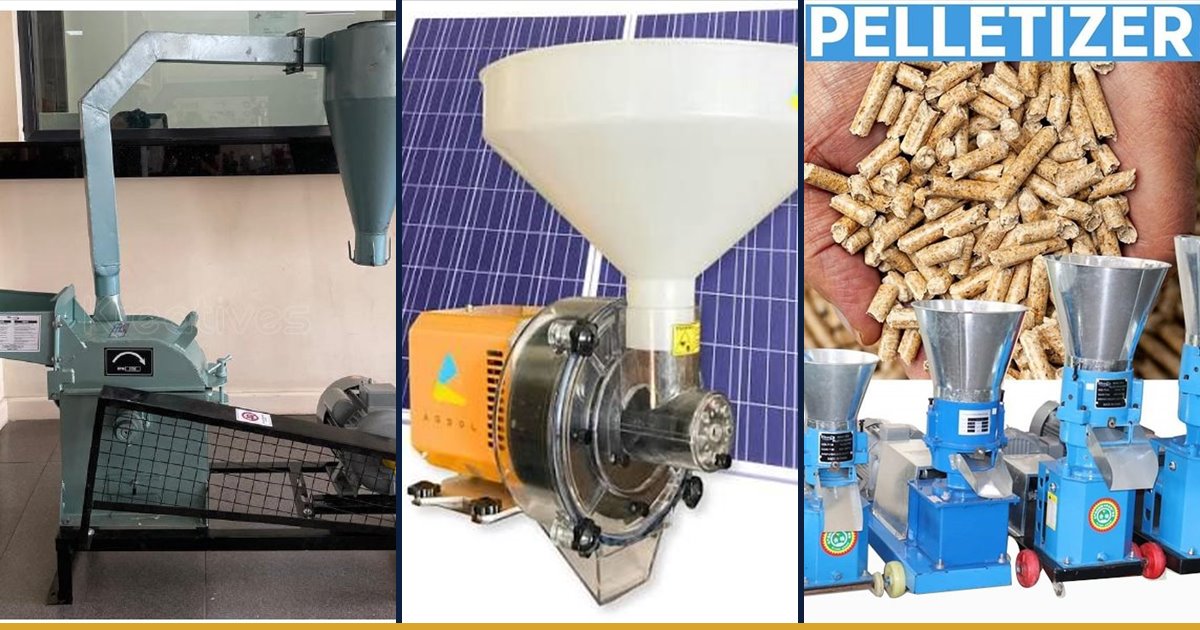
Two machines sit on the same shop floor, and both are sold to you as posho mills. One grinds maize by throwing it at high speed against a steel screen. The other squeezes it between two grooved plates that turn against each other. They look different, they sound different, and they will hand you two very different bags of flour. Yet the seller uses the same word for both, and the price tags rarely explain why one suits your work and the other will disappoint you.
The choice matters more than most buyers realise on the day. Pick the wrong machine and you get flour your ugali customers reject, a power bill that quietly eats the margin on every bag, or a grinder that chews through wear parts faster than it earns. Pick the right one and the same maize becomes either fine table meal, a balanced animal ration, or a steady stream of custom milling that pays for itself.
This guide separates the two machines by how they actually work, then walks through the things that decide a real purchase: fineness and consistency, throughput and power draw, wear parts and running cost, and noise and dust. It ends with a plain rule for matching the mill to human food, to animal feed, or to a posho business turning volume for the public.
Two Machines, Two Ways of Breaking a Grain
A hammer mill grinds by impact. A rotor carries a set of swinging hammers, and it spins fast, close to 3000 revolutions per minute on a standard two pole electric motor at Kenyan mains frequency. Grain drops into the chamber and is struck again and again, thrown against fixed breaker plates and the hammers themselves, until each particle is small enough to fall through the holes in a perforated steel screen wrapped around the rotor. Nothing leaves the chamber until it can pass that screen, so the size of the holes sets the coarsest particle that escapes.
A disc mill, also called a burr mill, plate mill or attrition mill, grinds by shear and crushing rather than by blows. Grain is fed into the centre of two grooved discs, one held still and one turning, and the gap between them narrows towards the rim. As the grain is dragged outward it is sheared, crushed and rubbed to size, then thrown clear at the edge. The classic Kenyan posho mill many people picture, the belt driven grinder that has stood in trading centres for generations, is usually a plate mill of exactly this kind.
Every practical difference that follows comes from this one distinction. Impact shatters a grain in an instant and cares mostly about the exit screen. Attrition works the grain progressively and cares mostly about the gap. Hold that picture and the rest of the comparison stops being a list of features and becomes something you can reason about.
Impact versus attrition. A hammer mill hits the grain and lets a screen decide when it may leave. A disc mill grinds the grain between plates and lets a gap decide how fine it gets. One is a hammer and a sieve, the other is a millstone. That single idea predicts the flour, the power bill and the wear.
Fineness and Consistency: What Comes Out of Each
Fineness is only half of what matters. The other half is consistency, meaning how even the particles are once you have set the machine, and the two mills behave very differently on that second point.
A hammer mill sets its top particle size with the screen. Fit a fine screen and the flour is fine, fit a coarse screen and it is coarse. Because impact is violent and slightly random, though, the meal that comes out holds a wide spread of sizes at once: plenty of fine flour, a fair amount of medium particles, and some coarser bits that only just squeezed through. That range is a strength for animal feed, where a mixture of sizes actually helps digestion and handling. For fine table meal it means you often sieve afterwards to lift out the bran and the coarse tail. Our companion guide on hammer mill screens and sieve sizes goes into how one sheet of perforated steel changes everything downstream.
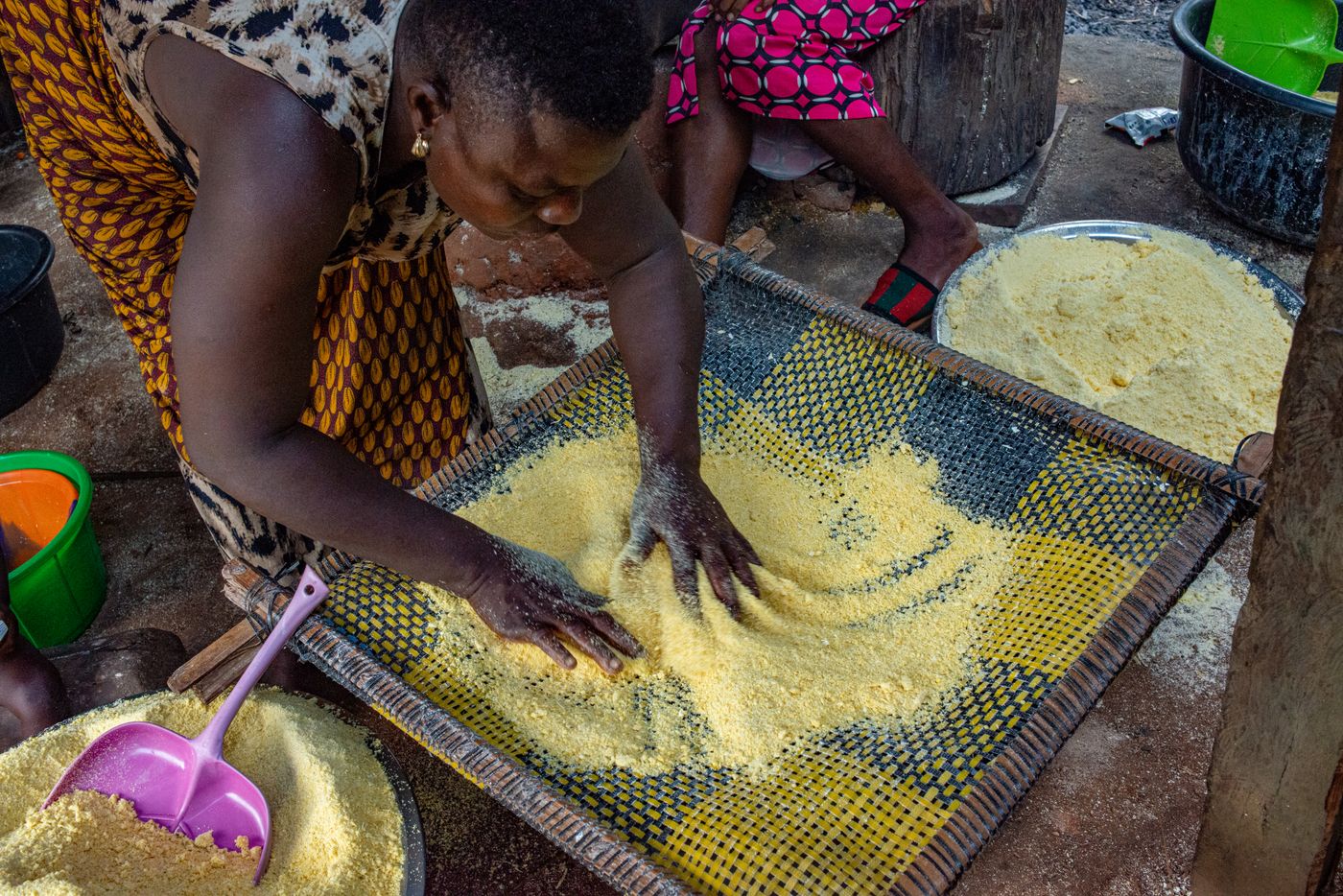
A disc mill sets its fineness with the gap, and because the grain is worked steadily rather than smashed, the particles come out more uniform. That evenness is exactly what smooth ugali flour wants, and it is why plate mills held the posho trade for so long. The trade off is that shearing generates heat by friction, so a disc mill can warm the meal noticeably, and warm flour bagged straight away holds moisture that shortens its shelf life. Let it cool and breathe before sealing it.
Put the two together and a simple table captures the whole personality of each machine, before you ever discuss price.
Throughput and Power Draw
Throughput is how much maize the machine turns per hour, and power draw is what it pulls from the socket to do it. The two are joined, and the join is different for each mill.
A hammer mill is fast and forgiving at coarse and medium settings. Open the screen up and it swallows maize quickly on modest power, which is why it is the workhorse for feed and bulk grinding. Close the screen down for fine flour and the picture changes: particles must be struck many more times before they are small enough to pass, so the same maize now sits longer in the chamber, throughput falls, and the energy spent on every kilogram climbs. A fine screen on a hammer mill is where the power bill quietly grows.
A disc mill runs slower and is efficient at fine, dry grinding, which is its natural home. It does not rely on repeated impact, so producing an even fine flour does not punish it the way a tight screen punishes a hammer mill. Its throughput is set by how fast you can feed it and how tight the gap is, and closing the gap raises the load just as tightening a vice takes more effort. For a single fine product it is a lean, steady grinder.
Whichever you choose, size the machine to your electricity before you fall in love with a specification. A grinder rated for three phase power will not run on a single phase socket, and a motor that is starved by a long, thin cable or a sagging rural line will overheat and stall under load. If the grid is unreliable where you mill, budget for a matched diesel or petrol option so a power cut does not stop the day. The Fuga price list shows the current motor sizes and drive options next to each mill so you can match the machine to the supply you actually have, and it always carries current pricing.
Fineness is not free. On a hammer mill, every step finer costs you throughput and power, because the grain must be hit more times to escape a smaller screen. On a disc mill the cost of fineness is gentler, which is one reason plate mills held the fine flour trade for so long.
Wear Parts and the Cost of Ownership
The price on the day is only the deposit. The real cost of a mill is paid out slowly through the parts that wear, and here the two machines ask for different things from your pocket and your discipline.
On a hammer mill the consumables are the hammers and the screen. Hammers wear blunt at the tips, but they are usually reversible and replaceable in a set, and many designs let you rotate them to a fresh edge before you change them, which stretches their life. The screen slowly enlarges and tears at the holes, and a worn screen quietly lets coarser particles through, so it needs watching and swapping. Both parts are simple, widely stocked, and cheap to hold on the shelf, which makes a hammer mill forgiving to run in a place far from a dealer.
On a disc mill the wear falls on the plates themselves. Grinding surfaces dull and lose their grooves over time, and once they do the meal comes out coarser and the machine works harder for the same result. Plates are replaced or, on some machines, re dressed, and they cost more than a set of hammers, though they are usually asked for less often on clean grain. The word clean is doing real work in that sentence. A single stone or a piece of metal in the maize can gouge a plate in seconds, so a disc mill rewards a farmer who cleans and de stones grain before milling and punishes one who does not. A hammer mill shrugs off small foreign objects far more easily, which matters when you are milling maize brought in by many different customers.
The honest way to compare running cost is to price a whole season rather than a single service, weighing the part cost, how often it is needed, how easily you can get it, and how much milling you lose while the machine is down. A cheaper plate that is hard to source and takes a week to arrive can cost more in lost trade than a pricier part kept in stock down the road.
Clean grain is a spare part. A disc mill lives or dies on how clean the maize is, because a stray stone can ruin a plate in an instant. If your grain arrives dusty and un sorted, either invest in de stoning first or lean towards a hammer mill, which tolerates the rough stuff.
Noise and Dust: The Costs Nobody Quotes
Neither machine is quiet or clean, but a hammer mill is the louder and dustier of the two by a clear margin. High rotor speed, the constant impact of grain, and the rush of air needed to carry flour through the screen all add up to real noise and a plume of fine dust that hangs in the air. Run one in the open near neighbours, or in a closed room without extraction, and you will hear about it from both the community and your own lungs.
This is not only a comfort question, it is a health and business one. Fine flour dust is a respiratory hazard over time and, in a confined space with an ignition source, a genuine explosion risk, which is why serious mills fit a cyclone and a collection bag to pull the dust out of the air. A disc mill is quieter and throws less airborne dust, but it is not dust free, so it still wants ventilation and a mask for the operator. Whichever you buy, plan for extraction, hearing protection and a sited building from the start rather than as an afterthought once the complaints begin.
Which Mill for Which Job
Now the question you actually came with. The answer is not that one machine is better, it is that each is built for a different product, so decide what you are selling and let that choose the mill.
Maize meal for the family plate. Fine, even, low bran flour for smooth ugali is the disc mill's home ground. Its uniform grind is exactly what the pot wants, and a well run plate mill has fed Kenyan kitchens for generations. A hammer mill with a fine screen and a good sieve can also make table meal, and many small commercial millers do exactly that, but it asks for the extra sieving step to lift out the bran. If fine table flour is your main product, start your thinking at a plate style posho mill.
Animal feed. Here the hammer mill wins on its own terms. Livestock and poultry rations are built from many ingredients, maize, sunflower cake, cereals, sometimes fibrous material, and the hammer mill handles all of them and delivers the mixed range of particle sizes that feed actually benefits from. It copes with the odd stone, grinds fast on modest power, and pairs naturally with a mixer once the grinding is done, a workflow we set out in our guide to mixing your own feed. For feed of almost any kind, an electric hammer miller is the sensible default.
A posho business milling for the public. A commercial posho operation often wants both, and for good reasons. Customers arrive with maize of every quality and expect fine table meal, which points to a rugged, tolerant machine that still grinds fine, and to a workflow that can sieve. Many established millers run a hammer mill for volume and versatility and keep a plate mill for the finest custom flour, sizing the whole shop to the queue rather than to one machine. If you are building or growing a milling business, our posho mill business guide works through demand, siting, power and the numbers that decide whether the shop pays.
How to Decide in the Shop
Turn all of the above into a short conversation you can have at the counter. Name your main product first, because it settles most of the argument on its own: fine table meal leans disc, feed leans hammer, and a public milling shop usually leans towards a hammer mill with sieving and, if the budget allows, a plate mill alongside.
Then test the machine against your own reality rather than the brochure. Ask what the screen or the plates cost and how quickly you can get them near you. Say honestly how clean your maize is, because dirty grain pushes you towards a hammer mill. Measure your power supply, single or three phase, steady or sagging, and be ready to add a diesel option if the grid fails often. Finally, price a whole season, not a single day, adding the wear parts and the milling you would lose during a breakdown to the sticker on the machine. The ranking of two mills often changes once those numbers are on the paper.
Key Takeaways
- A hammer mill grinds by impact and lets a screen set the top size. A disc or plate mill grinds by shear between two plates and lets a gap set the fineness.
- Hammer mills give a wider spread of particle sizes, ideal for feed and often sieved for table meal. Disc mills give a more uniform, finer grind that suits smooth ugali flour.
- On a hammer mill, finer flour costs more throughput and power because the grain must be struck more times to pass a smaller screen. A disc mill pays a gentler penalty for fineness but can warm the meal.
- Hammer mills wear hammers and screens, are cheap to service and tolerate dirty grain. Disc mills wear their plates and reward clean, de stoned maize, since a stray stone can ruin a plate quickly.
- Choose by product: hammer mill for animal feed, disc mill for fine family meal, and commonly both for a posho business milling for the public.
Frequently Asked Questions
Which mill gives finer flour for ugali, a hammer mill or a disc mill?
A disc or plate mill naturally gives the finer, more even flour that smooth ugali wants, because it works the grain steadily between two plates rather than shattering it. A hammer mill can reach a fine grind with a small screen, but the meal holds a wider range of sizes and usually needs sieving to lift out the bran and the coarse tail. If fine table meal is your main product, a plate mill is the simpler route.
Can I use one machine for both animal feed and human maize meal?
Yes, and many small millers do, though there is a trade off. A hammer mill is the more flexible single machine: fit a coarse screen for feed and a fine screen with a sieve for table meal. It will not match a dedicated plate mill for the smoothest flour, but it covers both jobs on one motor, which is often the right compromise for a mixed operation starting out.
Why does my hammer mill draw so much power when I fit a fine screen?
Because a smaller hole forces each particle to be struck many more times before it is small enough to escape the chamber. The grain sits longer, throughput drops, and the energy spent per kilogram rises. That is normal for the design, not a fault. If fine flour is your steady product and the power bill hurts, it is worth comparing the running cost against a disc mill, which handles fine dry grinding more efficiently.
How much maintenance does each mill really need?
A hammer mill asks for regular checks on its hammers and screen, both cheap, widely stocked and quick to change, which makes it forgiving far from a dealer. A disc mill asks for less frequent attention on clean grain, but its plates cost more and are ruined fast by stones or metal, so it demands that you clean and de stone maize first. Match the machine to how clean your grain is and how easily you can get parts.
At Fuga we stock both families of mill and we are happy to open the covers and show you the difference before you commit. Tell us your main product, how clean your maize is and what power you have at the site, and we will point you to the machine that fits rather than the most expensive one on the shelf. Browse the mills through our hammer miller and electric posho mill pages, check the current motor sizes and pricing on the price list, then reach us through our contact page or on WhatsApp for honest advice first and a quote second.