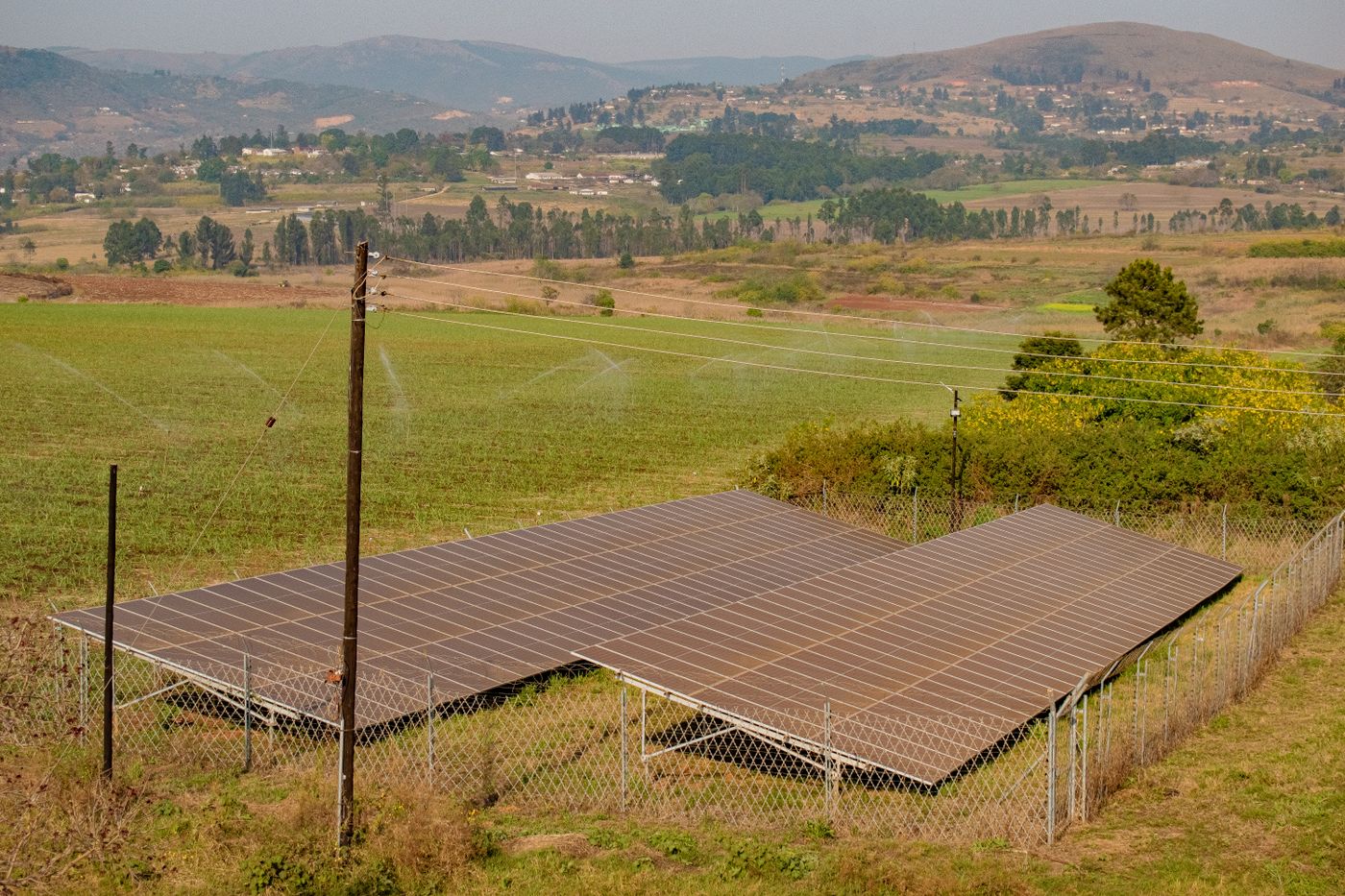
By the end of a dry spell, the solar pump on a farm beside a murram road starts finishing its day earlier than it did a month ago. The tank is not quite full by evening. The panels look fine from the ground, but up close they carry a fine brown film from every lorry that passed, a few white splashes where birds perch on the frame, and a line of dried mud along the bottom edge from the last shower. Nothing is broken. The panels are simply dirty, and dirty panels harvest less of every sunny hour.
Solar is sold as the equipment that needs no attention, and compared with a generator that is nearly true. But "nearly" covers a handful of jobs that decide whether a system gives its full output for years or slowly declines until someone blames the pump, the battery or the installer. Most of those jobs take less than an hour a month.
This guide covers cleaning and maintaining solar panels in dusty Kenyan conditions: why dust and bird droppings cost output, how to measure the loss on your own system, how to clean safely without damaging the glass or yourself, how much water it takes, and a practical inspection checklist for the panels, the mounts, the wiring and the battery.
Why Dirt Costs More Than It Looks
A panel makes power from the light that reaches its cells through the front glass. A uniform film of dust works like a thin curtain: it scatters and blocks part of the light across the whole panel, so the output drops across the whole panel. That loss is gradual and easy to miss, because it builds a little each day.
A bird dropping, a leaf or a patch of caked mud is different, and often worse. Inside a panel, the cells are wired in series, one after another, like links in a chain. Current has to pass through every cell in the chain, so a cell that is covered and cannot produce holds back the cells around it. Panels have bypass diodes that let current skip a blocked group of cells, which limits the damage, but that whole group then contributes nothing. A splash covering a few cells can cost far more than its size suggests.
There is a second reason to deal with droppings quickly. A covered cell that is being bypassed, or partly forced, can run hotter than its neighbours. Over time such hot spots can discolour and damage the cell. Cleaning off a dropping is cheap; replacing a panel is not.
Measure Your Own Loss Before Deciding How Often to Clean
How much dust costs depends on the site: a panel beside a busy murram road in the dry season soils far faster than one in a green compound on a tarmac road, and a tilted panel sheds more in the rains than a flat one. Rather than trust a general figure, measure your own system once. It takes ten minutes and settles the cleaning schedule for good.
- Pick a clear, bright morning and a time in the middle of the day, when the sun is strong and steady.
- Read the charging figure on the charge controller or inverter display: the panel watts or charging amps. Note it with the time.
- Clean the panels using the method below.
- Read the figure again as soon as the glass is dry, with the sun still in the same part of the sky.
The difference is what the dirt was costing you on that day. If it is small, clean less often; if it is large, clean more often, especially through the dry months. A battery that is already full will hold charging current down, so do this test when the battery has room to take charge, for example in the morning after a night of use.
How to Clean Panels Safely
Cleaning is simple, but done carelessly it scratches the glass, cracks a cold panel or puts someone in hospital after a fall from the roof. Follow the same method every time.
- Clean early or late: in the early morning or late afternoon, when the glass is cool. Many panel makers advise against throwing cold water on glass that has been baking in the midday sun, and the water also dries too fast at midday and leaves marks.
- Plain water and a soft brush: a soft-bristled brush or sponge on a pole, and clean water. Avoid detergents that leave a film, and never use scouring powder, wire wool, a scraper or a hard brush, which scratch the glass and its coating.
- Soak, do not scrape: bird droppings and dried mud come off with patience. Wet them, wait a few minutes, wet them again, then wipe.
- No pressure washer: high-pressure water can force its way past seals and into junction boxes and connectors. Our guide to pressure washers covers the many jobs they are good for; panels are not one of them.
- Do not stand or kneel on panels, and do not lean a ladder against them. Work from a ladder beside the array, or from the ground with a long-handled brush.
- Keep water off the connectors and the cable entries at the back of the panels, and do not touch the wiring while cleaning.
Rooftop panels add the hazard of height. Wet glass and wet iron sheets are slippery, so stay off the roof in the rain and use a properly footed ladder with someone holding it. Our guide to farm and workshop safety equipment covers footwear and fall protection. Where the roof is steep or high, use a long pole from the ground or pay a professional.
Water Use and Where to Get It
Panel cleaning uses far less water than people expect, because the job is wetting and wiping, not flooding. A bucket and a soft brush cover a small home or pump array; measure what you use the first time and you will know for every clean after. A hosepipe at gentle flow is quicker for a larger array, but turn it off while scrubbing.
Water quality matters more than quantity. Hard borehole water, rich in dissolved minerals, can leave white spots on the glass as it dries, and those spots also block light. Rainwater is soft and ideal, which is a good use for the tank you keep from the roof gutters; see our guide to rainwater harvesting. If only hard water is available, rinse lightly and wipe the glass dry with a soft squeegee or cloth before the minerals set.
These are the plain items from our price list that cover cleaning and the small wiring repairs described below.
| Item | Stock code | Price |
|---|---|---|
| PLASTIC BUCKETS | 6537 | 438 KSH |
| ZEBRA HOSE PIPE 1/2*60FT | 6437 | 600 KSH |
| MC4 SOLAR CONNECTOR 1 WAY | 6293 | 1,000 KSH |
| Y-TYPE SOLAR CONNECTOR | 6723 | 600 KSH |
| PV SOLAR CABLE 6MM | 6724 | 300 KSH |
| CHARGE CONTROLLER 30A | 6152 | 3,000 KSH |
The cable price is as listed; confirm the unit and length you need when ordering.
The Inspection Checklist: Panels, Mounts and the Ground Around Them
Every cleaning visit is also an inspection, because it is the one time you are close enough to see faults. Run through this list with the panels in front of you.
- Glass: cracks, chips or a crazed pattern. A cracked panel can let moisture in; note it and have it checked.
- Cells: brown or yellow patches, snail-trail lines or bubbles under the glass. These are signs of damage or ageing worth recording with a photo and a date.
- Frame and clamps: every clamp tight, no bent frames, no corrosion where aluminium meets steel.
- Mounts and stands: bolts tight, the stand plumb, feet sound. After the first heavy rains, check ground-mounted stands for undermining and lean.
- New shade: trees and hedges grow, and a branch that was clear last year may shade the array at midday now. Trim it.
- Nests and debris: birds and wasps like the gap under panels. Clear leaves and nests that trap moisture and heat.
- Ground-mounted arrays: keep grass cut below the bottom edge, keep the fence sound, and keep goats and cattle away; animals rub on frames and chew cables.
Wiring and Battery Checks
Most solar failures that are not dirt are connections. A loose or corroded connection wastes power as heat and, in the worst case, can start a fire. With the system safely isolated where the checks require it, work along the path the power takes.
- Panel cables: look for sun-cracked insulation, cables chafing on the frame, rodent damage and cable ties that have perished and let cables hang. PV cable is made for sun; ordinary house cable is not.
- MC4 connectors: fully clicked home, not cracked, not lying in water. A connector that is discoloured or warm to the touch in operation needs replacing.
- Charge controller and inverter: vents clear of dust and wasp nests, no error codes, and the battery type setting still matching the battery fitted. After a battery change this setting is often forgotten.
- Fuses and breakers: holders not discoloured, terminals tight.
- Battery terminals: tight and clean. White or green deposits on lead acid terminals should be cleaned off and the terminals protected.
- Flooded lead acid batteries: check electrolyte levels and top up with distilled water only, wearing eye protection. Keep the room ventilated.
- Lithium batteries: read the battery management display or indicator, and keep the battery out of direct sun and away from heat. Our guide to lithium and lead acid batteries explains how their care differs.
If you are not confident working on the battery side of the system, leave it to a qualified technician. Battery banks store a great deal of energy, and a spanner dropped across battery terminals can cause a dangerous short circuit.
A Maintenance Calendar That Fits a Farm Year
The easiest way to keep this going is to tie each job to a regular time, so it does not wait for a problem.
Keep a notebook beside the controller. Write the date, what was done, and the before-and-after reading each time you clean. After a year that notebook tells you how fast your site soils, whether output is holding up, and when something changed. Our guide to solar in the rainy season covers storms, lightning and earthing, which belong on the before-the-rains visit.
For connectors, cable, controllers, replacement panels or advice on a system that is underperforming, visit any Fuga branch or message us on WhatsApp 0716 961 018 with a photo of the array and the controller display. The full range is on our solar equipment page.
Key Takeaways
- Dust dims every cell a little, but a bird dropping or caked mud can switch off a whole group of cells, so clean droppings off promptly.
- Measure your own loss: read the controller's charging figure on a bright midday, clean, and read it again; the difference sets your cleaning interval.
- Clean when the glass is cool, with clean soft water and a soft brush; never use scourers, scrapers or a pressure washer, and never stand on panels.
- Rainwater is ideal; hard borehole water leaves mineral spots, so wipe the glass dry if that is all you have.
- Every clean is an inspection: glass, cells, clamps, mounts, new shade, nests, cables, MC4 connectors and battery terminals.
- Any connection that runs warm is a fault in the making; isolate and fix it before it burns.
Frequently Asked Questions
How often should solar panels be cleaned in Kenya?
It depends on the site. Panels beside a murram road in the dry season soil much faster than panels in a green compound. Measure once: read the charging figure on the controller at midday, clean, and read it again. If the gain is large, clean more often through the dry months; if it is small, clean less. Monthly in the dry season is a common starting point to adjust from.
Can I clean solar panels with soap?
Plain clean water and a soft brush or sponge are enough for most dirt. Detergents can leave a film that holds dust, and abrasive powders scratch the glass. For stubborn bird droppings, soak them with water, wait a few minutes, soak again and wipe. If the panel maker's manual recommends a specific cleaner, follow it.
Is it safe to use a pressure washer on solar panels?
No. High-pressure water can force its way past seals into the junction box and connectors, and can damage the glass coating. Use gentle water from a bucket or a hosepipe at low flow with a soft brush instead.
Does rain clean solar panels?
Only partly. Heavy rain on a tilted panel washes away loose dust, but light showers often leave muddy water that dries in a line along the bottom edge, covering the lowest cells. Look at the panels after the rains rather than assuming they are clean, and wipe off any line of dried mud.
What should I check on my solar batteries?
Check that terminals are tight and clean, that there are no white or green deposits, and that the room is ventilated. For flooded lead acid batteries, check electrolyte levels and top up with distilled water only, wearing eye protection. For lithium, read the battery management display and keep the battery out of heat and direct sun. Confirm the charge controller's battery type setting matches the battery fitted.