Walk into almost any working farm workshop in Kenya and the safety equipment is there. It is in a carton under the bench, or on a nail behind the door, still in its plastic. The welding mask is on the shelf. The goggles are somewhere. Nobody is wearing any of it, and the grinder is running.
That gap between owning protection and using it is the real problem, and it is rarely about attitude. Treat safety equipment like any other purchase for a working farm: match the item to the hazard, buy the version comfortable enough to stay on, and put it where the work happens.
Why Good Kit Gets Bought and Then Never Worn
Four things keep protection off the body. Discomfort is the biggest: goggles that pinch and respirators that trap heat will not survive a hot afternoon in Nakuru, so comfort decides whether an item works at all. Distance comes next, because if the goggles live in the office and the grinder lives in the yard, the grinder wins. Mismatch is the quietest failure: hand someone a paper dust mask for spraying, they smell the chemical through it, and they stop trusting the whole idea. Scarcity settles the rest, since one shared pair of goggles means three people working unprotected.
Eye Protection: Glasses, Goggles and Face Shields Do Three Different Jobs
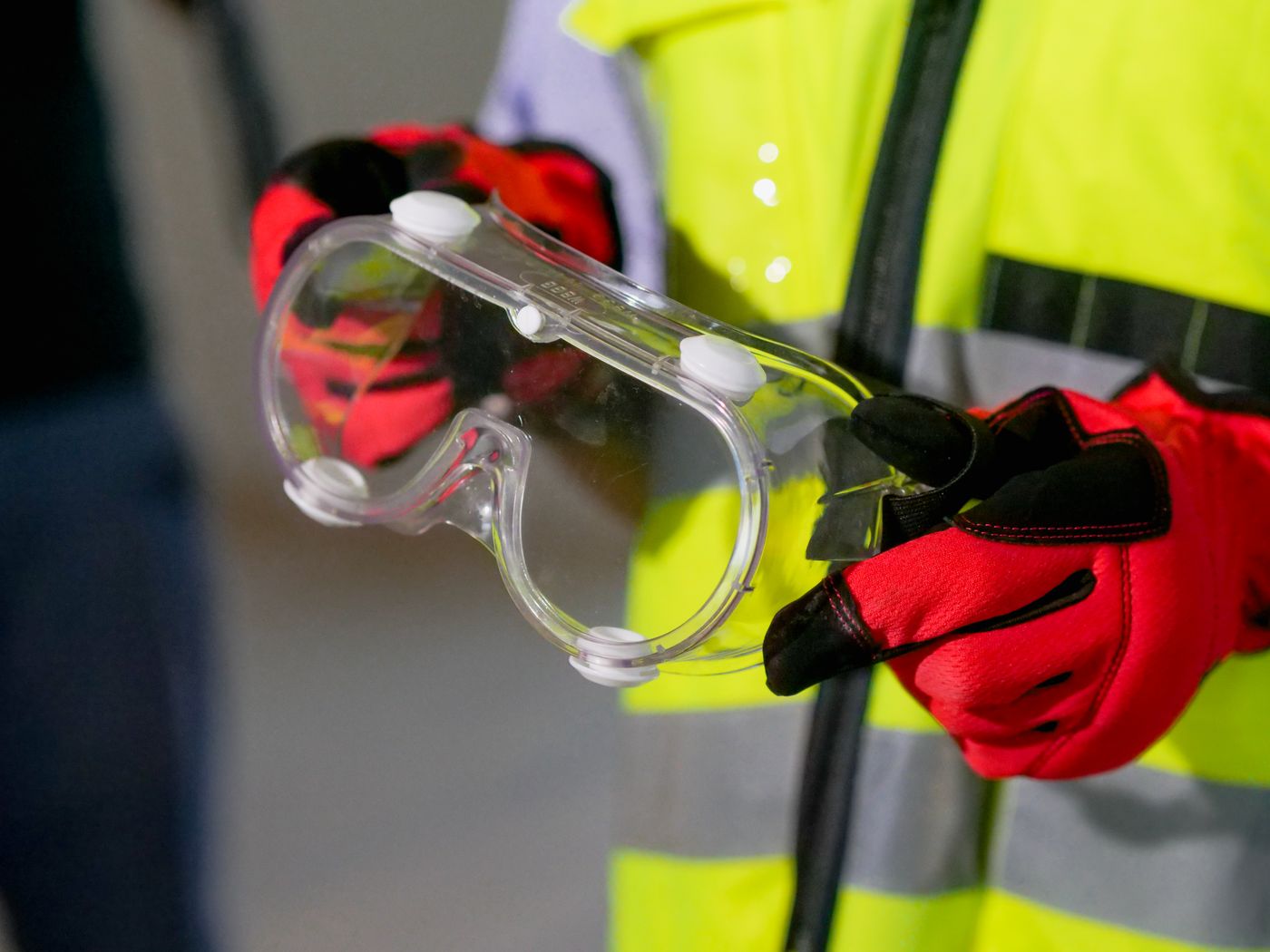
Eyes are the cheapest thing on a farm to protect and the most expensive to lose, and the three common products are not interchangeable. Safety glasses are impact-rated spectacles, open or lightly wrapped at the sides. They suit hammering and general workshop movement and are comfortable enough to wear all day, but they do not seal, so grit still reaches the eye from below. Goggles seal to the face on a soft skirt, and that seal is the point: for angle grinding, wire wheels, chiselling concrete and any splash risk, they are the minimum. Indirect vents let heat escape while blocking the straight path a fragment takes, which is why vented goggles fog far less than the cheap unvented sort people abandon after ten minutes.
A face shield protects the face, not the eyes. It stops sparks reaching your cheeks and mouth, but it is one sheet of plastic with a gap all round its edge, and grinding debris ricochets rather than travelling in straight lines. Wear a shield over goggles, never instead of them, and store the goggles in a box rather than loose in a toolbox, because a scratched lens makes the wearer squint and a squinting wearer takes them off.
Welding Helmets and Why the Shade Number Matters
Welding produces intense visible light plus ultraviolet and infrared radiation. The immediate hazard is arc eye, a painful inflammation of the eye surface that appears hours after the work. A welding helmet is not there to keep sparks off; it is a filter, rated by a shade number, and higher means darker.
Too light and the filter does not block enough radiation. Too dark and you cannot see the weld pool, so you lift the helmet to look, which is exactly when eyes get burned. Shade follows process and current: gas welding sits in the low single digits, everyday stick and MIG work typically wants shade 10 to 12, and heavy current goes darker still.
An auto-darkening helmet holds a light shade until sensors detect the arc, then switches in a fraction of a second. The value is accuracy as much as safety: you can see the joint and strike without nodding a passive helmet down, which is where beginners waste rods. Check that it darkens reliably on every strike, that the shade is adjustable, and that its power source can be replaced locally. Our guide to welding machines for a rural workshop matches machine, rods and power supply to the same jobs.
The rest is often skipped: a leather apron or thick cotton overall (synthetic fabric melts), leather gauntlets, closed boots, and a screen so passers-by are not exposed.
Hearing Protection Around Mills, Cutters and Generators
Hearing loss from machinery is gradual, painless and permanent, which is why it is so easy to ignore. Chaff cutters, posho mills, petrol chainsaws, brush cutters, angle grinders and small generators all sit in the range where prolonged exposure does damage, and it accumulates over seasons rather than announcing itself in a day.
The practical test needs no meter. If you must raise your voice to be understood at arm's length, the noise is loud enough to protect against, and ringing or muffled hearing afterwards is a warning, not a normal part of the work.
Ear muffs suit fixed machines and intermittent jobs: one second to put on, visible enough that you notice when someone is not wearing them, and shareable. Hang a pair on the mill, another on the chaff cutter and another by the generator. Ear plugs suit long continuous work in heat, where muffs turn sweaty, and foam plugs are cheap enough to keep a box at the door.
Dust Masks and Cartridge Respirators Are Not the Same Purchase
This is the mismatch that causes the most harm on Kenyan farms, because the two products look similar and cost very differently. A dust mask, the disposable moulded type, filters particles. It is correct for grain dust at the mill, sweeping a dusty store, mixing dry feed or sanding, and it does nothing at all about vapours and gases, which pass straight through the filter medium.
A cartridge respirator is a rubber or silicone facepiece with replaceable filters. Particle filters catch dust and mist, chemical cartridges hold activated carbon that adsorbs organic vapour, and combined cartridges do both, which is what spraying needs, because it produces mist and vapour together.
Three rules make one work. It must seal against the skin, so a beard along the seal line defeats it. The cartridge must match the chemical, which means reading the agrochemical label and asking for that filter. And cartridges expire in use: carbon saturates, so if you can smell the chemical through the mask the cartridge is finished and tightening the straps will not help.
Spraying protection is a set, not a single item: respirator, goggles, chemical-resistant gloves, a long-sleeved overall and gumboots with the trouser legs outside the boot so run-off does not drain in. Our knapsack sprayer guide covers nozzle choice and calibration, which cut the chemical in the air to begin with.
Gloves: One Pair for Everything Is the Wrong Pair for Most Things
Gloves are the item most often bought generically and most often mismatched. General handling such as loading, fencing and moving timber suits a knitted glove dipped in latex or nitrile on the palm: it grips, it breathes and it is cheap enough to replace. Welding and hot work needs leather gauntlets with a cuff covering the wrist and forearm, because coated fabric melts onto skin near spatter.
Chemical handling and spraying needs unlined nitrile, long enough to tuck a sleeve into. Leather is the worst choice because it absorbs the chemical and holds it against your skin. Cutting, butchery and sharp sheet metal needs a cut-resistant glove, which uses engineered yarn rather than thickness to resist a blade, since an ordinary thick glove offers reassurance and little else.
One warning applies everywhere: never wear gloves near rotating machinery such as a drill press, a lathe or an unguarded shaft. A glove that catches pulls the hand in, where bare skin would have slipped. Gloves protect against contact hazards, not entanglement.
Boots, and the Kit a Chainsaw Specifically Demands
Footwear has two separate jobs. Around the workshop and yard you want a safety boot with a toe cap and ideally a penetration-resistant midsole, because dropped steel and nails in offcut timber are the standard injuries. For spraying, dipping and mud you want gumboots, which wash clean and keep chemicals off the skin. Treating one as a substitute for the other is how people end up spraying in canvas shoes.
Chainsaws are the one machine where general protection is not enough. Chainsaw trousers and chaps are built from loose synthetic fibres that pull out on contact and jam the drive sprocket, stopping the chain before it reaches the leg, and no ordinary trouser substitutes for that however heavy. Add a forestry helmet with mesh visor and integrated ear defenders, snug gloves and boots with grip, then read our chainsaw sizing, safety and maintenance guide, because kickback is defended against by how you stand and cut long before the trousers matter.
Fire Extinguishers: Which Class Belongs in a Workshop
A farm workshop keeps the ingredients of a serious fire together: petrol in cans, oily rags, dry grass outside the door, welding sparks and old wiring. An extinguisher is only useful if it is the right type, serviced, and mounted where you can reach it without walking past the fire.
Fires are grouped by class: solids, flammable liquids, flammable gases, burning metals and cooking oils. Electrical equipment is not a class in itself, since it is an ignition source, but extinguishers are tested for use on live equipment.
For most farms that means a dry powder ABC extinguisher by the workshop door, a CO2 unit near the welder and distribution board, and foam at the fuel store. Mount them on the exit side so reaching one never means walking towards flames, and check the gauges monthly.
A First Aid Kit, and a Fuel Store That Will Not Catch
Every workshop should hold a stocked first aid box in a marked, unlocked place, and what matters as much as the contents is that the kit is paired with someone trained to use it. First aid is a taught skill with hands-on practice, so this guide gives no treatment instructions: send someone on a recognised course and let the training govern what happens at the scene. Restock it after every use.
Fuel storage deserves the same seriousness. Petrol vapour is heavier than air and travels along the ground to find an ignition source, which is why a jerrican in the corner of a welding workshop is a real hazard rather than a theoretical one. Store fuel in metal or approved plastic containers with tight caps, clearly labelled, in a separate ventilated store away from the workshop.
Key Takeaways
- Unworn protection protects nothing: buy for comfort, store it at the machine, one set per person.
- Wear a face shield over sealed goggles for grinding, never instead of them.
- Use the darkest welding shade through which you can still see the weld pool clearly.
- Auto-darkening helmets improve weld quality as well as safety; check adjustability and local power.
- If you must raise your voice at arm's length, the machine needs hearing protection.
- A dust mask filters particles only. Spraying needs a cartridge respirator matched to the label.
- Match gloves to the hazard, and never wear gloves near rotating machinery.
- Chainsaw trousers and chaps jam the chain; ordinary heavy trousers do not.
- Dry powder ABC at the door, CO2 near electrics, foam at the fuel store.
- A first aid kit is only as useful as the trained person beside it.
Frequently Asked Questions
Do I need goggles if I already have a face shield for grinding?
Yes. A face shield leaves a gap all round its edge, and grinding debris ricochets rather than travelling in straight lines. The correct setup is sealed impact goggles with a shield worn over them. If you can only buy one item today, buy the goggles.
What welding helmet shade should I use for farm welding?
Everyday stick and MIG work on farm-scale machines typically falls in the shade 10 to 12 band, with darker shades as current rises and lighter shades for gas welding. Use your helmet chart and the welder manual, and settle on the darkest shade through which you can still see the weld pool clearly.
Can I use a dust mask when spraying pesticides?
No. A dust mask filters particles and does nothing about chemical vapour, which passes straight through it. Spraying needs a cartridge respirator that seals against the face, with a filter matched to the chemical on the product label, worn with goggles, chemical-resistant gloves, an overall and gumboots.
Which fire extinguisher is best for a farm workshop?
A dry powder ABC extinguisher is the sensible default, because it covers solids, flammable liquids and gases and can be used on live electrical equipment. Add a CO2 unit near the welder and distribution board.
How much does farm safety equipment cost in Kenya?
Prices vary by specification and stock. Goggles and dust masks are inexpensive consumables, while auto-darkening helmets, cartridge respirators and chainsaw trousers cost more because of what they do. See our price list, or send us the machines you own on WhatsApp and we will quote a matched kit.