It starts with one hen. Her back feathers are thin, then bare, then one morning there is a spot of blood near her tail and half the house is following her around. By the end of the week two birds are dead, the rest have learned the taste, and egg numbers are falling. The farmer blames bad birds or bad feed, but pecking is rarely about either alone.
Feather pecking and its worst form, cannibalism, are among the most frustrating problems in Kenyan layer and improved kienyeji flocks. They spread fast once blood appears, and they cost money through lost birds, damaged eggs, poorer feathering and higher feed use. Yet in most cases the causes are in the house and the routine, which means the farmer can fix them.
This guide explains why chickens peck each other, the warning signs at each stage of a flock's life, what to do the day you find a pecked bird, how the house, light, feeders and drinkers can push a flock toward pecking or away from it, and where beak trimming fits in. Bird health questions stay with your vet; the focus here is management and equipment.
The Equipment, and What It Costs
Most pecking problems are solved with space, steady conditions and enough feeding and drinking points, not with special equipment. The items below are the ones that most often make the difference. These are current prices from our price list.
| Item | Stock code | Price |
|---|---|---|
| FEEDER - CHN- 9KG | 6212 | KSh 470 |
| 12KG FEEDER | 6213 | KSh 750 |
| DRINKERS - CHN- 10L | 6182 | KSh 420 |
| NIPPLE - POULTRY- SCREW | 6300 | KSh 40 |
| EXHAUST FAN | 6201 | KSh 650 |
| CHICKEN WIRE 1*3FT | 6625 | KSh 900 |
| DE BEAKER AUTOMATIC | 6169 | KSh 18,000 |
Feeders, drinkers and ventilation sit at the top because crowding at feed and water and a hot, stuffy house are two of the most common triggers. The chicken wire is for building a separate recovery pen. The debeaker is a specialist tool, discussed further down, and is not a first answer to pecking.
Why Chickens Peck Each Other
Pecking is normal chicken behaviour aimed at the wrong target. A free-ranging hen spends a large part of her day pecking and scratching at the ground for seeds, insects and grit. Confine her in a house where the feed is finished in minutes and the litter is bare and hard, and that urge has to go somewhere. Often it goes to the feathers of the bird next to her.
Gentle feather pecking can then turn severe. A pulled feather leaves a bare patch, the bare skin gets pecked, and once blood appears the red colour and the taste draw in other birds. Chickens learn by copying, so one bird's habit becomes the flock's habit. That chain is why pecking problems seem to explode overnight.
What drives the first peck is usually a combination of factors, rarely a single one:
- Crowding. Too many birds for the floor, feeder or drinker space means constant competition and stress.
- Heat and stale air. A hot, poorly ventilated house makes birds restless and irritable.
- Too much light. Very bright light, or long hours of strong light, increases activity and aggression.
- Feed problems. A ration short of protein or other nutrients, a sudden change of feed, or empty feeders for long periods.
- Boredom. Bare floors, nothing to scratch in, no variation in the day.
- An injured or weak bird. Any wound, prolapse or sick bird becomes a target.
- Exposed laying. Hens laying in open, brightly lit places rather than in dark nest boxes, which leaves the vent visible during and after laying.
When Pecking Is Most Likely
Pecking can appear at any age, but some stages carry more risk than others, and knowing them lets you watch harder at the right time.
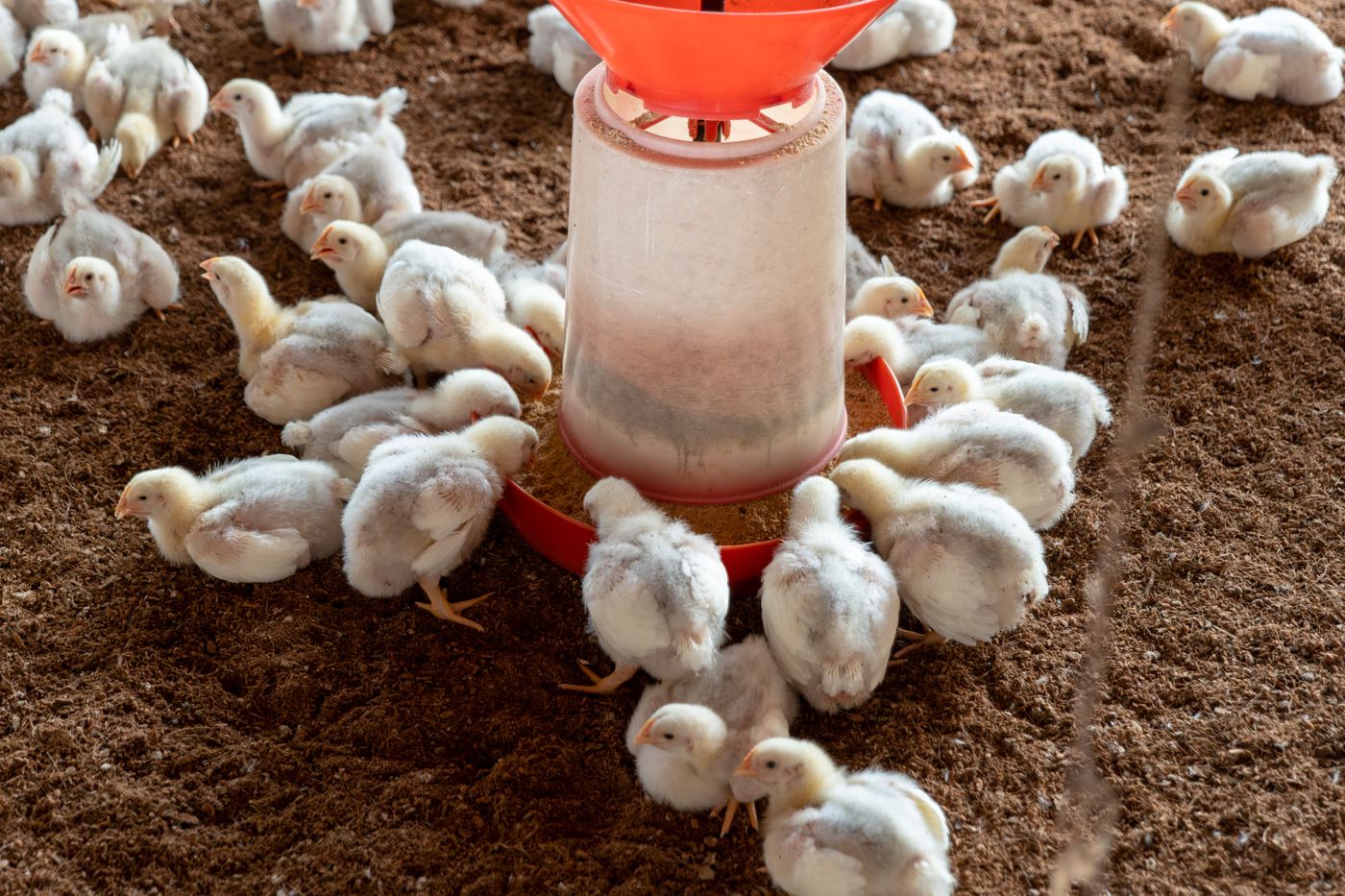
In the brooder. Chicks pecking at toes and the stubs of new feathers is common when the brooder is too hot, too crowded or too brightly lit, or when feeders run empty. Our guide to chick brooding equipment covers temperature and space in the first weeks.
Growing birds. As pullets feather out and grow, a house that was big enough for chicks becomes crowded. Spread the flock out, add feeders and drinkers, and keep the litter loose before the crowding shows.
Point of lay. The start of laying is the highest-risk stage for vent pecking. A pullet laying her first eggs may have a slightly everted, red vent, and if she lays in the open the other birds see it. That is why good, dark nest boxes in place before laying starts matter so much. Our laying nest page shows the type.
During a moult or after a stress. A moult, a move to a new house, a disease outbreak or a sudden feed change can all set off a new round of pecking in an older flock.
What to Do the Day You Find a Pecked Bird
Speed matters more than anything else. A wounded bird left in the flock overnight can be killed, and every bird that tastes blood is a bird more likely to peck again.
- Remove every bird with an open or bleeding wound at once. Put it in a separate pen with its own feed and water.
- Keep the injured birds apart until fully healed and feathered over. Even a healed bare patch can restart the problem when the bird goes back.
- Find and remove the persistent peckers if you can. Watching the flock quietly for fifteen minutes often shows which birds are doing most of the damage.
- Ask your vet about wound care and any product to discourage pecking at wounds. Treatment of injured birds and any medication is for the vet to advise.
- Start fixing the cause the same day. Removing birds treats the symptom; the house, light, feed and space are where the cure is.
A simple recovery pen can be built from a few poles and a roll of chicken wire in a quiet corner of the compound or the end of the house. Give it a small feeder and drinker, dry litter and shade.
Fixing the House: Space, Air and Light
Space. Check your stocking against the guidance for your system, whether deep litter or cages. If the house is full, the answer is fewer birds or more house, not more patience. Our guide to layer cages and deep litter covers the space each system needs.
Air and temperature. Chickens pant and become restless when the house is hot and the air is stale with ammonia. Open curtains and vents on the windward side, add exhaust fans where natural airflow is weak, and keep the roof and walls shaded. Our poultry house ventilation guide goes into the detail.
Light. Bright, uneven light encourages pecking, and the brightest patches, often near open sides or under a bare bulb, are where it starts. Many farmers dim the lighting, use warmer or lower-wattage bulbs, or shade bright spots when pecking appears. Keep the day length steady rather than changing it suddenly. Our guide to the poultry lighting programme explains how to set hours for layers.
Litter and things to do. Loose, dry litter gives birds something to scratch and peck at the floor. Hanging a bunch of fresh greens or a vegetable just above head height, or scattering a small handful of grain into the litter, keeps birds busy pecking where it does no harm. These are simple, cheap and widely used.
Fixing the Feeding and Drinking
If birds have to queue to eat and drink, the low-ranking ones are pushed away and the house becomes a place of constant competition. As a rule of thumb, birds should be able to reach feed and water without waiting, and feeders and drinkers should be spread through the house rather than bunched at one end.
- Add feeding points before you need them. As birds grow, move from chick feeders to larger tube feeders, and add more of them. Our guide to poultry feeders and drinkers explains how to size and space them.
- Hang feeders at back height. The lip of the feeder should be level with the birds' backs, which cuts waste and lets more birds eat at once.
- Do not let feeders run empty for long. Hungry birds that find nothing to eat turn to each other.
- Use a balanced commercial ration or a properly formulated home mix, and change feeds gradually over several days.
- Keep water clean and constant. Nipple lines keep water clean and reduce wet litter; bell or plastic drinkers need daily cleaning.
Where Beak Trimming Fits In
Beak trimming, often called debeaking, removes a small part of the tip of the upper beak so that pecks cause less damage. It is widely practised in commercial layer production, usually in young birds, and many hatcheries or experienced operators offer it. An automatic debeaker cuts and cauterises in one action.
It is important to see trimming for what it is: a way to reduce the damage done by pecking, not a cure for the causes. A trimmed flock in a hot, crowded, bright house will still be stressed and still peck. It is also a procedure on a live animal. Done badly, at the wrong age or too short, it causes pain, bleeding and birds that struggle to eat and drink. It should be done only by someone trained to do it, at the age they recommend, and with advice from your vet on whether your flock needs it at all. Many small flocks with good housing are kept successfully without it.
Improved Kienyeji and Mixed Flocks
Farmers who keep improved kienyeji birds sometimes assume pecking is only a problem in commercial layer houses. It is less common in birds that range outside during the day, because they spend their pecking urge on the ground. But it appears quickly when the same birds are kept indoors through a long rainy spell, when a night house is too small for a flock that has grown, or when birds of very different sizes are housed together.
- Plan the night house for the flock you will have, not the one you have today. Chicks hatched this month are adults in a few months.
- Separate by size where you can. Small or young birds mixed with mature cocks and hens are bullied at feeders and roosts.
- Give confined birds work. On wet days when the flock stays in, scatter grain into the litter and hang greens, as described above.
- Introduce new birds carefully. A new bird dropped into an established flock is a target. Keep newcomers apart for a while, which is also sound biosecurity, and then introduce them in a group at night.
Our guide to improved kienyeji housing and equipment covers night houses, perches and runs for these flocks.
Common Mistakes to Avoid
- Waiting to see if it stops. Pecking almost never stops on its own once blood has appeared.
- Blaming the birds and replacing the flock. A new flock in the same house under the same conditions will start the same habit.
- Changing everything at once in a panic. A sudden switch of feed, light and house can itself add stress. Make changes steadily and note what you did.
- Using red bulbs or darkness as the only fix. Dimming can calm a flock, but if birds cannot see to eat and drink, production suffers. Fix the causes too.
A Weekly Pecking Check
- Walk the house slowly and look at backs, tails, vents and wing tips for thin or missing feathers.
- Remove any bird with blood to the recovery pen at once.
- Watch feeding and drinking for a few minutes. Are birds queueing or being driven away?
- Feel the air and smell the litter. Hot, stuffy or ammonia-heavy air needs more ventilation.
- Check the light for bright patches and the nest boxes for darkness and enough space.
- Write it down. Note the date, birds removed and what you changed, so you can see what worked.
For feeders, drinkers, fans, chicken wire and other poultry equipment, visit any Fuga branch, browse our livestock and poultry equipment, or ask on WhatsApp 0716 961 018.
Key Takeaways
- Feather pecking is normal foraging behaviour aimed at the wrong target, usually triggered by a combination of crowding, heat, bright light, feed problems and boredom.
- Once blood appears, pecking spreads by copying, so remove every wounded bird to a separate pen the same day.
- Watch hardest in the brooder, at point of lay when vents are exposed, and after any moult, move or feed change.
- Fix the house: correct stocking, good ventilation, softer and even light, loose litter and something to scratch at.
- Give enough feeders and drinkers spread through the house so birds never queue, and change feeds gradually.
- Beak trimming reduces damage but does not fix causes; it is a skilled job for a trained operator, with your vet's advice.
Frequently Asked Questions
Why are my chickens pecking each other?
Usually because of several stresses at once: too many birds for the floor or feeder space, a hot and stuffy house, very bright light, a poor or suddenly changed ration, bare floors with nothing to scratch at, or an injured bird that becomes a target. Pecking is redirected foraging behaviour, so the fix lies in the house, the light, the feeding and the space.
What should I do when I find a bleeding hen?
Remove her from the flock straight away and keep her in a separate pen with her own feed and water until the wound has fully healed and feathered over. Blood attracts other birds and teaches them to peck. Ask your vet about caring for the wound, and start looking for the cause in the house the same day.
Does dim light stop feather pecking?
Dimming or shading bright spots can calm a flock, because strong, uneven light increases activity and aggression. But birds still need enough light to find feed and water, and dimming alone does not fix crowding, heat or feed problems. Keep the day length steady and use light changes alongside other fixes.
Should I debeak my layers?
Beak trimming can reduce the damage done by pecking in high-risk flocks and is common in commercial layer production, but it is not a cure for the causes. It is a procedure on a live bird that should only be done by a trained operator at the recommended age, with your vet's advice on whether your flock needs it. Many small flocks with good housing do well without it.
Why does vent pecking happen at the start of laying?
When pullets begin to lay, the vent can be red and slightly everted after laying, and if a hen lays in the open, other birds see it and peck. Providing enough dark, comfortable nest boxes before laying starts, avoiding very bright light and removing any hen with a prolapse or wound quickly all reduce the risk.