Ask most Kenyan poultry keepers where their money leaks, and they will point at feed. They are right. Feed is by far the biggest running cost in any layer or broiler operation, often more than half of everything you spend. Yet the item that quietly decides how much of that feed reaches the bird, and how much ends up trampled into the litter, is one of the cheapest things in the house: the feeder.
The drinker matters just as much. Water is the one input a bird cannot go without for even a day, and a dirty or poorly placed drinker is one of the fastest routes to a disease outbreak. Get feeders and drinkers wrong and you pay for it twice, once in wasted feed and again in vet bills and stunted growth.
This guide walks through the choices we help customers make every week across our Eldoret, Nakuru, Nairobi and Coast branches: tube feeders versus pans, bell drinkers versus nipple lines, how many units your flock actually needs, and how to keep the whole system clean without burning your morning on it.
Feeder Types: Tube Feeders Versus Pan Feeders
Two feeder styles cover the vast majority of small and medium Kenyan flocks, and each has a clear job.
The tube feeder, sometimes called a hanging or bucket feeder, is a cylinder that holds a reserve of feed and releases it into a lipped pan at the base as birds eat. Its strength is labour. You fill it once and it keeps feeding through the day, which suits keepers who are away at work or running several houses. Hung at the right height, it also cuts billing and raking, the habit birds have of flicking feed out with their beaks.
The pan or trough feeder is an open dish or long channel that birds eat from directly. It is cheap, easy to clean, and ideal for chicks in the first weeks when they need to find feed easily on a flat surface. The trade off is waste. An open trough filled too high is an invitation to bill feed onto the floor, and it needs refilling more often.
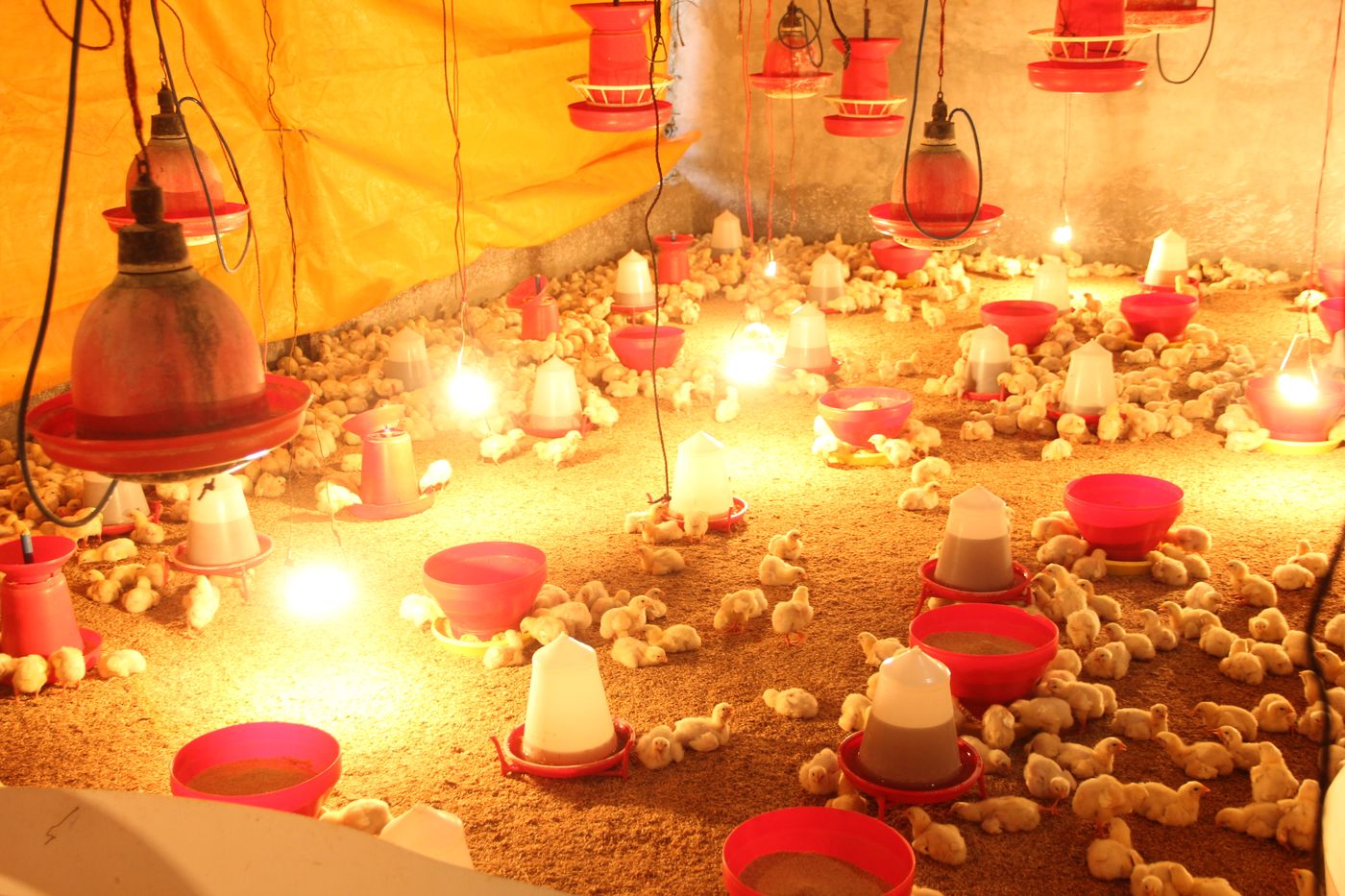
Most operations we supply run both. Chicks start on shallow trays or open pans so they learn to feed, then graduate to tube feeders as they grow. Browse the full range on our livestock and poultry page to see the sizes we carry.
Drinker Types: Bell Drinkers Versus Nipple Lines
The drinker decision usually comes down to two systems, and it is worth understanding both before you commit.
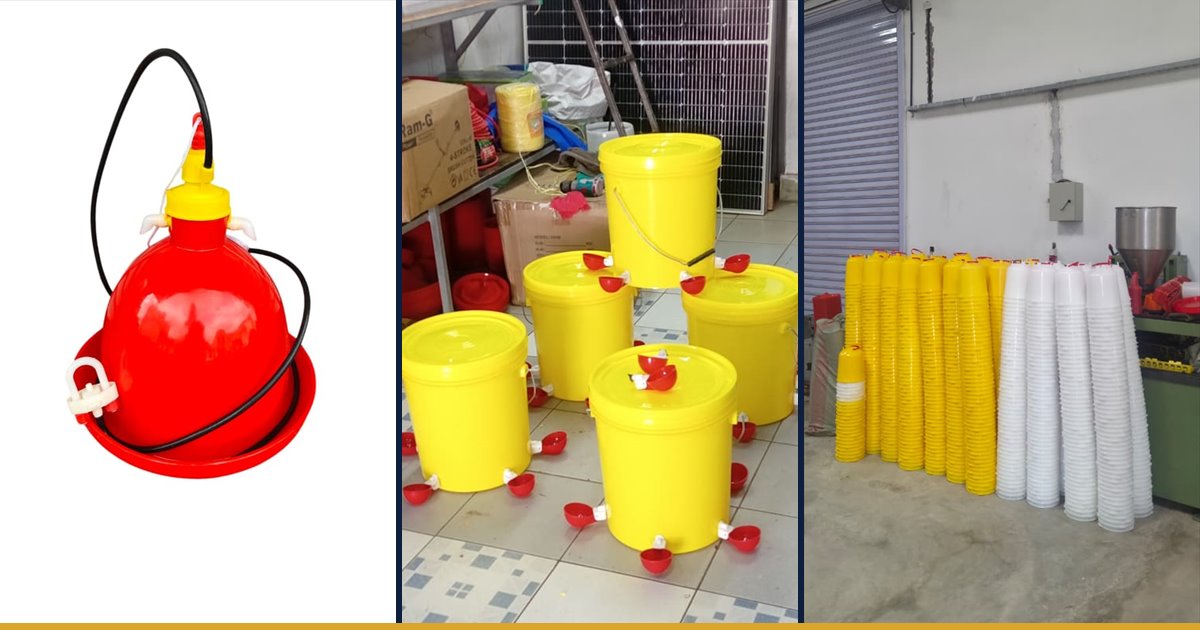
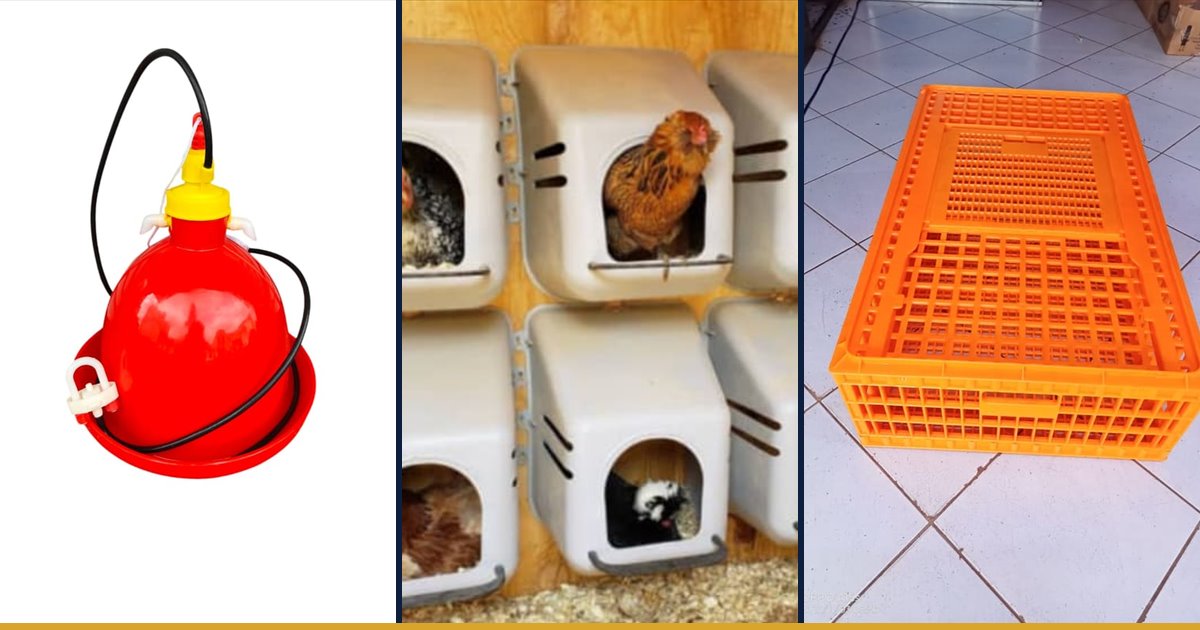
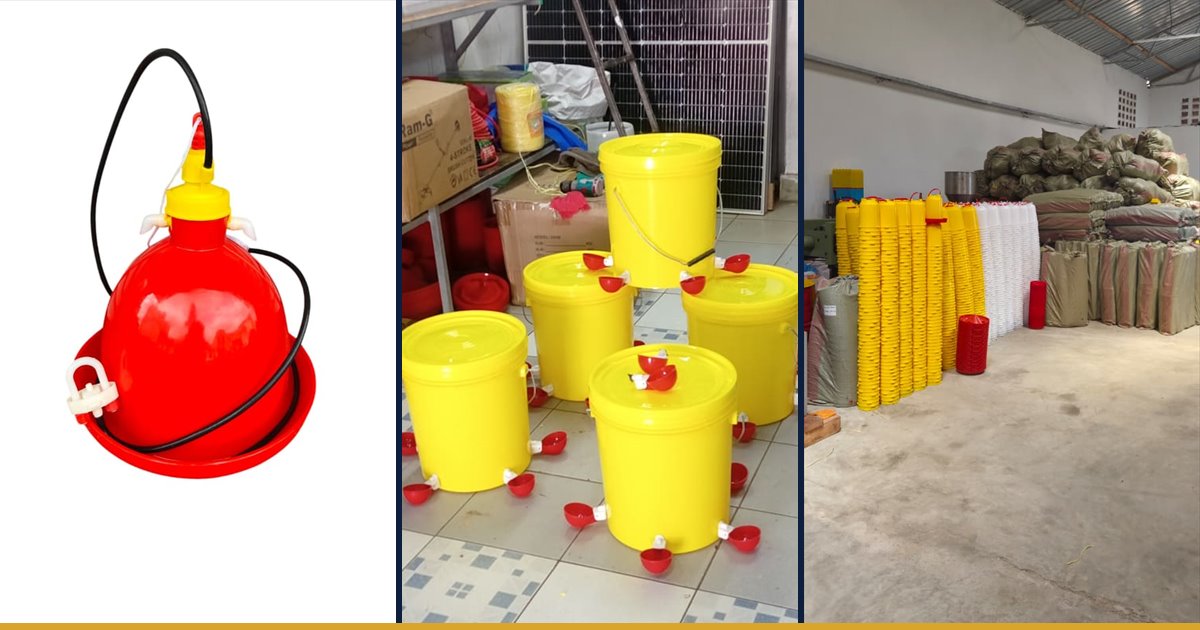
A bell drinker (also called a plasson or automatic hanging drinker) is a bell shaped bowl fed by a hose or a header tank, with a valve that refills the rim as birds drink. Birds drink from an open water surface, which is natural and needs no training. Bell drinkers are forgiving, affordable, and a sensible default for most smallholder and semi commercial flocks.
A nipple drinker is a line of small valves the bird pecks to release a drop of water. Nothing sits in an open bowl, so the water stays remarkably clean and spillage into the litter is very low. That dryer litter means fewer foot and respiratory problems and less ammonia in the house. The cost is a higher setup, a header tank or pressure regulator, and birds that need a few days to learn the peck.
For a first flock or a modest layer unit, a bell drinker is hard to beat on simplicity and price. For larger broiler batches where litter quality drives your results, a nipple line often pays for itself in health and cleaner conditions. See our water equipment range for tanks, hoses and fittings to feed either system.
Sizing to Your Flock: How Many, and How Much Space
The number of feeders and drinkers is not really about how many birds you own. It is about how many can eat and drink at the same moment without a queue. Crowding at the feeder means the timid birds eat last, grow unevenly, and your flock finishes as a mix of big and small.
The rule of thumb the industry uses is feeder space per bird. For growing birds, plan for roughly 4 to 5 centimetres of feeding space each, and around 2 to 2.5 centimetres of drinker rim each. A standard round tube feeder serves in the region of 25 to 40 birds, and a bell drinker a similar band, depending on the model and the bird's age. Nipple lines are usually planned at about 8 to 12 birds per nipple.
The chart above turns those ratios into rough unit counts. Treat them as a starting point, not gospel. Broilers eat and drink more aggressively than layers, and a hot Coast house means birds crowd the drinkers far more than in cool Eldoret. When in doubt, add one more drinker rather than one less.
Reducing Feed Waste: Where the Shillings Actually Go
Feed waste rarely shows up as one dramatic loss. It leaks a little at every meal, and over a flock cycle it adds up to real money. A few habits fix most of it.
First, the fill level. As the callout above says, keep feeders no more than a third full. Second, the height, raised to back level and adjusted weekly. Third, the grille or anti waste lip, many tube feeders come with a grid that stops birds climbing into the pan and scratching feed out. Use it.
Fourth, control the pests. Feed left in open troughs overnight feeds rats and wild birds, not your flock, and rodents also carry disease. Empty or cover feeders at night where you can, and store your feed sacks off the ground on a pallet. Fifth, match feed form to age. Fine mash spills and blows more than crumble or pellet, so make sure the feeder type suits what you are pouring into it.
Hygiene: The Cheapest Disease Control You Have
A drinker is the most likely thing in your house to spread disease, because every bird uses it and warm standing water grows bacteria fast. Cleaning is not optional maintenance, it is your front line of biosecurity.
Rinse and scrub open bell drinkers daily. A slimy film on the inside of the bowl, called biofilm, shelters bacteria and blunts any medication or vitamins you add to the water. Once a week, wash drinkers with a mild disinfectant and rinse well before refilling. Nipple systems stay cleaner day to day, but the lines and header tank still need periodic flushing so nothing builds up inside where you cannot see it.
Feeders need attention too. Scrape out caked or damp feed rather than pouring fresh feed on top of it, because stale feed at the bottom of a pan can grow mould that causes serious problems in young birds. Position drinkers and feeders so droppings from perches or higher birds cannot fall into them, and keep drinkers slightly away from feeders so water splash does not turn nearby feed into a mouldy paste.
Matching the System to Your Stage and Budget
There is no single best setup, only the right one for where you are now.
If you are brooding chicks, start with shallow feeding trays and small chick drinkers or fountains so the young birds find feed and water easily on day one. As they grow, move to tube feeders and bell drinkers at back height. A first time layer keeper with 50 to 200 birds is usually best served by tube feeders and bell drinkers, cheap, robust, and simple to clean.
If you are scaling into larger broiler batches and litter quality is dragging your results, that is the point where a nipple line starts to earn its keep through cleaner water, dryer floors and less daily washing. Whatever the scale, buy spares and fittings in advance so a cracked pan or a stuck valve does not cost you a day.
Key Takeaways
- Tube feeders save labour and cut waste for growing birds, while open pans and trays suit chicks learning to feed.
- Bell drinkers are the simple, affordable default. Nipple lines cost more but keep water cleaner and litter dryer.
- Size by feeding and drinking space per bird, not just by flock count, so no bird has to queue to eat.
- Keep feeders no more than a third full and hang everything at the birds' back height to slash feed waste.
- Daily rinsing and weekly disinfecting of drinkers is the cheapest disease control you have.
Frequently Asked Questions
How many feeders and drinkers do I need for 100 birds?
As a rough guide, around three tube feeders and three bell drinkers spread evenly through the house works for 100 growing birds, so none has to walk far or wait. Broilers and hot houses may need one more drinker. Confirm the exact count for your breed with our team.
Are nipple drinkers worth it for a small flock?
For most small and starter flocks a bell drinker is the better value, being cheaper and needing no training. Nipple lines start to pay off at larger scale, where cleaner water and dryer litter make a real difference to bird health and daily cleaning time.
What is the best way to stop my birds wasting feed?
Fill feeders no more than a third full, hang them so the pan lip sits level with the birds' backs, and use the anti waste grille if your feeder has one. Raise the feeders as the flock grows. These three habits fix most feed waste in Kenyan houses.
How often should I clean drinkers?
Rinse and scrub open bell drinkers every day to stop the slimy biofilm that shelters bacteria, and give them a proper disinfectant wash weekly. Nipple lines stay cleaner but still need the lines and header tank flushed periodically.
Where can I buy feeders and drinkers in Kenya?
Fuga Equipment stocks poultry feeders, drinkers, spares and fittings across our Eldoret, Nakuru, Nairobi and Coast branches. See our livestock and poultry range, read our guide on starting a poultry farm, or contact us for advice sized to your flock.