Right now, on many dairy farms, the Napier is shoulder high, the grass along the boundaries is lush and the cows cannot eat it fast enough. In ten weeks, if the usual pattern holds, the same farm will be buying hay by the bale at dry-season prices and watching milk fall while the January school fees fall due. The surplus of the short rains and the shortage of January to March are the same grass, separated only by whether someone stored it.
Kenya's national weather service forecast above-average October to December rainfall over about 80 per cent of the country for 2026. That is good news for fodder growth, and a strong reason to conserve. But it also makes the choice of method important, because hay needs dry weather to cure, and the short rains rarely give you many dry days in a row.
Our guides to making silage and hay baling cover the basic methods. This guide takes a planning view: how much fodder you actually need to store for the dry months, how to choose between silage and hay when it keeps raining, how to use a chaff cutter for small-scale silage, and how to store what you make so it is still good feed in February.
Step One: Work Out How Much You Need
Most farmers conserve whatever they have time for, then run out in February. Start from the other end: how many animals, how many days, and how much of their diet must come from stored fodder.
A rule of thumb used in many dairy extension guides is that a cow eats dry matter equal to roughly 3 per cent of her body weight per day; actual intake varies with her size, yield and the quality of the feed. Dry matter is what is left when the water is removed, and it is the fair way to compare fresh grass, silage and hay. If you do not know your cows' weights, a heart girth weighing tape gives a good estimate.
Here is an illustrative budget for one 400 kilogram cow, assuming stored forage will supply half her dry matter for 90 days of dry season, with the rest from crop residues, dairy meal and whatever grazing remains.
| Step | Working | Result |
|---|---|---|
| Daily dry matter | 400 kg x 3% | 12 kg DM a day |
| From stored forage | Half of 12 kg | 6 kg DM a day |
| As silage (about 30% DM) | 6 kg / 0.30 | About 20 kg fresh silage a day |
| For 90 days | 20 kg x 90 | About 1,800 kg silage |
| Allow for losses | Add about 15% | About 2,100 kg to make |
| Or as hay (about 85% DM) | 6 kg / 0.85 x 90, plus losses | About 600 to 700 kg hay |
The point is not the exact figure but the scale. Two tonnes of silage per cow is far more than most smallholders store. Multiply by your herd, compare with what you can harvest, and decide early whether you need to plant more, buy in or reduce stock.
Silage or Hay When It Keeps Raining?
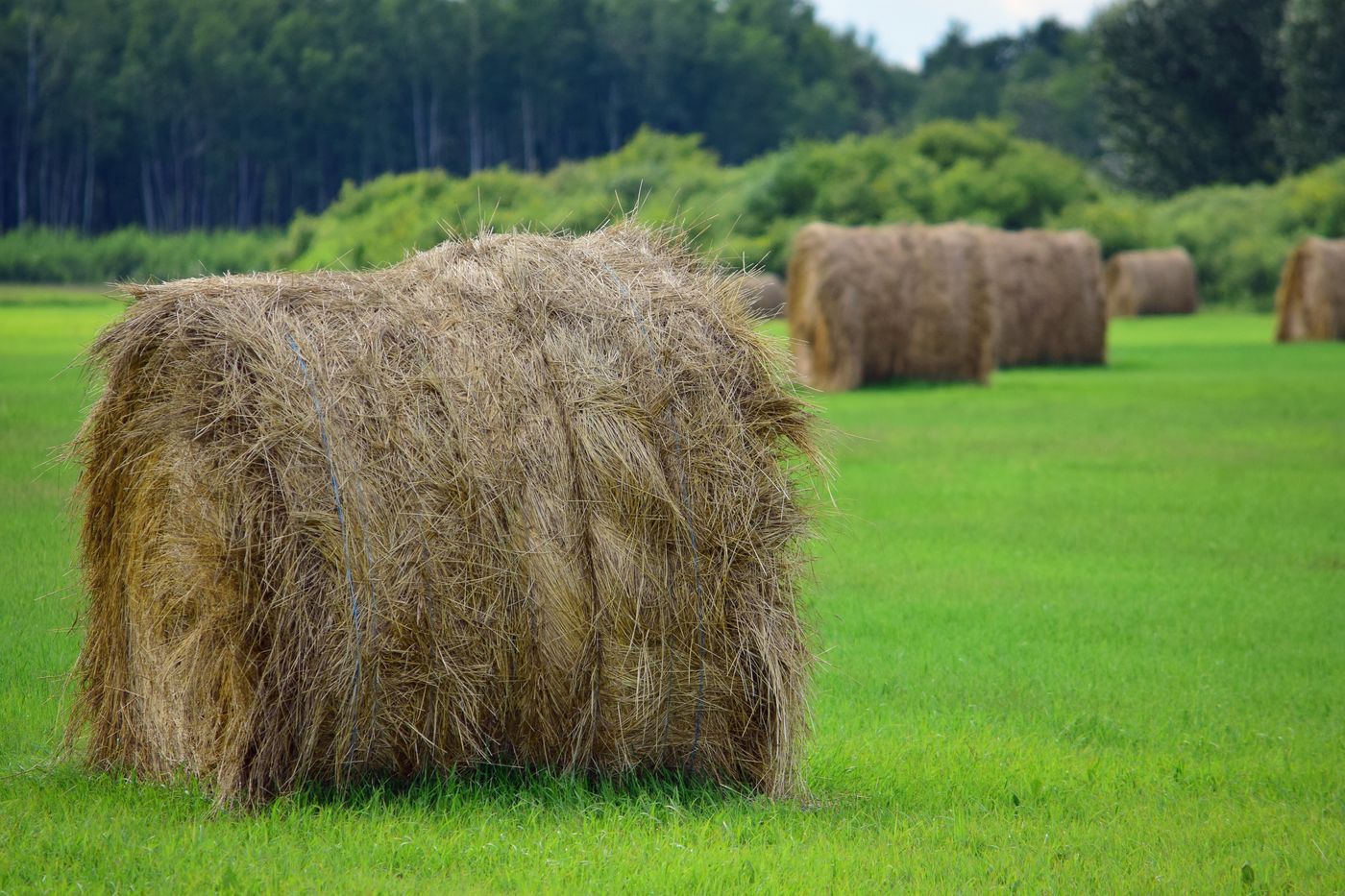
Hay is grass dried in the field until it is dry enough to store without heating or going mouldy. It needs several consecutive dry, sunny days, turning, and dry storage. Hay baled damp heats up, goes mouldy and can be dangerous to feed. In a wet short-rains season, making good hay is a gamble except in drier areas or during a reliable dry spell.
Silage is forage preserved by fermentation in the absence of air. It needs only a short wilt, not full drying, so it is far better suited to wet weather. The work is concentrated: cut, chop, pack and seal quickly. The trade-off is that it needs airtight storage, care when opening and feeding, and some materials such as molasses and polythene.
Cut at the Right Stage
Whatever the method, conserved fodder can only be as good as the grass that went into it. Young, leafy grass has more protein and energy; overgrown, stemmy grass is bulk with little feed value. FAO-published trials at the National Animal Husbandry Research Centre in Naivasha found that silage made from poor, overgrown Napier would at best meet a cow's maintenance needs, leaving nothing for milk.
The temptation in a surplus season is to let grass grow tall to get more tonnes. Resist it. Cut Napier and other grasses at the stage your livestock officer recommends; our guide to Napier establishment and cutting covers cutting height and intervals. Leftover maize stover and crop residues can be stored too; see our guide to crop residues for dry-season feed.
Small-Scale Silage With a Chaff Cutter
For a smallholder with a few cows, a chaff cutter and polythene can turn the short-rains surplus into silage without a tractor. The Naivasha trials worked with small earthen pits holding 1,000 to 2,000 kilograms of fresh material, a sensible scale for one or two cows' dry-season needs.
Wilt, but not too much. The Naivasha work recommends wilting cut Napier for one or two days to about 30 per cent dry matter, and advises against drying further, because of the weather risk and because drier material is harder to compact. In wet weather, spread the cut grass thinly in the open rather than leaving it in heaps, and do not wait for it to dry out fully.
Chop short. Short pieces pack tightly and push out air, which is what makes silage ferment well. Set your chaff cutter for a short chop; our guide to choosing a chaff cutter compares manual and motorised machines, and Fuga stocks chaff cutters including a 2 blade chaff cutter. Before the season, sharpen and set the blades as explained in our chaff cutter maintenance guide; blunt blades crush and shred rather than cut, and slow the whole job.
Add molasses. Molasses gives the fermenting bacteria sugar to work with. The Naivasha authors suggest about 3 per cent of the fresh weight is probably enough when it is mixed by hand through chopped material, more when it is only sprinkled in layers, diluted with no more than an equal amount of water. That is about 3 kilograms of molasses for every 100 kilograms of chopped grass. Weigh a few loads so you know the real quantities; a crane scale makes this easy.
Pack hard and seal the same day. Fill a pit, a trench or strong polythene tube bags in thin layers, pressing each layer firmly to push the air out. The Naivasha trials completed ensiling and covering within one day, sealing with polythene and at least 50 centimetres of soil on the top and sides, with good drainage for rainwater. Tube bags should be squeezed of air, tied tightly and stored where rats and sharp objects cannot puncture them.
Making Hay When a Dry Spell Comes
Even in a wet season there are often a few dry, sunny days in a row, especially towards the end of the rains in December. If the forecast shows one, hay is worth making from grasses that dry quickly, such as Rhodes grass and boma grass, or from fine pasture. Napier is thick-stemmed and slow to dry, so it is better as silage.
Cut in the morning once the dew has lifted, spread the grass thinly, and turn it at least once or twice a day so it dries evenly. Gather it into small heaps in the evening if rain threatens, and spread again the next morning. Hay is ready to store when the stems snap rather than bend and no moisture appears when you twist a handful. Bale or tie it, and move it under cover the same day. Our guide to hay baling covers box balers and storage.
If rain comes after cutting and the hay cannot be dried, do not stack it wet hoping for the best. Grass that has been rained on and is still damp can be chopped and made into silage with molasses, or fed fresh to stock, rather than left to rot in the field.
Store It So It Lasts Until February
Silage that is well made can be spoiled in storage. Water getting into a pit, a torn sheet or a bag nibbled by rats lets air in, and mould follows. Site pits and bag stores on high, well drained ground, dig a drain around them, cover them from rain and check them weekly for damage. Patch any hole in polythene straight away.
Hay needs a dry, ventilated store off the ground, on pallets or poles, under a sound roof. Stacking damp hay can make it heat. Our guide to feed storage, pests and moulds covers rodent control and store layout.
Your Fodder Conservation Checklist
| Step | Check |
|---|---|
| Budget | Animals x days x share from stored forage, worked out before cutting |
| Method | Silage in wet weeks; hay only when several dry days are forecast |
| Stage | Grass cut leafy, not overgrown |
| Silage making | Wilt 1 to 2 days; chop short; about 3% molasses; pack hard; seal in one day |
| Equipment | Chaff cutter blades sharpened and set; scale ready; polythene and molasses bought |
| Storage | High, drained site; rain cover; weekly checks; rats controlled |
| Feeding | Small face; daily removal; reseal; spoiled silage discarded |
Fodder Conservation Equipment
Prices change, so we do not list them here. See each product page or the Fuga price list for current prices and stock.
| Item | Job |
|---|---|
| Chaff cutters | Short, even chop for packing silage |
| 2 blade chaff cutter | Daily chopping for a small herd |
| Brush cutter | Cutting grass and boundary fodder quickly |
| Panga | Cutting Napier by hand |
| 500 kg crane scale | Weighing loads, bags and molasses rates |
Budget first, cut leafy grass, make silage in the wet weeks and hay only in dry spells, chop short, pack hard, seal fast and store it where water and rats cannot reach it. For chaff cutters and fodder equipment, see our dairy and livestock range or our guide to the zero-grazing dairy unit, or WhatsApp 0716 961 018 with the number of cows you feed.
Key Takeaways
- Budget first: animals x dry-season days x the share of feed that must come from stored forage.
- On a 3 per cent of body weight rule of thumb, one 400 kg cow needs roughly 2 tonnes of silage or 600 to 700 kg of hay for 90 days at half her dry matter.
- In wet weeks, make silage; make hay only when several dry, sunny days are forecast.
- Cut grass leafy; overgrown Napier silage barely meets maintenance needs.
- Wilt 1 to 2 days to about 30 per cent dry matter, chop short, add about 3 per cent molasses, pack hard and seal in one day.
- Store on high, drained ground, check weekly, open a small face and discard spoiled silage.
Frequently Asked Questions
Is silage or hay better in the short rains?
Silage, in most cases. Hay needs several consecutive dry days to cure and goes mouldy if stored damp, while silage needs only a short wilt before it is chopped, packed and sealed. Keep hay making for a reliable dry spell or drier areas.
How much silage does one cow need for the dry season?
It depends on her size, yield and other feeds. As an illustration, a 400 kg cow eating about 3 per cent of her weight as dry matter, with half from silage at about 30 per cent dry matter, needs about 20 kg of silage a day, or roughly 2,100 kg for 90 days including losses.
How much molasses should I add to Napier silage?
FAO-published trials at Naivasha suggest about 3 per cent of the fresh weight is probably enough when it is mixed by hand through chopped material, more if it is only sprinkled in layers, diluted with no more than an equal amount of water. That is about 3 kg of molasses per 100 kg of chopped grass.
How long should I wilt grass before making silage?
The Naivasha trials recommend wilting cut Napier for one to two days to about 30 per cent dry matter and not drying it further, because drier material is harder to compact and longer wilting adds weather risk.