Every dairy farmer in Kenya knows the shape of the dry season. The napier stops growing, hay prices climb week by week, and milk yields slide just as milk prices peak. The cows are the same cows. What changed is the feed.
Yet a few months earlier, most of these same farms had more fodder than the cows could eat, and the surplus over-matured into woody stems or was lost. Silage is the bridge: it locks away the green surplus of the wet months so you can feed it out when everyone else is buying.
This guide covers the full job: why fermentation beats drying, the best crops, harvest timing, the equipment chain, the failure modes, and disciplined feed-out.
Why Silage Beats Hay for Dry-Season Energy
Silage is fodder preserved by fermentation in the absence of air. Instead of drying the crop, as you do for hay, you chop it while it is still moist and full of sugars, pack it tightly to squeeze out the air, and seal it. Bacteria on the crop then ferment those sugars into lactic acid, the same souring that preserves mala. The acid pickles the fodder and holds it stable for a year or more.
Hay works on the opposite principle: remove the moisture so nothing can grow. In much of Kenya that has two weaknesses: it needs several rain-free days at exactly the time the crop is ready, and drying drops the leafiest, most digestible parts of the plant.
Silage sidesteps both. You harvest on the day the crop is right, not the day the weather is right, and the energy-rich leaf and grain go into the store instead of onto the ground: exactly the energy a milking cow lacks when grazing fails.
The Best Silage Crops for Kenyan Farms
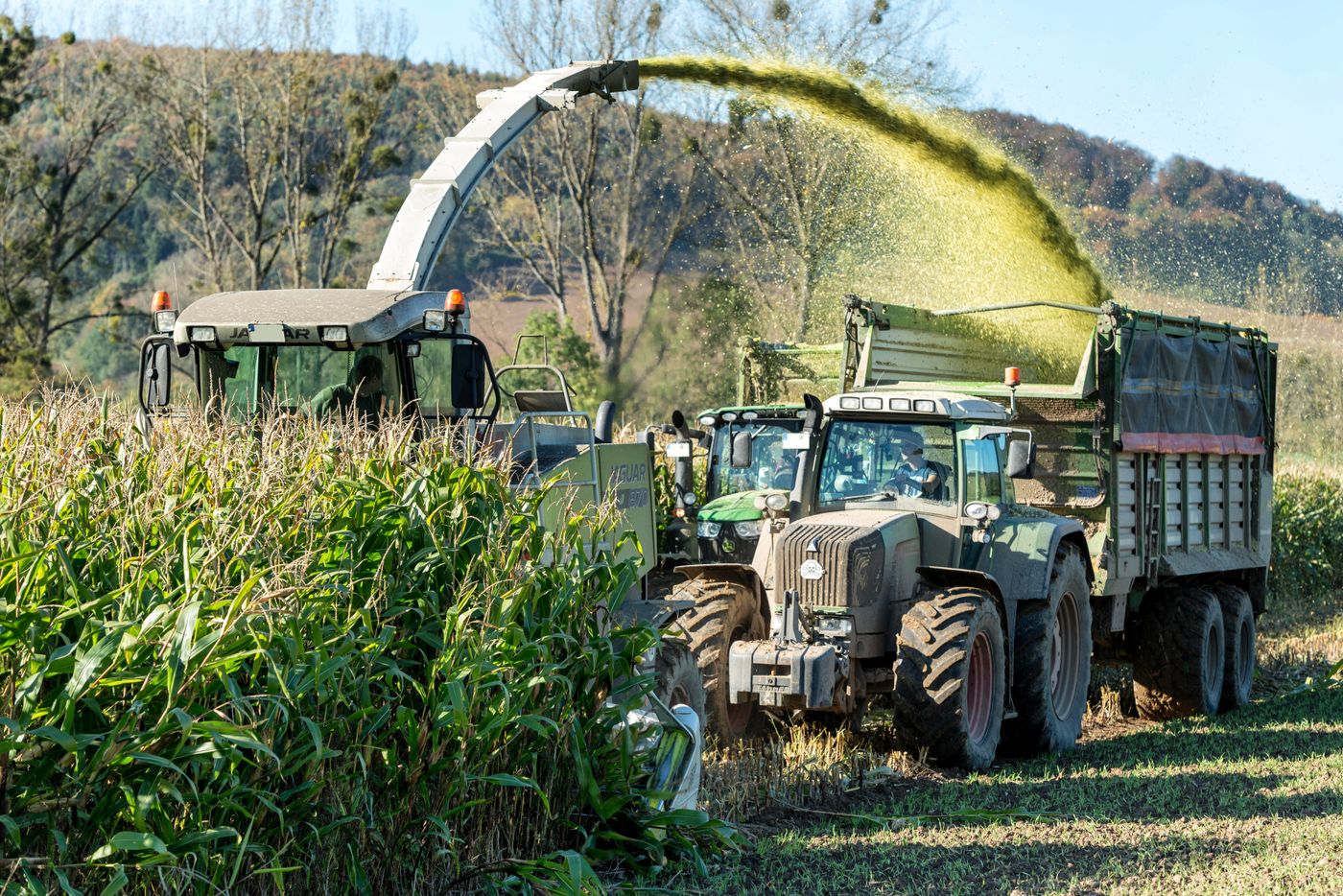
Maize is the king of silage crops here: one harvest packs a high yield of starch and sugar, and those sugars ferment easily without any additive. Fodder maize is cut as a whole plant, cob and all, so none of the grain value is lost.
Napier grass, including the high-yielding Pakchong varieties, ensiles well with two adjustments. Young napier is very wet and relatively low in sugar, so it needs wilting, which means leaving the cut crop to lose moisture for several hours to a day before chopping, plus added molasses to feed the fermentation.
Sorghum earns its place in drier zones where maize struggles. One caution: young or drought-stressed sorghum can carry prussic acid, a plant toxin that fades with maturity and is further reduced by ensiling, so harvest at the recommended maturity for your variety.
Harvest Timing: What the Dough Stage Means
Timing decides more of your silage quality than any equipment. For maize, the target is the dough stage: the point where the grain contents have thickened from a milky liquid into a soft paste, like ugali dough, when you press a kernel open with your thumbnail. The whole plant is then roughly one-third dry matter, the balance silage wants: enough moisture and sugar to ferment, most of the starch laid down, stems not yet woody.
Too early, at the milk stage, and the watery crop drains nutrients away as effluent and tends toward a foul, butyric fermentation driven by clostridia instead of a clean lactic one. Too late and the fibrous, springy stems make the heap almost impossible to compact.
For napier, cut at the stage you would feed it fresh, then wilt it. A simple field check for any crop: squeeze a fistful of chopped material hard. Juice running between your fingers means too wet; a ball that springs open dry means too late; one that holds briefly with damp palms is about right.
The Equipment Chain: Chop, Fill, Compact, Seal
Silage making is a chain of jobs done fast, ideally within a day or two per store.
Chopping comes first, and this is where a chaff cutter earns its keep. The target chop is short, one to three centimetres: small pieces pack tightly and exclude air, the cut surfaces release the sugary juice that fermentation bacteria feed on, and cows waste less short chop at the trough. Chopping tonnes with a panga is brutal, uneven work; a powered chaff cutter does it in hours at a consistent length. Our guide on how to choose a chaff cutter covers matching motor or engine size to your herd.
Filling and compacting happen together. Spread chopped material in thin layers, no deeper than a boot, and compact each layer before the next: systematic treading or ramming on smallholder scale, a tractor on larger bunkers. Every pocket of air you leave behind is fuel for spoilage.
Sealing closes the chain. Heavy-gauge polythene, commonly sold as 1000 gauge, goes over the heap and is weighed down with soil, sandbags, or tyres so it hugs the surface everywhere. The seal must stay airtight for months, which is why thin polythene is a false saving.
Tubes, Pit or Bunker: Choosing Your Silage Store
Silage tubes are the entry point for most smallholders: heavy polythene tubes or bags each holding a few hundred kilograms of compacted fodder. They cost little, need no construction, and they portion your silage, so opening one tube does not expose the rest of the store to air. For a farmer with two to five cows, a row of tubes is a complete dry-season plan; see our guide to planning a zero-grazing dairy unit.
Pit silos suit the next scale. A pit dug into a slope, lined with polythene so soil never touches feed, filled in compacted layers, and sealed under a mounded top holds several tonnes at low cost. The slope lets rainwater run away from the pit; never site one where storm runoff or a rising water table can reach it.
Above-ground bunkers are for serious volume: walls of earth, timber, or masonry on a firm floor, filled and compacted by tractor, sealed under weighted sheeting. They give larger dairies fast filling and a wide feed-out face, which demands the discipline covered below. Whichever store you choose, do not economise on the polythene: a single tear can spoil feed worth many times its price.
Molasses and How the Fermentation Actually Works
Fresh chopped fodder carries lactic acid bacteria on its surfaces. Sealed away from air, they consume the plant's sugars and produce lactic acid, and the pH, the measure of acidity, falls steeply. Around a pH of about four the silage becomes too acidic for the organisms that cause rotting: the feed is pickled in its own acid and stays stable as long as air stays out.
Air is the one thing that breaks this: oxygen lets yeasts and moulds burn through the sugars and the acid itself, heating the heap and opening the door to rot. The bacteria do the preserving; only you can give them the airless home they need.
Molasses enters as bacteria food. Maize at dough stage ferments unaided, but napier and other wet grasses are short of sugar, so the fermentation can stall before enough acid forms. Dilute molasses with two to three parts water and sprinkle it evenly over each layer of chopped napier, at the rates in standard extension guidance; an unevenly fed fermentation gives unevenly preserved silage.
Where Silage Fails, and How to Avoid Each Failure
Poor compaction is the most common. Loose, springy silage holds air, heats up, and moulds from the inside. The fixes are all upstream: harvest at the right dry matter, chop short, fill thin, compact each layer. If you can push your arm easily into a filled heap, it is not compacted.
Late sealing wastes silage before fermentation starts. Every hour a filled heap stands open, plant respiration and air-loving microbes burn sugars the fermentation needs. Chop, fill, compact, and seal as one continuous operation, and never leave a part-filled pit open overnight uncovered.
Water ingress quietly destroys pits and tubes alike: rain pooling on a flat cover, runoff into a badly sited pit, or a tear letting water wick through a section. Mound the top so water sheds, trench uphill of a pit, and inspect covers after every storm.
Physical damage finishes the list: rats, dogs, and chickens puncture polythene, and sunlight weakens it. Keep the area clear, cover exposed sheeting with soil or old sacks, and patch any hole the day you find it.
Opening, Feed-Out Discipline and Daily Rates
Leave the store sealed for at least three to four weeks so fermentation completes; longer does no harm. Good silage smells pleasantly sour, like fermented porridge, and is greenish-yellow to light brown with the plant structure still visible. Black, slimy, foul-smelling, or heavily moulded material has failed and should be discarded, not fed.
Feed-out is where good silage is often lost, because every opening reintroduces air. Keep a small, tight face: vertical and firm, worked across steadily rather than dug into. Remove at least a hand's width from the whole face often enough that spoilage cannot get ahead of you, take only a day's feed, and reseal snugly every time. Tubes shine here: each is its own portion and the rest stay sealed.
On rates, treat silage as the forage base, not the whole diet. Kenyan dairy extension guidance commonly works around 15 to 25 kilograms of fresh silage per milking cow per day, alongside protein feed and dairy meal matched to her yield; confirm the exact ration with your livestock officer. Introduce silage gradually over several days, and feed it after milking rather than before, since strong-smelling feeds at milking can taint the milk.
The Honest Economics: Stored Feed vs Bought Feed
Silage economics differ farm by farm, so we will not invent figures, but the structure of the calculation is the same everywhere. Your cost is concentrated at harvest: crop production, chaff cutter purchase or hire, a hard day or two of labour, polythene, and molasses if you ensile napier. Divide the total by the kilograms stored and you have your cost per kilogram of feed, fixed months in advance.
Compare that with dry-season prices, when hay and every substitute feed are at their annual peak and quality at its worst. Then add the part most farmers undercount: the milk you do not lose. A cow that holds production through February because her energy never dropped earns dry-season prices on milk that would otherwise not exist. Run those three lines for your farm and you will see whether a chaff cutter and a stack of tubes pay for themselves. Unlike bought feed, which depends on the market having stock when everyone needs it at once, stored feed is already on your farm and its price cannot rise.
We stock chaff cutters, silage tubes, polythene sheeting, and forage tools across our branches in Eldoret, Nakuru, Nairobi, and the Coast. Browse the full range of farm equipment, or talk to us before the season.
Key Takeaways
- Silage preserves wet-season surplus by fermentation: bacteria turn plant sugars into acid, which pickles the feed for a year or more if air stays out.
- Maize cut at the dough stage, when kernels press to a soft paste, is Kenya's best silage crop; napier needs wilting plus molasses, and sorghum suits drier zones.
- Chop short, fill thin, compact hard, and seal with heavy polythene the same day. Air is the enemy at every step.
- Choose tubes for small herds, a lined pit on sloping ground for mid-scale, and a bunker for volume. Never economise on the polythene.
- Open after three to four weeks, keep a tight vertical feed-out face, reseal after every removal, and discard mouldy material.
- Cost your silage per kilogram at harvest and compare it with peak dry-season feed prices plus the milk you protect.
Frequently Asked Questions
Can I make silage without a chaff cutter?
Technically yes, by chopping with a panga, but the labour is punishing for real volume and the uneven chop compacts poorly, risking the whole batch. A chaff cutter gives a short, consistent chop that packs airtight, and it doubles as a daily feed-preparation machine the rest of the year.
Do I need molasses for maize silage?
Usually not. Maize harvested at the dough stage carries enough of its own sugar to ferment well unaided. Molasses earns its place with napier and other wet, low-sugar grasses, diluted with water and sprinkled over each layer to fuel the fermentation.
How much silage does a dairy cow need per day?
As a working guide from Kenyan dairy extension practice, a milking cow is commonly fed about 15 to 25 kilograms of fresh silage per day as the forage base of her ration, with protein feed and dairy meal matched to her yield. Confirm the full ration with your livestock officer.
What equipment do I need to start, and what does it cost?
The starter kit is a chaff cutter, silage tubes or heavy polythene sheeting, and molasses for napier. Prices move with the season and stock, so confirm current prices on WhatsApp at wa.me/254716961018, call 0734 263958, or visit any branch in Eldoret, Nakuru, Nairobi, or the Coast.