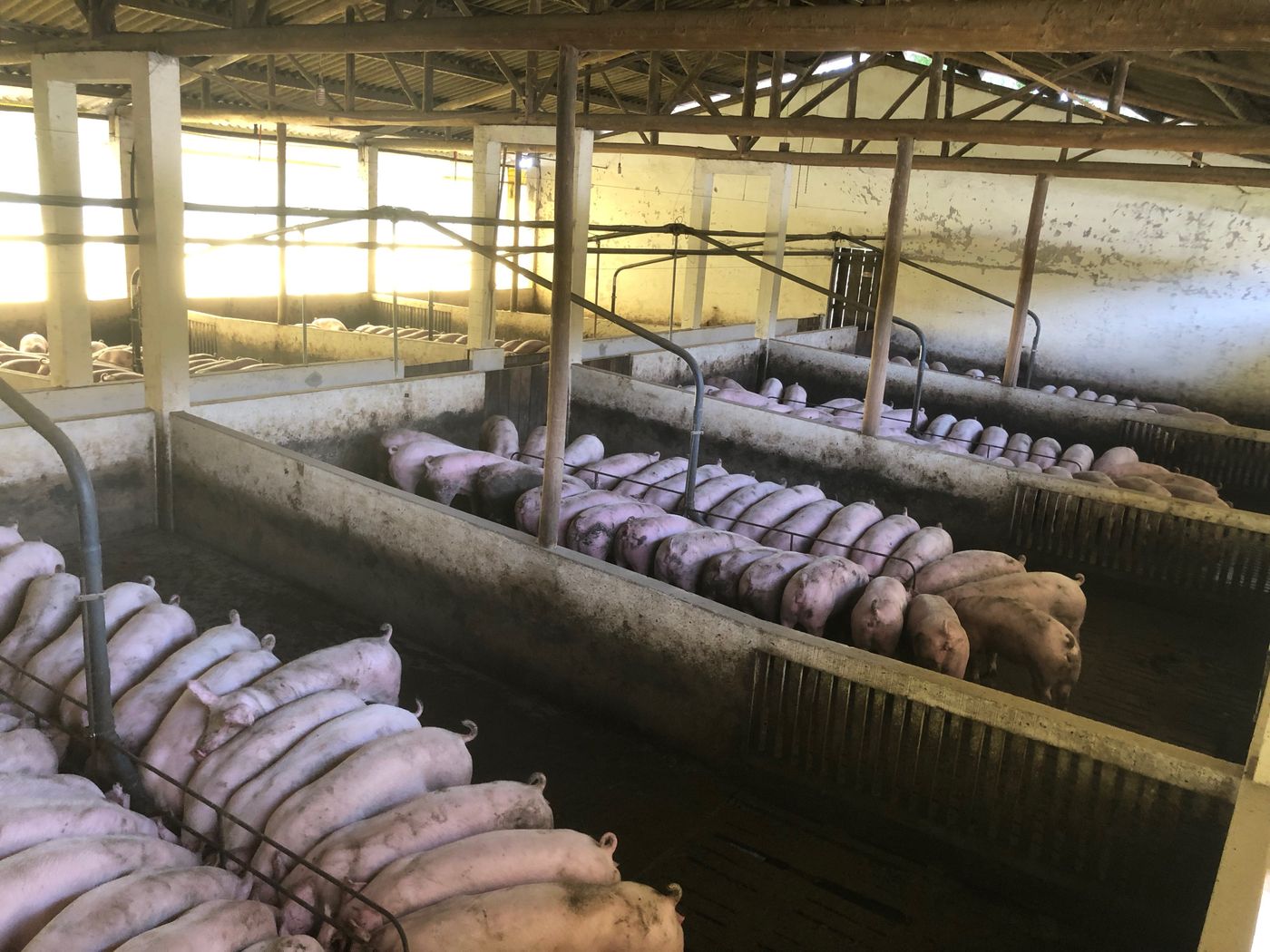
Pigs are clean animals when they are given the chance. Left to themselves they choose a dry place to sleep and a separate, wetter place to dung. The trouble in the rains is that many pens give them no such choice. Water pours in off the roof edge, runs in under the walls, lies in the low corner, and within a week the whole floor is a slurry of mud, dung and urine. The pigs sleep in it, eat beside it and walk it into the feed trough.
That wet floor is behind most of the rainy-season problems pig farmers in Kenya see: coughing and pneumonia in weaners, skin problems and mange, scouring piglets, slow growth, more worms and more feed wasted. And this year the stakes are higher. African swine fever has been reported in several counties in 2026, including a Kiambu outbreak that The Standard reported had killed about 1,470 pigs on more than 20 farms since mid-May.
This guide covers how to read a pen in the rain, getting the floor slope and drainage right, choosing and managing bedding, keeping pigs warm without making them damp, the main wet-season disease risks and the biosecurity that keeps African swine fever off your farm.
Read Your Pen in the Rain
The best time to plan drainage is during a heavy storm. Put on a coat, go to the pig house and watch where the water goes. Look for four things.
Roof water. Is rain blowing in under the eaves or dripping from the roof edge into the pen? Short eaves on the windward side are a common cause of a wet sleeping area.
Runoff from outside. Is surface water from the yard or the slope above running in under the walls or through the door? A pig house built in a dip will flood every season until the water is diverted.
Standing water inside. Where does water collect on the floor? If puddles form in the middle or at the sleeping end, the floor is either flat or sloping the wrong way.
Drinker leaks. A leaking nipple drinker or an overflowing trough can wet a pen as much as the rain. Check every drinker with the water running.
Slope and Drainage: Dry Sleeping End, Wet Dunging End
The aim of a good pig pen floor is simple: the sleeping area stays dry, and dung, urine and washing water run away to one side and out of the pen. That needs a solid floor, usually concrete, laid with a fall towards a dunging area and a drain channel.
Recommendations for the slope vary between sources. The Ugandan agricultural advisory service NAADS, for example, recommends a slope of at least 5 per cent, a fall of 5 centimetres for every metre, with the water trough and feeders at the lower end so the sleeping area stays dry. Ask your county livestock officer for the design used in your area, but whichever figure you use, the principle is the same: water should never be able to collect where the pigs lie.
Take the drain outside the pen. A shallow open channel along the low wall, outside the pen, collects slurry and washing water and carries it to a covered pit or manure store well away from the house and any well or borehole. Channels inside the pen trap piglets' feet and are hard to keep clean.
Divert runoff before it arrives. Dig a cut-off trench on the uphill side of the house and lead it around the building. Raise the floor level above the surrounding ground when you build. Our guide to farm drainage and dewatering explains trench layout and how to pump out water that is already trapped.
Fix the floor itself. An earth floor in the rains becomes mud that pigs dig and wallow in, which spreads worms and makes cleaning nearly impossible. If you cannot concrete the whole pen yet, concrete the sleeping area first, laid with a fall. Our guide to mixing concrete by hand covers mixes and curing. Leave a slightly rough finish so pigs do not slip, but not so rough that it scrapes their feet and knees.
Bedding: Dry, Deep Where It Matters, Changed Often
Bedding insulates pigs from a cold concrete floor, absorbs moisture and keeps piglets warm. It only does that while it is dry. Wet bedding is worse than none, because it chills the pigs and breeds bacteria.
Use dry material: wood shavings, sawdust from untreated timber, dry grass or chopped maize stover, rice husks where available. Put it only in the sleeping area, not across the whole pen, so pigs keep their dunging area separate. Remove wet or soiled bedding every day and top up with dry material. Store bedding under a roof, off the floor, before the rains start; a heap left in the open will be useless after the first storm.
Crowding makes every wet-season problem worse. More pigs in a pen means more urine and dung on the same floor area, wetter bedding, more ammonia and faster spread of disease. If pens are always wet despite good drainage, check stocking against the space allowance your county livestock officer recommends for each age, and sell or move pigs before pens become overcrowded rather than after.
Warm Without Damp: Ventilation in the Rains
Pigs have few working sweat glands and suffer in heat, but young pigs also chill easily, and damp, cold air is a strong trigger for coughing and pneumonia. In the rains the instinct is to close the pig house up. That traps moisture and ammonia from urine, which irritates the lungs and makes respiratory disease worse.
Block draughts at pig height, especially on the windward side and around the sleeping area, with a solid lower wall or boards. Keep the upper part of the walls open or fitted with curtains that can be adjusted, so warm, moist air escapes above the pigs. If you can smell ammonia when you crouch to pig height, the house needs more air movement up high or more frequent cleaning.
Piglets need extra warmth. A creep area in the farrowing pen with dry bedding and a heat source keeps them out of the sow's way and off a cold floor; our guide to preparing the farrowing pen covers the layout.
Wet-Season Disease Risks and What Drives Them
Most rainy-season pig disease comes back to a few conditions: wet floors, cold damp air, dirty water and too much movement of people and pigs. The figure below links each condition to the problems it tends to cause. Diagnosis and treatment are for your vet; the farmer's job is to remove the conditions.
Worms and mange. Mud and wet dung are where worm eggs survive and spread, and skin kept wet and dirty is more prone to problems. Ask your vet for a deworming and mange control programme suited to your herd, and keep floors clean and dry so treatment is not undone within days.
Pneumonia and coughing. Cold, damp sleeping areas and ammonia are the main triggers you control. A pig that coughs, breathes hard or goes off feed needs a vet's attention early.
Scours. Wet, dirty pens and contaminated feed and water cause scouring, especially in piglets and weaners. Keep feed troughs covered from rain, and store feed dry and off the floor as explained in our feed storage guide; mouldy feed is another cause of poor growth.
African Swine Fever: Biosecurity Is the Only Protection
African swine fever is a viral disease of pigs. There is no vaccine and no cure, and it kills most infected pigs. It does not infect people. The virus spreads through sick pigs, contaminated pork and swill, and on boots, vehicles, equipment and clothing. During outbreaks in 2026, Kenyan veterinary authorities urged farmers to confine pigs, avoid unnecessary movement between farms, markets and slaughter facilities, and not to slaughter, sell, transport or eat pork from sick pigs or pigs that died of unknown causes.
Practical biosecurity: keep pigs confined, not roaming; fence the unit; allow no visitors into the pig house; keep separate boots and overalls for the pigs and use a footbath at the entrance; never feed swill or kitchen waste containing pork; buy new stock only from known sources and keep new pigs apart for a few weeks; and disinfect equipment and vehicles that come from other farms. Our guide to farm biosecurity sets up the routine, and a knapsack sprayer makes applying disinfectant to pens and vehicle wheels practical. Use products and dilutions your vet recommends.
Your Rainy-Season Pig Pen Checklist
| Area | Check |
|---|---|
| Roof and walls | No rain blowing or dripping onto the sleeping area; draughts blocked at pig height |
| Floor | Solid, sloping from sleeping end to dunging end; no standing water |
| Drainage | Outside channel to a covered pit; cut-off trench uphill of the house |
| Bedding | Dry, in the sleeping area only; wet bedding removed daily; store under cover |
| Water and feed | Drinkers leak-checked; troughs covered from rain; feed stored dry |
| Health | Vet-planned deworming and mange control; early vet call for coughs or scours |
| Biosecurity | Pigs confined; no visitors; footbath; no swill; sick pigs reported, never sold |
Equipment for a Drier, Cleaner Pig Unit
Prices change, so we do not list them here. See each product page or the Fuga price list for current prices and stock.
| Item | Why it helps in the rains |
|---|---|
| High pressure water pump | Cleans concrete floors and drains with less water |
| Manual knapsack sprayer | Applies vet-recommended disinfectant to pens and wheels |
| Jembe | Digs cut-off trenches and clears drain channels |
| Ear tags | Identify pigs for treatment and movement records |
| Digital weighing scale | Tracks growth so a slowdown is noticed early |
Watch your pen in a storm, give the floor a fall from the bed to the drain, keep runoff out, keep bedding dry, ventilate high and block draughts low, and treat biosecurity as non-negotiable while African swine fever is about. For more on running the unit, see our guides to pig farming equipment and fattening weaners to market, browse our livestock range, or WhatsApp 0716 961 018.
Key Takeaways
- Watch your pig house in a storm to find roof drips, runoff, standing water and leaking drinkers.
- Give the solid floor a fall from the dry sleeping end to the dunging end and an outside drain; NAADS in Uganda recommends at least 5 per cent.
- Divert runoff with a cut-off trench uphill and keep bedding dry, in the sleeping area only, changed daily.
- Block draughts at pig height but ventilate high so moisture and ammonia escape.
- Wet floors, cold damp air, dirty water and movement drive most wet-season disease; plan deworming and treatment with your vet.
- African swine fever has no vaccine or cure: confine pigs, stop visitors and swill, and report sudden deaths to the county vet.
Frequently Asked Questions
What slope should a pig pen floor have?
Sources vary. The Ugandan advisory service NAADS recommends at least 5 per cent, a fall of 5 centimetres per metre, towards the dunging and drinking end. Ask your county livestock officer for the design used locally; the key is that water never collects where pigs lie.
What is the best bedding for pigs in the rainy season?
Dry wood shavings, sawdust from untreated timber, dry grass, chopped maize stover or rice husks. Put bedding only in the sleeping area, remove wet or soiled bedding daily and store bedding under cover before the rains.
Why do pigs cough more in the rains?
Cold, damp sleeping areas, draughts at pig height and ammonia from urine in a closed-up house irritate the lungs and favour respiratory disease. Block draughts low, ventilate high, keep bedding dry and call your vet early for coughing pigs.
What should I do if I suspect African swine fever?
Do not sell or slaughter. Isolate the pen, stop all pig movement off the farm and call your county veterinary office immediately. The disease has no vaccine or cure and spreads through pigs, pork, swill, boots and vehicles. It does not infect people.