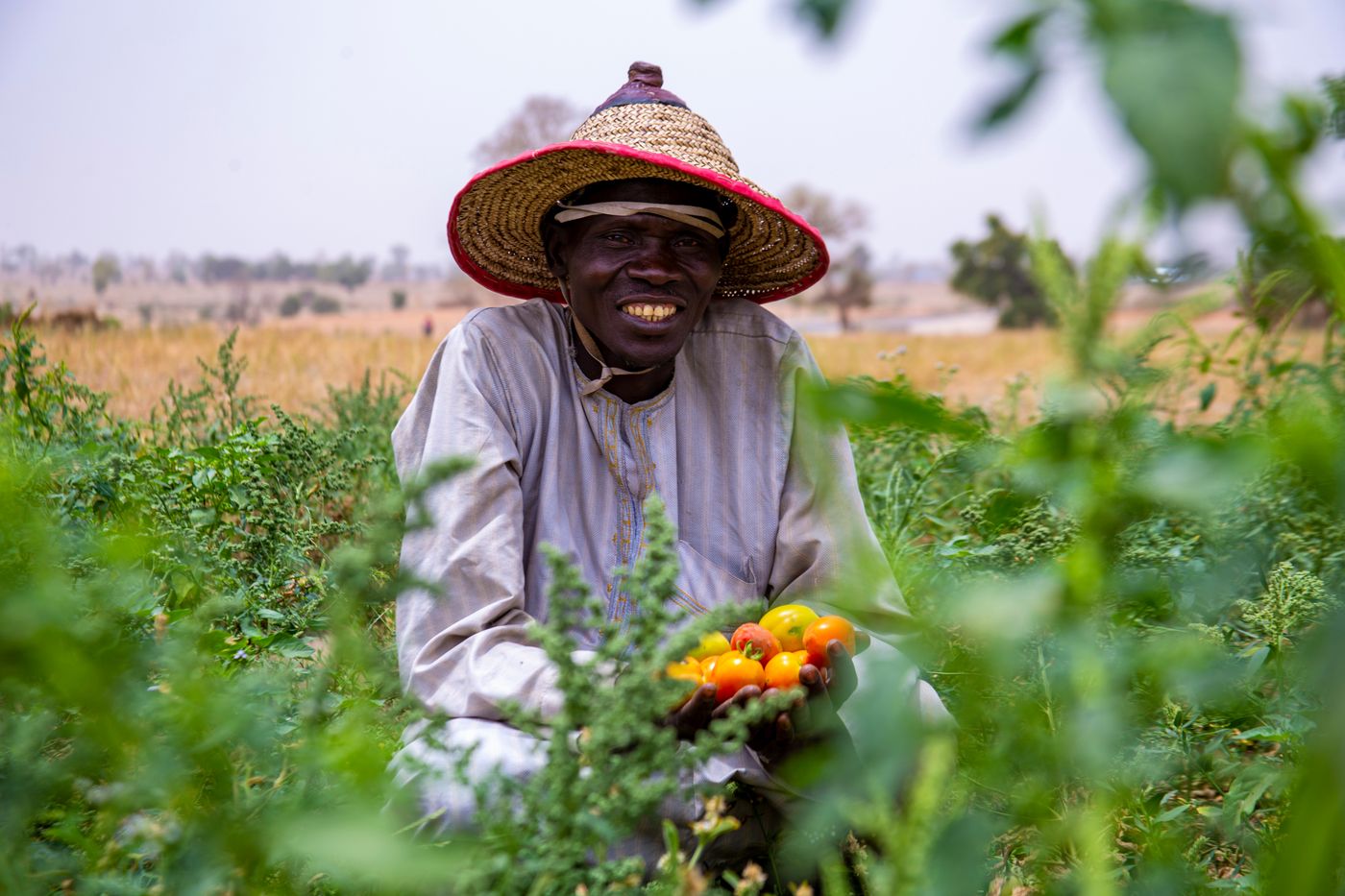
A tomato field in the short rains can change in a week. On Monday the plants are dark green and setting fruit. By the following Monday, after a few cool, wet nights, dark greasy patches have spread across the leaves, stems are blackening and young fruit carries firm brown blotches. It is late blight, and in a wet season it can take a whole crop.
The rains are still a good time to grow tomatoes. Prices can rise when wet weather cuts supply from open fields, and a crop that comes through healthy into December earns well. But a rainy season crop needs a different approach from a dry season one: more attention to air flow and leaf wetness, earlier and more disciplined spraying, and much more care with the chemicals themselves.
This guide covers how to tell the main rainy season diseases apart, how staking and field layout cut disease before any spray, how to plan a spray programme with your agronomist, and how to spray safely for yourself, your buyers and the environment. For the building work, our guide to tomato staking and trellising explains the support systems step by step.
Know What You Are Fighting
Not every brown leaf is late blight, and different problems need different responses. Spraying a fungicide on a bacterial disease wastes money. These are the problems most often seen on tomatoes in wet weather.
| Problem | Typical signs | Weather that favours it |
|---|---|---|
| Late blight | Large, dark, water-soaked patches on leaves and stems; white fuzz under leaves in humid mornings; firm brown patches on green fruit | Cool, wet, humid spells; spreads fast in wind and rain |
| Early blight | Brown spots with rings like a target, starting on older, lower leaves | Warm and wet; worse on stressed plants |
| Septoria leaf spot | Many small round spots with pale centres and dark edges on lower leaves | Wet weather and rain splash from soil |
| Bacterial wilt | Whole plant wilts while still green, often suddenly; no leaf spots | Warm, wet soils; spreads in soil and water |
| Tuta absoluta | Pale mines and blotches in leaves; holes in fruit | All seasons; an insect pest, not a disease |
Late blight is caused by Phytophthora infestans, the same organism that causes late blight of potatoes. Its spores travel on wind and rain splash, so a single infected field, including a neighbour's potato crop, can seed a whole valley. Kenyan farm press warns that the disease can ruin an entire crop if it is not identified and dealt with early.
Bacterial wilt is the one to rule out first, because no spray cures it. A simple field test helps: cut a short piece of stem from the base of a wilted plant and hang it in a clear glass of water. A milky stream running out of the cut end suggests bacterial wilt. Remove and destroy affected plants, do not compost them, and ask your extension officer about rotation, because the bacteria survive in soil.
Stop Disease Before It Starts
Fungicides work best on a crop that is already set up to stay dry. Every hour that leaves stay wet is an hour the blight spores can germinate. The cheapest disease control in a rainy season is anything that helps the canopy dry out faster.
- Site. Choose a well drained, sunny, open plot where the air moves. Avoid low, sheltered corners where mist sits in the morning, and do not plant next to potatoes.
- Spacing. Crowded plants hold moisture. Follow your seed supplier's spacing, and resist the temptation to squeeze in an extra row.
- Staking and pruning. A staked crop keeps leaves and fruit off the wet soil, so rain cannot splash spores up, and lets air through. Remove the lowest leaves once the plants are established, and prune indeterminate types as the staking guide describes.
- Water at the roots. In dry spells between rains, water with drip lines or at the base of the plant, not overhead.
- Mulch. A layer of dry grass under the plants reduces rain splash from the soil.
- Rotation and hygiene. Do not plant tomatoes, potatoes, peppers or eggplants on the same land season after season. Remove crop residue after harvest, and keep tools clean.
- Clean seed and seedlings. Buy certified seed and healthy seedlings from a reputable nursery; our guide to seedling nurseries and transplanting covers raising your own.
Planning a Spray Programme With Your Agronomist
In a wet season, waiting until blight is visible and widespread usually means waiting too long. Most farmers who keep a rainy season crop clean work with an agronomist on a programme that protects the crop before infection and responds quickly when the weather turns cool and wet.
Protectant and systemic products. Protectant fungicides sit on the leaf surface and stop spores from infecting it. They must be on the leaf before the spores arrive, and rain gradually washes them off. Systemic products move into the plant and can act on infections that have just started. Many programmes combine or alternate the two.
Rotate the chemistry. Using the same active ingredient over and over encourages resistance, and then the product stops working. Fungicides are grouped by how they work, and your agronomist can help you alternate between groups through the season.
Use the label rate, not more. A 2023 field survey of tomato farmers in Kenya, published in a peer reviewed journal, found that most were applying fungicides against early blight at higher dosages and more often than the labels recommend. Stronger mixes do not work better. They cost more, leave more residue on the fruit, harm the people spraying and speed up resistance.
Registered products only. Use only products registered by the Pest Control Products Board for use on tomatoes, buy them from a licensed agro-dealer in sealed original packaging, and keep the receipt. Counterfeit agrochemicals are a known problem, and a fake product gives no protection at all.
Spraying Safely: Protect Yourself and Your Buyers
Tomatoes are eaten fresh, often within days of picking. That makes safe use of chemicals more important on tomatoes than on almost any other crop. Three groups of people depend on you getting it right: the person spraying, your family and neighbours, and the people who buy and eat the fruit.
The pre-harvest interval
Every product label states a pre-harvest interval: the minimum number of days between the last spray and picking. Tomatoes are picked repeatedly over many weeks, so plan the programme so that every picking day respects the interval of the last product used. Keep a simple spray record with the date, product, rate and field, and check it before each harvest. Supermarkets and exporters commonly ask for these records.
Protect the person spraying
- Read the label before mixing, and follow its protective clothing requirements.
- Wear chemical resistant gloves, long sleeves and trousers, boots and eye protection as a minimum, and a suitable mask or respirator where the label requires it.
- Mix in the open air, away from children, animals, wells and streams, and never stir with bare hands.
- Do not eat, drink or smoke while spraying, and wash thoroughly before you do.
- Spray in calm weather, walking so that any drift moves away from you, never into wind.
- Wash spray clothes separately from family laundry after every use.
If someone feels unwell during or after spraying, with headache, dizziness, nausea, sweating or blurred vision, stop work, move them to fresh air, remove contaminated clothing, wash the skin with plenty of clean water, and take them to the nearest health facility with the product label.
Get the dose right with the sprayer
A label rate means nothing if the sprayer puts out twice or half as much as you think. Calibrate your knapsack sprayer with clean water before the season, check nozzles for wear, and use the nozzle type your agronomist recommends for fungicides. Our guides to knapsack sprayer calibration and spray nozzle selection walk through both. For fungicides on a staked crop, cover both sides of the leaves and the inside of the canopy, not just the top.
When Blight Gets In Anyway
Even a well managed crop can be hit in a run of cool, wet days. Act quickly.
- Remove badly infected leaves, stems and fruit, bag them and take them out of the field. Do not leave them on the ground or throw them into the compost.
- Talk to your agronomist the same day about an appropriate curative or systemic product and the interval to follow.
- Pick mature fruit that is still sound before the disease reaches it, and sort out any fruit with brown patches before selling.
- If most of the crop is lost, clear the field completely, so it does not seed the next crop or your neighbours' fields.
Picking and Selling in Wet Weather
Disease does not stop at harvest. Fruit picked wet, bruised or carrying blight lesions rots quickly in crates and spreads rot to sound fruit. Pick when the plants are dry, usually after the morning dew has lifted, and handle fruit gently. Pick at the colour stage your buyer wants: fruit for distant markets is often picked as it starts to colour, so it ripens on the way.
Sort at the field edge. Remove fruit with brown patches, cracks or soft spots, and grade the rest by size and colour before it goes into clean, shaded crates. Clean, well graded tomatoes earn a better price than a mixed crate, and buyers come back to growers they can trust.
Your Rainy Season Tomato Checklist
| Stage | Check |
|---|---|
| Site | Sunny, open, well drained; away from potatoes; rotated from tomato family crops |
| Seed and seedlings | Certified seed; healthy nursery seedlings |
| Field layout | Recommended spacing; staked; lower leaves removed; mulched |
| Scouting | At least twice a week in wet weather; problems diagnosed before spraying |
| Spray plan | Agreed with an agronomist; registered products; label rates; chemistry rotated |
| Safety | Protective clothing worn; calm weather; no eating or smoking; clothes washed separately |
| Harvest | Pre-harvest interval respected on every picking day; spray record kept |
Equipment for a Healthy Tomato Crop
Fuga stocks the equipment that keeps a rainy season tomato crop clean and safely sprayed: manual knapsack sprayers and motorised knapsack sprayers, replacement nozzles and sprayer spare kits, drip irrigation kits to water at the roots between rains, and planting trays for raising clean seedlings. For current prices, see the price list or the full farm equipment range, and WhatsApp 0716 961 018 if you would like help choosing the right sprayer for your plot.
Key Takeaways
- Late blight is caused by Phytophthora infestans, which also attacks potatoes and spreads on wind and rain in cool, wet weather.
- Rule out bacterial wilt first with the stem-in-water test, because no spray cures it.
- Staking, spacing, lower leaf removal, mulch and watering at the roots keep leaves drier and cut disease before any spray.
- Plan sprays with an agronomist, use only PCPB registered products at label rates and rotate fungicide groups.
- A 2023 Kenyan survey found most tomato farmers sprayed fungicides above label dosage and frequency; more is not better.
- Respect the pre-harvest interval on every picking day, keep spray records and wear protective clothing.
Frequently Asked Questions
How do I know if my tomatoes have late blight?
Look for large, dark, water-soaked patches on leaves and stems, often with white fuzz under the leaves on humid mornings, and firm brown patches on green fruit. It spreads fast in cool, wet weather. Have a sample checked by an agronomist or plant clinic to confirm.
Why are my tomato plants wilting suddenly while still green?
That is a typical sign of bacterial wilt. Cut a piece of stem from the base and hang it in clear water; a milky stream from the cut suggests bacterial wilt. No spray cures it, so remove affected plants and ask your extension officer about rotation.
Does staking tomatoes reduce blight?
Staking does not stop blight on its own, but it keeps leaves and fruit off wet soil, reduces rain splash and lets air dry the canopy faster. Combined with spacing, lower leaf removal and mulch, it lowers disease pressure considerably.
What is a pre-harvest interval?
It is the minimum number of days between the last spray of a product and harvesting, stated on the label. Because tomatoes are picked many times, plan sprays so every picking day respects the interval of the last product used.