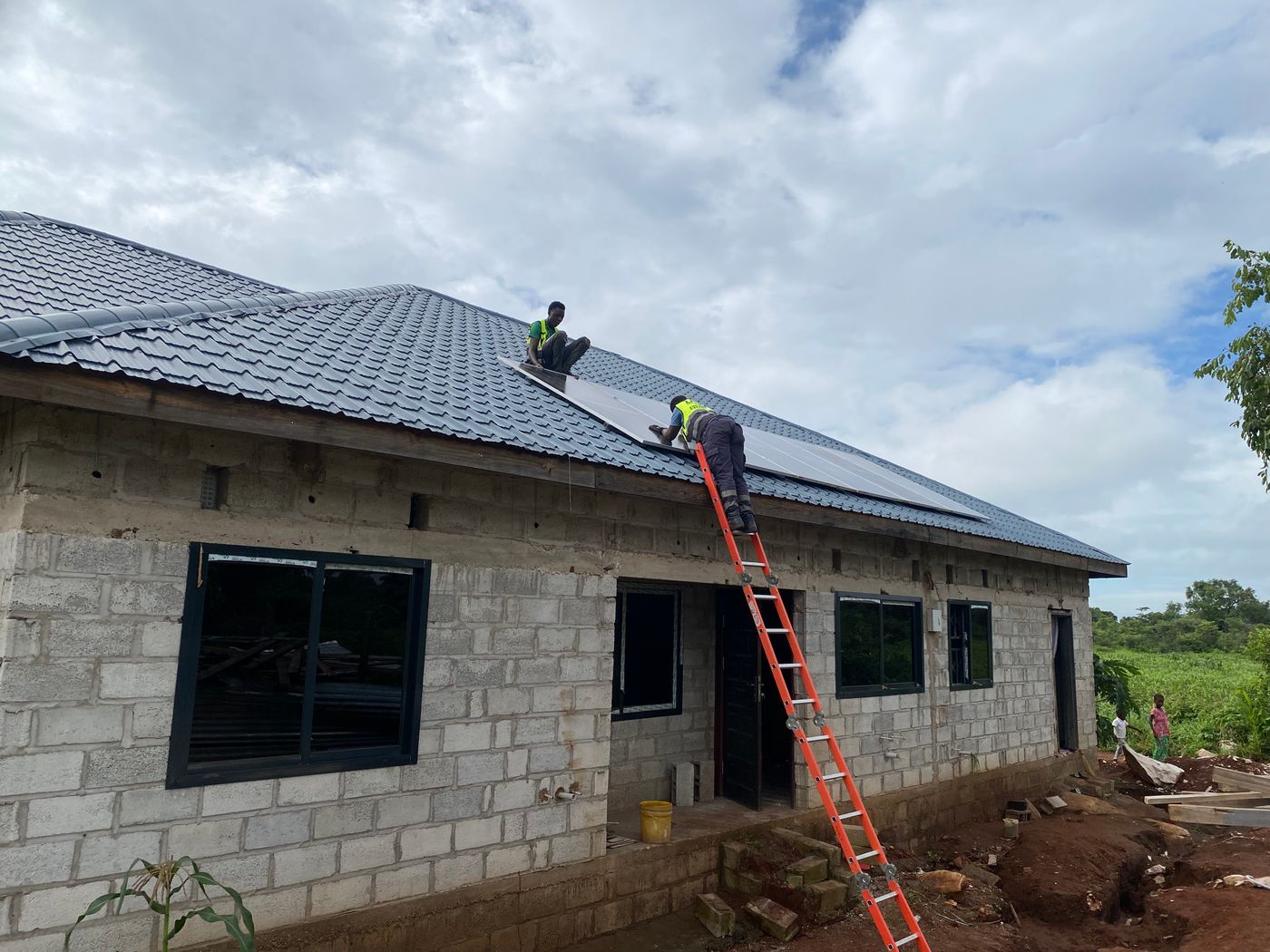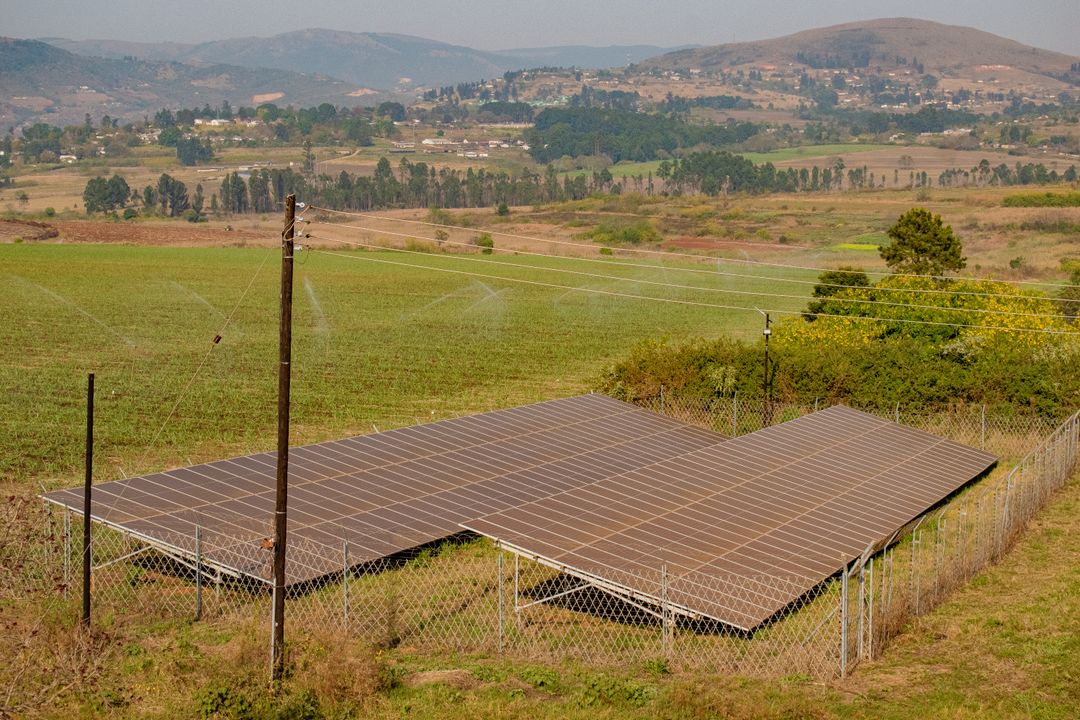
Our estimate for one acre of drip vegetables, about 20 cubic metres a day: a petrol pump burns roughly 70 litres a month, about KSh 16,500 at the Nairobi EPRA price, while a solar pump uses no fuel. Solar costs more upfront and needs sun, so the question is how many months the saving takes to repay it.
Every farmer who pumps water knows the monthly ritual: the walk to the petrol station with a jerrycan, the cost at the counter, and the quiet worry about whether the engine will start tomorrow. A solar pump removes that ritual but asks for a bigger cheque on day one. Between the two sits a number nobody quotes properly: what each one really costs to run for a month.
We have already explained the break-even method in our guide to whether solar water pumps are worth it, and how to size one in our solar pump sizing worksheet. This guide does something different: it prices one specific farm job both ways, month by month, shows every assumption, and says clearly where the answer could change in your hands. Everything labelled "Our estimate" is our arithmetic from stated assumptions, not a quotation.
What Job Are We Pricing?
A comparison only means something for a defined job. We chose a common one: a one-acre plot of drip-irrigated vegetables in the dry season, with the water lifted from a borehole or well into the drip line. One acre is about 4,047 square metres, and one millimetre of water over one square metre is one litre. At 5 mm a day that is about 20,000 litres, or 20 cubic metres.
| Item | Assumption (Our estimate) | Where it comes from |
|---|---|---|
| Daily water need | 20 m³ a day (5 mm over one acre) | Our assumption; check against your crop and season |
| Total head | About 25 m (15 m lift plus about 10 m for drip pressure and friction) | Our assumption; measure yours |
| Pumping days | 26 a month | Our assumption |
| Petrol pump flow at that head | 10 m³ an hour, so 2 hours a day | Our assumption; read the pump curve in your manual |
| Fuel use | 1.4 litres an hour | Honda GX160 engine, fuel use at continuous rated power (Honda Engines Europe product page, accessed 14 November 2026) |
| Petrol price | KSh 226.96 a litre | EPRA maximum pump price, Nairobi, 15 October to 14 November 2026 |
The 1.4 litres an hour is the maker's figure at full continuous rated power, so it is a cautious ceiling. A pump seldom loads its engine fully, so real use may be lower. The best figure of all is your own: fill the tank, run the pump for a measured hour on the real job, and top up with a measured jug.
What Does the Fuel Price Look Like Right Now?
EPRA sets maximum retail pump prices for each town every month, and they change on the 14th. For the cycle running 15 October to 14 November 2026, EPRA's Nairobi maximums were KSh 226.96 for super petrol and KSh 227.76 for diesel, up from the September cycle, with EPRA citing the Middle East conflict and import costs. The 14 November review, reported by Nairobi News on that day, left Nairobi diesel unchanged at KSh 227.76 for 15 November to 14 December 2026. Reports of the new petrol figure differ by a shilling or so, so we treat fuel price as a variable and keep 226.96 in our table.
Prices in other towns differ from Nairobi, and you pay the price at your own pump plus the cost of fetching it. The table below shows how much that matters, using our 72.8 litres a month (2 hours a day for 26 days at 1.4 litres an hour).
| Fuel price you pay per litre | Litres a month | Monthly fuel bill (Our estimate) |
|---|---|---|
| KSh 200 | 72.8 | KSh 14,560 |
| KSh 226.96 (EPRA Nairobi petrol, Oct to Nov 2026) | 72.8 | KSh 16,523 |
| KSh 250 | 72.8 | KSh 18,200 |
| KSh 280 | 72.8 | KSh 20,384 |
If your pump runs on diesel, use the litres an hour in your engine manual and the diesel price. The sums are identical: hours a month times litres an hour times price.
How Much Does the Petrol Pump Cost Each Month?
On our assumptions the job needs 2 hours a day over 26 days, so 52 pumping hours. At 1.4 litres an hour that is 72.8 litres, and at KSh 226.96 a litre it comes to about KSh 16,500 a month in fuel alone. Run the engine for more hours, because the pump is older, the head is higher or the plot is bigger, and the bill climbs in a straight line.
Fuel is only the visible cost. A petrol engine also needs servicing by the hour, and that is where owners often forget. Honda's small-engine manuals count oil changes, air filter care and spark plug checks in running hours, with a first oil change after about 20 hours and further changes at intervals in the order of 100 hours, so check your own manual. At 52 hours a month, a service falls due every month or two. Your local fundi's price per service times that frequency is the number to add, and it belongs on the petrol side of the ledger every month.
What Does the Solar Pump Cost Each Month?
The sun sends no invoice, so the running cost in fuel is zero. What remains is small: cleaning the panels, checking connections and keeping the controller dry, which costs a bucket of water, a soft cloth and a little time. Over years the pump itself and the controller will eventually need replacing, and that is a real cost, but it is spread over a long period and does not arrive every month.
The upfront side is the catch, and it is why this is a fair fight. For the same job, the solar system has to be sized for the energy, not just the water. Lifting 20 cubic metres through 25 metres takes about 1.4 kWh of hydraulic energy. Allowing for an overall efficiency of about 35 percent, which is our assumption, the panels must supply near 3.9 kWh a day. Kenya is commonly quoted at 4 to 6 peak sun hours a day, and with 5 hours and a 75 percent allowance for heat, dust and wiring losses, that points to roughly 1,000 watts of panels. That is our estimate, and your installer should confirm it against the real pump curve.
Two honest consequences follow. First, a pump that works only while the sun shines needs a storage tank holding about a day's water, and the tank is part of the solar cost. Second, small solar pumps will not do this job. A system of the 100 W class moves only a couple of cubic metres a day at this head by our arithmetic, which suits livestock drinking but not an acre of drip. Our sizing worksheet shows the full calculation.
The season changes both sides. In the short rains the crop needs less irrigation, so the petrol pump runs fewer hours and its bill falls, while a solar pump may lose output on grey days. In the hot, dry weeks of January and February the pump runs longest, which is when fuel costs bite hardest and the sun is usually most reliable. Do your sums for your driest month, because that is the month that decides whether the system copes.
What Does the Monthly Bill Not Show?
A month with a petrol pump has hidden costs beyond the pump price. A sensible comparison counts them, even where we cannot give you a figure.
| Cost or risk | Petrol or diesel pump | Solar pump |
|---|---|---|
| Fuel | About 73 L a month on our job, price changes monthly | None |
| Fetching fuel | Several trips a month for 20 L jerrycans, your time and transport | None |
| Fuel theft and storage | Fuel kept on site is attractive to thieves and a fire risk | Panels can be targeted; fix them securely |
| Servicing | By running hours: oil, air filter, spark plug | Cleaning and connection checks |
| Breakdown risk | Engine will not start, no fuel, wear on moving parts | Cloudy days cut output; controller and pump faults |
| Water on demand | Pumps any time, in any weather, at any flow you need | Pumps only in daylight, so storage matters |
| Upfront cost | Lower | Higher: panels, mounting, controller, pump, tank |
Fuel is also a safety matter. Store petrol only in proper containers away from the house and out of the sun, never refill a hot engine, and keep the engine outdoors. Our guide to the safe use of a small petrol generator covers the habits that apply equally to a petrol pump.
How Long Until Solar Repays Its Higher Upfront Cost?
This is the heart of it. Payback in months is the extra upfront cost of solar, divided by the monthly fuel (and servicing) you stop paying. We do not print a Fuga price, and your quote will depend on your head, your flow and the pump you choose, so the table below uses assumed gaps that are illustrations, not quotes. Ask the team for a real figure from the price list and put it in.
| Petrol pump run time | Monthly fuel (Our estimate) | Months to repay an extra KSh 100,000 | Months to repay an extra KSh 200,000 | Months to repay an extra KSh 300,000 |
|---|---|---|---|---|
| 1 hour a day | KSh 8,261 | 12.1 | 24.2 | 36.3 |
| 2 hours a day (our job) | KSh 16,523 | 6.1 | 12.1 | 18.2 |
| 4 hours a day | KSh 33,045 | 3.0 | 6.1 | 9.1 |
The gaps are assumed for illustration, and the table ignores servicing, which shortens the payback, and the replacement of a solar pump after some years, which lengthens it. It also ignores the value of your time and any breakdown. Read it as a way to see the shape: more run hours or a higher fuel price pull payback closer, and a bigger upfront gap pushes it out.
When Does a Petrol or Diesel Pump Still Win?
Solar does not win everywhere, and an honest comparison says so. A petrol or diesel pump is the better answer when you pump only occasionally, when you need a lot of water quickly on demand, when the site is shaded for much of the day, or when the budget cannot stretch to panels and a tank this season. A solar pump is strongest where you pump most days, the sun is dependable, and the farm can put the water into storage for use when it is needed.
Many farms end up with both: solar for the daily base load and a petrol or diesel pump kept for the rare big job or a run of cloudy days. If you also need power for lights or tools, our guide to generator or solar backup for small businesses compares the two for electricity rather than water.
What Should You Do Before You Decide?
Do three things. Measure your real fuel use for a month: litres bought, hours run and money spent. Measure your real head and daily need, because a wrong head makes both sums wrong. Then ask for a written solar quote for the same job and divide the extra upfront cost by your monthly saving. Fuga's team can help with the sums, and a minimum one-year warranty applies on machines bought from us. Message us on WhatsApp with your source, your head, your daily need and your current fuel bill.
The Pumps and Power We List
Fuga lists a Solar Water Pump 100W under water equipment and generators under machinery. Their product pages give branch availability and the warranty terms but no technical specification, so ask the team on WhatsApp for the flow, head and panel size of any solar pump before you rely on it for a job like this one. Prices change, so we do not print them here; see each product page or the Fuga price list.
Pricing the job both ways, with your own numbers, turns a vague preference into a date. If the fuel you would stop buying repays the extra upfront cost within a few seasons, solar is probably your answer. If it does not, a petrol or diesel pump is still a sound choice for how you farm.
Key Takeaways
- Our estimate for one acre of drip vegetables, about 20 m3 a day: roughly 73 litres of petrol a month, about KSh 16,500 at the Nairobi EPRA price.
- Fuel cost rises in a straight line with run hours, so measure your own litres, hours and price for a month.
- Solar has no fuel bill but a higher upfront cost: panels, mounting, controller, pump and a storage tank.
- Payback in months is the extra upfront cost divided by the monthly fuel and servicing you stop paying.
- Count the hidden costs of fuel: fetching trips, theft, storage safety, servicing by running hours and breakdowns.
- Petrol or diesel still wins for occasional use, shaded sites, big on-demand flows or a tight budget this season.
Frequently Asked Questions
How much does it cost to run a petrol water pump for a month in Kenya?
It depends on run hours and fuel use. On our estimate for a one-acre drip plot, 2 hours a day for 26 days at 1.4 litres an hour is 72.8 litres, about KSh 16,500 at EPRA's Nairobi petrol maximum of KSh 226.96 a litre. Your own litres and price will differ.
What is the current EPRA diesel price in Nairobi?
EPRA's maximum Nairobi diesel price was KSh 227.76 a litre for 15 October to 14 November 2026, and the 14 November review left it unchanged for 15 November to 14 December 2026, as reported by Nairobi News. Prices differ by town and change monthly, so check EPRA before you budget.
Does a solar water pump have any running cost?
It has no fuel bill. What remains is small: cleaning the panels, checking connections and keeping the controller dry, with the pump and controller eventually needing replacement after some years. The real cost is the higher upfront price.
How long does a solar pump take to pay for itself?
Divide the extra upfront cost of solar by your monthly saving on fuel and servicing. With a monthly fuel bill near KSh 16,500, an extra KSh 200,000 would take about 12 months to repay, before servicing. That gap is an illustration, so get a real quote.
When is a diesel or petrol pump better than solar?
When you pump only occasionally, need a lot of water quickly on demand, have a shaded site, or cannot afford panels and a tank this season. Many farms use solar for daily pumping and keep an engine pump for the rare big job or a cloudy spell.