
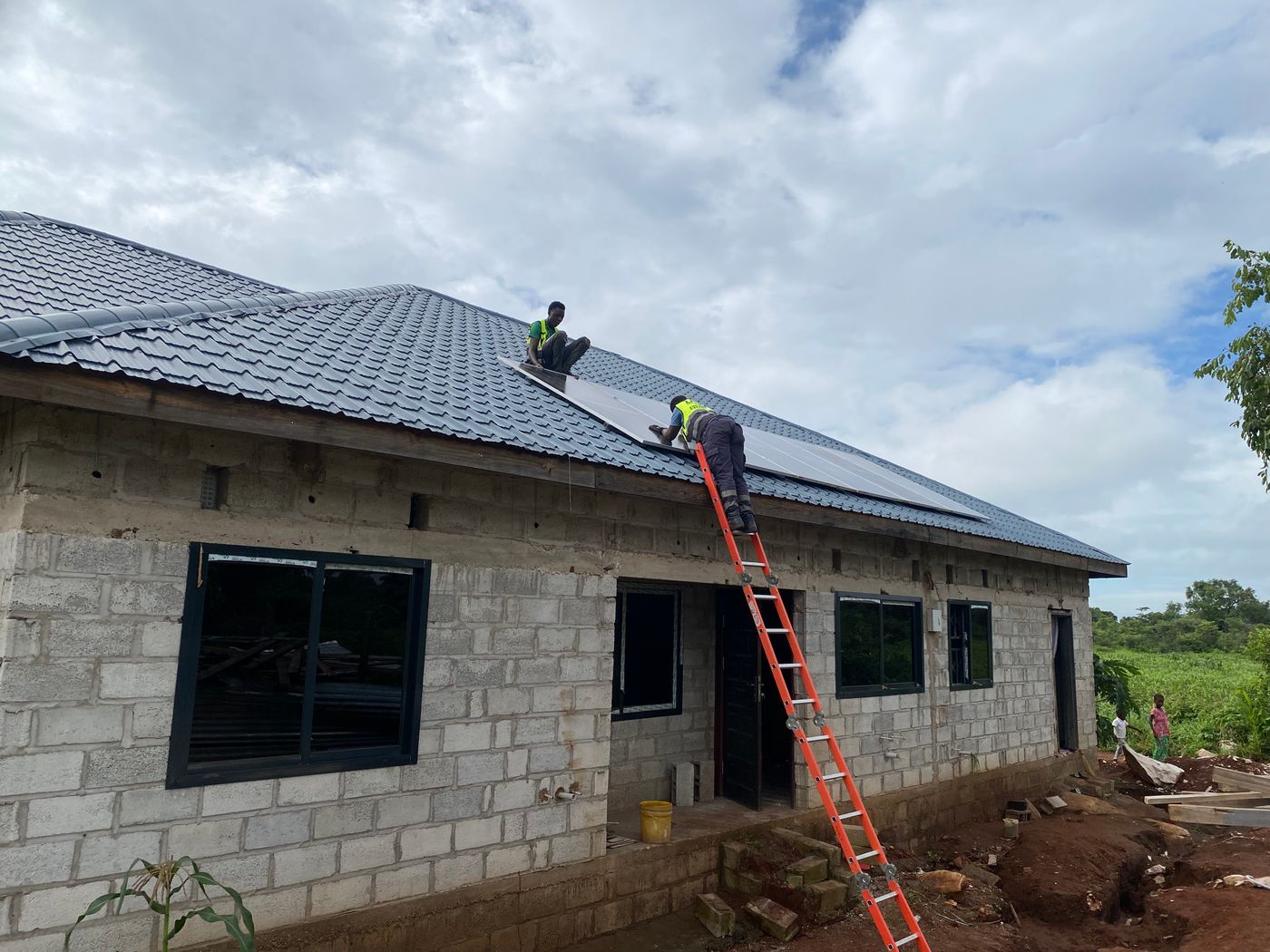
Lightning protection for a solar array, a poultry house or any farm building is a system, not a single part: a risk check by a qualified designer, a way to catch and carry a strike safely to the ground, good earthing, bonding of all the metalwork, surge protective devices on the power lines, and cables kept dry and tidy. It must be designed and installed by an EPRA-licensed electrician or solar contractor working to the applicable Kenya Standards (KS), because a wrong earth connection can be more dangerous than none.
That is not a job for a Saturday with a hammer and a length of wire. This article explains what the parts are and why they matter, so that you can ask your contractor the right questions and check the work. It deliberately gives no wiring instructions.
The October to December short rains are the season when many Kenyan farmers lose equipment, birds and sometimes people to storms. If you have invested in panels, a charge controller, an inverter, an incubator or a milk cooler, a few well-chosen protections cost very little compared with a burnt-out system. Our guides to solar in the rainy season and PV cable and MC4 connectors cover the everyday side of a wet-season system. This one covers lightning.
How High Is the Lightning Risk in Kenya?
High enough to plan for, especially in the western highlands and around Lake Victoria. The Star reported in 2015 that lightning kills about 30 people a year in Kenya, nearly all of them near Kisii, and explained why: the region sits on an escarpment between warm, moist air from Lake Victoria and cooler, high-altitude winds from the east. The same article noted that metal roofs are becoming popular for homes and stores. In November 2025 the Kenya Meteorological Department warned of lightning strikes in Kisii, Kisumu and Narok counties during the October to December rains.
Treat the 30 deaths figure as an approximate, press-reported number rather than an official count. Other countries are not a perfect comparison either, because populations and recording methods differ, but the chart below shows the order of magnitude.
For a farmer, deaths are only part of the picture. Lightning also kills livestock under trees and along fences, starts fires in dry thatch and timber, and destroys electronics. This is why it is worth taking seriously even if your farm is far from Kisii.
Can Lightning Damage My Equipment Without Hitting It?
Yes, and this is the most common way solar and farm electronics are lost. A direct strike on a building is rare for any single building in any single year. A strike somewhere nearby is far more common, and it can push a surge of voltage along cables, fences, water pipes and the ground itself.
A long cable lying across open ground acts like an aerial. A strike a few hundred metres away can induce a spike in it that travels to whatever is connected at the end: a charge controller, an inverter, an incubator, a fan controller, a phone charger. The damage often looks mysterious, because nothing is scorched and the building is still standing. A controller simply stops working after a storm.
The same applies on the mains side. A surge can arrive along a KPLC supply line and reach every device on the circuit. A solar array does not attract lightning, but a tall, exposed structure standing in open ground does stand out, and so does a metal roof or a lone tree beside your poultry house. Height, exposure and the quality of the earth matter more than the equipment itself.
What Makes Up a Lightning Protection System?
Five ideas work together. Your licensed designer decides which are needed for your site and sizes each one.
A risk check. The IEC 62305 series is the international standard family for lightning protection, and a competent designer will use a risk method like it to decide how much protection a building needs. Ask which standard your contractor designs to and which Kenya Standard applies.
Catching and carrying the strike. Where a building needs it, rods or a conductor network on the roof intercept a strike and carry it down heavy conductors to the ground, instead of letting it find its own way through the roof, the walls or your wiring.
Earthing. The conductors end in an earth electrode system, often driven earth rods, that spreads the current into the soil. This is where many installations go wrong, which is why it gets its own section below.
Bonding. Panel frames, mounting rails, metal roof sheets, steel poultry cages, water pipes, fences and the electrical earth should all be tied together by the installer so they rise and fall in voltage together. If two metal objects are at different voltages during a strike, current may jump the gap, through a person or an animal if one is standing between them.
Surge protective devices (SPDs). These clamp a surge and divert it to earth before it reaches your equipment. A solar system needs them on both the DC side (panels to controller) and the AC side (inverter to distribution board). The IEC 61643 series of standards covers SPDs, and your installer will specify the right type and rating.
What Do Earth Rods Do, and Why Does the Soil Matter?
An earth rod is a metal rod, often copper-bonded steel, driven into the ground so that electricity has a low-resistance path into the soil. The lower the resistance, the more easily a surge or fault current leaves your system without raising the voltage of everything on it.
How well the rod works depends heavily on the ground. Wet clay and loam conduct well. Dry sand, murram and rock conduct poorly. In many parts of Kenya, a rod that reads well in the short rains can read much worse at the end of a long dry season, so a licensed electrician measures the resistance with an earth tester and decides whether more rods, longer rods or a different layout are needed. They should give you the reading in writing.
Two practical points. First, the earth system should be one connected network, not separate earths scattered around the farm, because separate earths can sit at very different voltages in a strike. Second, copper is valuable and thieves know it. Our guide to protecting solar panels and batteries from theft applies to earthing copper as well, and a stolen earth conductor can leave a system unprotected without anybody noticing.
How Do I Keep Cables Dry and Tidy in the Rains?
Water is the other big enemy in the wet season, and wet cable and lightning make a poor combination. Cables that sit in puddles, hang loose or have damaged insulation leak current, corrode and can fail in a storm.
- Ask for UV-resistant PV cable and weatherproof conduit, rather than loose wire strapped along a roof.
- Make sure connectors are fully mated and kept off wet ground, because a half-pushed connector admits water and arcs.
- Keep cable runs as short and direct as practical. Long loops make better aerials for surges.
- Avoid trenches that flood. If a cable must run underground, it needs the right cable, conduit and depth, as your installer specifies.
- Seal cable entries into buildings so rain does not follow the cable inside.
- After heavy rain, look for damaged insulation, rodent chewing and cable lying in water, but do not touch a damaged or wet DC or mains cable. Switch the system off at the isolators and call your installer.
Our PV cable and MC4 guide explains why connectors and cable type matter for a long-lasting array.
What Should I Do During and After a Storm?
You cannot control the sky, but you can control what you do. The US National Weather Service teaches "when thunder roars, go indoors": if you can hear thunder, you are close enough to be struck, and lightning can hit several kilometres from the storm. Stay away from the array, metal roofs, fences and lone trees, and keep out of open fields.
Do not touch or approach the panels or cables during a storm, and do not wash or work on the array in bad weather. Where it can be done safely and quickly before a storm, farmers often unplug sensitive equipment such as incubators and chargers from the wall, but never at the cost of standing in the open during a strike.
After a storm, look for scorch marks, a tripped breaker, a controller or inverter that has gone dark, or an SPD indicator that has changed from green to red. SPDs are sacrificial parts that wear out, so replacing them after a strike is normal. Do not reset or open equipment that has been struck. Have your installer inspect it first, because damage can be hidden.
How Do I Choose an Installer I Can Trust?
Under the Energy (Solar Photovoltaic Systems) Regulations of 2012, a person may not design or install a solar PV system without a licence from the regulator, now EPRA. Our guide to hiring a solar installer explains how to check a licence and compare quotes. For lightning and earthing specifically, ask these questions:
| Ask the contractor | What a good answer sounds like |
|---|---|
| Are you EPRA licensed for solar work? | A current licence number you can check |
| Which standards do you design to? | Names the Kenya Standards and the IEC series they follow |
| Did you assess lightning risk for my site? | Explains the exposure: height, roof type, soil and nearby trees |
| What earth resistance did you measure? | A written reading, and a plan if the soil dries out |
| Where are surge protectors fitted? | On the DC side and the AC side, with ratings given |
| What is bonded together? | Panel frames, rails, roof metalwork and the electrical earth |
| What is covered if a strike damages the system? | A clear written warranty and inspection after storms |
Solar Parts to Look At
Prices change, so we do not print them here. See each product page or the Fuga price list for current prices and stock. The product pages do not describe surge protection, so ask your installer what protection to add to any panel or controller you choose, and do not assume it is built in.
| Item | Where it fits |
|---|---|
| 590 Solar panel | A panel for a farm array; the frame must be bonded by your installer |
| Charge controller 20 amps | A small-system controller, protected by surge devices that your installer specifies |
Plan protection before the storms arrive, not after. See our solar equipment range, or WhatsApp 0716 961 018 with your site and system size and we will help you choose parts to take to your licensed installer.
Key Takeaways
- Kenya's western highlands carry a real lightning risk, with press reports of about 30 deaths a year, mostly near Kisii, and storms peaking in the October to December rains.
- Most equipment is lost to surges from nearby strikes, not direct hits, so protection means earthing, bonding and surge devices, not one part.
- A good scheme has a risk check, a path for the strike, earth electrodes, bonded metalwork and surge protectors on DC and AC lines.
- Never improvise an earth; a nail, fence post or water pipe is not one. Soil dryness changes earth readings, so ask for them in writing.
- Keep cables UV-rated, short, in conduit and out of water, and do not touch damaged or wet cables after a storm.
- Always use an EPRA-licensed electrician or solar contractor, and ask which Kenya Standards and IEC series they design to.
Frequently Asked Questions
Do I need lightning protection for my solar panels in Kenya?
Most solar systems need at least good earthing, bonding of the metal frames and surge protective devices, and many sites need more, depending on height, roof type, soil and local storm risk. An EPRA-licensed solar contractor should assess your site and tell you in writing what protection it needs.
Does a solar array attract lightning?
Panels themselves do not attract lightning, but tall, exposed structures in open ground are more likely to be struck. Nearby strikes can also send surges along cables into your controller and inverter, which is why surge protection and earthing matter as much as the position of the array.
Can I install an earth rod myself?
No. A wrong or poor earth can give a false sense of safety and put dangerous voltage on metal that people and animals touch. An EPRA-licensed electrician should design, install and test the earth and give you the resistance reading.
What is a surge protective device and where does it go?
A surge protective device clamps a voltage spike and diverts it to earth before it reaches your equipment. A solar system normally needs them on the DC side and the AC side, in the places and ratings your licensed installer specifies, and they should be inspected and replaced after a strike.
What should I do to my solar system after a lightning storm?
Look for a tripped breaker, a dark controller or inverter, scorch marks or a changed surge device indicator, but do not open or touch damaged equipment or wet cables. Switch off at the isolators and ask your installer to inspect before you restart.


