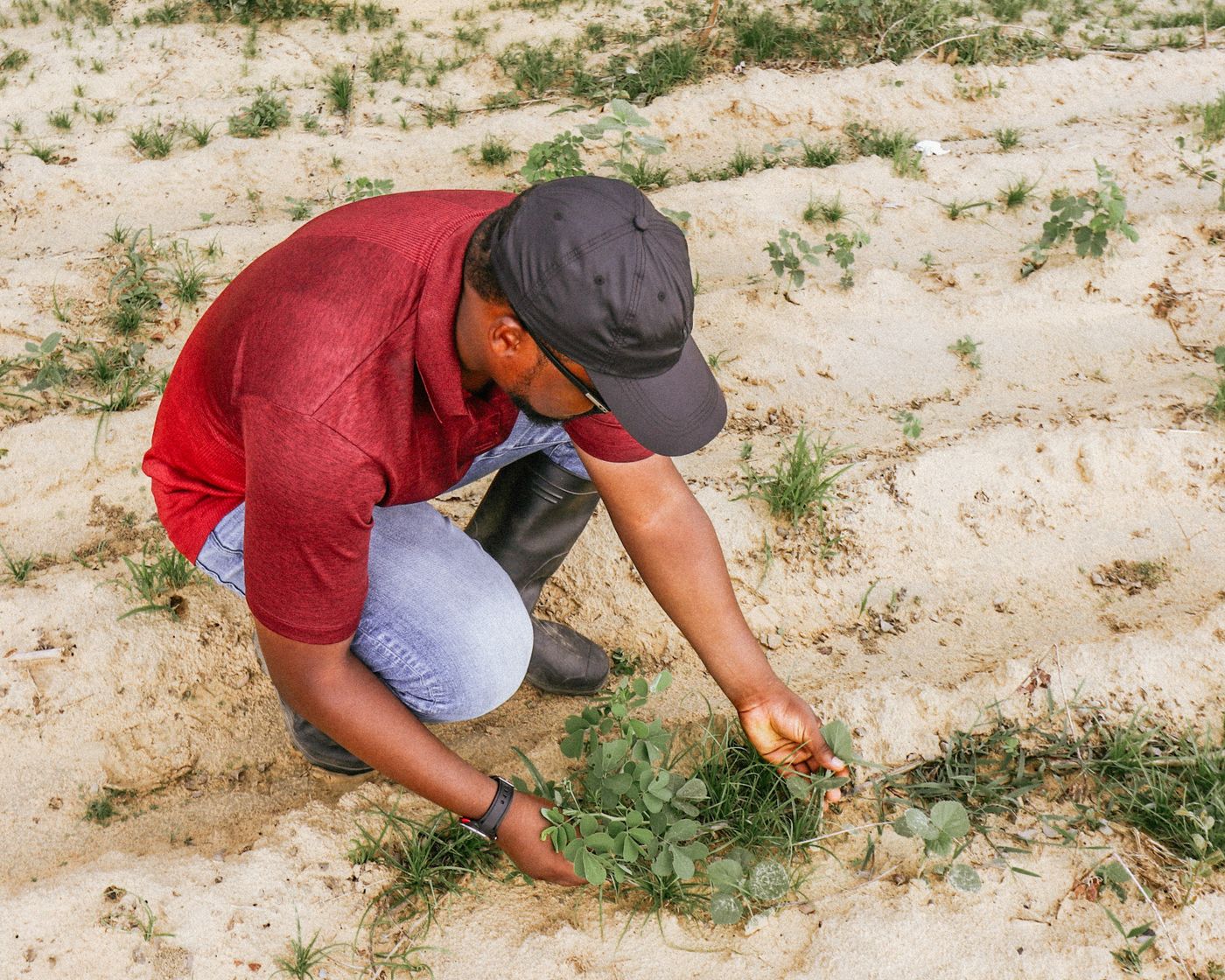
Three weeks after the short rains begin, the maize is ankle high, the beans have opened their first true leaves, and the field looks green from end to end. Look closer and much of that green is not crop. Couch grass, blackjack, oxalis and a dozen other weeds came up with the first rain, and they are growing faster than the maize because they started with roots already in place or seeds already in the soil.
This is the moment that decides a large share of the season. A field weeded on time keeps its water, its fertiliser and its light for the crop. A field weeded two weeks late has already handed part of all three to the weeds, and no amount of top dressing later fully buys it back. Most smallholders know this; the trouble is labour, because weeding falls in the same fortnight on every farm in the village, and casual workers are scarce and expensive exactly when everyone needs them.
This guide covers when to weed in the short rains and why timing matters more than thoroughness, how to weed a maize and bean intercrop without damaging the crop, when a mechanical weeder tiller makes sense and when it does not, and how to plan the labour so the field is clean before it is too late. Timings below are general guidance; your seed pack and your county agriculture extension officer can give figures for your variety and area.
Why the First Weeks Matter Most
Weeds and crop compete for three things: soil water, nutrients and light. In the first weeks after emergence the crop is small, its roots are shallow, and it cannot shade anything out. A weed growing beside a young maize plant takes nitrogen and water from the same small volume of soil the maize is relying on. The maize does not die, but it grows slower, and a plant that falls behind early tends to stay behind.
Agronomists describe this with the idea of a critical period for weed control: a window, starting a little after emergence, during which weeds cause the most lasting damage to yield. Before the window, very small weeds do little harm. After it, once the crop canopy has closed over the rows, new weeds struggle for light and do much less damage. Inside it, every week of weed competition costs yield that the crop cannot recover. The exact length of the window varies with crop, variety, weed type, rainfall and soil fertility, which is why extension advice is usually framed as weeks after emergence rather than calendar dates.
A Short Rains Weeding Calendar
Most Kenyan extension material for maize describes two weedings, sometimes three on weedy land. The rule of thumb is a first weeding roughly two to three weeks after the crop emerges, and a second weeding a few weeks later, often timed so that it comes just before top dressing, so the fertiliser goes to the crop and not to the weeds. After that, the aim is to keep the field reasonably clean until the maize canopy closes over the rows. Beans are shorter season and lower growing, so in an intercrop the bean rows usually set the urgency of the first weeding.
Two practical points follow from the calendar. First, the clean seedbed in step one is part of weed control, not separate from it. Land that was prepared well and planted soon after preparation gives the crop a head start; land prepared weeks earlier has a new flush of weeds by planting day. Our guide to land preparation before the rains covers this. Second, the first weeding is also your chance to fill gaps and thin, because you are walking every row anyway; our article on planting in the short rains explains why that window is short.
Weeding by Hand: The Jembe Done Well
The jembe is still the main weeding tool on most Kenyan smallholdings, and used well it is hard to beat in a mixed or irregular field. A few habits make the difference between weeding that helps the crop and weeding that damages it.
Work shallow. Most annual weeds can be cut just below the surface. Deep digging between rows brings buried weed seeds up to germinate, dries out the topsoil you need for the crop, and cuts the crop's shallow feeder roots, which spread further across the row than most people expect. A lighter jembe for the first weeding, when weeds are small, is less tiring and encourages shallow work; a heavier one is useful on hard ground or established perennial weeds.
Pull weeds close to the plant by hand. The last few centimetres around each maize or bean plant are where most crop damage happens. Pull those weeds by hand rather than swinging the blade into the plant base.
Deal with perennial grasses differently. Couch grass and similar creeping weeds regrow from every piece of rhizome left in the soil. Chopping them into pieces with a jembe can spread them. Fork or dig them out where you can, shake the soil off, and remove the rhizomes from the field instead of leaving them on the surface in wet weather, where they simply root again.
Weed on dry days where possible. In the short rains this is not always possible, but weeds cut and left on dry soil in sunshine wither; weeds cut in a downpour often re-establish. A jembe and a rake to gather pulled weeds into heaps make the job cleaner, and heaped weeds can go to the compost pit once they have dried.
The Maize and Bean Intercrop: Weeding Around Two Crops
Intercropping beans between maize rows is common across Kenya, and it changes how you weed. Beans have shallow, delicate roots and stems that break easily, and once they start to flower, disturbing the soil around them can cause flowers to drop. The practical rule of thumb is to finish weeding the bean rows before flowering, and to avoid working among beans when the leaves are wet, because moving through wet bean foliage can spread leaf diseases from plant to plant.
Intercropping also limits machine weeding. A mechanical weeder needs a clear lane between crop rows. If beans are planted in the middle of the maize inter-row, there is no lane, and the field has to be weeded by hand. If you plan to use a machine, the layout has to be decided at planting, not at weeding.
When a Weeder Tiller Makes Sense
A weeder tiller is a small, engine-driven machine with rotating tines that cultivates a strip of soil between crop rows, cutting and burying small weeds. The operator walks behind it along each inter-row. On the right field it covers ground much faster than hand weeding, and it does not depend on finding casual workers in the busiest fortnight of the season. On the wrong field it damages crop and wastes fuel.
The machine suits fields with straight, evenly spaced rows wide enough for the tines to pass without touching the plants. Maize is commonly planted in Kenya at around 75 centimetres between rows, which leaves room for a narrow cultivator if the rows were laid out straight. It suits pure stands of maize, or intercrops where the second crop is planted in its own rows with lanes kept open. It works best when weeds are small, the soil is moist but not sticky, and the ground has few stones and stumps.
It does not suit broadcast or random planting, intercrops with beans in the middle of every inter-row, very steep land, waterlogged fields in the middle of the rains, or fields full of large perennial grasses, which wrap around the tines. And it never weeds inside the row: the strip of soil between plants along each row still needs hand weeding, though that is a small fraction of the field.
Does It Pay? Work It Out for Your Own Farm
The honest answer depends on your acreage, how many weedings you do, local casual rates and whether neighbours would hire the machine. Write down, for your own farm: the number of person-days a hand weeding of one acre takes, the daily rate for casuals in your area, the number of acres, and the number of weedings in a year across both seasons. Multiply them to get your annual hand-weeding bill. Then compare that bill with the machine price, its fuel and maintenance, and the hand weeding still needed inside the rows. If the machine would pay for itself within a few seasons, and especially if it frees you from waiting for labour at the critical moment, it is worth a serious look. If you farm one acre of intercrop, a good jembe and well timed family labour is usually the better choice.
Timeliness is the hidden part of the sum. Two acres weeded on time by machine can protect yield that two acres weeded late by hand loses, and that difference never shows up in a labour cost comparison. Ask the Fuga team about the two models on the price list, the standard WEEDER TILLER and the WEEDER TILLER 4 STROKE; in general, four stroke engines run on plain petrol without oil mixed into the fuel, while two stroke engines need a fuel and oil premix. For heavier tillage before planting, our guide to choosing a power tiller covers the bigger machines.
Field Edges, Paths and Slashing
Weeds on field margins, paths and fence lines do not compete directly with the crop in the middle of the field, but they seed into it every season and shelter pests. Slashing margins before weeds set seed reduces next season's weed pressure. A hand slasher handles small farms; for long fence lines and larger margins a brush cutter is faster, and our brush cutter and slasher guide compares the options.
Herbicides: A Decision for the Label and the Extension Officer
Some farmers use herbicides, either before planting or after the crop emerges. They can save labour, but they carry real risks: the wrong product or rate can damage the crop, products that suit pure maize may kill beans in an intercrop, and drift can damage neighbouring crops. If you are considering a herbicide, use only products registered in Kenya for your crop, follow the label exactly for rate, timing and protective equipment, and ask your extension officer or agrovet whether it suits your cropping system. Use a separate, clearly marked sprayer for herbicides so no residue reaches crops later. Our guides to calibrating a knapsack sprayer and storing and handling agrochemicals cover the practical side.
Planning the Labour So the Field Is Clean in Time
Because weeding timing matters more than thoroughness, the best plans start with the calendar and work backwards. Note the emergence date of each plot. Mark the first weeding window two to three weeks later and the second a few weeks after that, and book labour, family time or a machine before the window opens, not when the weeds are already knee high. If labour is short, weed the plot planted first, first, and keep the weeding ahead of the weeds rather than chasing them.
Sharpen jembes before the season, replace loose handles, and keep a spare. A blunt jembe takes noticeably more strokes per row, and across a whole acre that is hours of extra labour. If you buy a weeder tiller, run it before the weeding window, check the tines and fuel system, and learn how to set the working depth on a headland, not in the first crop row.
Tools for the Weeding Season, With Prices
These are current prices from the Fuga price list; confirm stock with the team before you travel.
| Item | Stock code | Price |
|---|---|---|
| WEEDER TILLER | 6430 | KSh 25,000 |
| WEEDER TILLER 4 STROKE | 6431 | KSh 30,000 |
| JEMBE 2LB COCK BRAND | 6249 | KSh 280 |
| JEMBE 3LB ALLIGATOR | 6256 | KSh 450 |
| RAKE 12 TEETH | 6373 | KSh 220 |
| SLASHER WOODEN HANDLE | 6395 | KSh 250 |
| BRUSH CUTTER 4 STROKE RAM-G | 6139 | KSh 20,000 |
| FERTILIZER APPLICATOR-OXFORD | 6220 | KSh 1,800 |
Weed early, weed shallow, keep lanes open if you want to use a machine, and finish the bean rows before flowering. For the top dressing that follows the second weeding, a fertiliser applicator puts the fertiliser beside the row where the roots can reach it; our guide to hand planters and fertiliser applicators explains how. For a weeder tiller demonstration or help choosing jembes for the season, talk to any Fuga branch or WhatsApp 0716 961 018.
Key Takeaways
- Weed competition does the most lasting damage in a critical window in the first weeks after emergence, so early weeding protects more yield than late, thorough weeding.
- As a rule of thumb, do the first weeding about two to three weeks after emergence and the second a few weeks later, just before top dressing.
- Work shallow with the jembe, pull weeds close to the crop by hand, and remove creeping grass rhizomes from the field instead of chopping them up.
- In a maize and bean intercrop, finish weeding the bean rows before flowering and avoid working among wet bean leaves.
- A weeder tiller suits straight, evenly spaced rows with open lanes; it cannot weed inside the row or in beans planted in every inter-row.
- Work out your own annual hand weeding bill before buying a machine, and count the value of weeding on time, not just the labour saved.
Frequently Asked Questions
When should I do the first weeding of maize in the short rains?
A common rule of thumb in Kenya is about two to three weeks after the maize emerges, while the weeds are still small. Weeds cause the most lasting yield loss in the early weeks, so a timely first weeding matters more than a perfect one. Your seed pack and county extension officer can give the timing for your variety and area.
How many times should I weed maize?
Most Kenyan extension advice describes two weedings, with a third on very weedy land. The second weeding is often timed just before top dressing so the fertiliser feeds the crop rather than the weeds. After that, keep the field reasonably clean until the maize canopy closes over the rows.
Can I use a weeder tiller in a maize and bean intercrop?
Only if the layout leaves open lanes for the machine. If beans are planted in the middle of every maize inter-row, there is no space for the tines and the field must be weeded by hand. If you want to use a machine, plan the row layout at planting, with straight rows and the second crop in its own rows.
Is it bad to weed beans when they are flowering?
Disturbing the soil and plants around flowering beans can cause flowers to drop, and bean roots are shallow and easily damaged. The usual advice is to finish weeding the bean rows before flowering and to avoid moving through bean plants when the leaves are wet, which can spread leaf diseases.
Should I use a herbicide instead of weeding?
Herbicides can save labour but carry risks: the wrong product can damage the crop, products for pure maize may kill beans in an intercrop, and drift can harm neighbouring crops. Use only products registered in Kenya for your crop, follow the label exactly, keep a separate sprayer for herbicides, and ask your extension officer whether a herbicide suits your cropping system.