By late September in much of Kenya's maize belt, the long-rains crop is standing brown in the field and the short rains are a few weeks away. Every farmer walking those rows is making the same silent calculation: leave the cobs to dry where they stand, or start harvesting now and finish the drying under cover. Get it right and the grain goes into store hard, clean and safe. Get it wrong and the first heavy storm lands on cobs that were three days from ready.
The stakes are higher than a wet afternoon. Maize that stays damp grows mould, and the mould that matters most in Kenya, Aspergillus, produces aflatoxin, a poison you cannot see, smell or cook out. Damp grain also heats in the bag, sprouts on the cob, draws weevils and loses weight and price. A crop that took four months to grow can lose its value in the two weeks between the field and the store.
This guide walks through the decision from the black layer to the bag: how to read maturity, when field drying is worth the risk and when it is not, how to plan shelling and drying so the crop is never caught half done, how to hit the 13 percent moisture target, which drying methods keep working when the ground is wet, and the checklist a bag should pass before the store door closes on it.
Black Layer: When the Crop Is Finished and the Clock Starts
A maize plant stops feeding its grain at physiological maturity. The sign is the black layer, a dark band that forms at the tip of each kernel where it joins the cob, sealing off the channel that carried sugars in. Once that layer is black, the kernel has all the dry matter it will ever have. Nothing you do in the field after this point adds yield; everything from here is about losing as little as possible.
To check, pull a few cobs from the middle of the field rather than the edge, strip the husk, and pop out kernels from the middle of the cob. Cut or scrape the tip of the kernel that sat against the cob. A brown or black layer across the tip means maturity. If it is still pale or milky, the crop is not finished, and harvesting now trades yield for time.
At black layer the grain is still wet, typically somewhere around 30 percent moisture and often higher. That is the number that frames every decision that follows. Safe storage is about 13 percent, so the crop has to shed more than half of the water in the kernel between maturity and the bag, and the only question is where that drying happens: in the field, on a drying floor, or in a dryer.
Field Drying Versus Rain: The Trade-off Every Farmer Makes
Leaving mature maize standing is free drying. Warm, dry, breezy weather can pull moisture out of standing grain at something like half a percentage point to a point a day, so a crop at 30 percent can be down near 20 percent in two or three weeks with no labour at all. In cloudy, humid weather that rate slows sharply, and in rain it can reverse as the husks soak up water.
The risk is what rain does to a cob that is not yet dry. Water runs into loose husks, especially on cobs that point upward or have been chewed open by birds. Wet cobs grow ear rot and the moulds that carry aflatoxin, and kernels on a wet cob can sprout in place after a few wet days. Lodged plants put cobs on the ground, where soil moisture and termites finish the job. Add rodents, birds and theft, and the free drying starts to carry a real bill.
Stooking, cutting the stalks and standing them in tight bundles, is often used to get the cobs off the ground and let air through while the field is cleared for the next crop. It helps in dry weather. It does not protect the crop from rain: a wet stook dries slowly from the outside and stays wet in the middle, which can be worse than a standing plant.
The short rains in most maize areas arrive in October or November, and the long-rains harvest in the same areas runs from around August into October. The overlap is the problem. The later the crop was planted, and the higher and cooler the site, the more the two collide, and the more the calendar rather than the moisture meter sets the harvest date.
Plan the Throughput Before You Pick the First Cob
A crop is not harvested when it is picked. It is harvested when it is dry and in the store. In between are five jobs, picking, dehusking, shelling, drying and cleaning, and the slowest of them sets the pace for all the others. Most farms discover which one is slowest halfway through the season, with a heap of wet cobs under a tarpaulin and a storm building.
Work it out in advance. Count the people available and how many bags of cobs they can pick and dehusk in a day. Then look at shelling: hand shelling a bag of cobs takes hours of work, while a motorised sheller does the same in minutes, which is why shelling is usually the first bottleneck. Our guide to choosing a maize sheller covers sizing one to your acreage and power source.
Then measure the drying area. Grain dries only in a thin layer, a few centimetres deep, so the square metres of tarpaulin, concrete or rack you can cover and turn set a hard ceiling on how much shelled grain you can dry per day. Divide the crop by that daily capacity and you have the number of drying days the harvest needs, which tells you how many days before the rains you must start.
- Harvest in portions. Pick only as much as the sheller and the drying floor can clear in two or three days, then pick the next portion. The field is a better store than a wet heap.
- Keep waiting cobs under a roof, not in a pile. Cobs waiting for the sheller should be in a ventilated crib or an open shed where air moves through them, never in a closed heap where they heat.
- Shell dry cobs, not wet ones. Kernels shell cleanly and with less breakage once the cobs have dried to around 20 percent or below. Wetter cobs jam the sheller, bruise the grain and leave broken kernels that mould first in store.
- Book the sheller and the labour for dates, not for "after harvest". Everyone in the district wants the same machine in the same fortnight.
The 13 Percent Target and How to Know You Have Hit It
Maize stores safely at about 13 percent moisture, and the reason is biology rather than habit. Storage moulds and the insects that follow them need free water in the grain to grow. At around 13 percent and below there is too little for the moulds to work with, so the grain sits stable through a Kenyan storage season. Above about 14 to 15 percent the storage moulds can grow, and the grain itself respires, producing heat and more moisture in a cycle that spreads through a bag. By 18 percent and above, spoilage is a matter of days.
The number matters because the difference between 13 and 15 percent is invisible. Both look and feel like dry maize in the hand. The only reliable way to know is a grain moisture meter, and set against the value of a maize crop it is one of the cheapest instruments a farm can own. Sample from several bags and from the middle of each bag, not the top, because the last grain spread in the corner of the floor is usually the wettest. Our guide on grain drying and moisture goes deeper into meters, calibration and reading them correctly.
Without a meter, two field tests give a rough answer. Bite a kernel: dry maize cracks with a sharp snap rather than denting under the tooth. Or put a handful of grain in a dry glass jar with a spoonful of dry table salt, shake it hard for a minute and look at the glass; if salt clings to the walls, the grain is still giving off moisture and is above safe storage level. Neither test tells you the number, so treat them as a warning, not a pass.
Sun Drying, Raised Drying and Dryers
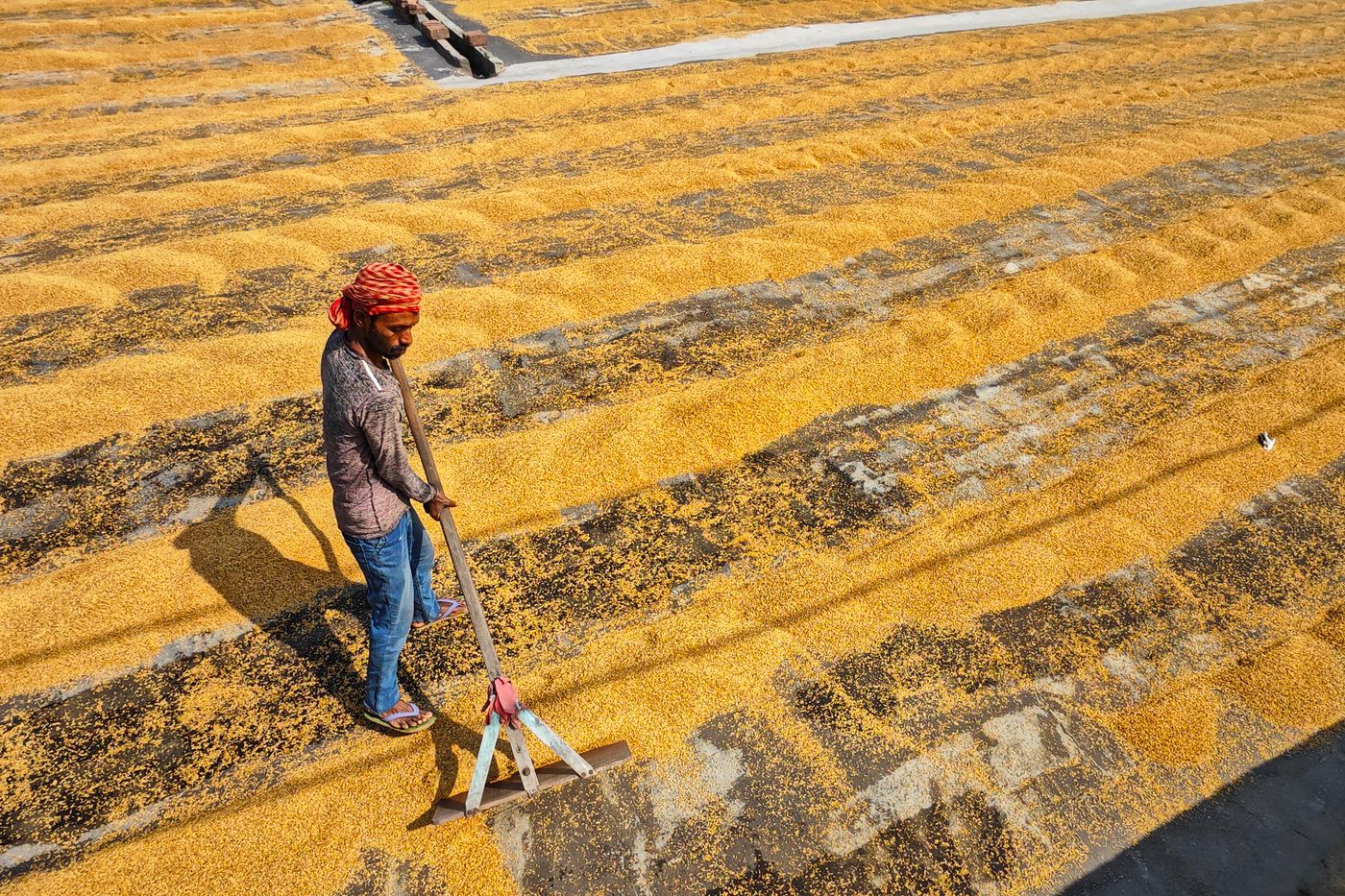
Sun drying on a tarpaulin or a clean concrete floor is how most Kenyan maize is dried, and done well it works. Spread the grain thin, turn it with a rake or by hand every hour or so to bring the damp layer to the top, and keep it away from livestock, poultry and dust. Never dry on bare soil: the grain picks up moisture, dirt and mould spores from the ground, and soil contact is one of the main routes by which the aflatoxin mould reaches grain.
Cover the grain the moment clouds build, and always at night. Grain left out in the evening reabsorbs water from damp night air and loses much of the day's gain. Heap it, cover it with a tarpaulin held down at the edges, and spread it again as soon as the sun is on the floor in the morning.
Raised drying puts the grain on a mesh rack, a table or a slatted floor above the ground so that air moves under as well as over it. It dries faster than a floor, keeps grain out of run-off and away from chickens, and with a clear plastic cover on hoops it keeps working through a light shower. A ventilated cob crib does the same job for unshelled cobs, letting air through the stack while the sheller catches up.
A solar dryer takes the idea further, using a covered chamber to trap heat and drive warm air through the grain, so drying carries on in cloudy weather when a floor would be under a tarpaulin. Our guide to solar dryers for produce explains the designs and what they suit. For larger volumes, a mechanical dryer with a fan and a heat source dries grain regardless of the weather; the discipline there is temperature, because grain meant for seed, or for a buyer with quality specifications, is damaged by overheating.
The Storage-Entry Checklist
The store should have a door that grain has to earn its way through. Run every batch past this list, and refuse the ones that fail. It is cheaper to spend two more days on the floor than to seed a store with one bag that spoils the rest.
- Moisture at or below 13 percent, confirmed by meter on samples from several bags, including the last grain off the floor.
- Cooled to air temperature before bagging, never bagged warm from the sun.
- Cleaned and sorted. Winnow out chaff, cob pieces and dust, and pick out discoloured, mouldy, shrivelled and insect-holed kernels. A handful of mouldy grain carries enough spores and toxin to condemn the bag.
- Bags new or clean, dry and sound. Old bags carry weevil eggs and mould from last season. If you use hermetic bags, seal the inner liners properly with the air squeezed out.
- Store prepared. Old grain removed and the floor swept, cracks in walls and floor sealed, roof leaks fixed, rodent entry points blocked and vents screened.
- Stacked off the floor and off the walls on pallets or poles, in stacks you can walk around and inspect.
- Labelled and scheduled. Write the date and moisture reading on each stack, and check weekly for warmth, a musty smell, damp patches on the bag surface or insect dust at the seams.
For the store itself, from bag types to hermetic storage and pest control, our guide to post-harvest grain storage covers the choices in detail. The same moisture discipline applies to grain going to the mill: damp maize smears the screen of a hammer mill and packs in the hopper of a posho mill, so whether you are milling for feed or for the household, our comparison of hammer mills and disc mills assumes the grain arrives dry.
A Season Plan You Can Write on One Page
Put the dates on paper before the crop reaches black layer. Note the day you expect maturity, the date the short rains usually start in your area, the daily capacity of your drying floor and the sheller you have booked. Work backwards from the rains and the answer falls out: the date you must start picking, in portions the floor can clear, so that the last bag is meter-tested and in the store before the first storm.
Then hold to it. The most expensive mistake in maize is not a wrong decision but a late one: waiting for the field to finish a job the sun could have done under cover. If you need a sheller, a mill or advice on a drying set-up that matches your acreage, talk to any Fuga branch or WhatsApp 0716 961 018 and we will work through the dates and the equipment with you.
Key Takeaways
- Black layer marks physiological maturity: the grain has all the dry matter it will get, is still around 30 percent moisture, and everything after is about losing less.
- Field drying is free but slow and weather-dependent, so harvest when the grain is at a moisture you can finish under cover before the short rains, not when the field is perfect.
- Shelling and drying-floor capacity set the pace: pick in portions the sheller and the floor can clear in two or three days, and never shell more than you can spread the same day.
- Maize stores safely at about 13 percent moisture; the difference between 13 and 15 is invisible, so measure with a meter and sample from the middle of several bags.
- Dry in a thin layer on a tarpaulin, floor or raised rack, never on bare soil, cover at night and in cloud, and use a solar or mechanical dryer when the weather will not cooperate.
- Let grain cool before bagging, then run every batch through the storage-entry checklist: dry, cool, cleaned, sorted, in sound bags, off the floor and labelled.
Frequently Asked Questions
When should I harvest maize if the short rains are coming?
Harvest once the crop has reached black layer and the grain is at a moisture you can finish drying under cover before the rains arrive. If the calendar leaves two weeks and your drying floor can clear the crop in ten days, start now rather than waiting for the field to reach a lower moisture. Grain brought in at around 20 percent and sun-dried to 13 is safer than grain left standing into the first storms, where wet husks, ear rot and sprouting on the cob begin.
What moisture content is safe for storing maize in Kenya?
About 13 percent. At that level and below, storage moulds and the insects that follow them have too little free water to grow, so the grain stays stable through the season. Above roughly 14 to 15 percent moulds can start, the grain respires and heats, and by 18 percent spoilage is a matter of days. Because 13 and 15 percent look and feel identical, confirm the number with a grain moisture meter on samples from several bags before anything goes into store.
How can I check maize moisture without a meter?
Two rough field tests help. Bite a kernel: properly dry maize cracks with a sharp snap rather than denting. Or put a handful of grain in a dry glass jar with a spoonful of dry table salt, shake hard for a minute and look at the glass; if salt sticks to the walls, the grain is still giving off moisture and is above safe storage level. Neither test gives a number, so treat a pass as a sign that you may be close, not as proof that you have reached 13 percent.
Is it better to dry maize on the cob or after shelling?
Both have a place. Cobs in a ventilated crib or open shed dry safely while they wait for the sheller, and shelling is cleaner with less breakage once cobs are down to around 20 percent or below. Shelled grain dries much faster on a floor or rack because every kernel is exposed to sun and air, so the final drying to 13 percent is best done after shelling. The thing to avoid is a closed heap of wet cobs or wet shelled grain, which heats and moulds within days.
Can I store maize that is slightly mouldy if I dry it well?
No. Drying stops mould growing but does not remove the toxin it has already produced, and aflatoxin cannot be seen, smelled or cooked out. Sort every batch before bagging and pick out discoloured, mouldy, shrivelled and insect-holed kernels, because a handful of spoiled grain carries enough spores and toxin to condemn the bag and seed the rest of the store. Mouldy grain should not go to livestock feed either, as the toxin passes into milk and meat.