
Somewhere in Kenya this morning there is a soda bottle on a low shelf that does not hold soda. Someone decanted a chemical into it because the original container was awkward to carry, or because it had cracked, or simply because the bottle was there.
That bottle looks like a drink and sits at a height a child can reach. That single habit kills children in this country. It is the reason an article about chemical safety has to start with where products live between uses rather than with how to spray them.
What follows is the handling side of crop protection: the store, the container, the label, the mixing point, the protective equipment people will genuinely keep on in the heat, the empty, and the spill. Almost none of it costs money. Most of it costs a decision.
A Lockable, Ventilated Store Is Not Excessive
The store is the cheapest safety equipment you will ever own, and it does three jobs.
It locks. A padlocked door is the only barrier between stored product and a curious child, a casual visitor or a thief. One person holds the key, and that person is named.
It breathes. Vapour builds in a hot sealed room, so whoever opens the door takes the worst dose of the day. Vents high and low, meshed, keep air moving without anyone touching it.
It contains. A sealed floor with a raised lip means a container that splits overnight leaks into a room rather than into the ground and the water table.
Siting matters as much as construction. Keep the store away from the house and from anywhere people sleep, away from where food, seed and animal feed are kept, and clear of any well, tap, tank or drainage channel. A leaking container above a bag of feed puts a whole herd at risk.
Inside, put liquids on the lower shelves and powders above them, never the other way around: a leaking liquid on a top shelf rains onto everything beneath it, and a contaminated sack of granules cannot be salvaged. Put a hazard sign and a written stock list on the door, so anyone responding to an emergency knows what is in the room before opening it.
Original Container, Original Label, Never a Drink Bottle
Say this one plainly, because softening it has never helped anyone. Decanting a farm chemical into a soda bottle, a water bottle or a juice container kills children in Kenya. It is a recognisable pattern in poisoning cases here, and it is entirely preventable.
Three protections disappear the moment you pour product into a drink bottle. The container now looks like something to swallow. The product name is gone, so nobody can say what it was. And the safety directions, first aid instructions and emergency contact printed on the label are gone with it, so the clinician who receives a poisoned child is treating blind.
The plastic is a problem too. Bottles made for soft drinks were never designed to hold agricultural formulations, and some will weaken over time.
The rule admits no exceptions. Every product stays in the container it was sold in, label intact and facing outward. If a label starts to peel, tape a clear sleeve over it. Never scrub a label off to reuse a container.
The same logic governs buying. Purchase only from a registered agrodealer, in a factory sealed container with an intact label. Crop protection products sold in Kenya must be registered with the Pest Control Products Board and the label carries those details, so a container with no label is untraceable as well as unsafe. Product decanted into an unlabelled bottle at a market should never enter your farm.
How to Read a Label Properly, Including the Two Intervals
The label is not packaging. It is the legal and technical instruction for that product, and the only document that applies specifically to what is in your hand. Read it before you buy, before you open, and before you mix.
Work through it in order: what the product is registered to control and on which crops, the rate and the water volume, the safety directions and the equipment they require, what it says about tank mixing, and the first aid instructions. If your crop is not named on the label, the product is not for your crop.
Then find the two intervals, because these are the ones people skip.
The re-entry interval is the time after spraying before anyone can go back into the treated block without protective equipment. It catches the people who never touched the sprayer: casual weeding labour, children taking a shortcut, animals let into a field. Tell everyone on the farm, and mark the block.
The pre-harvest interval is the minimum time between the last application and harvest, so residue falls to an acceptable level before anything is eaten or sold. Harvesting early is the most common way a consignment fails residue testing, and it applies to cutting fodder and grazing as much as to picking vegetables.
If the label does not answer a question, ask a registered agrodealer or a qualified agronomist. Not a neighbour, and not the internet.
Mixing and Measuring Without Dosing Yourself
The most concentrated material you will ever touch is the product before it goes into the tank. Design the mixing point around that fact.
Mix outdoors in good light, standing so the wind is at your back, well away from the store, the house, wells, taps and drainage. Never inside a closed shed, and never in the dark, when you cannot read a label or see a splash.
Measure with dedicated equipment: a marked jug for liquids, a syringe for small volumes, a scale for powders, all kept for that purpose and nothing else. A kitchen cup, a bottle top or a matchbox is not a measure. Rinse the measure into the tank afterwards.
Part fill the tank with water first, add the measured product, then top up. Adding product to an empty tank and blasting water in throws splash back at you. Do not combine two products unless both labels allow it.
Getting the amount right also means knowing how much liquid your sprayer puts on an acre, which is a measurement rather than a guess. Our guide to calibrating a knapsack sprayer covers it, and until you have done that, no label rate can be turned into what goes in your tank.
Mix only what you will use today, because a leftover half tank is a disposal problem with no good answer. And while you mix there is no eating, no drinking, no smoking and no phone. Wash first, every time.
Protective Equipment People Will Actually Wear in the Heat
A full protective outfit that gets abandoned by ten in the morning protects nobody. Kit that fails in the heat is a safety problem, not a discipline problem, so plan around the heat.
Start by moving the work. Spray early morning or late afternoon: calmer, so less drifts, and cooler, so the equipment stays on. That one change does more than anything else to make protective gear survive a working day.
Gloves matter most, because hands do the mixing and the mixing is the concentrated part. Use chemical resistant gloves with long cuffs. Fabric and leather gloves are worse than none: they soak product up and hold it against the skin all day. Wash the outside of gloves before taking them off.
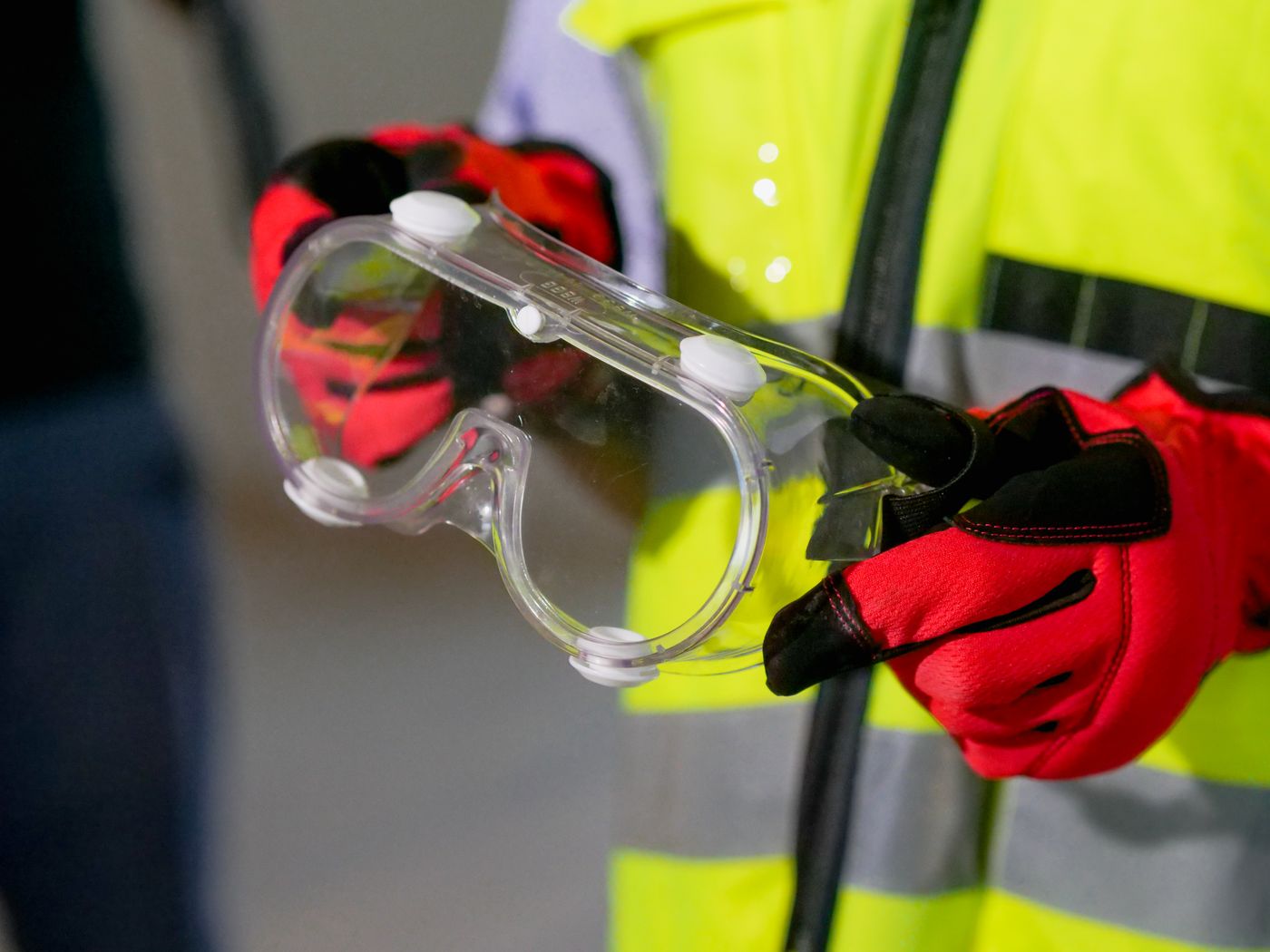
Eye protection must seal. Sunglasses and open safety spectacles let splash and drift in from the sides. Goggles get abandoned because they fog, so choose an indirect vented pattern and keep an anti-fog cloth with them.
Cover the skin, then take the cover off outside. A light long sleeved overall over your clothes is enough for most work, and it should not be the shirt you wear afterwards. Gumboots, with the trouser legs outside the boot so runoff cannot drain in.
Respiratory protection is label led. Where a label calls for a respirator, a dust mask will not do and a cloth mask is nothing at all. If the label requires equipment you do not have, do not spray that day.
Finally, check the sprayer with clean water before filling it. A leaking tank seal or a perished hose soaks the operator's back and legs for hours. We stock gloves, goggles, overalls and gumboots alongside the sprayers on the farm equipment page, with prices on the price list.
Triple Rinse, Then Make the Container Useless
An empty container is not empty. Product clings to the walls, and enough remains to matter to whoever handles it next.
Rinse it at the mixing point, while the sprayer is still standing there. Every rinse goes into the spray tank and onto the crop, which is both the safe route and the one that recovers product you paid for. Rinsate never goes on the ground, into a drain or near a watercourse.
Then destroy the container. Puncture and crush it so it cannot hold liquid again. This is the step people skip, and the one that stops an old container becoming a water jug or a feed scoop in someone's kitchen.
Store empties apart from full stock, still labelled, and return them to a registered agrodealer or an approved collection point. Do not burn them, because the fumes are their own hazard, and do not bury them near water. Paper sacks are shaken out into the tank and destroyed the same way.
What to Do About a Spill
The minutes after a spill decide how much damage it does, and the instinct to grab a hose is exactly the wrong one.
Keep people back first. Move children and animals away before you touch anything, then put on gloves and eye protection. Do not start clearing bare handed because it feels urgent.
Stop the source if it is safe to do so. Stand the container upright, plug the split, move undamaged stock out of the way.
Contain before you clean. Ring the spill with dry soil, sand, sawdust or ash to stop it running towards a drain, a channel, a well or a river, then cover the spill itself with the same material so it soaks up.
Sweep, do not wash. Water spreads a spill and carries it somewhere it can do more harm. Use a dedicated brush and shovel, put the contaminated material into a marked container, and keep it in the store until you have a disposal route. The label tells you what that route is.
If a person is affected, get contaminated clothing off, wash the skin with plenty of soap and clean water, and flush eyes with gently running clean water for far longer than feels necessary. If anyone has swallowed, inhaled or been badly splashed, get medical help straight away and take the container or the label with you. Do not induce vomiting unless the label instructs it. A clinician who can read the label treats the actual exposure; one told only "some spray" is guessing.
Keep a spill kit ready: dry absorbent, a dedicated brush and shovel, a bucket, spare gloves and heavy waste bags. Keep it outside the store, so you are not opening a door into a room full of vapour to reach it.
Making It Ordinary
None of this is complicated: a lock, a vent, a shelf order, a label that stays where it was printed, a measure that lives with the sprayer, and rinsing empties while you are still at the tank.
Write the routine down, name the person who holds the key, and go through it with everyone who sprays, including seasonal labour who may never have been told any of it. If you want help putting a store together, talk to us at any of our six branches.
Key Takeaways
- A store needs four things: a lock, vents high and low, a sealed floor that holds a leak, and distance from the house, from food and feed, and from water.
- Never decant a farm chemical into a drink bottle. It looks like a drink, it removes the label a clinician needs, and it kills children in Kenya.
- Buy only sealed, labelled product from a registered agrodealer. Crop protection products sold in Kenya must be registered with the Pest Control Products Board.
- The re-entry interval and the pre-harvest interval are on the label, both start the day you spray, and both apply to people who never touched the sprayer.
- Triple rinse every empty into the spray tank, then puncture and crush it. Contain a spill with dry material and sweep it up. Never hose it away.
Frequently Asked Questions
How should farm chemicals be stored on a small farm in Kenya?
In a space that locks, that has ventilation high and low, that has a sealed floor able to hold a leak, and that is separated from the house, from anywhere food or animal feed is kept, and from any well, tap or drainage line. Liquids go below powders so a leak cannot drip onto dry product. A strong lockable cabinet in an outbuilding counts as a store if a dedicated room is not possible.
Why should you never put pesticide in a drink bottle?
Because it looks like a drink and children in Kenya die from exactly this. It also destroys the three things that make treatment possible: the product name, the safety directions and the emergency information printed on the original label. A soda bottle is not built to hold agricultural formulations either, so it can weaken over time. Keep every product in the container it was sold in, with the label intact and readable.
What is the pre-harvest interval and why does it matter?
The pre-harvest interval is the minimum number of days that must pass between the last application and harvest, and it is printed on the product label. It exists so residue falls to a legally acceptable level before produce is eaten or sold. Harvesting early is the most common reason a consignment is rejected on residue testing, and it applies to cutting fodder and letting animals graze, not only to picking fruit and vegetables.
What protective equipment do I need for spraying pesticides?
At minimum chemical resistant gloves with long cuffs, sealing goggles or a face shield, a long sleeved overall worn over your clothes, and gumboots with the trouser legs outside the boot. Respiratory protection is needed where the label calls for it, and a dust mask is not a chemical respirator. Read the safety directions on the label of the specific product, because that is what sets the requirement.
How do I dispose of empty pesticide containers?
Triple rinse the container at the mixing point, pouring every rinse into the spray tank so it goes onto the crop rather than onto the ground. Then puncture and crush it so nobody can reuse it. Store the empties apart from full stock and return them to a registered agrodealer or an approved collection point. Do not burn containers, do not bury them near water, and never let one become a household jug.