Yes on a generator, usually not on a small solar inverter. An arc welder draws far more power than its amp setting suggests. Choose a generator whose continuous rating is at least 25 percent above the welder's input kVA at the amps you weld, and use an inverter only if it is a large, true sine unit.
The call usually comes on a Friday afternoon. A farmer two kilometres off the tarmac needs a gate hung, a cattle crush repaired or a water tank stand welded, and there is no KPLC pole in sight. The fundi arrives with his welder, a borrowed generator or a small solar inverter, strikes an arc, and the machine either trips, stutters or goes quiet. Half a day is lost, and sometimes a generator or inverter board is damaged as well.
Our guide to choosing a welding machine for a jua kali workshop covers job mix, duty cycle and the inverter versus transformer choice. This guide does the arithmetic that guide leaves out: how much power an arc welder really takes, what generator size that means, why solar inverters struggle, and how to test your setup before the customer is watching.
Why Does a Small Welder Need a Big Generator?
Because the number printed on the welder is the current leaving the electrode, not the power coming from the wall. The international welding machine standard, IEC 60974-1, defines a conventional arc voltage for stick welding of 20 volts plus 0.04 volts for every amp of welding current. At 160 amps that is about 26 volts, so the arc carries roughly 4.2 kilowatts. Add the machine's own losses and the supply has to deliver about 5 kilowatts or more at full output.
Then comes power factor. Generators are rated in kVA, which is volts times amps, and a welder with a poor power factor pulls more amps (and so more kVA) than its kilowatts alone suggest. Older or cheaper machines without power factor correction can sit around 0.7, while machines with correction are much closer to 1. The same 160 amp output can therefore need anything from about 5 to 7 kVA depending on the design.
The chart carries the main lesson. Power demand climbs steeply with current, so the cheapest way to fit a smaller generator is to weld at a lower current with the right rod, not to hope the generator copes with maximum output.
How Do I Read My Welder's Real Power Demand?
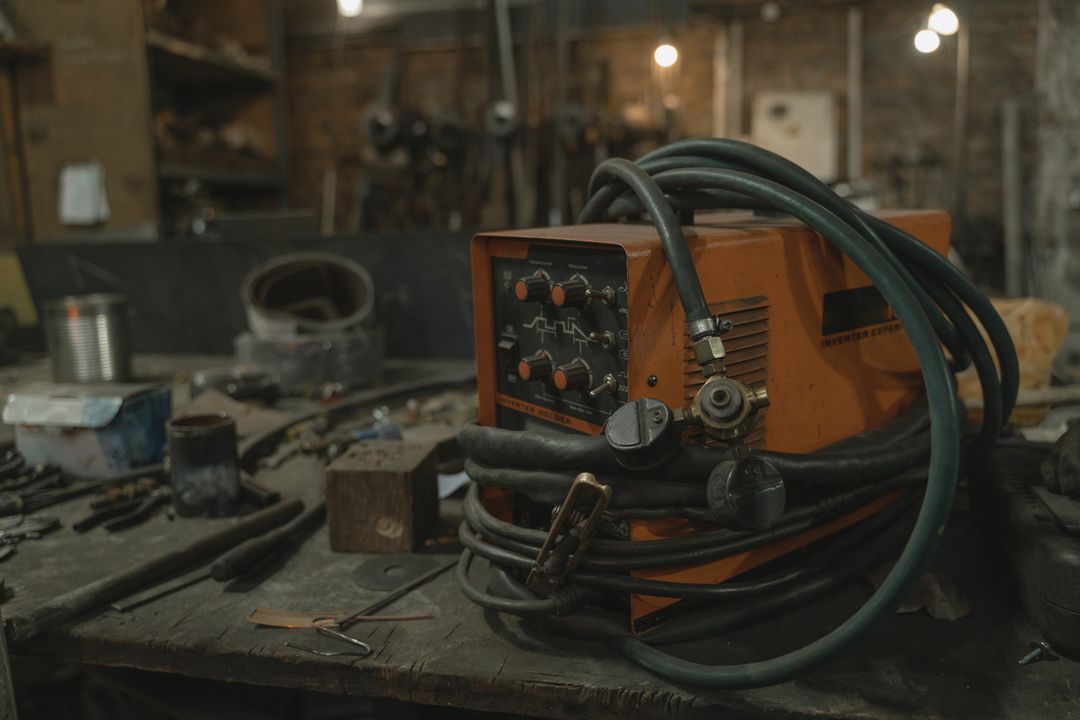
Look at the rating plate, usually on the back or side of the machine. For a single-phase inverter welder you will normally find the supply voltage (for example 230 V), and one or two input current figures, often marked I1max and I1eff. I1max is the highest current the machine draws from the supply, at its top setting. I1eff is an effective value taken at the rated duty cycle.
Multiply I1max by the supply voltage to get kVA at full output. A plate showing 32 amps at 230 volts means about 7.4 kVA. That is an illustrative example, not a Fuga rating, and your machine will differ. If the plate shows a different phase arrangement, such as 400 V three-phase, a single-phase generator will not do, and ask an electrician to confirm what supply you have and what the machine needs.
What Generator Size Does That Mean?
Take the supply kVA at your working current from the chart, then add a margin of about 25 percent. The margin covers voltage sag, the surge when you strike the arc, hot weather, an ageing engine and the fact that a generator should not run flat out for hours. The table gives planning figures for a single-phase machine. Ask the welder maker for the recommended minimum generator, because the manual outranks any rule of thumb.
| Welding current | Arc power | Supply kVA (with / without correction) | Generator rated kVA to look for |
|---|---|---|---|
| 80 A | about 1.9 kW | 2.3 / 3.1 | about 3 to 4 |
| 100 A | about 2.4 kW | 3.0 / 4.0 | about 4 to 5 |
| 120 A | about 3.0 kW | 3.7 / 5.0 | about 5 to 6.5 |
| 160 A | about 4.2 kW | 5.2 / 7.1 | about 6.5 to 9 |
Illustrative, calculated from the IEC 60974-1 conventional load voltage with 85 percent efficiency and a 25 percent margin. Always check the generator's rated or continuous output, not the maximum figure printed in large letters on the label. Maximum output can be held only briefly, and the continuous figure is often noticeably lower.
Does Altitude and Heat Change the Answer?
Yes, in both directions. A petrol or diesel engine makes less power in thin air, and Kenya's welding towns sit high: Nairobi is at roughly 1,700 metres and Eldoret above 2,000. Engine makers publish derating figures, often in the range of a few percent per 300 metres, so a generator that delivers its full rating at the coast may fall short in Eldoret. Treat the derating table in the generator manual as part of your sizing.
Heat hits the welder too. Duty cycle ratings are defined at 40 degrees Celsius ambient. In a tin-roofed workshop at midday, or welding in direct sun at the coast, the machine's real duty cycle is lower and its thermal protection trips sooner. A thermal trip is not a fault, it is the machine protecting itself, but on a generator it can look like one. Work in the shade and keep vents clear, as our guide to inverter overload and startup surge explains for other motor and electronic loads.
How Does Duty Cycle Help a Smaller Generator?
Duty cycle is the share of a ten-minute period the machine can weld at a given current before it must rest. At a 60 percent rating you weld about six minutes and rest four. A generator sees the full welding load only while the arc is burning, and much less in between, when you chip slag, reposition or change a rod.
This is why a generator that looks marginal on paper can handle light, intermittent work such as tacking a frame or a grille. It is also why the same generator overheats on continuous heavy beads, which keep the arc going and the engine near its limit. Match the generator to your longest continuous weld, not your average minute.
Can a Solar Inverter Run a Welding Machine?
A small one cannot, and a large one can but rarely makes sense. The inverters on our solar pages range from 300 watts up to 1500 watts, for example the 1500W inverter. Compare that with the 3 to 7 kVA a stick welder needs even at moderate current. A welder on a 1500 watt inverter will overload it almost as soon as the arc strikes, and an inverter that shuts down on overload is the best outcome. A badly protected one fails.
To weld from batteries you need an inverter whose continuous rating exceeds the welder's input kVA, with surge capacity above that, and a true sine output. Some inverter makers state in their manuals that welders are not supported, so read yours. Then comes the battery side, where the real cost sits. Five kilowatts through an inverter pulls a heavy current from the battery.
The energy is modest. Twenty minutes of actual arc at 5 kilowatts uses about 1.7 kilowatt-hours, which a decent lithium bank can supply. The hard part is the peak current: it demands thick cables, a battery bank that can deliver it without voltage collapse, and a 24 or 48 volt design. A kit built for lights, a TV and a fridge will not do. If you are weighing the options for site work, a generator is almost always the simpler and cheaper route unless the shop already runs a large solar system.
Which Power Source Fits Which Welding Job?
| Source | Where it fits | Watch out for |
|---|---|---|
| KPLC mains, on a circuit an electrician has checked | Fixed workshop, daily work | Breaker size, cable length and voltage sag at peak evening hours |
| Petrol or diesel generator sized with margin | Farm and site jobs without mains | Rated versus maximum kVA, altitude, fuel, noise, exhaust |
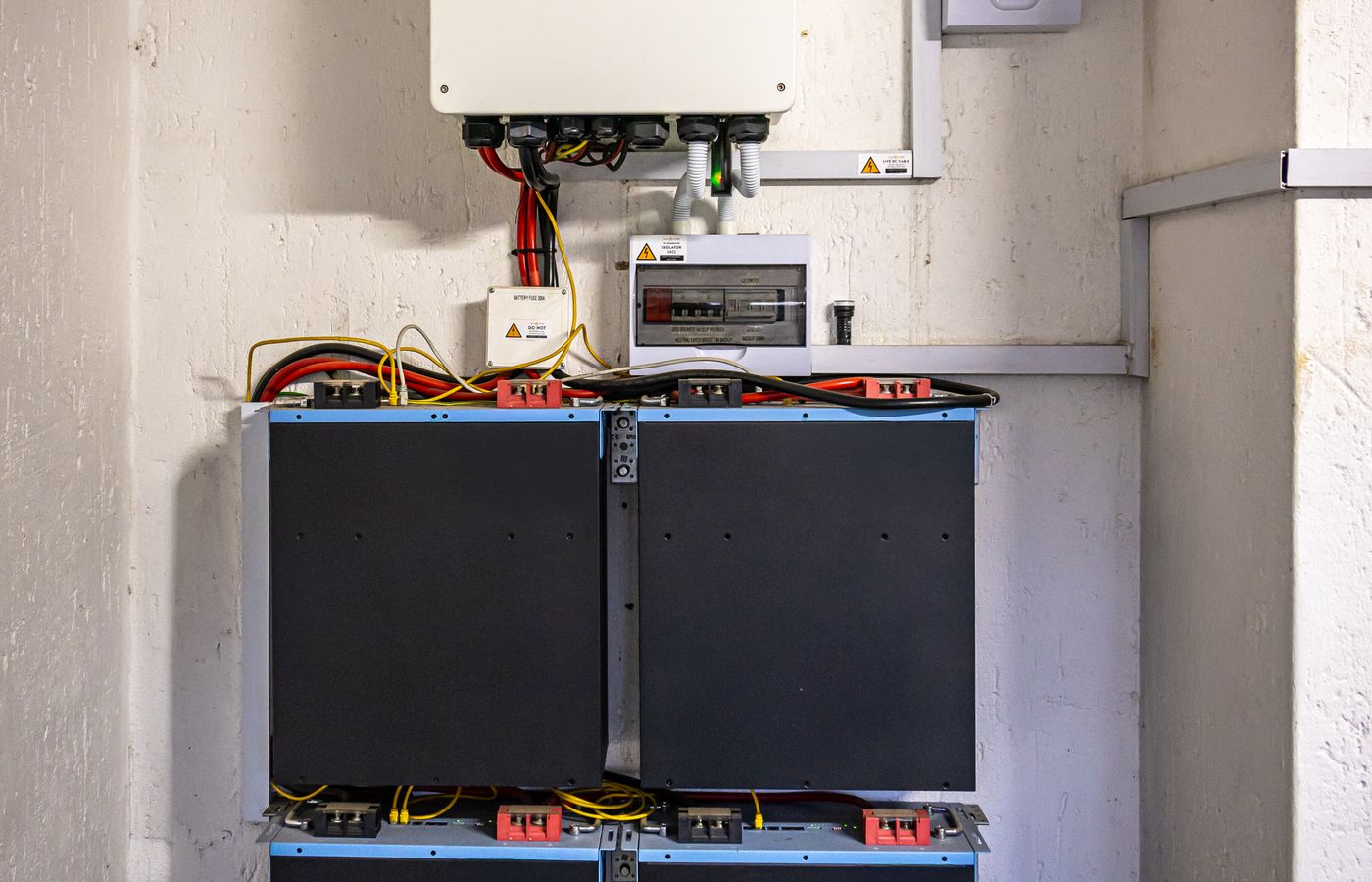
| Large true sine solar inverter with a 24 or 48 V bank | A shop that already has big solar | Surge rating, peak battery current, cable size, maker's warnings |
| Small inverter of 300 to 1500 W | Lights, phone chargers, small tools | Not for welding |
How Do I Connect a Welder to a Generator Safely?
Electrical connection work belongs to a licensed electrician. Never join a generator to a building's wiring by plugging a lead into a wall socket, because that back-feeds the line and can kill a KPLC lineman, and a proper changeover switch must be installed by a qualified person. Plug the welder directly into the generator's socket where it is rated for the current.
Use the shortest, thickest lead you can, and unroll it fully, since a coiled lead heats. Thin or long cables lose voltage, and a welder on a sagging supply gives a weak arc that sticks the rod. Our guide to extension cables and electrical safety explains how to choose cable and what overheating looks like.
Place the generator outside, on firm dry ground, never in a closed shed, because exhaust contains carbon monoxide. Let it cool before refuelling, and keep fuel away from the sparks and spatter around the weld. Fix the earth clamp to the work, not to the generator frame, and follow the generator maker's instructions for earthing.
Your Pre-Job Test Checklist
| Check | What good looks like |
|---|---|
| Rating plate | Voltage, phase and I1max written down and compared with the generator's rated output |
| Generator rating | Rated (continuous) kVA at least 25 percent above the welder's input at your working amps |
| Fuel and oil | Fresh fuel, oil topped up, air filter clean, enough fuel for the whole job |
| Leads | Short, thick, uncoiled, no cuts, plugs tight and cool to touch after ten minutes |
| Arc test | Steady arc at working current; engine speed holds when you strike |
| Voltage | Output within the welder's stated supply range while welding, read by an electrician or a competent person with a meter |
| Environment | Generator outside, in shade, dry ground, ventilation clear |
Key Equipment to Look At
Prices change, so we do not print them here. See each product page or the Fuga price list for current prices, stock and the arc welding machine listed there. Check its rating plate against the figures in this guide.
| Item | Where it fits |
|---|---|
| Generators | Site power for a welder; confirm the rated kVA and the single-phase or three-phase output before you buy |
| 1500W inverter (Solar Max) | Lights and small loads in a solar set-up, not an arc welder |
| Price list | Welding machine, rods and holders, with current prices |
Read the rating plate, work out the supply kVA at the amps you weld, add a margin, and test the set-up in your own yard first. For help matching a generator to your welder, see our generators, or WhatsApp 0716 961 018 with your welder's rating plate details and we will help you choose.
Key Takeaways
- A welder's amp setting is current at the electrode, not power from the wall, so read the rating plate for the input current.
- Work out supply kVA at the amps you really weld, then choose a generator with a rated (continuous) output at least 25 percent higher.
- Welding at a lower current with the right rod is the cheapest way to fit a smaller generator.
- Small solar inverters of 300 to 1500 watts are for lights and small loads, not arc welding.
- A big true sine inverter needs a 24 or 48 volt battery bank because the peak current is heavy.
- Test the whole set-up in your yard for ten minutes before a site job, and use a licensed electrician for any mains connection.
Frequently Asked Questions
What size generator do I need to run an arc welding machine?
Find the welder's maximum input current on its rating plate and multiply by the supply voltage to get kVA, then choose a generator whose rated (continuous) output is at least 25 percent above the kVA at the amps you actually weld. As a planning guide, a machine welding around 100 amps may need roughly 4 to 5 kVA and one at 160 amps roughly 6.5 to 9 kVA, depending on its design. Always check the welder maker's recommended minimum.
Can I run a welding machine on a 1000 watt or 1500 watt inverter?
No. A stick welder needs several kVA from the supply, so a 1000 or 1500 watt inverter will overload and shut down as soon as the arc strikes. These inverters suit lights, phone chargers and small loads.
Can I weld with solar power at all?
It is possible only with a large true sine inverter whose continuous and surge ratings exceed the welder's input, on a 24 or 48 volt battery bank with thick cables. The energy used is modest, but the peak battery current is high. For most workshops a correctly sized generator is simpler and cheaper.
Why does my welder keep tripping or the arc keep stuttering on the generator?
The usual causes are a generator that is too small, an engine that bogs when you strike the arc, thin or long leads that drop the voltage, and a welder that has overheated in hot weather. Drop the welding current, shorten and thicken the leads, work in shade and let the machine cool. If it continues, have an electrician check the generator's voltage under load.
Is it safe to plug my generator into a wall socket to power the workshop?
No. That back-feeds the line and can kill a KPLC worker, and it is dangerous wiring. Plug the welder into the generator's own socket, or have a licensed electrician fit a proper changeover switch.