
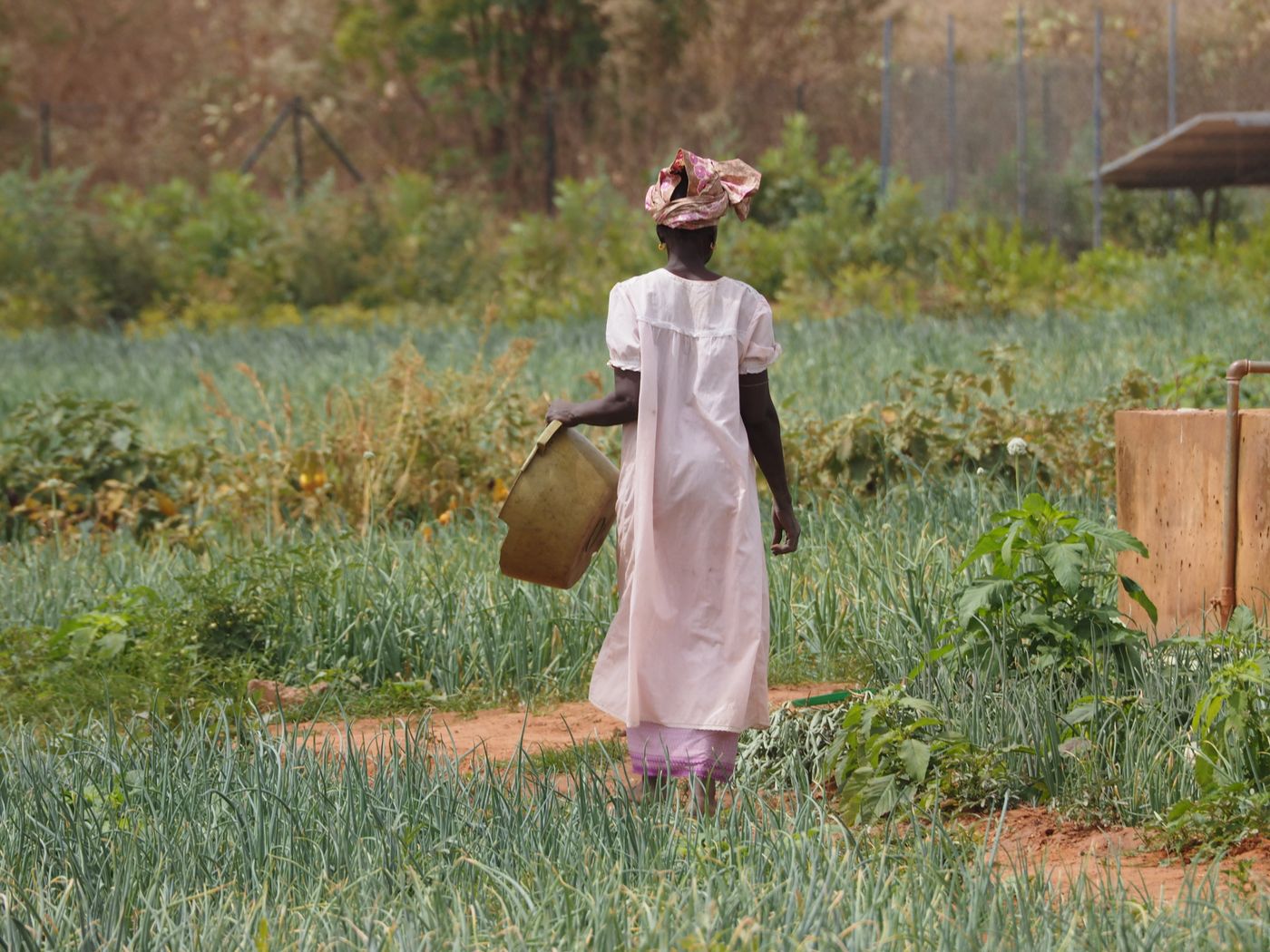
A good onion crop in Kenya comes from a clean raised nursery, seedlings transplanted at 6 to 8 weeks when they carry three to five well-formed leaves, a spacing of about 30 cm between rows and 8 to 10 cm between plants, light and frequent watering that rises through bulbing, and a firm stop to irrigation about three weeks before harvest. After that, the bulbs need two to three weeks of curing in dry, airy conditions before they are sold or stored.
Those steps come from the bulb onion training material of Kenya's Ministry of Agriculture, Livestock and Fisheries (the SHEP PLUS programme, prepared with JICA and the Horticultural Crops Directorate), and from the FAO crop water guidance for onion. This guide walks through them in the order you will do them, with the equipment that makes each step easier.
Onions punish shortcuts. A weak nursery gives uneven bulbs, a dry spell at the wrong stage gives split bulbs, and a wet finish or a rushed cure gives rot in the sack. Plan the whole calendar before the first seed is sown.
Will Onions Suit My Site and the Short Rains?
Check the basics first. The SHEP PLUS deck gives the ecological range for bulb onion in the table below. Most of Kenya's farming zones fall inside it, but the ranges are wide, so the variety you choose matters more than the county you farm in.
| Item | Figure | Source |
|---|---|---|
| Altitude | 0 to 1,900 m above sea level | MOALF/SHEP PLUS |
| Rainfall | 500 to 700 mm a year | MOALF/SHEP PLUS |
| Growing temperature | 15 to 30 degrees C | MOALF/SHEP PLUS |
| Soil | Fertile, well drained, pH 6.0 to 6.8 | MOALF/SHEP PLUS |
| Seed rate | 0.8 to 1.2 kg per acre | MOALF/SHEP PLUS |
| Nursery to transplanting | 6 to 8 weeks, or 3 to 5 well-formed leaves | MOALF/SHEP PLUS |
| Spacing | 30 cm between rows, 8 to 10 cm between plants (the deck's calendar uses 30 x 10 cm, about 133,000 plants an acre) | MOALF/SHEP PLUS |
| Time to harvest | 90 to 150 days after transplanting, depending on variety | MOALF/SHEP PLUS |
| Seasonal water need | 350 to 550 mm for optimum yield | FAO crop information, onion |
| Stop irrigating | 15 to 25 days before harvest | FAO crop information, onion |
| Field curing | 2 to 3 weeks, weather permitting | MOALF/SHEP PLUS |
The short rains matter in two ways. Seedlings transplanted into wet, warm soil establish quickly, but the cool, humid, poorly drained conditions that come with heavy rain are exactly what favour downy mildew, as the same Ministry material notes. And the deck is blunt about the finish: the last three weeks before harvest should be dry. Count back from your variety's maturity and ask whether that window is likely to fall in dry weather where you are. Your county agricultural officer will know the local pattern better than any national calendar.
Variety is the other big decision. The SHEP PLUS deck describes red varieties that mature in about 90 to 150 days, some with tolerance to purple blotch or downy mildew, and storage lives that range from poor, for a mild white type, to five or six months for some pungent reds. Buy certified seed from a registered dealer, and check the packet's date, because onion seed loses vigour quickly when it is old or badly stored.
How Do I Raise Strong Onion Seedlings?
Onions are almost always started in a nursery and transplanted. The Ministry's guidance is simple and worth following closely.
Make a raised bed no more than 1 m wide and any convenient length, so you can reach the middle from both sides without stepping on it. Mix in well-decomposed manure (the deck gives about 20 kg per square metre) and about 20 g of DAP or TSP fertiliser per square metre. Draw shallow rows about 15 cm apart, drill the seed thinly in furrows about 1 cm deep, cover lightly and spread a mulch over the bed.
Germination takes 7 to 10 days. Once the seedlings emerge, remove the mulch and keep the bed watered regularly, weeded and watched for damping-off and cutworms. Use a fine rose, not a heavy stream that washes the seed out. A watering can works for a small bed, and our guide to micro-sprinklers for a vegetable nursery shows how to automate it as the bed grows.
Some growers prefer to raise onions in trays instead of a bed, which keeps each seedling's roots together and makes counting easy. Our planting tray page has the options Fuga stocks, and our guide to seedling nursery trays and transplanting covers the routine of filling, sowing and hardening off.
When and How Should I Transplant?
Transplant at 6 to 8 weeks after sowing, or when the seedlings have three to five well-formed leaves and are about the thickness of a pencil, a rule of thumb that is also common in Kenyan grower guides.
Here is the routine the Ministry deck lays out:
- Prepare the field well, working in 10 to 16 tonnes an acre of well-decomposed manure or compost at least one to two weeks before transplanting.
- Water the nursery bed the day before so the seedlings lift with their roots intact, and irrigate the field well a day before planting.
- Pull seedlings carefully and cut off about half of the green tops to help them take off.
- Plant in shallow trenches about 2.5 to 3 cm deep, 30 cm between rows and 8 to 10 cm between plants.
- Transplant in the cool of early morning or late evening, and water straight away.
Spacing is a trade. Closer spacing gives more plants an acre, but crowded plants hold humidity in the canopy, which the Ministry material links to disease. Wider spacing gives bigger bulbs and easier weeding.
Transplanting is the labour peak, and the Ministry deck itself calls onion a profitable crop that needs a lot of labour at transplanting and weeding. A hand seedling transplanter can make planting holes quicker and more uniform on a larger plot, and a jembe and string line keep rows straight on a smaller one. See each product page for what it is and how it is used, and ask our team on WhatsApp if you want help matching it to your plot size.
How Much Water Do Onions Need Through Bulbing?
Onions have shallow roots, so they want light, frequent irrigation rather than rare soaking. The FAO crop information on onion gives a seasonal requirement of 350 to 550 mm for optimum yield, and the SHEP PLUS deck adds the stage pattern: avoid excess moisture during early growth, give a substantial amount of water during bulbing, then reduce and stop watering towards maturity.
FAO suggests irrigating when roughly a quarter of the available water in the top 30 cm of soil is used up, which in practice means every two to four days in many conditions, with the exact interval set by soil, weather and crop stage. Lighter soils need more frequent but smaller applications, and the SHEP PLUS deck says the amount should increase as plants and roots grow.
Stress at the wrong moment has a price. The Ministry material warns that drought stress causes splitting and double or multiple bulbs, and that water-stressed plants are more attractive to thrips. At the other end, watering right up to harvest keeps the necks green and the bulbs soft. FAO says irrigation can be stopped 15 to 25 days before harvest, which agrees with the Ministry's advice that the last three weeks should be dry.
For a small plot, a watering can or a hose with a rose is enough, if somebody does it on time. For more than a bed or two, a sprinkler line or a drip kit saves hours. Our sprinklers and irrigation kits pages list what Fuga stocks, and our guide to drip irrigation versus sprinklers compares the two. One caution: overhead sprinklers wet the leaves, and in cool, humid weather wet foliage helps mildew and purple blotch. Water early in the day so the leaves dry before night, and read our irrigation scheduling guide for a simple way to track how much your soil is holding.
How Should I Feed Onions Without Overdoing It?
Onions respond well to well-decomposed manure, and the Ministry deck recommends top-dressing with CAN in two splits, 40 kg an acre at 30 days after transplanting and 80 kg an acre at 45 days, placed in a band beside the row rather than broadcast. It adds two warnings: finish top-dressing before bulbing begins, and remember that too much nitrogen gives thick necks.
Thick necks matter because they store poorly and are sorted out at grading. Take a soil test before you buy fertiliser, because it tells you what the field actually lacks, and treat all rates as a starting point.
Which Pests and Diseases Should I Watch For?
The Ministry deck names two major pests and five major diseases of bulb onion in Kenya. In general terms:
- Onion thrips are tiny sap-feeders that leave sunken silvery patches on the leaves. Keep plants well watered, keep the plot weed-free and remove badly infested plants.
- Onion fly maggots tunnel into the roots and bulbs. Rotate crops, use only well-decomposed manure and plough in crop residues soon after harvest.
- Downy mildew and purple blotch are fungal leaf diseases that thrive in cool, humid, poorly drained conditions. Rotation, field hygiene, recommended spacing, good drainage and tolerant varieties all help.
- Neck rot starts after harvest in bulbs that were stored wet or with thick necks. Rotate for at least three years and dry the bulbs thoroughly.
If you decide to spray, involve an agronomist or agro-vet. Registered products change, rates depend on the product, and every product has a pre-harvest interval, which is the number of days you must wait before harvesting. Never guess a dose. Wear gloves, a mask and eye protection, and clean the sprayer afterwards, following our knapsack sprayer safety and cleaning routine.
When Is the Crop Ready, and How Do I Cure It?
Bulb onions are ready when the leaves collapse, or when about 75 percent of the tops have dried and fallen over, according to the SHEP PLUS deck. Lift the bulbs on a dry day and trim the roots.
Curing dries the neck and outer leaves so the bulb keeps longer and resists rot. The Ministry describes two routes:
- Field curing when harvest falls in dry weather: lay the onions in rows with the leaves partly covering the bulbs to prevent sunburn, and leave them until the necks and outer skins are completely dry and papery. This can take 2 to 3 weeks.
- Protected curing in a warm, dry, well-ventilated place away from sun and rain: remove excess soil, trim the foliage to leave about 2.5 cm at the neck, and spread the bulbs in a single layer on trays, or tie the tops in bunches and hang them from a pole in airy shade.
The deck adds that good ventilation matters more than sun for drying, that you should store only bulbs with dry, thin necks, and that you should sort out any bulbs showing rot. Grade into large, medium and small, discard doubles and bolted bulbs, and keep the bulbs in nets on shelves in a dry, ventilated, dark store, since darkness reduces sprouting.
Your Onion Season Checklist
| Stage | Check |
|---|---|
| Before sowing | Certified seed, a clean raised bed, manure and starter fertiliser, a dry window planned for the last three weeks |
| Nursery | Thin drills, mulch until emergence, regular light watering, weeds and damping-off watched |
| Transplanting | 6 to 8 weeks or 3 to 5 leaves, tops trimmed by half, cool hours, 30 cm by 8 to 10 cm |
| Growing | Light, frequent water, CAN in two bands before bulbing, scouting twice a week |
| Bulbing | Do not let the crop dry out; keep weeds down; expose bulbs gently when weeding |
| Finishing | Taper and stop water 15 to 25 days before harvest |
| After harvest | Trim, cure 2 to 3 weeks, sort, grade, store in nets in a dark, airy place |
Onion Equipment to Look At
Prices change, so we do not print them here. See each product page or the Fuga price list for current prices and stock.
| Item | Where it fits |
|---|---|
| Planting tray | Raising seedlings in trays instead of, or beside, a nursery bed |
| Seedling transplanter | Setting seedlings into the field |
| Sprinklers | Nursery and field watering on small and medium plots |
| Irrigation kits | Regular watering through bulbing without carrying water by hand |
| Watering can | Gentle watering of nursery beds and young seedlings |
Plan the calendar backwards from a dry finish, raise seedlings carefully, water lightly and often, stop watering on time and cure properly. See our farm equipment range and water equipment pages, or WhatsApp 0716 961 018 with your plot size and water source and we will help you choose.
Key Takeaways
- Transplant onion seedlings at 6 to 8 weeks, or at 3 to 5 well-formed leaves, in rows 30 cm apart with 8 to 10 cm between plants.
- Water lightly and often, give the most water during bulbing, then taper and stop 15 to 25 days before harvest.
- Top-dress with CAN in two bands, at 30 and 45 days after transplanting, and finish before bulbing starts.
- Water stress causes split and double bulbs and invites thrips, while too much nitrogen makes thick necks that store badly.
- Harvest when about 75 percent of the tops have fallen, then cure for 2 to 3 weeks in dry, airy conditions.
- Plan the calendar backwards so the last three weeks before harvest fall in dry weather.
Frequently Asked Questions
When should I transplant onion seedlings in Kenya?
Transplant at 6 to 8 weeks after sowing, or when the seedlings have 3 to 5 well-formed leaves, according to the Ministry of Agriculture's SHEP PLUS training material. Do it in the cool of early morning or late evening and water straight away.
What spacing should I use for bulb onions?
The Ministry deck recommends 30 cm between rows and 8 to 10 cm between plants, and its planting calendar uses 30 by 10 cm, about 133,000 plants an acre. Closer spacing gives more plants, but wider spacing gives bigger bulbs and easier weeding.
How often should I water onions, and when do I stop?
Onions want light, frequent watering, with the most water during bulbing. FAO says irrigation can stop 15 to 25 days before harvest, which matches the Ministry's advice that the last three weeks should be dry.
How long should I cure onions before storing them?
The Ministry says field curing can take 2 to 3 weeks, until the necks and outer skins are completely dry and papery. Cure in dry, airy conditions away from rain and direct sun, then store only bulbs with thin, dry necks.
Why are my onions splitting or forming double bulbs?
The Ministry material links splitting and double or multiple bulbs to drought stress. Keep the soil evenly moist through bulbing and do not let the plot dry out between waterings.


