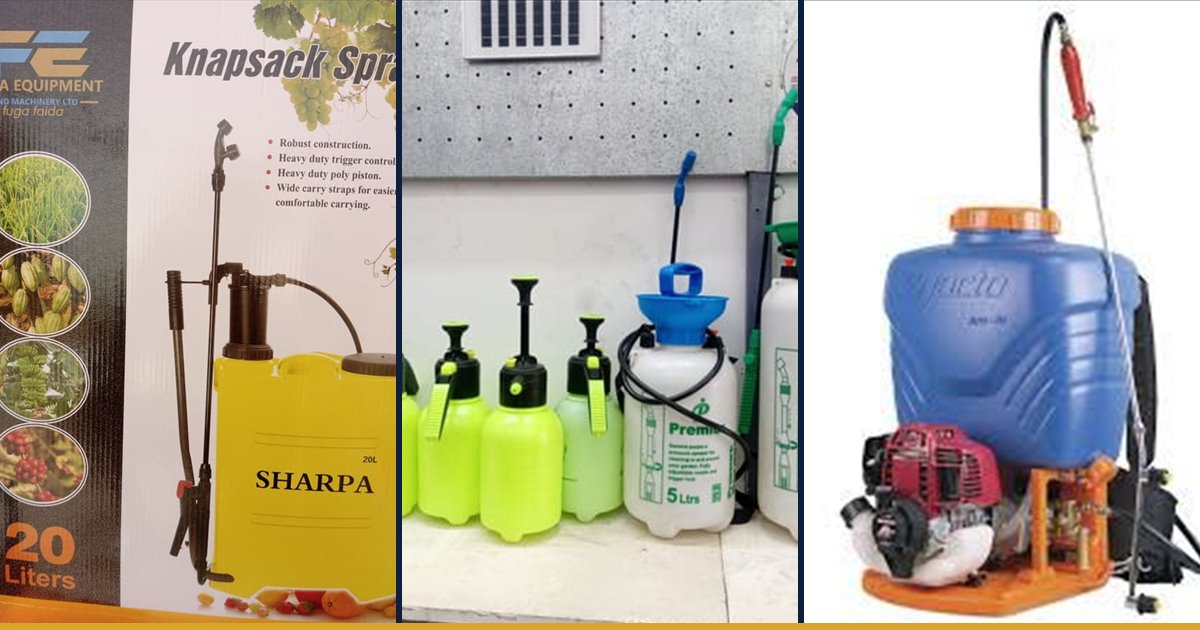
The knapsack sprayer is the most widely used piece of crop protection equipment on Kenyan farms, and the one most often used carelessly. It is common to see a sprayer mixed by hand next to a water point, carried on a bare back that is wet with drift, rinsed in the stream, and then used the next week for a different crop with a different chemical. Each of those habits costs something: chemical on the skin, a damaged crop, a poisoned water source or a spray that simply does not work.
We already have guides to choosing a knapsack sprayer, calibrating it and maintaining and repairing it. This article takes a different angle: a safe working routine for a whole spraying day, from choosing the right sprayer for the job through mixing, spraying, cleaning out and disposing of empty containers. It is written for the short rains, when most farms spray more often than at any other time of year.
The Right Sprayer for the Job
Safety starts with a sprayer that is suited to the work and in good condition. A leaking tank, a dripping trigger or a worn harness puts chemical straight onto the person carrying it.
| Type | Best for | Safety point |
|---|---|---|
| Manual lever knapsack | Most field crops and vegetables on small and medium plots | Steady pumping keeps pressure even; check the lid seal and harness |
| Motorised knapsack | Larger areas, tall crops and orchards | Finer droplets drift further; noise and fumes need protection |
| Hand pressure sprayers | Kitchen gardens, nurseries, spot treatments | Release pressure before opening; small size tempts people to skip gloves |
| Stirrup sprayer | Livestock spraying and small jobs with a bucket | Keep the bucket covered and away from children and animals |
Before every spraying day, fill the sprayer with clean water and test it. Look for leaks at the lid, tank seams, hose joints and trigger valve, check the harness straps, and spray onto dry concrete to see whether the nozzle gives an even pattern. Fix leaks before you add any chemical; sprayer spare kits and new carry straps cost little compared with a season of chemical running down your back.
Calibrate So the Dose Is Right
Every label rate assumes you know how much spray you put on each area. Most farmers do not, so they either under-dose, and the spray fails, or over-dose, which wastes money, raises residues and increases the operator's exposure. Calibration takes about fifteen minutes with water.
Once you know how many litres your sprayer puts out per hectare, or per acre (divide the per hectare figure by about 2.5), you can work out how much product goes into each tankful to match the label rate. If the result is far from the volume your agronomist recommends for the crop, change your walking speed or the nozzle, not the product rate. Our full calibration guide works through the arithmetic, and our nozzle selection guide explains which nozzle suits which job.
Protective Clothing That Actually Protects
Most pesticide exposure comes through the skin, especially the hands, and through the eyes, rather than through breathing. That is why gloves and eye protection matter more than anything else on the list. The label of each product tells you the minimum protection it needs; treat that as a legal and safety requirement, not a suggestion.
| Item | Why it matters | Common mistake |
|---|---|---|
| Chemical resistant gloves | Hands touch the concentrate, the lid and the trigger | Cotton or leather gloves, which soak up chemical and hold it against the skin |
| Eye protection | Splashes during mixing reach the eyes first | Skipping it because the job is short |
| Long sleeves and trousers | Drift and leaks wet arms and legs | Wearing the same unwashed clothes every day |
| Boots | Feet walk through wet, sprayed crop | Open shoes or bare feet |
| Mask or respirator where the label requires it | Fine droplets and dust can be inhaled | A loose cloth over the face that gets soaked |
Wear trousers outside the boots so drips run off instead of into them, and gloves under the sleeves when spraying low, over the sleeves when spraying upwards into trees. Replace gloves that are torn or stiff. Our guide to farm and workshop safety equipment covers protective gear more broadly.
Mixing and Filling: The Most Dangerous Ten Minutes
The person mixing handles the product at full strength. A splash of concentrate carries far more chemical than hours of light drift from a diluted spray. Take the mixing step as seriously as the spraying itself.
- Read the label first, including the protective clothing it requires, the rate and any warnings about mixing with other products.
- Dress for the concentrate. Chemical resistant gloves, eye protection, long sleeves and trousers and boots as a minimum, plus an apron and a suitable mask where the label requires them.
- Choose the place. Mix in the open air on level ground, well away from wells, boreholes, streams, the kitchen and where children play. Never fill the sprayer by dipping it into a stream or dam.
- Use a measure, not a guess. Keep a marked measuring cup and stirring stick for chemicals only, and never use household cups or spoons.
- Half fill, add, top up. Put about half the water in the tank, add the measured product through the strainer, then top up with water and close the lid firmly.
- Mix only what you need. Calibration tells you how much spray the job requires. Leftover mixed spray is a disposal problem.
Spraying: Protect Yourself, Others and the Crop
Most exposure during spraying comes from drift, leaks and walking into the spray. These habits cut all three.
- Spray in calm conditions, usually early morning or late afternoon. Stop if the wind picks up.
- Walk so that the wind carries spray away from you. Do not walk forward into the cloud you have just sprayed.
- Keep the nozzle low and close to the target. A spray guard on the lance helps keep herbicide on weeds and off the crop.
- Keep other people and animals out of the field while spraying and for the re-entry period on the label.
- Do not eat, drink, smoke or chew while spraying. Wash hands and face before any break.
- Never blow through a blocked nozzle with your mouth. Clean it with water and a soft brush, or swap in a spare nozzle.
- Avoid spraying onto flowering crops when bees are active.
Cleaning Out: The Step Everyone Skips
A sprayer put away dirty carries chemical residue into the next job, corrodes seals and blocks the nozzle. Clean it the same day, while residues are still wet and easy to remove, and keep your protective clothing on while you do it.
Rinse with clean water, about a tenth to a fifth of the tank each time, shaking or pumping it through the hose and lance, and spray the rinse water over the field you have just treated, at a spot that can take a little extra. That way the rinse water does useful work instead of collecting in a puddle. Remove the nozzle, the trigger filter and the tank strainer, and scrub them in a bucket of clean water with a soft brush. Wash the outside of the sprayer, then leave it to dry with the lid open, upside down, out of the sun.
Wash yourself and your clothes too. Wash gloves on the outside before taking them off, then wash your hands, face and any exposed skin with soap. Wash spray clothes the same day, separately from family laundry.
Empty Containers: Rinse, Puncture, Never Burn
Empty pesticide containers are not empty. Triple rinsing at the time of mixing removes most of what is left. A John Deere report on spraying in Kenya notes that triple rinsing removes more than 99 percent of residue and that spray service providers are working with CropLife Kenya on collection points for rinsed containers.
- Drain the container into the spray tank and let it drip for half a minute.
- Fill it about a tenth to a quarter with clean water, close the cap and shake well.
- Pour the rinse water into the spray tank, as part of the mix.
- Repeat twice more.
- Puncture or crush the container so it cannot be reused, and store it safely until you can take it to a collection point.
Never use an empty chemical container to carry water, milk, cooking oil or food, and never give one away for that use. The FAO warns against burning or burying containers, which harms both people and the environment. Ask your agro-dealer or county agriculture office where the nearest container collection point is.
Storage Between Jobs
Store the clean, dry sprayer, its spare nozzles and your protective clothing in a locked, ventilated place, away from food, feed, seed and children. Keep chemicals in their original labelled containers, never decanted into drink bottles. Our guide to storing and handling agrochemicals covers store layout and spill kits. Before the long dry season, follow the storage steps in our maintenance guide so the seals do not dry and crack.
Your Spraying Day Checklist
| Stage | Check |
|---|---|
| Before | Right sprayer for the job; leak test with water; calibrated; label read |
| Mixing | Protective clothing on; away from water and homes; measured, not guessed |
| Spraying | Calm weather; walking away from drift; no eating or smoking; people and animals kept out |
| Cleaning | Same day; rinse sprayed on the field; nozzle and filters cleaned; sprayer dried open |
| Containers | Triple rinsed into the tank; punctured; taken to a collection point; never reused |
| Person | Gloves washed before removal; skin washed; clothes washed separately |
Sprayers and Spares From Fuga
Fuga stocks manual knapsack sprayers, motorised knapsack sprayers, hand pressure sprayers, and the parts that keep them safe to use: spare kits, nozzles, complete nozzle lines, knapsack lines, spray guards and carry straps. For current prices and stock, check the price list or the full farm equipment range, or WhatsApp 0716 961 018 and we will help you choose the right sprayer and spares.
Key Takeaways
- Leak test the sprayer with water before every job and fix drips; a leaking tank puts chemical on your back.
- Keep a separate, clearly marked sprayer for herbicides only.
- Calibrate on 100 square metres: litres used multiplied by 100 gives litres per hectare.
- Mixing concentrate is the riskiest step: full protective clothing, away from water and homes, measured not guessed.
- Clean out the same day and spray the rinse water over the treated field, never in a stream or near the house.
- Triple rinse empty containers into the tank, puncture them and take them to a collection point; never burn, bury or reuse them.
Frequently Asked Questions
How do I calibrate a knapsack sprayer?
Mark out 10 m by 10 m (100 square metres), fill the sprayer with clean water to a marked level, spray the square at your normal walking speed and pressure, then measure how much water it takes to refill to the mark. Multiply that figure by 100 to get litres per hectare.
How should I clean a knapsack sprayer after use?
Clean it the same day. Spray out the last of the mix, rinse the tank at least twice with clean water and spray the rinse over the treated field, clean the nozzle, filter and strainer, wash the outside, then dry it with the lid open and store it locked away.
Can I use the same sprayer for herbicides and insecticides?
It is safer not to. Traces of some herbicides left in a tank can damage a sensitive crop sprayed later, even after rinsing. Keep one sprayer marked for herbicide only.
What should I do if someone feels sick after spraying?
Stop work, move them to fresh air, remove contaminated clothing, wash the skin with plenty of clean water, and take them to the nearest health facility with the product label.
How do I dispose of empty pesticide containers?
Triple rinse them into the spray tank when mixing, puncture or crush them so they cannot be reused, and take them to a collection point. Ask your agro-dealer or county agriculture office where the nearest one is. Never burn or bury them.