Ask a dairy farmer how much milk the farm produces and you will usually get a quick answer: the number on the cooperative slip, or the litres the hawker collected this morning. Ask how much each cow gave yesterday, and how that compares with last week, and most farmers have to guess. The herd total hides everything that matters. A cow quietly losing two litres to early mastitis, a heifer that never reached her potential, an old cow eating dairy meal she no longer pays back: none of it shows in the total until the money is already lost.
Milk recording simply means measuring and writing down each cow's yield at every milking. It needs no machine and no software, just a graduated bucket or measuring can, a pen and a sheet of paper on the wall, and about a minute per cow. In return it turns the dairy from a guessing business into one you can manage.
This guide explains how to measure milk accurately on a small farm, what to record, and how to read the numbers to catch sick cows early, feed better, decide which cows to keep, and check that every litre you produce is paid for. Figures on lactation and dry periods below are general guidance; your vet or livestock officer can advise for your herd.
Why the Herd Total Is Not Enough
Cows in the same unit are never equal. Even with the same feed and the same care, some cows give far more than others, and each cow's yield rises and falls through her lactation. A herd total can stay flat while one cow drops sharply and another rises, hiding a problem in the first and success in the second.
Individual records answer the questions that decide profit. Is this cow sick? Is she being fed for the milk she actually gives? Is she worth breeding from, or should her place go to a better heifer? Is the milk leaving the farm the same amount the buyer pays for? None of those can be answered from a cooperative slip.
Measuring Milk Accurately With Simple Equipment
You can measure milk by volume or by weight. Both work; the key is to do it the same way every time.
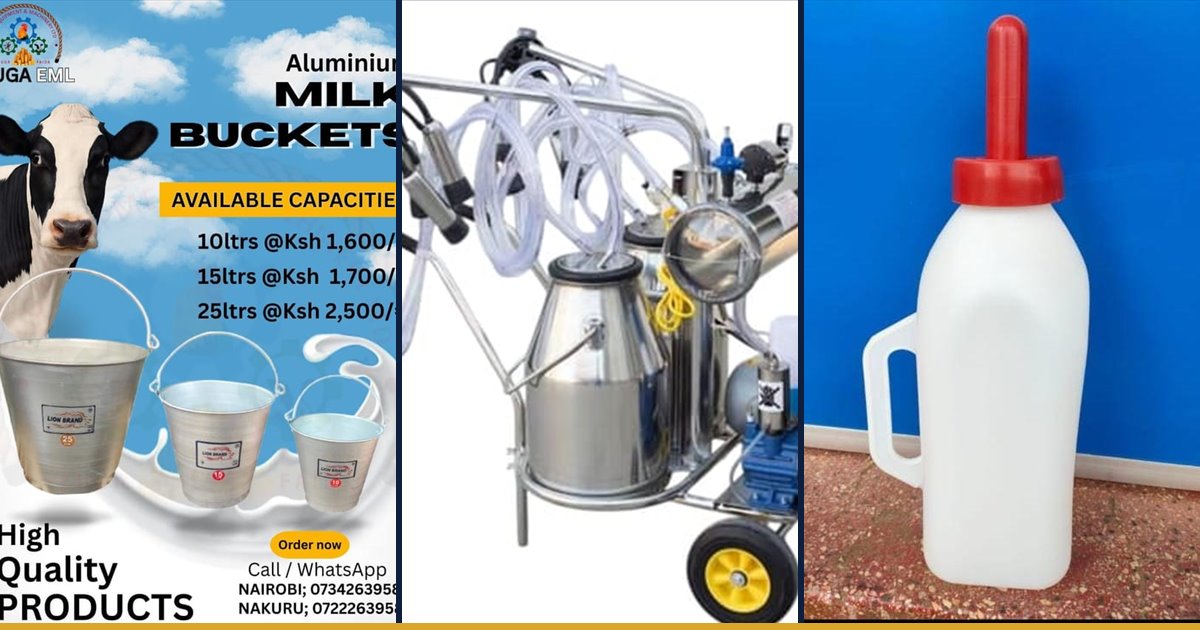
By volume: milk each cow into a graduated milking bucket, or pour her milk through a measuring can, and read the litres. Read with the bucket standing level and wait for the froth to settle a little, because froth makes milk look like more than it is. A one litre measuring can is handy for checking part-litres and for measuring out calf milk.
By weight: hang the bucket from a spring or digital scale, subtract the weight of the empty bucket, and record kilogrammes. Weighing is not fooled by froth, which makes it more consistent. Whole milk is slightly heavier than water; its density is commonly given as around 1.03 kilogrammes per litre, so to convert kilogrammes to litres, divide by about 1.03. For farm records, it is fine to record kilogrammes and keep to that unit. Our weighing scales guide explains how to check a scale against a known weight.
If you machine milk, many bucket units have graduations on the bucket, which makes recording easy. Whatever the method, measure every cow at every milking, morning and evening, and add the two to get her daily yield.
What to Write Down
Keep it simple enough that it actually gets done. A sheet pinned on the wall of the milking area, one row per cow and one column per day, is enough for most smallholdings. At the end of the month, copy the totals into a notebook or a phone spreadsheet so you can compare months and lactations.
| Record | Why it matters |
|---|---|
| Cow name or ear tag number | Ties every figure to one animal; ear tags avoid mix-ups between similar cows. |
| Morning and evening yield | Daily total per cow; a fall at one milking is often the first sign of trouble. |
| Calving date | Tells you where she is in her lactation and when to dry her off. |
| Heats, service dates and bull or semen used | Plans calving and drying off; shows cows that are slow to conceive. |
| Treatments and withdrawal periods | Milk from treated cows must be kept out of the sale milk until the withdrawal period on the label has passed. |
| Milk delivered and paid for | Lets you reconcile what left the farm with the buyer's slip. |
Reading the Lactation Curve
A cow's milk yield follows a fairly predictable shape after calving. Yield rises for the first weeks, peaks, commonly somewhere around six to eight weeks after calving, then declines slowly until she is dried off. The standard reference length for a lactation used in recording schemes is 305 days, and a dry period of around 60 days before the next calving is commonly recommended, though your vet may advise differently for a particular cow.
Knowing the shape helps you interpret the numbers. A slow decline in late lactation is normal. A sudden fall at any stage is not, and calls for a closer look. A low peak usually means a low lactation overall, because cows rarely make up later for a poor start, which is why feeding and comfort in the first weeks after calving matter so much.
Four Decisions Your Records Will Improve
1. Catching sick cows early
A cow that drops several litres overnight, or whose evening yield falls while her morning yield holds, needs looking at that day. Check her udder and milk for clots and heat, her feet, her appetite and her temperature, and call your vet if anything is wrong. Our guides to milking hygiene and mastitis and to dairy cows in the wet season list the usual causes during the rains.
2. Feeding to yield
Concentrate is the most expensive part of most rations. Records let you give more dairy meal to the cows producing more and less to late-lactation cows, instead of the same scoop for everyone. The right amount per litre depends on your forage and the meal, so agree a feeding rule with your livestock officer or feed adviser. Our article on mixing dairy meal at home covers the cost side.
3. Deciding which cows to keep
Over a full lactation, records show which cows give the most milk for the feed they eat, which have short lactations, and which take many services to get in calf. Breed replacements from your best performers and plan to replace the cows that consistently sit at the bottom. If you want official, registered production records, for example to sell breeding stock, ask about recording schemes run with breed societies and the Kenya Stud Book.
4. Checking every litre is paid for
Add up what each cow gave, subtract milk fed to calves and used at home, and compare the result with what the cooperative or buyer recorded. A small, regular gap may come from froth and measuring differences. A large or growing gap is worth investigating, whether it comes from spillage, a measuring problem at the collection point, or milk going missing on the way. Keep your own delivery record alongside the buyer's slip so you can raise a difference with facts.
What the Short Rains Will Show in Your Records
October and November are a good time to start recording, because the season changes the numbers in ways worth seeing. Fresh napier and grass after the first rains often lift yields for a few weeks, especially in herds that went through a lean dry spell. A record shows you which cows respond and by how much, which tells you something about how short of feed they were before.
The rains also bring the things that pull yields down: mud and lameness, wet bedding and mastitis, mouldy feed in damp stores, and fresh forage so wet that cows cannot eat enough dry matter to keep up. In a herd total these effects cancel out and hide each other. Cow by cow, they show clearly. If one cow falls while the rest rise, she is the one to examine, and if several fall together after a change of feed, the feed is the first suspect.
Goats, Small Herds and Phones
Recording works the same way for dairy goats; the volumes are smaller, so use a measuring can or a kitchen scale and record to the nearest tenth of a litre or 100 grammes. With only one or two cows, the habit matters even more, because each animal is a large share of the farm's income and a missed illness costs proportionally more.
If you prefer a phone, a simple spreadsheet with one row per milking works well, and several dairy record apps are offered in Kenya by cooperatives, processors and private companies. Choose whatever you will actually keep up. Paper on the wall has one advantage: whoever milks sees yesterday's figure for that cow while standing next to her, and notices a fall straight away.
Making It a Habit
The commonest reason recording fails is that it stops after a few weeks. Make it part of milking, not an extra job: keep the sheet and pen at the milking point, give each cow her own row in the order she is milked, and write the figure before you move to the next cow. If a worker milks, show them why the numbers matter and look at the sheet with them each week. Once a fall in a cow's figures has caught a case of mastitis early, nobody needs convincing again.
Recording Equipment, With Prices
These prices are from the Fuga price list at the time of writing; check the site for current prices and confirm stock before you travel.
| Item | Stock code | Price |
|---|---|---|
| Milk measuring can, 1.0 litre | 6515 | KSh 850 |
| 10 litre milking bucket (Lions brand) | 6535 | KSh 1,800 |
| 15 litre stainless steel milking bucket | 6502 | KSh 2,890 |
| 30 kg weighing scale | 6527 | KSh 4,500 |
| Teat dip cup | 6820 | KSh 350 |
Measure every cow at every milking, write it down before the next cow, and compare each day with the last: a graduated milking bucket or a weighing scale, a pen and a sheet on the wall are all it takes. For buckets, measuring cans and scales, talk to any Fuga branch in Eldoret, Nakuru or Nairobi, or WhatsApp 0716 961 018.
Key Takeaways
- The herd total hides sick cows, underfed cows and unprofitable cows; only a record per cow shows them.
- Measure every cow at every milking with a graduated bucket, a measuring can or a scale, the same way every time, and write it down before the next cow.
- Weighing is not fooled by froth; milk density is commonly given as about 1.03 kg per litre if you need to convert.
- Yield typically peaks some weeks after calving and then declines slowly; a sudden fall at any stage is a reason to check the cow that day.
- Use records to feed dairy meal to yield, choose which cows to breed from and replace, and reconcile your deliveries with the buyer's slip.
- The short rains change yields in both directions, which makes October a good month to start recording.
Frequently Asked Questions
What is milk recording?
Measuring and writing down each cow's milk yield at every milking, so you know her daily yield and how it changes over her lactation. On a small farm it needs only a graduated bucket or measuring can, or a scale, plus a sheet of paper and a pen.
Should I measure milk in litres or kilogrammes?
Either works if you are consistent. Weighing is more accurate because froth does not affect it. Milk density is commonly given as about 1.03 kilogrammes per litre, so divide kilogrammes by about 1.03 to get litres. Most buyers pay by the litre.
When does a dairy cow give the most milk?
Yield usually rises after calving and peaks commonly around six to eight weeks into the lactation, then declines slowly until she is dried off. Breed, feeding, health and weather all change the exact timing and height of the peak.
How do milk records help detect mastitis?
Mastitis and most other illnesses cut milk yield, often before other signs are obvious. A cow whose yield drops sharply from one milking or one day to the next should have her udder, milk, feet and temperature checked that day, and your vet called if anything is wrong.
How long should a lactation be?
Recording schemes use 305 days as the standard lactation length, and a dry period of around 60 days before the next calving is commonly recommended. Your vet may advise differently for a particular cow.