Every month the same lorry drops the same bags at the gate, and every month a larger share of the milk cheque goes straight back out through that gate to pay for them. At some point a dairy farmer stops and does the arithmetic in their head: the maize germ, the pollard and the cotton cake inside those bags are all sold in the same town they came from. Why not buy the parts and mix the feed here?
It is a fair question, and for many Kenyan herds home-mixing is the right answer. It is also the question that ruins more cows than almost any other, because the gap between a good idea and a good ration is a set of machines, a supplier you can trust, and a discipline that does not slip on a busy morning.
This guide is about that gap. It covers when home-mixing actually pays off against buying compounded feed, the equipment the job needs, how to source ingredients without gambling on quality, and why the one thing you should never mix yourself is the formula. Keep the recipe with a nutritionist. Keep the machinery, the method and the money on your side of the fence.
The Real Question Is Not Cheaper, It Is Control
Farmers usually start down this road to save money, and saving is real, but it is not the whole prize. What home-mixing actually buys you is control over three things a sealed bag hides.
The first is composition. When you buy the ingredients yourself you know exactly what went in, in what state, and how fresh it was. The second is consistency: a bag bought this month and a bag bought next month can quietly differ, and a cow's rumen reads every change as a small shock. The third is cash flow timing, because you can buy energy and protein sources when they are plentiful just after harvest and store them, rather than paying a premium every single month.
None of that is free. In exchange for control you take on the work that a feed mill was doing for you: grinding, weighing, blending to a target, and keeping records that let you repeat a good batch. Compounded feed is not the enemy here. It is a service, and the honest way to decide is to ask whether you can perform that service, at your scale, more cheaply and more reliably than the mill can.
Reframe the decision. The question is not "is bought feed a rip off?" It is "can my farm reproduce a mill's grinding, weighing and blending, batch after batch, at a lower true cost than the bag?" If the answer is yes, home-mix. If it is only sometimes yes, you are not ready.
When Home-Mixing Pays, and When It Quietly Loses
Home-mixing has a break-even scale, and it is set less by the price of ingredients than by how much feed you move each month. Machines, storage and your own labour are largely fixed costs. Spread over two cows they are ruinous per kilogram. Spread over twenty, or over a small group of farmers buying together, they almost disappear into the background.
Below that scale the maths is brutal. A mill buys maize germ by the truckload, grinds with three-phase power and blends to a lab-checked target, and it sells the result with a margin that is still smaller than the inefficiency of a two-cow farmer doing all of that by hand. That is why the smallest herds usually lose money home-mixing even when every ingredient looks cheaper on the receipt.
So the honest test has four parts. Home-mixing tends to pay when your volume is high enough to absorb the equipment, when you have reliable access to good ingredients at fair prices, when you have somewhere dry and secure to store them, and when someone on the farm will actually keep the discipline every day. If two or more of those are shaky, the bag is still your friend, and there is no shame in that. Many excellent dairies buy compounded feed for exactly that reason. Our companion piece on whether making your own feed pays off works through the same break-even logic in more detail.
The Equipment: A Chaff Cutter, a Mixer, and Sometimes a Pelletizer
Home-mixing is a small production line, and each machine does one job the next one depends on. Buy them in the order the work flows, not the order a catalogue lists them.
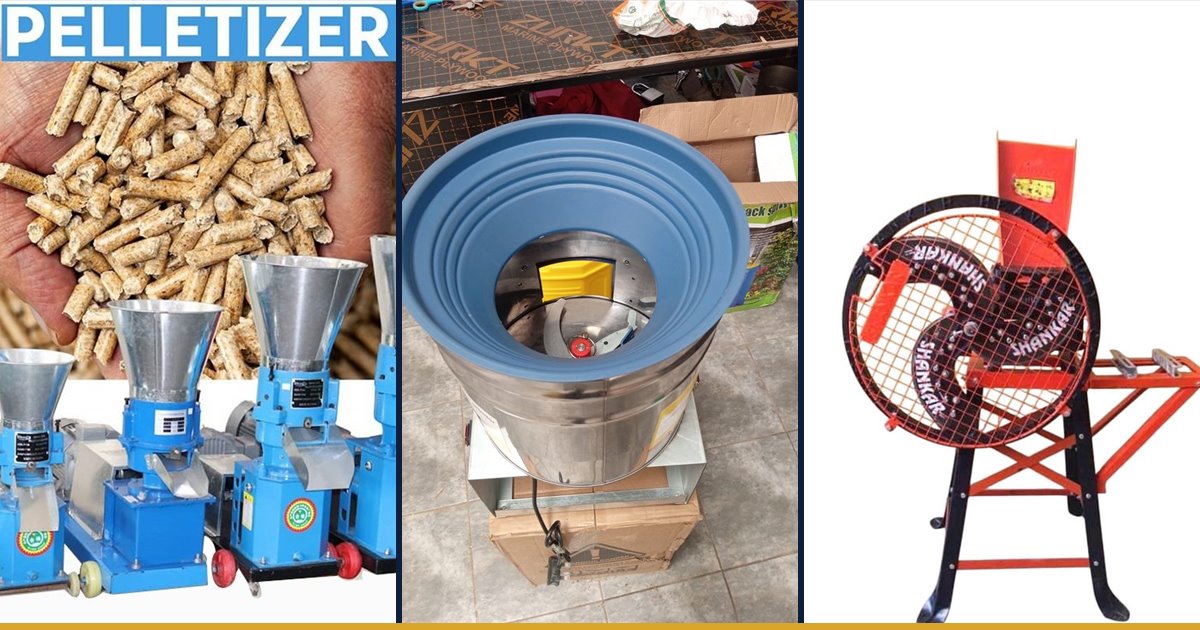
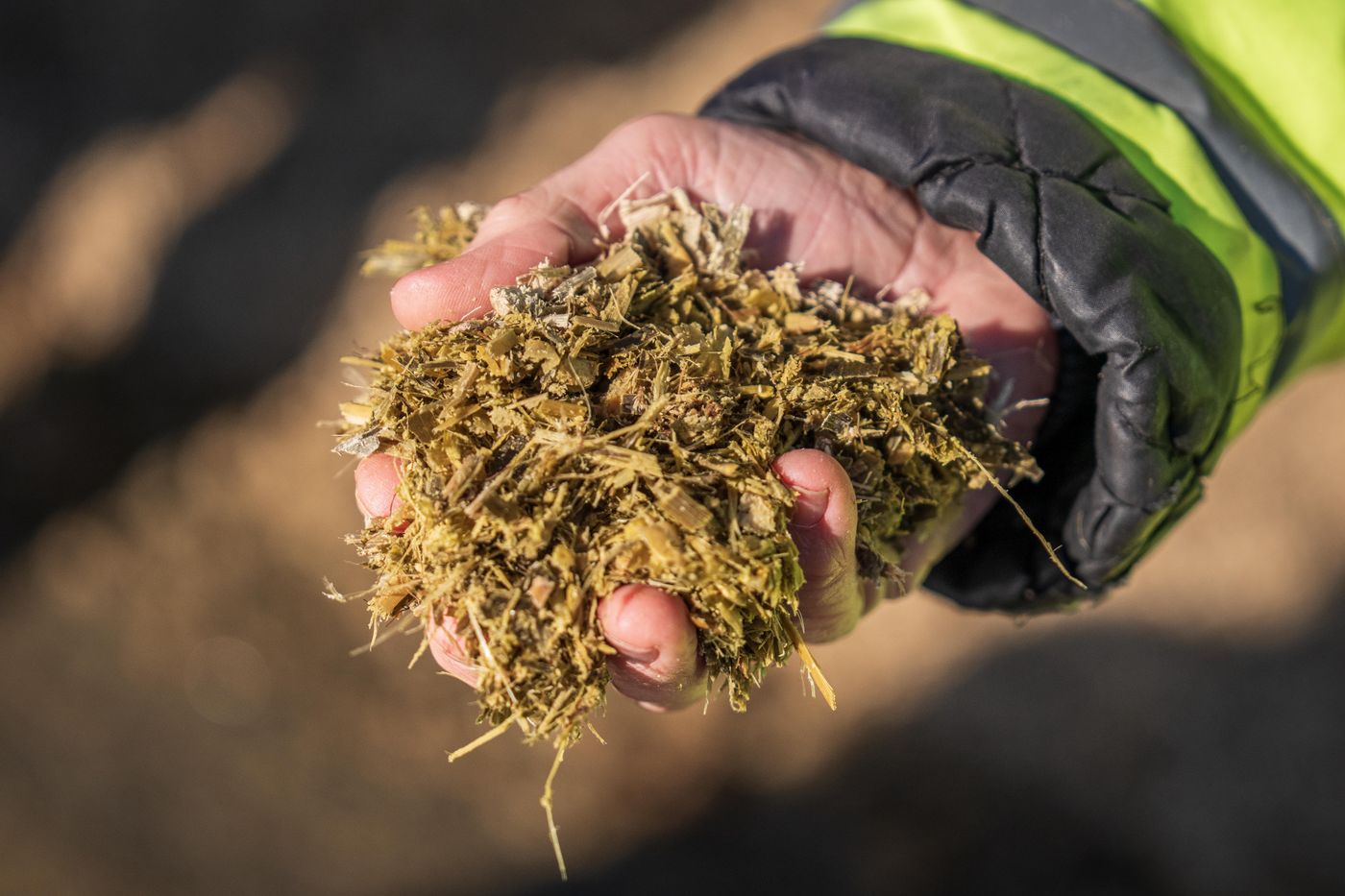
The chaff cutter comes first. Cows eat a ration, not a scoop of concentrate on its own, and the forage half of that ration has to be chopped to a consistent length so the animal cannot sort the tasty bits from the rest. A chaff cutter reduces Napier, maize stover, hay or fresh fodder to an even chop that mixes cleanly with the meal and stops selective feeding at the trough. Chop length matters: too long and the cow sorts, too short and you rob the rumen of the fibre it needs to keep the fat in the milk. If you are still choosing a machine, sizing and safety deserve as much thought as price.
The mixer is the heart of the operation. Weighing the right amounts means nothing if they do not end up evenly spread through the batch, and hand mixing on a floor with a shovel is the single most common reason a home ration fails. A powered feed mixer turns the batch over enough times that every mouthful carries roughly the same blend of energy, protein and minerals. This is not a detail. A cow that gets a double dose of mineral in one mouthful and none in the next is worse off than a cow on a plain, honest, consistent feed. We cover the mechanics of getting a batch truly uniform in our article on feed mixers and ration uniformity.
The pelletizer is optional, and it is a scale decision. A pellet machine presses a mixed mash into firm pellets, which cuts wastage, stops the fine mineral powder from sifting to the bottom of the bag, and makes the feed easier to store and to sell. For a dairy herd feeding a mash straight into a trough with chopped forage, pelleting is often an expense you do not need. For a farmer who also wants to sell surplus feed, or who is producing poultry and pig rations alongside the dairy meal, it can earn its keep. Treat it as a second-stage investment, not a first purchase.
You do not have to buy everything at once. A sensible path is a chaff cutter first, because chopped forage improves feeding immediately whether or not you mix concentrates, then a mixer once your volume justifies it, and a pelletizer only if a clear second use appears. For a sense of what each stage costs to equip, our price list is the honest starting point, and any branch will help you scope a line to your herd rather than sell you the biggest machine in the room.
Sourcing Ingredients Without Gambling on Quality
The machines are the easy part. The ingredients are where home-mixing is won or lost, because a mixer blends bad inputs just as evenly as good ones. A Kenyan dairy ration is usually built from a forage base plus a handful of concentrate ingredients, each playing a distinct role.
Three sourcing habits separate a farmer who saves money from one who slowly poisons a herd. The first is buying from a known source and inspecting every delivery. Energy and protein by-products are the most adulterated feeds on the Kenyan market: maize germ can be cut with milled cob, and cakes can be padded with hulls, sand or ground shells. Look, smell and squeeze every load, and reject anything musty, hot or clearly bulked out.
The second is refusing anything mouldy, no matter the price. Maize by-products and cakes that have been stored damp grow moulds that produce aflatoxins, and those toxins pass straight into the milk you sell. A cheap bag of spoiled germ is not a bargain, it is a recall and a sick herd waiting to happen. When a price looks too good, assume the reason is in the sack.
The third is respecting the quirks of specific ingredients. Cottonseed cake, for example, contains gossypol, a natural compound that is tolerated by adult cattle in measured amounts but is risky if it dominates the ration or is fed to the wrong stock. This is exactly the kind of detail a formula accounts for and a guess does not, which is the bridge to the next point.
A mixer cannot fix a bad sack. Uniform blending spreads a contaminant just as evenly as a nutrient. The quality of your feed is capped by the quality of the worst ingredient you accepted at the gate, so your cheapest, most powerful tool is the willingness to turn a delivery away.
The Discipline Is the Whole Game
A ration is a promise to the rumen: the same feed, in the same proportions, at the same times. The microbes that digest fibre and turn feed into milk are a living population that tunes itself to a steady diet over days. Change the mix abruptly and that population crashes, intakes fall, and milk drops before you have worked out why.
This is why home-mixing rewards boring consistency and punishes improvisation. Weigh, do not scoop, because a scoop of dense cake and a scoop of fluffy pollard are not the same mass, and volume measuring is how rations drift without anyone deciding to change them. Keep the batch size and the order of loading the same each time. Write down what went in, so a good batch can be repeated and a bad week can be traced back to the sack that caused it.
When you must change an ingredient, because a supplier ran out or a price moved, change it gradually over several days and watch the milk. A farm that treats the ration as a fixed procedure, run the same way whether the owner is there or not, captures the savings. A farm that mixes by eye and memory usually ends up feeding an expensive, invisible lottery.
Consistency beats theoretical perfection. A slightly plain ration fed exactly the same way every day will out-milk a cleverer ration that lurches around with the mood of whoever is holding the shovel. The cow rewards routine, not ambition.
Why the Formula Still Belongs to a Nutritionist
Here is the line that keeps a home-mixing farm profitable rather than tragic: own the machines and the method, but never the formula. The proportions of energy to protein to minerals, and how they shift with milk yield, stage of lactation and the quality of your forage, are not something to copy from a neighbour or a social media post. They are a calculation, and getting them wrong is expensive in ways you cannot see at the trough.
Underfeed protein and milk quietly falls below what the cow could give. Overfeed it and you have burned money and stressed the animal. Get the mineral balance wrong, especially calcium and phosphorus around calving, and you invite milk fever and breeding problems that cost far more than any feed saving. A qualified animal nutritionist, or a reputable feeds company's advisory service, builds a ration around your specific ingredients, ideally after testing your forage and your cakes, and adjusts it as your inputs change through the year.
Think of it the way a builder thinks about a structural drawing. You can own the mixer, the mill and the store, and run them expertly, and still take the loading sheet from an engineer. That is not weakness, it is the division of labour that makes the whole thing safe. The nutritionist gives you a set of proportions, and your job, the job all this equipment exists to do, is to reproduce those proportions faithfully in every single batch.
Split the roles cleanly. The nutritionist owns the recipe. You own the execution: sourcing, weighing, mixing and record keeping. Farms get into trouble when they let the person with the shovel quietly become the person with the formula.
Storage, Hygiene and Records: The Unglamorous Half
Everything above can be done well and still undone by a bad store. Ingredients are food, and they spoil. A home-mixing operation needs a dry, ventilated, rodent-proof store where sacks sit on pallets off the floor and away from the wall, so damp cannot wick in from below and mould cannot start unseen in the middle of a heap.
Buy in quantities you will use before they spoil, rather than the largest bulk discount you can find, because a tonne of cake going rancid in the store is a false economy. Rotate stock so the oldest is used first. Keep the mixer and any pelletizer clean, because residue left in a machine turns rancid and seeds the next batch with spoilage and, worse, cross contaminates a dairy mix with the remains of a medicated poultry mix if you run more than one ration on the same line.
The records are the cheapest insurance you will ever buy. A simple book noting the date, the batch, what went in and where each ingredient came from lets you repeat what works, prove what you fed if milk is ever questioned, and trace a problem to its source in an afternoon instead of a fortnight. It is the least exciting part of home-mixing and quite possibly the most valuable.
Key Takeaways
- Home-mixing buys control over composition, consistency and cash flow timing, not just a lower price. Decide whether your farm can reproduce a mill's grinding, weighing and blending more reliably than the bag.
- There is a break-even scale. Fixed equipment and labour make home-mixed feed dear for a handful of cows and cheap for a large herd or a buying group.
- The line is a chaff cutter, then a mixer, with a pelletizer only if a clear second use appears. Buy in the order the work flows.
- Ingredient quality caps everything. Inspect every delivery, reject anything mouldy because aflatoxins pass into milk, and respect ingredient quirks like gossypol in cottonseed cake.
- Own the machines and the method, but take the formula from a nutritionist, and keep every batch consistent. The cow rewards routine over ambition.
Frequently Asked Questions
Is home-mixing dairy meal always cheaper than buying compounded feed?
No. It is cheaper only above a certain scale, because the chaff cutter, mixer, storage and your own labour are largely fixed costs that fall per kilogram as your volume rises. For a very small herd the bag is usually cheaper and safer, since a mill buys in bulk and blends to a checked target. Run your own numbers on volume before you buy any machine, and consider whether a buying group with neighbours reaches the scale that makes it pay.
What equipment do I actually need to start?
At minimum a chaff cutter to chop forage to an even length, and a feed mixer to blend the concentrate portion uniformly so cows cannot sort it. A pelletizer is optional and usually only worthwhile if you also sell feed or produce poultry and pig rations on the same line. Start with the chaff cutter, add the mixer as volume grows, and treat pelleting as a later, scale-driven decision.
Can I just use a ration recipe from another farmer or online?
You can own the equipment and the method, but the proportions should come from a qualified nutritionist or a reputable feeds advisory service, ideally after testing your own forage and ingredients. A borrowed recipe assumes your maize germ, cakes and forage match the ones it was built for, and small errors in the energy to protein ratio or the mineral balance cause hidden yield losses and health problems like milk fever that cost far more than any feed saving.
How do I avoid aflatoxins when buying ingredients myself?
Buy from a known, reputable source and inspect every delivery. Reject any maize by-product or oilseed cake that smells musty, feels warm or damp, or shows visible mould, however cheap it is, because the toxins these moulds produce pass directly into the milk you sell. Store what you buy dry, off the floor, and rotate it so the oldest stock is used first rather than sitting long enough to spoil.
At Fuga we supply the whole home-mixing line, from chaff cutters and feed mixers to pellet machines, across our Eldoret, Nakuru, Nairobi and Coast branches, and we would rather scope a line to your herd than sell you a machine you will not fill. Tell us how many cows you feed and how much forage you have, browse the current price list, or bring the question to any branch. We will help you size the equipment, and we will always tell you honestly when buying compounded feed is still the smarter move for where your farm is today.