You carry the morning milk to the collection centre before seven. The clerk drops a resazurin tablet into your sample, sets it in the water bath and turns to the next farmer. Forty minutes later the dye has changed too fast, your can is graded down or turned away, and you carry it home. The cows looked healthy. Nobody was limping, no udder was hot to the touch, the milk in the churn looked white and clean. So what failed?
Almost always, the answer is upstream of the cow, inside a machine you rinsed but never truly cleaned. The milking machine is the one piece of equipment that touches every quarter of every cow at every single milking. When it is clean it protects the whole herd. When it is dirty it becomes two things at once: the fastest route for mastitis bacteria to travel from one cow to the next, and a warm reservoir that grows bacteria between milkings and seeds the milk before it ever reaches the churn.
This guide works through the mechanism first, then the fix: how a dirty machine spreads mastitis and fails the cooler test, the four stage wash that removes the danger, how to read and replace liners before they turn against you, and the vacuum and pulsation checks that keep teat ends healthy. Hygiene here is not housekeeping. It is the line between milk accepted at grade and milk poured on the ground.
The Machine That Touches Every Cow
Mastitis is inflammation of the udder, and in the great majority of cases it is caused by bacteria getting into the teat and multiplying. Some of the worst offenders, such as Staphylococcus aureus and Streptococcus agalactiae, are contagious: they live inside an infected udder and on teat skin, and they spread from cow to cow. The question that decides your herd's health is simple. What carries them across?
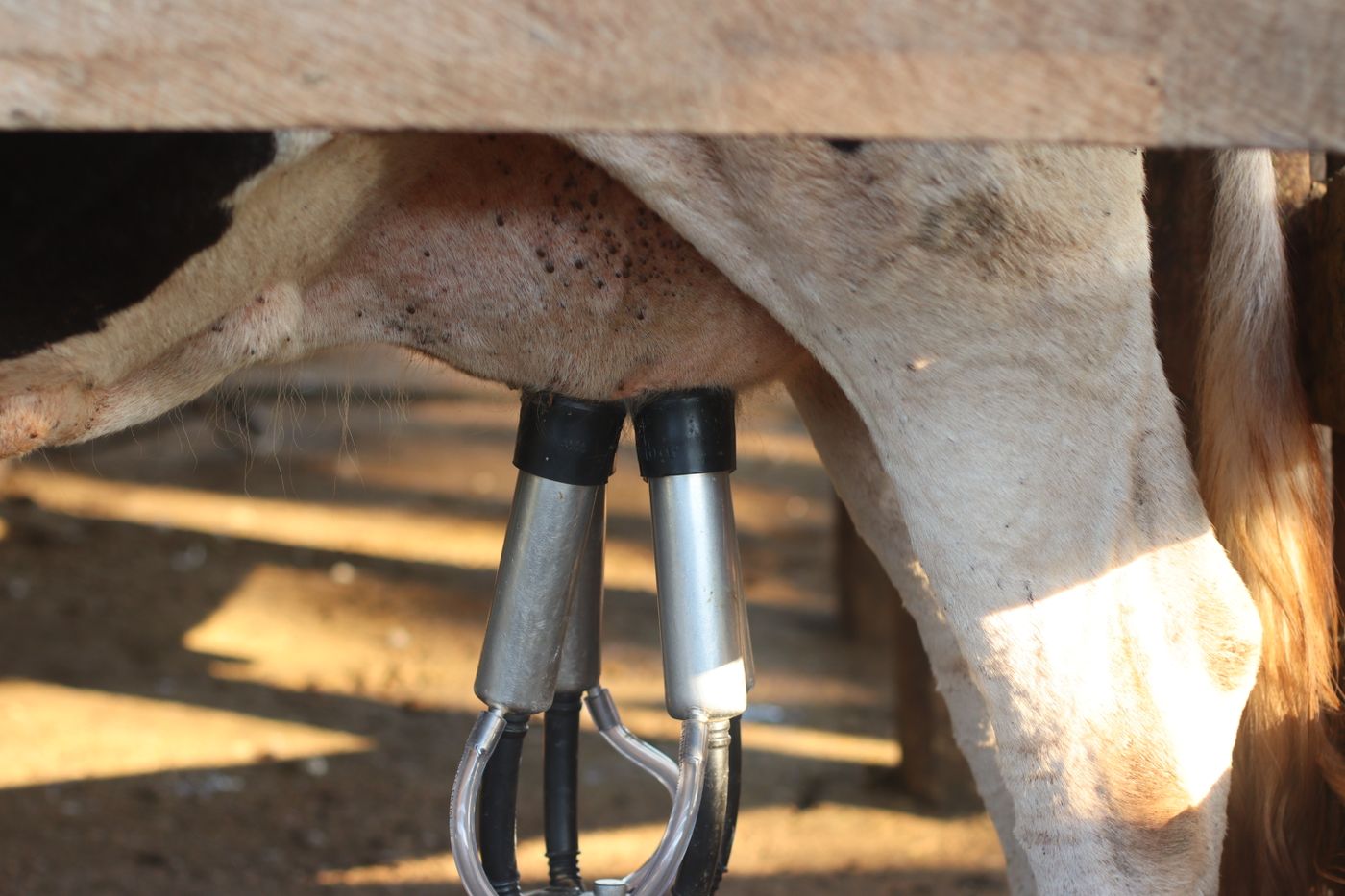
The liner does. Picture the order of milking. The cluster comes off a cow that is quietly infected, carrying no obvious signs, and goes straight onto the next cow with nothing in between to kill what the last one shed. The inside of that liner is now coated with organisms, and the next teat it grips is exposed to all of them. One infected cow, milked early in the string, can seed every cow milked after her.
That is the machine acting as a vector, moving infection within a single milking. It has a second, slower failure mode. Milk is rich in fat, protein and minerals, and every milking leaves a thin film of it on the inside of the liners, the claw, the long milk tube and the receiver. Bacteria settle into that film and build a biofilm, a living layer that grips the surface and shrugs off a quick rinse. Between milkings, in the warmth, that reservoir multiplies. At the next milking it washes straight into your bulk milk.
One machine, two dangers. A dirty milking machine is a vector during milking, carrying contagious mastitis from cow to cow, and a reservoir between milkings, growing bacteria that dose the whole can. A clean machine is neither. Everything below is about denying bacteria the film they live in.
Why the Cooler Rejects Your Milk
At the collection centre the clerk is not testing your cows. He is testing the bacteria in your milk, and the machine is where most of them come from. The resazurin reduction test, widely used at Kenyan cooperative coolers, adds a blue dye to a sample and watches how fast it changes colour. Bacteria are active, so the more there are, the faster the dye shifts through mauve toward pink. A fast change means a high bacterial load, and that means a downgrade or a rejection.
Processors that take the milk on run further checks: total bacterial count, and somatic cell count, which measures the immune cells that flood into milk from an inflamed, infected quarter. A neglected machine pushes both the wrong way at once, raising bacterial count from its own biofilm and somatic cell count by spreading the subclinical mastitis that produces those cells. The two numbers rise together because they share a cause.
The machine and its cleaning also sit behind several other reasons a delivery is refused. Antibiotic residues appear when you treat the mastitis the machine spread, then milk a treated cow too soon. Added water shows up when a wash cycle is not drained. Off flavours develop when bacteria break down fat overnight in an unwashed line. All of it traces back to hygiene, which is why clean milking and a clean cold chain are two halves of the same job. Our guide to milk cooling and hygiene on a Kenyan dairy farm covers the tank and cold chain side that the cooler also grades.
The Four Stage Wash That Actually Works
A machine that has milked cows is not cleaned by running water through it. Milk residue is fatty, and fat needs heat, a chemical to lift it, turbulence to carry it away and time to act. Leave any one out and the film survives. The reliable routine has four stages, and each exists to solve a specific problem the others cannot.
Stage one, the rinse. Immediately after milking, before anything dries, flush the system with lukewarm water and send it to waste. Warm water carries off the bulk of the milk while it is still loose. The temperature matters in both directions: cold water leaves fat behind, and water that is too hot at this first stage cooks milk protein onto the metal and rubber, where it becomes far harder to shift. Rinse until the water runs clear, and never recirculate that dirty rinse back through the line.
Stage two, the hot detergent wash. This is the real clean. Circulate a hot alkaline detergent, usually a chlorinated one, around the full circuit for several minutes. The alkali lifts fat and protein off every internal surface. The rule that farmers break most often is temperature: the wash must start genuinely hot and must not be allowed to fall below roughly 40 to 45 degrees by the time it drains, because once the solution cools the fat it just lifted drops back out and redeposits as a greasy film. A wash that ends cold has cleaned nothing.
Stage three, the acid descaler. Alkaline detergent does not touch mineral scale. Milk minerals and hard water leave a hard, chalky deposit called milkstone on the inside of the machine, and it builds slowly enough that you do not notice it arriving. Milkstone is not a cosmetic problem. Its rough, porous surface is exactly where bacteria hide from every future wash, sheltered in pits the detergent cannot reach. A periodic acid rinse dissolves it. In the many parts of Kenya with hard water, that periodic step needs to come round more often.
Stage four, the sanitise. A machine standing overnight grows bacteria even when it was washed clean. Just before the next milking, run a short sanitising rinse to knock down anything that multiplied since the last wash, then drain the system completely so that no chemical and no standing water carries into the first milk of the day.
Water, Heat and Dose: Why Each Stage Earns Its Place
It helps to remember the four levers that decide whether cleaning works, sometimes taught as temperature, action, concentration and time. Turbulent flow does the scrubbing you cannot reach by hand, the chemical does the lifting, heat makes the chemical work and keeps fat mobile, and time lets the reaction finish. Weaken one lever and the others must compensate. Weaken all four, which is what a quick cold rinse does, and the machine looks clean while the film stays exactly where it was.
This is why measuring beats guessing. A cheap dairy thermometer tells you whether the wash is really hot at the drain, not just at the tap, and a measuring jug keeps the detergent at the right strength rather than a splash that felt about right. Under strength chemical and short contact time are silent failures: nothing looks wrong, and the biofilm survives until the resazurin test finally reports it.
The acid step deserves emphasis because it is the one farmers skip. Milkstone builds invisibly for weeks, and by the time you feel the chalky roughness it has been protecting bacteria for a long time. A machine that has never had an acid wash can be scrubbed with alkali every day and still fail, because the alkali cannot reach the organisms inside the scale. Regular descaling is not an extra. It is what keeps the daily wash able to work at all.
Hot water is the cheapest disinfectant you own. A wash that starts hot and finishes cold has redeposited its own dirt. Check the temperature at the drain, not the tap, and keep the acid step on the calendar so the daily wash can actually reach the bacteria.
Liners: The Part That Wears Out Where You Cannot See
The liner, sometimes called the inflation, is the soft sleeve inside the metal shell that actually touches the teat. It is the only part of the whole machine that makes contact with the cow, and it flexes open and closed tens of thousands of times across a season. Rubber does not last forever under that. It perishes from the inside, developing fine cracks and a rough, tacky surface long before it looks worn from the outside.
Those two changes are exactly what you do not want. A cracked, roughened liner can no longer be cleaned properly, because the wash cannot reach into the splits where residue and bacteria collect. The same roughness encourages liner slip, where air rushes in around the teat with a squawk, and each inrush fires a fine spray of contaminated droplets back against the teat end, toward the opening of the teat canal. A worn liner is not a saving. It is a mastitis applicator.
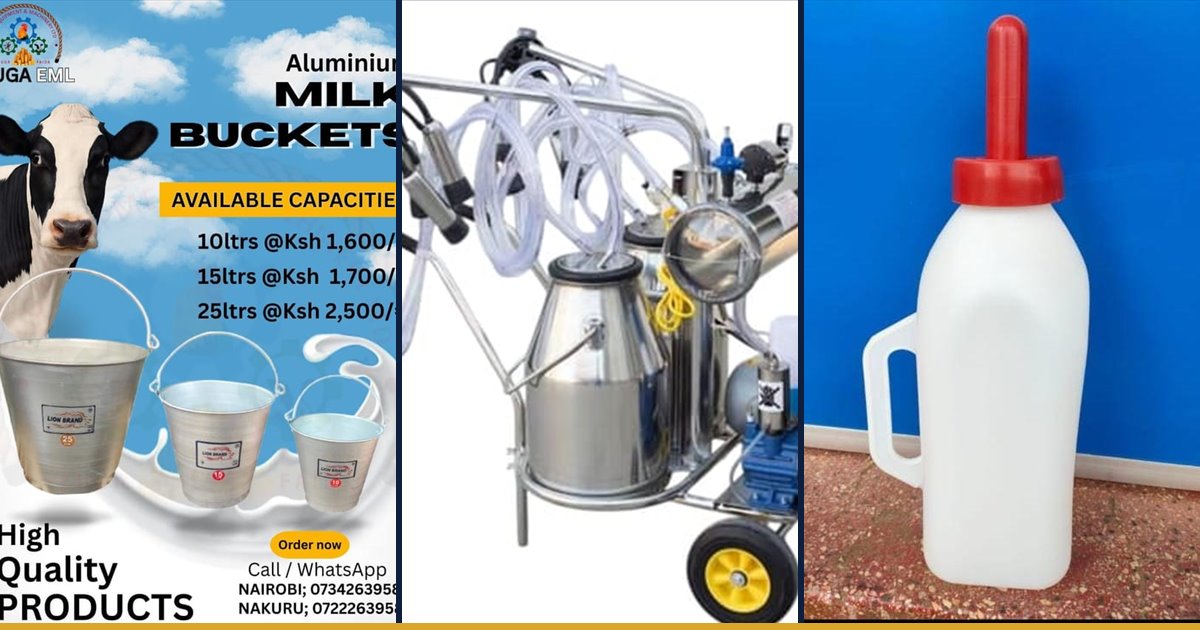
Manufacturers rate liners for a working life, usually given as a number of milkings, commonly in the low thousands, or a number of months, whichever comes first, and silicone liners generally last longer than natural rubber. Whichever your machine uses, write the date of the last change on the wall of the parlour and count. Replace the whole set together, not one at a time, so the cluster stays balanced and all four teats get the same treatment. When you are choosing a machine and its consumables, our comparison of the best milking equipment for Kenyan dairy farms walks through bucket units and pipeline machines, and Fuga keeps liners and spares for the milking machines we supply in various sizes so a due change never becomes an excuse to stretch an old set.
Inspect liners on a schedule, not on a hunch. Look for splits, hard spots, ballooning and loss of shape. Feel inside for tackiness and roughness. A liner past its rated milkings looks fine and cleans badly, and it is quietly undoing every other thing you do right.
Vacuum and Pulsation: The Settings That Protect the Teat
Even a spotless machine harms the cow if its vacuum and pulsation are wrong, and a harmed teat is an open door for the bacteria you worked to remove. Two settings do most of the damage when they drift.
Vacuum that is set too high, or that swings up and down because the regulator or pump is tired, batters the teat end. Over time the end thickens into a hard ring, a condition called hyperkeratosis, that both harbours bacteria and holds the teat canal slightly open between milkings. The remedy is not feel, it is a gauge: have the working vacuum measured and set to the level your machine specifies, and have the pump and regulator serviced on a schedule rather than after they fail.
Pulsation is the rhythm that makes machine milking safe. In the massage phase the liner collapses around the teat and restores blood flow the vacuum would otherwise cut off. If a pulsator fails, or the rate or ratio drifts, the teat sits under near constant vacuum, congests and gets damaged at the end. Typical machines run around sixty pulsation cycles a minute at a ratio near sixty to forty, but the number that matters is in your machine's manual, and the way to know it is right is to have the pulsators checked, not assumed.
Two habits finish the job. Do not overmilk: leaving the cluster on after milk flow stops chafes the teat end for no yield at all, so take it off promptly. And treat squawking and liner slip as faults to fix rather than noise to ignore, because every slip is another spray of bacteria at the teat. Correct the alignment, vacuum and liner condition until the cluster hangs quiet.
What Clean Milking Is Actually Worth
Put the health and the money on the same page, because they move together. Hygiene pays in three currencies at once, and each one is large enough to matter on a Kenyan smallholding.
The first is fewer mastitis cases. Every clinical case is milk you must discard during treatment and withdrawal, a vet bill or drug cost, a cow milking below her potential, and sometimes a quarter or a whole cow lost for good. Break the machine's role in spreading it and you keep more cows producing more milk for more of their lives.
The second is grade at the cooler. A rejected can is a total loss: you paid to grow the feed, you paid to keep the cow, and you carry the whole thing home. A downgraded delivery is a discount on every litre you did sell. Clean milking turns the same herd and the same feed into more litres that clear the test and sell in the top band. Where equipment and spares fit the budget, our current price list lets you plan the change of liners and the small tools of hygiene before they become emergencies.
The third currency is the machine itself. Milkstone, perished rubber and an overworked pump are what a neglected routine leaves behind, shortening the life of an expensive asset. The same wash that protects the cow and the milk protects the metal, so good hygiene is the cheapest maintenance the machine will ever get.
Price the routine against a single rejection. A set of liners and a bottle of acid descaler cost a fraction of one refused delivery, one course of mastitis treatment, or one culled cow. The wash is not a cost centre. It is the highest return work on the farm.
Key Takeaways
- The milking machine touches every cow, so it is both a vector that carries contagious mastitis cow to cow and a reservoir that grows bacteria between milkings.
- The cooler does not grade your cows, it grades your bacteria. A dirty machine raises both bacterial count and somatic cell count, the two numbers behind most rejections.
- Clean in four stages: warm rinse to waste, a hot detergent wash that stays hot to the drain, a periodic acid descale for milkstone, and a sanitise just before the next milking.
- Liners perish where you cannot see. Replace the full set on the manufacturer's rated milkings, and inspect for cracks, roughness and slip.
- Set vacuum and pulsation by gauge and manual, not by feel, and never overmilk. Damaged teat ends undo every cleaning gain.
Frequently Asked Questions
Can a milking machine really cause mastitis?
Yes, in two ways. Contagious mastitis bacteria such as Staphylococcus aureus and Streptococcus agalactiae ride from an infected cow to the next one on the inside of the liner when there is no kill step between them. Separately, poor vacuum, failed pulsation, liner slip and overmilking damage the teat end and hold it open, which lets any bacteria present get into the udder. A clean machine that is set correctly does neither.
Why does my milk fail the resazurin test when my cows look healthy?
The test reads bacterial activity, not how the cow looks. Cows carrying subclinical mastitis show no outward signs while still shedding bacteria and somatic cells, and a machine with biofilm or milkstone adds its own overnight. A wash that ends cold, or that never includes an acid descale, leaves that population in place. Healthy looking cows and a fast colour change usually point straight back to the machine.
How often should I replace milking machine liners?
Follow the manufacturer's rating, which is normally given as a number of milkings, commonly in the low thousands, or a set number of months, whichever comes first. Silicone liners generally outlast natural rubber. Beyond the count, inspect regularly for cracks, hard spots, ballooning and a tacky inner surface, and change the whole set at once so the cluster stays balanced. A liner past its life cleans badly and encourages slip.
Do I need the acid wash every day?
No. The warm rinse and the hot detergent wash happen after every milking. The acid descaler is a periodic step whose job is to remove milkstone, the mineral scale that alkaline detergent cannot shift. How often depends on your water: hard water, which is common in many parts of Kenya, builds scale faster and needs the acid step more often. Follow the guidance on your detergent and descaler, and never let it lapse entirely.
What water temperature should the wash reach?
Keep the first rinse lukewarm, because water that is too hot at that stage bakes milk protein onto the surface. The hot detergent wash should start genuinely hot and, most importantly, should not be allowed to fall below roughly 40 to 45 degrees by the time it drains, or the fat it lifted redeposits as a film. Check the temperature at the drain with a thermometer rather than trusting the tap.
Fuga supplies dairy farmers across our Eldoret, Nakuru, Nairobi and Coast branches, and we sit on the practical side of this question every day. We stock milking machines in the sizes that suit a few cows or a full parlour, and we keep the liners, pulsators and hygiene consumables a clean routine depends on. Tell us how many cows you milk and how you are washing now, through our contact page or on WhatsApp, and we will help you build a routine and a spares list that keeps your milk in the top band.