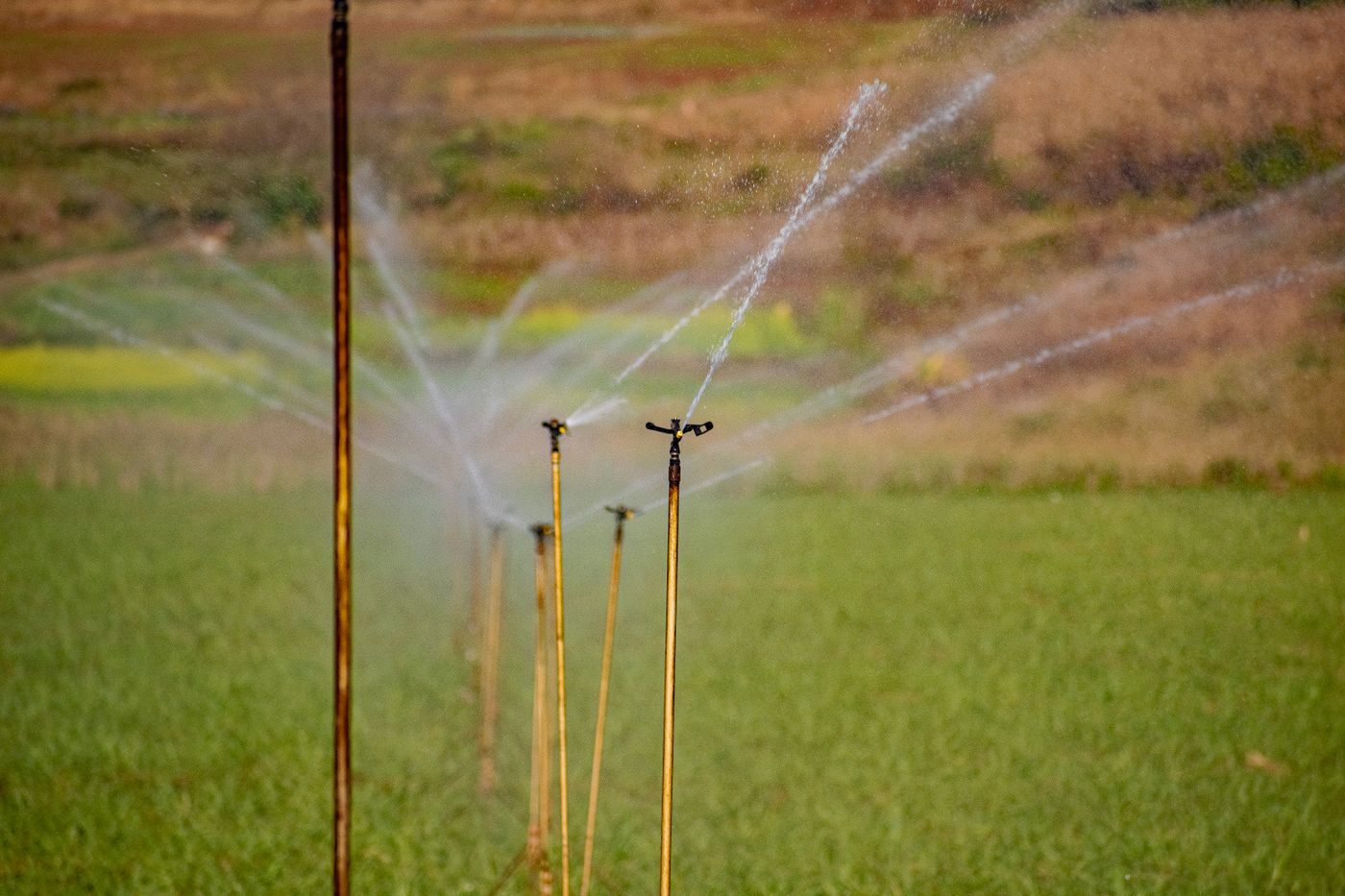
Picture a petrol pump at the river with a full head of pressure, a hose snaking three hundred metres up the slope, and a rain gun at the far end that barely wets a circle ten paces across. The pump is fine. The gun is fine. What went wrong is in the middle, and it went wrong at the moment somebody chose a hose by price per metre and nothing else.
Moving water across a farm is a pressure problem before it is a plumbing problem. Every metre of hose, every coupling and every kink takes a share of the pressure the pump made, and by the time the water reaches the sprinkler or the trough there may be very little left. The hose you choose, and above all its diameter, decides how much survives the trip.
This guide compares the three ways most Kenyan farms move water: PVC lay flat hose, braided hose and rigid pipe. It covers pressure ratings, why friction loss climbs with length and collapses with diameter, the couplings and clamps that hold pressure, the damage that actually kills hoses, storage, field repair, and which option suits pump discharge, rain guns, trough lines and temporary lines during the rains.
Three Ways to Move Water, and What Each One Really Is
PVC lay flat hose is a woven polyester jacket coated inside and out with PVC. Empty, it lies flat and rolls up like a fire hose. Under pressure it rounds out into a smooth bore. It is made in large diameters, typically from about 40 mm (1.5 inch) up to 150 mm and beyond, which is why it is the standard choice for pump discharge and rain gun supply. Have a look at the PVC lay flat hose we stock to see the diameters and roll lengths on offer.
Braided hose is a flexible PVC tube with a mesh of polyester threads set into the wall. It holds its round shape empty or full, so it can be dragged around a yard, coiled and uncoiled a hundred times, and connected with an ordinary hose tail. It comes in smaller sizes, from garden hose up to around 25 mm (1 inch) or 32 mm, and it handles higher pressure for its size than an unreinforced tube. The braided hose pipe page shows the range.
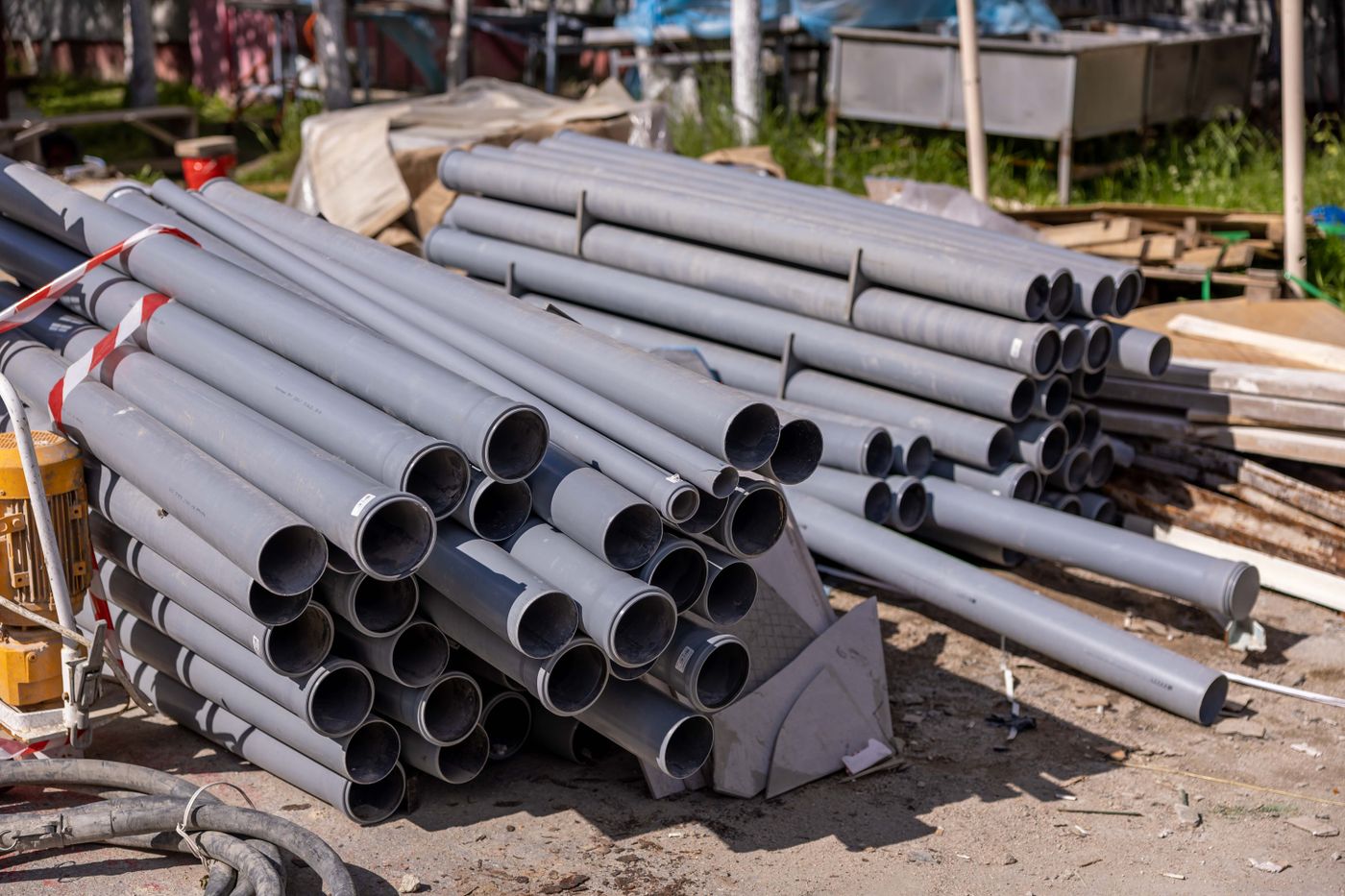
Rigid pipe means uPVC, HDPE or PPR, cut and joined into a fixed line. It has the smoothest bore, the longest life and the highest pressure class of the three, but it goes where you laid it and nowhere else. Our guide on plumbing a farm water system covers rigid pipe in depth, so here it appears mainly as the benchmark the two hoses are measured against.
Pressure Ratings: Working Pressure, Burst Pressure and the Pump
Every hose carries two pressure figures. The working pressure is the pressure it is designed to carry day after day. The burst pressure is where it fails on the test bench, usually several times higher. Buy on the working figure and treat the burst figure as a safety margin, never as capacity. Both are given in bar, and one bar is roughly the pressure of a ten metre column of water.
Lay flat hose is sold in classes, and the cheapest class is intended for low pressure drainage and gravity transfer, not for the discharge side of a pump. A pump forced to push against a closed valve or a blocked gun reaches its shut off head, which is the highest pressure it can make, and a hose rated below that pressure will split or blow off its coupling. Read the maximum head on the pump plate, divide the metres by ten to get bar, and buy a hose rated above it.
Braided hose generally carries a higher working pressure for its size than lay flat hose, because the mesh takes the hoop stress instead of the plastic. That is why a small braided hose can sit on the outlet of a high pressure pump for washing or spraying where a lay flat hose of the same bore would balloon. What braided hose cannot do is carry a large flow, and that is the subject of the next section.
Remember too that the pressure that matters is the pressure at the far end, not at the pump. A pump plate promises a head at the outlet. Whatever the hose, the couplings and the climb take between the outlet and the nozzle is gone, and nothing at the gun can bring it back.
Friction Loss: Why Length Hurts and Diameter Decides Everything
Water rubbing along the inside of a hose loses energy, and that energy shows up as lost pressure at the far end. Engineers call it friction loss or head loss. Two things control it, and they behave very differently.
Length is the simple one. Loss is proportional to length, so a hose twice as long loses twice the pressure at the same flow. Three hundred metres of hose loses three times what one hundred metres does. That is why a long run of undersized hose can swallow most of what a small pump makes.
Diameter is the one people underestimate. For the same flow, a narrower bore forces the water to move faster, and friction rises with the square of that speed and with the smaller wall area at the same time. The net effect is that loss climbs with roughly the fifth power of the diameter ratio. Halve the diameter and the loss goes up by around thirty times. Go one size up and the loss can fall by two thirds or more. Our guide on pipe size and friction loss works through the tables in detail.
The practical lesson is blunt: on any run longer than a few dozen metres, buy the hose one size bigger than instinct suggests. The extra cost per metre is small next to the pressure it saves, and the same pump will then push water further, run a second sprinkler, or fill the tank faster. If the flow you need and the head you have are not yet clear, work them out first with our guide to sizing a water pump by head and flow, because the hose diameter and the pump are chosen together, not one after the other.
Couplings and Clamps: Where the Pressure Leaks Away
A hose is only as good as its ends. The most common leaks and blow offs on Kenyan farms happen not in the hose wall but at the coupling, and a coupling that sprays a fine mist is throwing away pressure as well as water.
Lay flat hose is joined with camlock couplings (a lever locking pair), Bauer type couplings (a ball and socket held by a lever) or plain threaded hose tails clamped into the hose. Camlocks are quick, cheap and easy to swap in the field. Whatever the coupling, the hose tail must match the hose bore exactly, and the tail must have proper barbs, not a smooth spigot.
Clamps carry the load. Use a worm drive clamp of the right size, seat it fully behind the barb, and on the discharge side of a pump fit two clamps side by side. For large bore lay flat hose above about 75 mm, a bolted double clamp or a crimped ferrule grips more evenly than a worm drive band. Check clamps after the first hour of running, because the hose settles under pressure and the band loosens.
- Match the bore. A 50 mm tail in a 63 mm hose will blow out no matter how many clamps you fit.
- Keep sealing faces clean. A grain of sand on a camlock gasket is a leak you will chase for a week.
- Carry spare gaskets. They perish in the sun long before the coupling wears out.
- Avoid needless joins. Every coupling adds a small loss and a possible leak, so buy a longer roll rather than joining short ones.
Kinking, Abrasion, UV and Rodents: What Actually Kills a Hose
Hoses rarely wear out from carrying water. They die from being dragged over rock, folded under a wheel, left in the sun and chewed in the store. Each has a simple cure.
Kinking is the enemy of braided hose. A sharp fold crushes the mesh, and the hose will kink at the same spot ever after. Kinks also throttle the flow, which shows up as lost pressure downstream. Lay flat hose does not kink in the same way, but a tight bend under pressure creases the jacket and weakens it. Lay both types in gentle curves and never run a hose around a corner post.
Abrasion is the enemy of lay flat hose. Dragging a charged hose across gravel, or letting it pulse against a sharp edge for a season, wears through the outer coating and then the jacket. Lift it over rough ground, lay old tyre strips or a plank where it crosses a track, and move it empty rather than full.
Ultraviolet light attacks both. A hose left in the Kenyan sun for a season turns chalky and stiff, and the plastic loses its strength before it looks ruined. Store hoses in shade, under a roof, or at the very least under a sack.
Rodents chew hoses in the store, especially a hose that has carried molasses water or has grass seed caught in the folds. Hang it, keep the store clean, and check for gnaw marks before the next season rather than discovering them at the pump.
Storage on a Reel and Field Repair
A reel is the single best investment for anyone who moves hose often. Lay flat hose rolls onto a simple drum reel, ideally one that fits a trailer hitch or a wheelbarrow frame, so one person can lay and recover a long line alone. Braided hose stores on a wall reel or a hose cart, always in loose coils, never in tight loops that set kinks.
Field repair is where the two hoses differ most. Lay flat hose is repaired by cutting out the damaged section and fitting a coupling on each side, so a hose with a burst becomes two shorter hoses joined by a camlock pair. Keep a pair of spare couplings, a hose knife and clamps in the pump box. Small punctures can be patched with a PVC repair kit and solvent, but a patch on a pressure line is a short term fix.
Braided hose is repaired by cutting out the damage and fitting a barbed joiner with two clamps. Soften the end in warm water so it slides over the barb. Rigid pipe is repaired with a coupling and, for uPVC, solvent cement, or for PPR, a fusion weld, which is one more reason a permanent line should be buried or protected and then left alone.
Which to Choose for Each Job
The right choice is easiest to see job by job, because each job fixes the flow, the pressure and how often the line has to move.
Pump discharge. Lay flat hose in the pump outlet size or one size larger, rated above the shut off head, with a camlock on the pump. It carries the full flow with little loss, rolls away when the pump goes home, and is cheap to replace if it fails. Braided hose is right only for small high pressure pumps where the flow is low.
Rain guns. Lay flat hose again, and diameter matters most here because a rain gun needs pressure at the nozzle to throw its full radius. A gun fed through an undersized hose wets a small circle with big drops that batter seedlings. Size the feed hose from the gun's pressure requirement, not from what happens to be in the store.
Moving water to troughs. The flow is small and the run is often permanent, so rigid pipe wins for a fixed trough and braided hose wins for a mobile trough or a temporary paddock. A braided hose can be walked across a yard every day without kinking flat.
Temporary lines during the rains. Lay flat hose on a reel, drained and rolled away between uses. It is the one option that handles a few weeks of use, a long run and quick recovery. Do not leave it out through the season, or the sun and the tractor will find it.
Cost of ownership follows the same logic. A lay flat hose is cheap to buy and is replaced every few seasons if it works hard. A braided hose costs more per metre and lasts longer if it is kept off the ground and out of the sun. Rigid pipe costs the most on the day and the least per year, provided it is on a route that will not change. Buying a hose for a line that never moves, or pipe for a line that moves every month, is how the money gets wasted.
Whichever you choose, buy the couplings, clamps and reel at the same time as the hose so the sizes match and the first day in the field is not spent improvising. Bring the pump plate details and the distance you need to cover to any Fuga branch, or send them on WhatsApp 0716 961 018, and we will size the hose, the couplings and the pump together.
Key Takeaways
- Decide first whether the line is fixed or moves: fixed lines belong in rigid pipe, large moving flows in lay flat hose, small moving flows in braided hose.
- Buy on working pressure, not burst pressure, and choose a hose rated above the pump's shut off head so it cannot split or blow off under a closed valve.
- Friction loss rises in step with length and climbs steeply as the bore shrinks, so on any long run go one hose size bigger than instinct suggests.
- Most leaks and blow offs happen at the coupling: match the tail to the bore, use barbed tails, double clamp the pump discharge and carry spare gaskets.
- Kinks, abrasion, sun and rodents kill more hoses than water does; lay gentle curves, protect crossings, drain before rolling and store under a roof.
- Keep a repair kit of couplings, clamps and a knife in the pump box so a burst in the field costs minutes rather than a day.
Frequently Asked Questions
Which is better for a pump discharge, lay flat hose or braided hose?
For most pumps, lay flat hose. It comes in the large diameters a pump discharge needs, carries the full flow with little friction loss, and rolls flat for storage when the pump goes home. Match the bore to the pump outlet or go one size larger, buy a class rated above the pump's shut off head, and fit a camlock or hose tail with two clamps. Braided hose suits only small high pressure pumps where the flow is low, such as washing or spraying.
Why does my rain gun lose pressure at the end of a long hose?
Because friction loss rises with every metre of hose and rises far faster as the bore gets smaller. Water moving through a narrow hose has to travel faster, and the friction against the wall climbs with the square of that speed. Over a long run an undersized hose can swallow most of the pressure the pump made, leaving the gun to dribble in a small circle. Going up one hose size cuts the loss by two thirds or more, so on any long run buy the bigger diameter.
What pressure rating should a lay flat hose have?
Higher than the maximum pressure the pump can make, which is its shut off head, given on the pump plate in metres. Divide the metres by ten to get bar, then buy a hose whose working pressure is above that figure. The burst pressure printed on the hose is a test figure, not a capacity, so never rely on it. The cheapest lay flat classes are meant for drainage and gravity transfer and will split or blow off the coupling on a pump discharge.
How do I stop a lay flat hose blowing off the coupling?
Match the hose tail to the hose bore exactly, use a tail with proper barbs rather than a smooth spigot, seat a worm drive clamp fully behind the barb and fit two clamps side by side on the pump discharge. For bores above about 75 mm a bolted double clamp or a crimped ferrule grips more evenly. Check the clamps after the first hour of running, because the hose settles under pressure and the band loosens, and carry spare gaskets for camlock couplings.
How should I store hose between the rains?
Drain it first by lifting one end and walking the water out, then roll lay flat hose flat onto a drum reel and coil braided hose loosely on a wall reel or cart, never in tight loops that set kinks. Store it under a roof and out of direct sun, because ultraviolet light turns the plastic chalky and weak, and hang it or keep the store clean so rodents do not chew it. Check for gnaw marks and perished gaskets before the next season rather than at the pump.