Watch a farmer irrigating two acres of Boma Rhodes with a hose pipe and you are watching a full day's labour deliver less water than a rain gun puts down in a single set. A rain gun, the big rotating sprinkler on a tripod that throws a jet tens of metres across a field, is the least labour-hungry way to water a large area that exists at farm scale. It is also one of the most commonly mis-bought pieces of irrigation kit in Kenya, because it is sold as a sprinkler and behaves like a pressure appliance.
Pair it with a pump that cannot reach its pressure and it dribbles in a circle a few metres across. Feed it through a pipe too small for its flow and the pump's pressure never reaches the nozzle. Run it at noon in a breeze and a good share of the water lands on the neighbour, or in the air. Get those three things right and it will water pasture, fodder and field crops for years with one person moving it between sets.
This guide explains how a rain gun works, the pressure and flow it needs, how wetted radius follows pressure and nozzle size, how to match the pump and the pipe, how to lay out sets so the coverage overlaps, what wind and evaporation do to it, why application rate has to respect the soil, and, honestly, where a rain gun is the right tool and where drip or small sprinklers will serve you better.
How a Rain Gun Works
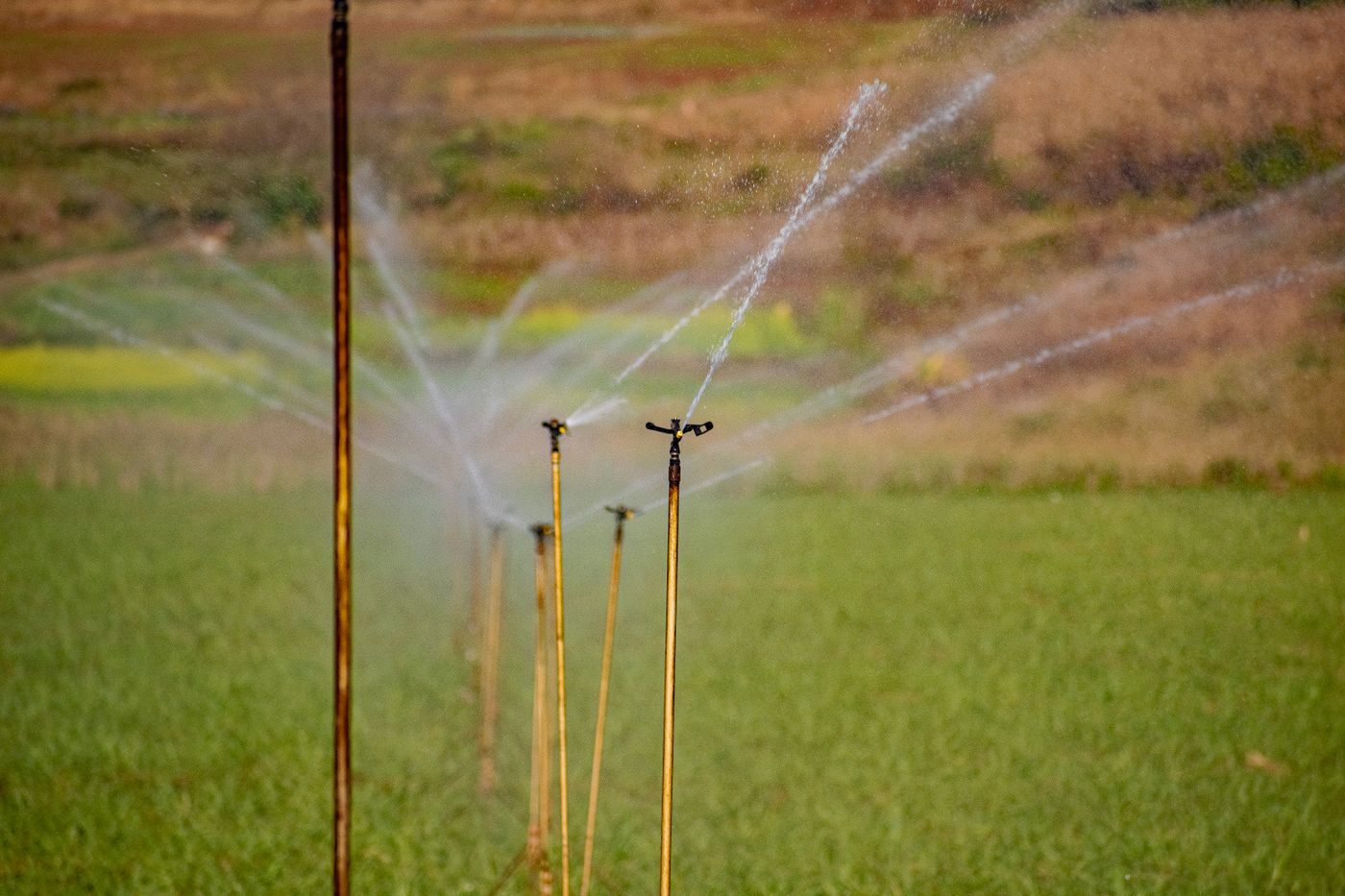
A rain gun is a large impact sprinkler. Water leaves a single nozzle as a solid jet, and a spring-loaded arm sitting in the jet is knocked sideways by it and swings back, turning the gun a few degrees with each strike. The jet sweeps a full circle, or a part circle set by adjustable stops, and breaks into drops as it flies. Some larger guns use a small turbine driven by the flow instead of an impact arm, but the effect is the same: one jet, slowly rotating, wetting a big circle.
It is the same mechanism as the small impact sprinklers on risers that many farms already use, scaled up. Where a garden sprinkler wets a circle a few metres across, a rain gun wets one measured in tens of metres, which is why it is mounted on a tripod or a sled a metre or more above the crop, high enough for the jet to clear the canopy. Fuga stocks rain guns for various pressures alongside conventional sprinklers, and choosing between them is what this guide is for.
The Pressure and Flow a Rain Gun Needs
Everything a rain gun does depends on pressure at the nozzle. Pressure sets the speed of the jet, the speed sets how far it throws, and the way the jet breaks up sets the size of the drops. Each gun is designed for a pressure range, stated by the maker, and the range is not a suggestion. Small guns are designed to work from around 2 bar at the nozzle; mid-size and large guns want several bar, commonly in the region of 4 to 6 bar and sometimes more.
Below its design pressure a gun does not simply throw a little shorter. The jet fails to break up, so it lands as a rope of water and large drops that beat the soil, seal the surface and batter seedlings. The impact arm may stall, leaving the jet dumping in one place. This is the most common complaint about rain guns, and it is almost never the gun's fault.
Pressure and head are the same thing in different units, and a pump is rated in head. One bar is roughly ten metres of water column, so a gun that needs 4 bar at the nozzle needs a pump delivering about 40 metres of head at the gun, plus whatever is lost on the way. The pump must supply that head at the gun's flow, not at zero flow, and the flow of a rain gun is high: a single gun can take the whole output of a pump that would run a row of small sprinklers.
Wetted Radius, Nozzle Size and Drop Size
Two things set how far a rain gun throws: the pressure at the nozzle and the diameter of the nozzle. A bigger nozzle passes more water and a heavier jet that carries further, and higher pressure drives any nozzle further. Across the range of farm guns, wetted radius runs from around fifteen metres for a small gun to well beyond forty for a large one at full pressure, and the flow rises with it.
The relationship is not a straight line, and it has a ceiling. As pressure rises the jet breaks into finer drops that fly further at first, but push a nozzle past its range and the jet atomises into mist that drifts, evaporates and never reaches the edge of the circle. Radius stops growing, and water use keeps climbing. Within the range, the middle usually gives the best balance of reach, drop size and uniformity.
Drop size matters for the crop and the soil as well. Large drops from low pressure compact bare soil and knock young plants flat. Fine drops from very high pressure drift in the lightest breeze and evaporate before landing. Most guns come with a set of interchangeable nozzles, and the right combination is the nozzle whose flow your pump can supply at a pressure inside the gun's range.
Matching the Pump and the Pipe
Start at the gun and work back. From the maker's table take the flow and pressure for the nozzle you intend to use. Add the pressure lost to friction in every metre of pipe and hose between the pump and the gun, and add the lift if the field is above the pump, at about one bar for every ten metres of rise. The total is the head the pump must deliver at that flow, and it is the number to check against the pump's curve, not the maximum head printed on the label, which is what the pump does at no flow at all.
Friction loss is where most rain gun systems quietly fail. Loss rises steeply with flow and falls with pipe diameter, and a rain gun's flow is high, so a pipe that served a row of small sprinklers may lose a large share of the pump's pressure before the water reaches the gun. Our guide on pipe sizing and friction loss gives the method; the short version is to go one size up on the main line and keep hose runs short.
For the pump itself, a petrol high-pressure pump is the usual choice for portable rain gun work on land without power, while an electric pump suits a fixed installation near a supply. Either way, size it by the head at the working flow using our guide to water pump sizing by head and flow. A pressure gauge fitted at the gun, or at the end of the line, is the cheapest instrument in irrigation and the only way to know the system is delivering what the table assumes.
Layout, Overlap, Wind and Evaporation
A rain gun does not water its circle evenly. Most of the water lands in the middle distance and the outer edge gets a thin ring, so a single set leaves a pattern of wet and dry. The fix is overlap: place the next set so that its circle covers the thin edge of the last one. The usual design rule for sprinklers is a spacing of roughly half to two thirds of the wetted diameter, and closer than that where wind is common.
Lay the sets out on a grid so the overlap is even in both directions, and mark the stand positions with pegs so they are the same every time. Along a boundary, a road or a building, set the gun to part circle so the jet stays on your land. Set time follows from the application rate and the crop's need: long enough to wet the root zone, then move on, rather than soaking one spot while the next waits.
One gun, one pump and one person can cover a surprising area in a day this way, moving the stand between sets while the pump runs. It is the reason rain guns suit farms with plenty of land and little labour.
Wind is the enemy of every sprinkler and the particular enemy of a rain gun, because its water spends longer in the air than any other system's. A steady breeze pushes the whole pattern downwind, so the upwind side of the circle goes short and the downwind side gets a double dose, and the finer drops are carried off the field entirely. Even a light wind that you barely notice distorts the pattern; a strong one makes the set worthless.
Evaporation works with the wind. Fine drops flying through hot, dry midday air lose part of their water before they land, and what lands on a hot leaf evaporates before it reaches the soil. The answer to both is timing: irrigate in the early morning, the evening or at night when the air is still and cool, and leave the middle of the day for moving pipes. Where a site is windy most of the time, a rain gun is the wrong tool, whatever the pump can do.
Application Rate Versus Soil Intake
Application rate is the depth of water a system puts on the ground per hour. A rain gun's rate is high, because a large flow lands in a narrow moving band rather than being spread over the whole circle at once, so each pass hits the soil hard. Every soil has an intake rate, the speed at which it can absorb water, and if the gun applies water faster than the soil takes it in, the excess runs off, puddles in the low spots and carries topsoil with it.
Sandy soils take water quickly and tolerate a gun well. Clay soils, compacted soils, bare soils and slopes all take water slowly, and on these a gun can lose a good share of its set to run-off without anyone noticing. Watch the ground during a set: surface shine, puddles or a trickle downhill within the first half hour all mean the rate is too high for the soil.
- Fit a smaller nozzle and run longer sets, which lowers the flow landing on each pass.
- Raise the gun so the jet spreads over a wider band before landing.
- Keep cover on the soil. A grass sward, a mulch or a standing crop slows the water and lets it soak in; bare tilled soil is the worst case.
- Split the application. Two shorter sets with a break between them put the same depth into a heavy soil without run-off.
Where Rain Guns Win and Where They Lose
Rain guns win on pasture and fodder. Napier, Boma Rhodes, lucerne and maize for silage are tall, tough crops on large areas that tolerate wet foliage, need a lot of water at once and cannot justify a dripline under every row. One gun and one person can keep a fodder block growing through the dry season, which is what makes year-round hay and silage possible. Rain guns also suit large field plots, rented or rotated land where fixed pipe makes no sense, and farms whose scarcest resource is labour rather than water.
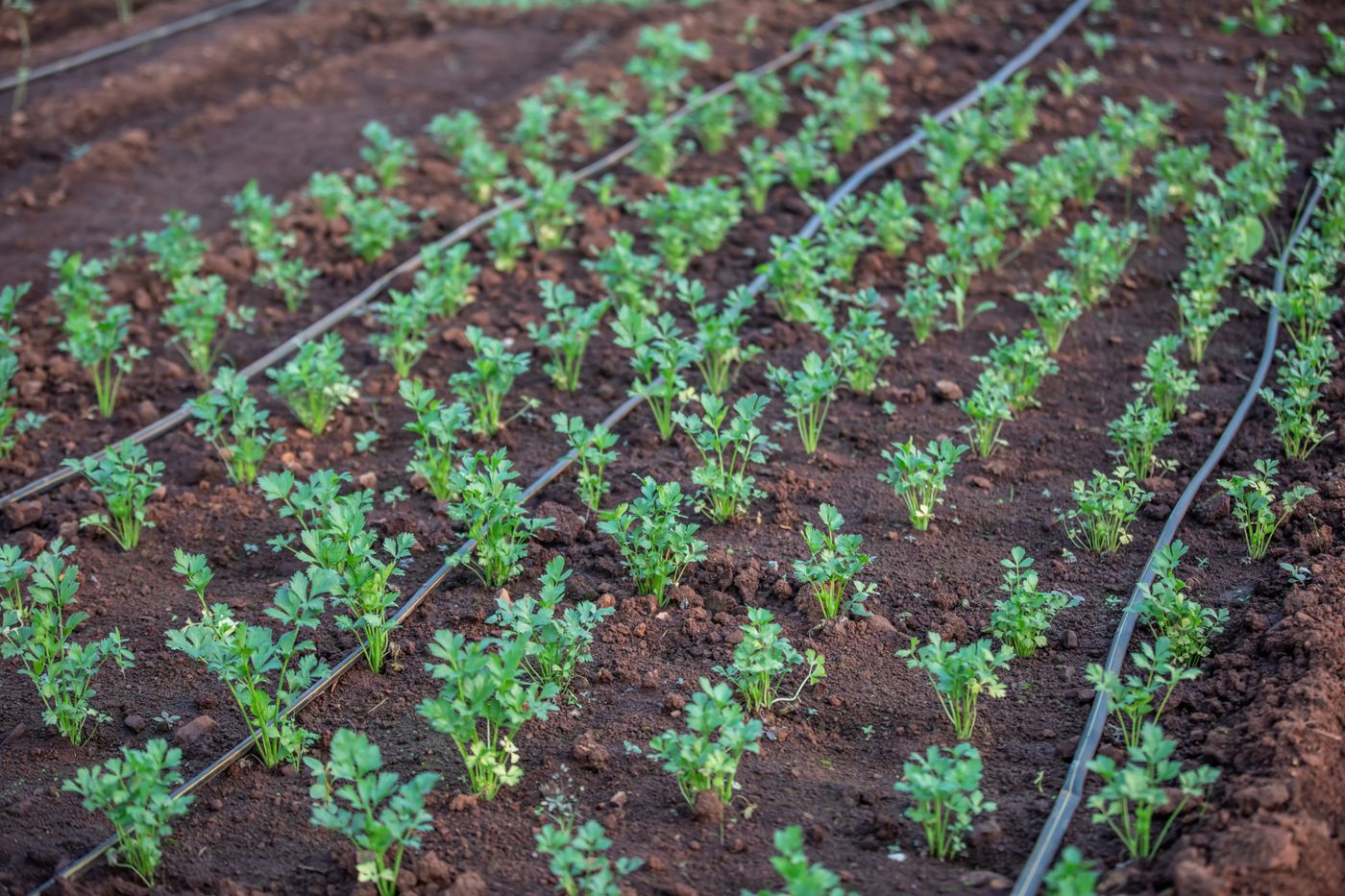
Rain guns lose on vegetables. Wet leaves invite fungal disease, large drops flatten seedlings and dislodge transplants, and the uneven pattern shows up as uneven beds. They lose on windy sites, for the reasons above. They lose where water is scarce or bought, because drip puts water at the root with the least loss to wind, evaporation and run-off, and they lose where pressure costs money, because drip works at a fraction of the pressure. On a small plot, a few conventional sprinklers are cheaper, more uniform and easier to fit to the shape of the land.
The comparison is a matter of fit rather than of one system being better. Many farms run more than one: drip on the vegetables and the greenhouse, small sprinklers on the nursery and the kitchen garden, and a rain gun on the fodder block, all from the same pump at different times. Our guide on drip irrigation versus sprinklers covers the vegetable side of that decision in detail.
Before You Buy: The Questions to Answer
Write down the area to be watered and the crop. Find the gun and nozzle whose wetted circle suits that area with sensible overlap, and read its flow and pressure off the maker's table. Measure the pipe run and the lift, and add the losses. Only then look at pumps, and choose one whose curve delivers the total head at the gun's flow with something in hand. Fit a gauge, water when the air is still, and watch the soil during the first sets.
Done in that order, a rain gun is one of the least labour-intensive ways to keep a fodder block or a field crop alive through the dry months. If you would like help matching a gun, a pump and the pipe to your land, visit any Fuga branch or WhatsApp 0716 961 018 with your field size, the water source and the pump you have, and we will work through the numbers with you.
Key Takeaways
- A rain gun is a large impact sprinkler and a pressure appliance: below its design pressure the jet does not break up, the throw collapses and the drops beat the soil.
- Read the maker's table for your nozzle to get flow and wetted radius at each pressure, then size the pump by head at that flow, not by the maximum head on the label.
- Wetted radius grows with nozzle size and pressure up to a point; past the range the extra pressure buys mist and drift rather than reach.
- Friction loss in undersized pipe is where most rain gun systems fail, so go a size up on the main line, keep hose runs short and fit a gauge at the gun.
- Overlap sets at roughly half to two thirds of the wetted diameter, closer in wind, and irrigate in still air at dawn, dusk or night.
- Rain guns win on pasture, fodder and large plots with little labour; drip or small sprinklers win on vegetables, windy sites, small plots and where every litre counts.
Frequently Asked Questions
What pressure does a rain gun need?
It depends on the gun and nozzle, and the maker's table is the authority. Small guns are designed to work from around 2 bar at the nozzle, while mid-size and large guns want several bar, commonly in the region of 4 to 6 bar and sometimes more. Below the design pressure the jet does not break up, the throw collapses and large drops beat the soil. Since one bar is roughly ten metres of head, a gun needing 4 bar needs about 40 metres of head at the nozzle plus friction and lift losses.
How far does a rain gun throw?
Across the range of farm guns, wetted radius runs from around fifteen metres for a small gun to well beyond forty for a large one at full pressure, and the flow rises with it. For any one nozzle, throw grows with pressure up to a point and then stops growing as the jet atomises into mist that drifts and evaporates. Wind shortens the upwind side and stretches the downwind side. Use the maker's table for the actual figures and plan overlap at roughly half to two thirds of the wetted diameter.
What size pump do I need for a rain gun?
Work back from the gun. Take the flow and pressure for your nozzle from the maker's table, add the friction loss in every metre of pipe and hose, and add the lift at about one bar per ten metres of rise. The total is the head the pump must deliver at that flow, and that is the point to check on the pump's curve. The maximum head printed on the label is what the pump does at no flow, so a pump chosen by that number will disappoint. Our pump sizing guide covers the method.
Is a rain gun better than drip irrigation?
Neither is better in general; each fits different jobs. A rain gun suits pasture, fodder, maize for silage and large plots where labour is short, because one person can water a big area by moving one stand. Drip suits vegetables, greenhouses, windy sites and farms where water is scarce or bought, because it puts water at the root with the least loss and needs far less pressure. Many farms run both from the same pump: drip on the vegetables and a rain gun on the fodder block.
Why does my rain gun keep stalling or dribbling?
Almost always low pressure at the nozzle rather than a fault in the gun. Either the pump cannot deliver the gun's flow at the required head, the pipe or hose is too small and friction is eating the pressure on the way, the field is higher than the pump allowed for, or the nozzle is too large for the pump. Fit a pressure gauge at the gun, compare the reading with the maker's table, and then fix the pipe size, the nozzle or the pump in that order.