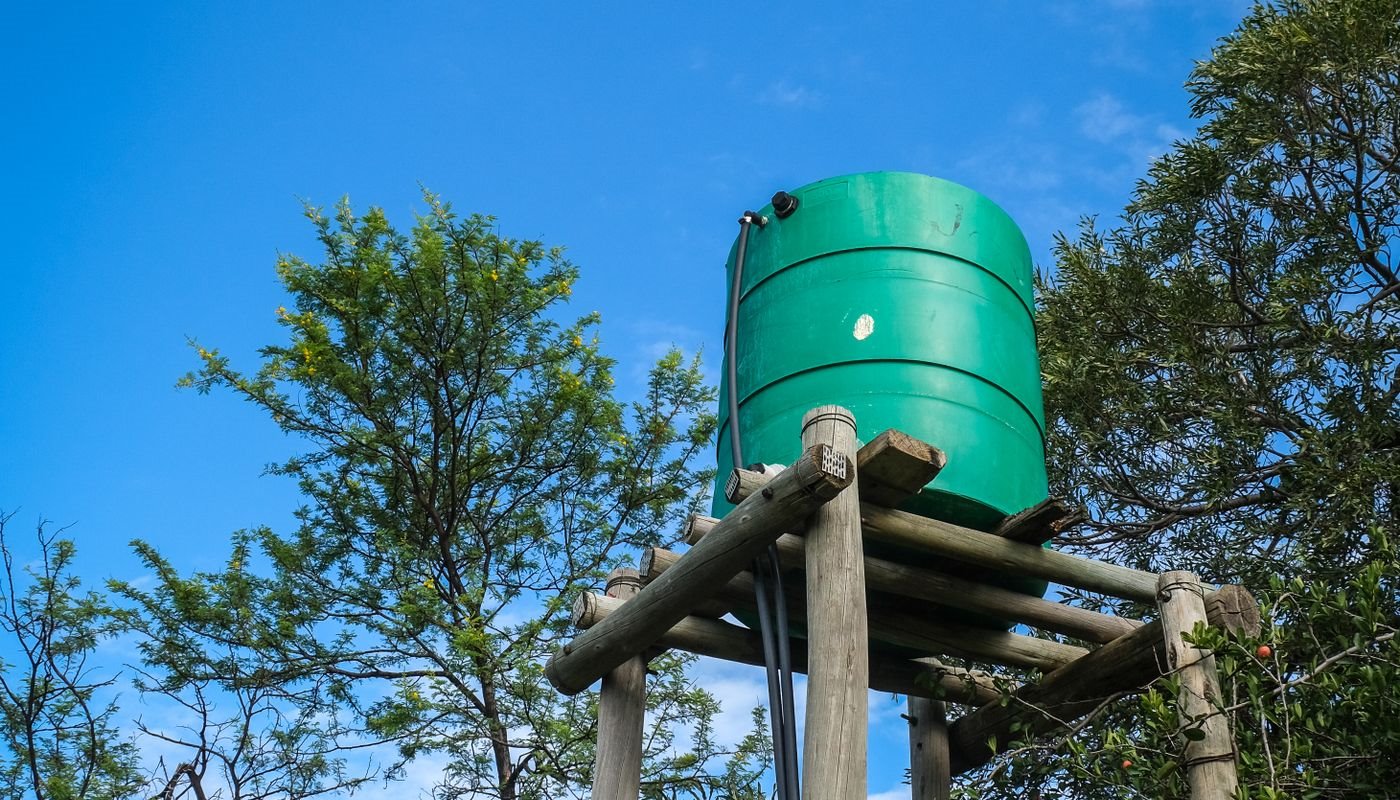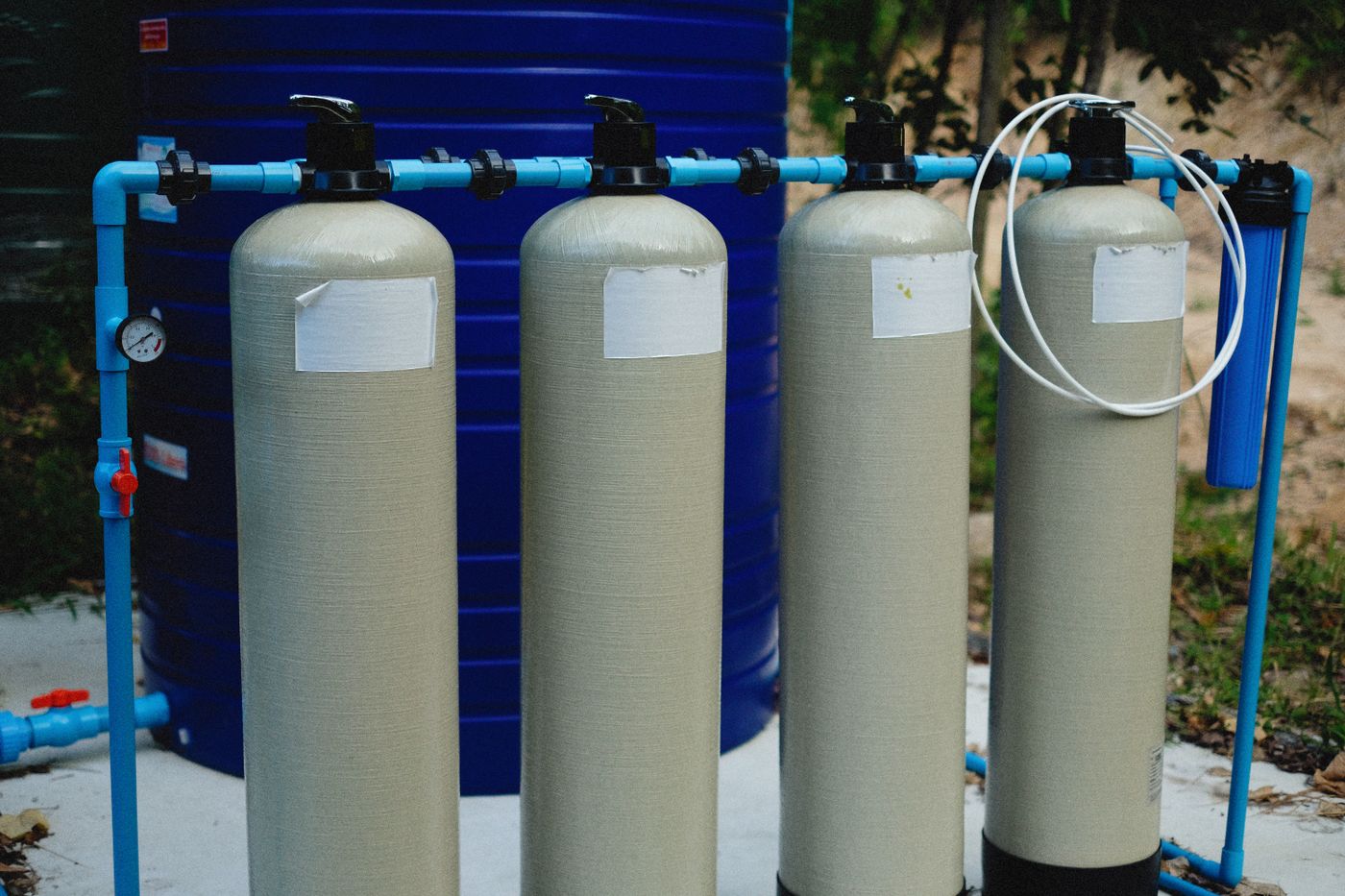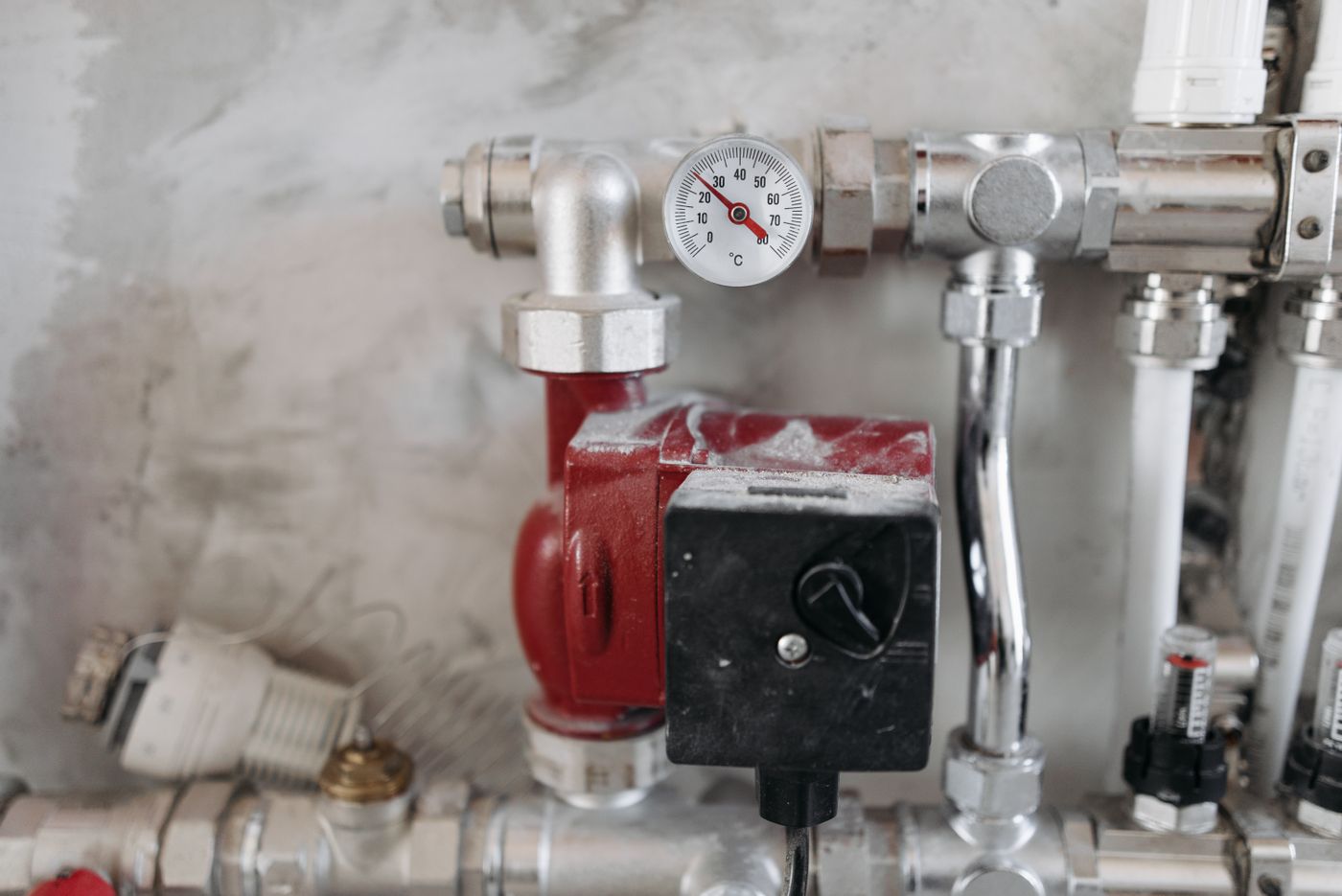
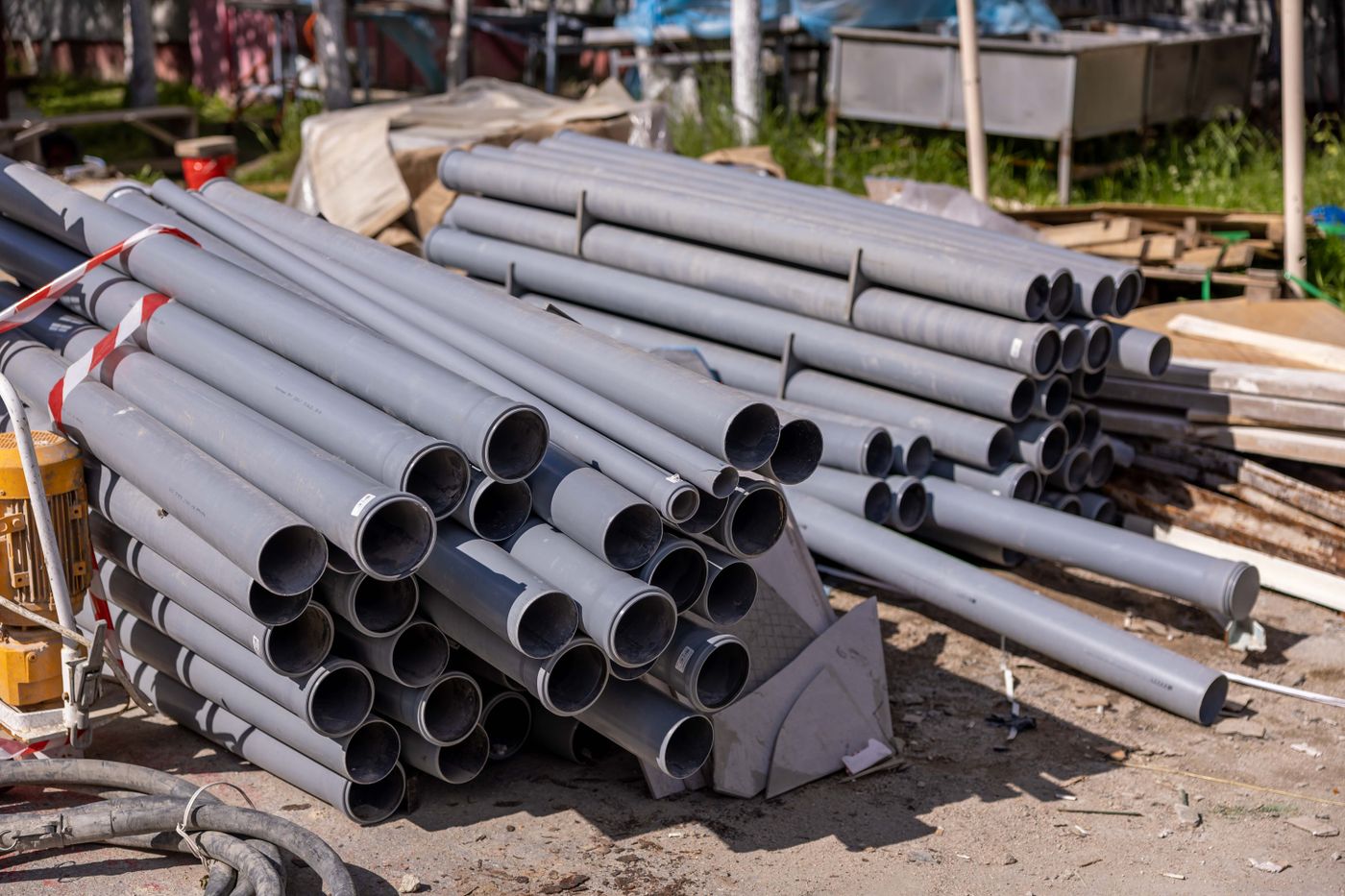
The pump is the right size. The tank is full. Yet the sprinkler at the far end of the plot turns lazily while the one nearest the pump throws water twenty metres, and there is a patch of permanently wet ground near the tank stand where a threaded joint has been weeping since the day it was installed.
Neither problem is a pump problem, and buying a bigger pump will not fix either of them. They are plumbing problems: a pipe too narrow for the distance it has to carry water, and a joint made with a method that was never going to hold. On most Kenyan farms, more water is lost to bad pipework than to any pump fault.
This guide covers the parts of a farm water system that actually decide whether it works: which pipe belongs where, how to weld PPR joints so they become a single piece of plastic, how to size pipe so pressure survives the journey, and how to lay out and test a line so you can fix one branch without shutting down the whole farm.
Four Kinds of Pipe, Four Different Jobs
Most farm plumbing failures start with using the wrong material because it was what the hardware had in stock. Each type has a job it does well.
PPR, polypropylene random copolymer, is the rigid green or white pipe used for pressurised runs around buildings, pump houses, dairies and tank manifolds. Its defining feature is that joints are heat fused rather than glued or threaded. It handles hot and cold water, resists scale, and once welded properly it is effectively continuous.
HDPE, high density polyethylene, comes in long coils and is the workhorse for buried mains and long runs across a farm. Because it arrives in rolls, a long distance can be laid with very few joints, and joints are where leaks live. It is flexible, tough, and takes compression fittings without special tools.
PVC is rigid, cheap, glued with solvent cement, and common for drainage and lower-pressure runs. Its weakness is ultraviolet light: PVC left in the Kenyan sun becomes brittle and cracks, sometimes within a couple of seasons. Bury it, box it, or paint and lag it.
Lay-flat hose is the flat roll that opens under pressure, used to move irrigation water temporarily from a pump to wherever the crop is this week. It is a delivery tool, not infrastructure. Never treat it as a permanent main, and never bury it.
Braided hose handles the short flexible connections, particularly at pumps, where a rigid pipe bolted straight onto a vibrating machine will eventually crack at the joint. A flexible section absorbs vibration and lets you remove the pump without cutting pipe.
Why Fused Joints Beat Threads and Glue
A threaded joint seals on tape or compound squeezed between two metal or plastic threads. A glued PVC joint seals on a chemical bond in a thin film of cement. Both work, and both have a failure surface: something between the two parts that can be disturbed by vibration, thermal movement or a knock from a jembe.
Socket fusion is different in kind. Both the outside of the pipe and the inside of the fitting are heated until the surface polymer is molten, then pushed together, and the two melts flow into one another. When it cools there is no interface left. The joint is not two pieces held together; it is one piece of plastic. That is why a correctly welded PPR system can sit under pressure for years with nothing to maintain.
The catch is that the method is unforgiving of technique. A weld done wrong looks identical from the outside to a weld done right, and it fails later, usually inside a wall or under a slab.
Welding PPR Correctly, Step by Step
A PPR welding machine is a heating plate with pairs of dies, a socket die and a spigot die, in the diameters you are working with. Fit the die pair for your pipe size, let the plate reach working temperature, which is around 260 degrees Celsius on most machines, and give it time to stabilise rather than starting the moment the light changes.
Cut square. Use a proper pipe cutter, not a hacksaw and not a panga. An angled cut welds on one side and leaves a gap on the other. Deburr the cut edge.
Mark the insertion depth. Measure the fitting socket depth and mark that distance on the pipe with a pencil. This mark is what tells you the pipe is fully home and, just as importantly, that it is not pushed in too far.
Heat both parts at once. Push the pipe onto the spigot die and the fitting onto the socket die at the same time, and hold for the time the machine's chart specifies for that diameter. Small pipe needs only a few seconds; larger diameters need longer. Guessing is how joints fail.
Join straight, without twisting. Pull both off the dies and push them together in one smooth axial movement up to the pencil mark. Do not rotate. Twisting drags the molten surfaces across each other and creates a spiral weakness that becomes a slow weep under pressure.
Hold still and let it cool. Grip the joint steady for several seconds, then leave it undisturbed. Moving or stressing a joint that is still soft is one of the most common causes of a leak that appears a week later.
One further check: after your first few welds on a new machine, cut one open and look at it. You want a clean fused ring with a small even bead, not a mass of displaced plastic narrowing the waterway. That single sacrificed joint calibrates your timing for the whole job.
Sizing: Why the Far Sprinkler Is Weak
Water moving through pipe loses pressure to friction against the pipe wall. That loss grows with the length of the run and with the speed of the water, and it falls sharply as the bore gets bigger. This is why the distant sprinkler underperforms: the pump is producing pressure, and the pipe is spending it on the way.
The practical consequence is that pipe diameter is not a place to save money on long runs. Stepping up one size on a main is usually cheap relative to the pump you would otherwise oversize, and unlike a bigger pump it costs nothing to run.
Two numbers help you think about the system as a whole. First, water pressure from a raised tank is set by height: roughly every ten metres of height gives about one bar of static pressure, so a tank three metres up on a stand delivers only about a third of a bar before any friction is subtracted. Gravity systems are pressure poor, which is why they need generous pipe diameters and why they suit drip rather than sprinklers.
Second, when choosing a pump, the figure that matters is total head, not just the vertical lift. Total head is the vertical distance plus all the friction loss along the pipe and through the fittings. A pump chosen on lift alone, then connected through a long narrow pipe, underdelivers and the owner concludes the pump was faulty. Our guide to choosing a water pump in Kenya works through that calculation.
Also check the pressure class stamped on the pipe. Ratings such as PN10, PN16 and PN20 tell you the working pressure the pipe is built for. Pump delivery lines and anything downstream of a booster need a higher class than a gravity feed from a tank, and mixing classes without thinking is how a system develops one weak section that fails first every time.
Laying Out a System You Can Actually Repair
A farm water system is not a single pipe. It is a network that will need repairs while the rest of the farm keeps running, and the difference between a good layout and a bad one shows up the first time something bursts.
Isolation valves at every branch. If the dairy line splits from the main, put a valve on it. Without valves, a leak on one spur means draining the whole system and shutting off the house, the cattle troughs and the irrigation together.
Unions or flanges either side of the pump. Pumps get removed for servicing. If the pump is welded solidly into the line, removing it means cutting pipe and rebuilding joints every single time.
A foot valve and strainer on the suction side where you are drawing from a river, dam or tank, so the pump keeps its prime and grit stays out of the impeller. A non-return valve on the delivery side so the column of water does not slam back through the pump when it stops.
Air release at high points and drains at low points. Air trapped at a summit in the line chokes flow and nobody can find why. A drain at the bottom lets you empty a section for repair instead of working in a puddle.
Bury properly. Below plough and jembe depth, on a bed of sand or fine soil with no stones bearing on the pipe, with warning tape above it so the next person digging a trench finds the tape before the pipe. Mark where buried lines run on a simple sketch and keep it, because the person who laid it will not always be the person repairing it.
Test Before You Backfill
The most expensive mistake in farm plumbing is covering the trench before testing the line. Fill the system slowly, with the highest outlet open so air can escape ahead of the water, because trapped air both hides leaks and makes pressure testing meaningless.
Once full, bring the line up to a test pressure above its normal working pressure, isolate it, and leave it. A sound system holds. A falling gauge means a leak, and now is the moment to find it, while every joint is still visible. Walk the whole run looking for damp patches, and pay particular attention to joints made late in the day when everybody was tired, because that is statistically where the bad weld is.
Flush the system before putting it into service. Installation debris, plastic shavings and soil get into open pipe ends during construction, and they will otherwise end up in your pump impeller, your sprinklers or, worst of all, in drip emitters that then block one by one over the following weeks.
After commissioning, the maintenance list is short: clean strainers and filters on a schedule rather than when flow drops, check exposed pipe runs for sun damage each season, and repair leaks when they are small. A weeping joint on a farm main wastes water continuously and quietly, and in a dry season that is the water your crop needed.
Key Takeaways
- Match pipe to duty: HDPE coil for buried long runs, PPR for pressurised runs at buildings, PVC for drainage out of the sun, lay-flat for temporary irrigation, braided hose at the pump.
- Fused PPR joints become one continuous piece of plastic, which is why they outlast threaded and glued joints.
- Cut square, mark insertion depth, heat both parts for the charted time, push straight without twisting, then hold still while it cools.
- Cut open one early joint to check for a clean fused ring rather than melt collapsed into the bore.
- The weak far sprinkler is usually a pipe diameter problem, not a pump problem. Friction loss falls steeply as bore increases.
- Roughly ten metres of height gives about one bar of static pressure, so gravity systems need generous pipe sizes.
- Choose pumps on total head, meaning vertical lift plus friction loss, not on lift alone.
- Fit isolation valves at branches, unions at the pump, a foot valve and strainer on suction, a non-return valve on delivery, air release high and drains low.
- Pressure test and walk the line before backfilling, then flush the system before it feeds emitters.
Frequently Asked Questions
What temperature should a PPR welding machine be set to?
Around 260 degrees Celsius on most machines, and let the plate stabilise rather than starting the instant the indicator changes. Heating time then depends on pipe diameter, so follow the chart supplied with the machine: small pipe needs only a few seconds while larger diameters need noticeably longer.
Why does my PPR joint leak even though it looked fine?
Almost always one of three things: the parts were twisted while being joined, which creates a spiral weakness; they were overheated so molten plastic collapsed into the bore; or the joint was moved before it cooled. A bad weld looks identical from outside to a good one, which is why technique matters more than appearance.
Why is water pressure low at the far end of my farm?
Friction loss along the pipe. Pressure is consumed by the journey, and the loss grows with distance and flow speed while falling steeply as the bore gets bigger. Before buying a bigger pump, check whether the main is undersized for its length, since stepping up a pipe size costs nothing to run.
Can I use PVC pipe above ground on a farm?
Only if you protect it. Ultraviolet light makes PVC brittle and it can crack within a couple of seasons in full Kenyan sun. Bury it, box it in, or paint and lag exposed sections. For runs that must sit in the open, HDPE or properly rated PPR is the better choice.
What plumbing equipment does Fuga stock?
PPR welding machines, hose pipes and braided hose, PVC lay-flat hose, irrigation kits, sprinklers, rain guns and pumps. Tell us the layout, the distances and the water source on WhatsApp at wa.me/254716961018 or call 0734263958 and we will help you size it, or visit any branch. See also our comparison of drip irrigation and sprinklers.